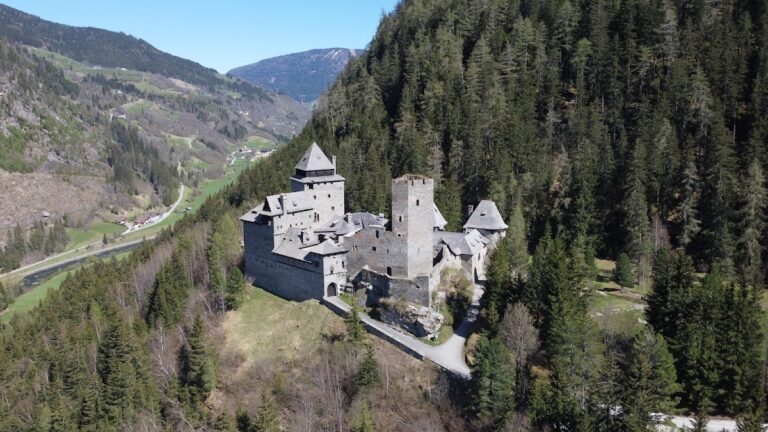
Burg Mauterndorf: A Medieval Hill Castle in Austria



Site at a Glance
- Rating
- 4.6
- Popularity
- Medium
- Country
- Austria
- Primary era
- Medieval
- External website
- Open
- Eras represented
- Medieval
- Civilizations
- Holy Roman Empire
- Site type
- Military
- Remains
- Castle
On this page8 sections
History
Burg Mauterndorf is a medieval hill castle in Austria, occupying a site where a Roman fort stood by AD 326 or earlier. The Roman fort guarded the mountain road from Teurnia through the Radstädter Tauern Pass to Iuvavum, the Roman settlement that developed into modern Salzburg, and may also have housed an administrator of Noricum, a Roman province covering parts of the eastern Alps and the nearby Danube region.
Roman origins and medieval beginnings
The fort was destroyed and abandoned during the Migration Period, a time of large-scale movements of peoples across Europe between late antiquity and the early Middle Ages. A later settlement or castle developed on the same strategic route, supported by toll collection. An imperial deed issued by Henry II in 1002 records a system for collecting tolls and taxes in the surrounding lands.
The medieval castle was first documented in 1253, when its keep was erected. This principal fortified tower, known as a Bergfried, formed part of a fortress controlling the route over the Radstädter Tauern Pass. The medieval road largely followed the earlier Roman line, preserving the site’s importance as a communications and revenue point.
Salzburg rule and fifteenth-century rebuilding
Burg Mauterndorf was held by the Prince-Archbishops of Salzburg. These senior Catholic Church authorities also ruled the Salzburg lands as territorial princes, so the castle served both ecclesiastical and governmental purposes. During the fifteenth century, Archbishops Burkhard Weisbriach and Leonhard von Keutschach substantially enlarged and reconstructed the complex.
For centuries, the castle operated as an administrative center for toll and tax collection and for the exercise of judicial authority. Its ownership remained with the Catholic archdiocese rather than passing to a secular ruling dynasty. The toll system supported both the castle and the village until 1803, when toll collection was abandoned during the Napoleonic Wars. The castle became Austrian state property in 1806.
Decline, restoration, and contested ownership
During the sixteenth century, the castle lost much of its earlier military importance. Its fortifications were no longer maintained, and by the eighteenth century the complex had deteriorated and was almost abandoned. In 1894, Hermann Epenstein, a Berlin-based surgeon in the Prussian Army and a Christian of Jewish descent, purchased the castle from local authorities. He carried out extensive repairs and restoration, converting it into a residence and helping to prevent its ruin.
Emperor Franz Joseph I granted Epenstein the minor noble title Ritter von Mauternburg in 1908, recognizing his services and a donation to the Crown. Epenstein later became an Austrian citizen and retired to Mauterndorf after the First World War. He had befriended Heinrich Ernst Göring, a German colonial official, while serving in German South-West Africa in the late 1880s. Epenstein became godfather and mentor to Göring’s children, and the Göring family, including Hermann and Albert Göring, frequently stayed at the castle. Albert spent part of his childhood there, while Hermann Göring stayed with Epenstein in 1923 after the failed Beer Hall Putsch.
After Epenstein died in 1934, the castle passed to his widow. When she died in 1939, she bequeathed it to Hermann Göring, a leading Nazi official and military commander. The transfer was not entered in the land register, so Göring never became its formal owner. This dispute led to a lengthy legal case between Epenstein’s heirs and the German state. Near the end of the Second World War, Göring considered using Mauterndorf as a refuge from the approaching Red Army, but surrendered instead to United States forces at nearby Bruck.
State care and museum use
Since 1968, Burg Mauterndorf has belonged to the state of Salzburg. Restoration undertaken between 1979 and 1982 renewed the complex, which is now a protected monument. A castle museum was established in 2003, and the Lungau Regional Museum opened in May 2007 under curator Helga Gappmayer. Its displays developed through several stages of work around the theme “Tradition with a New Look.” The castle also hosts scientific conferences and cultural events and contains restaurant and catering facilities.
Remains
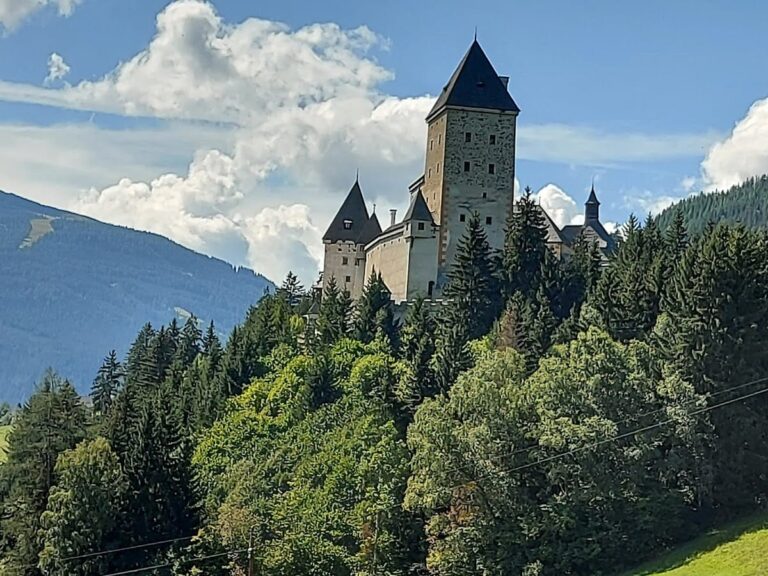
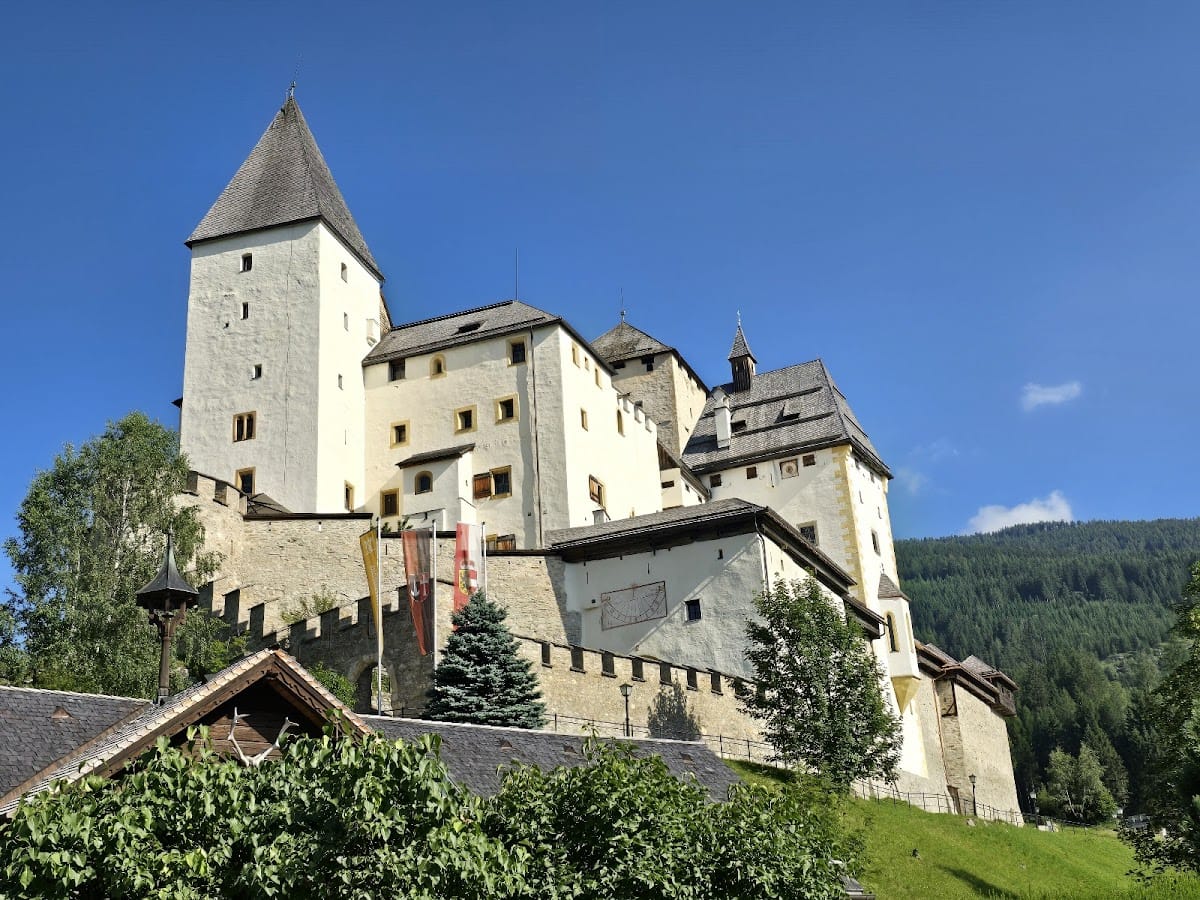
Burg Mauterndorf is a summit castle built on a high rocky hill at an elevation of 1,138 metres. Stone and brick form its documented construction materials, while its present appearance largely reflects the major enlargement and rebuilding of the fifteenth century. The complex occupies the site of the earlier Roman fort and remains associated with the communications corridor that crossed the Radstädter Tauern Pass.
Fortress and Roman communications site
The medieval fortress includes the keep erected by 1253. As the castle’s principal fortified tower, the Bergfried served as a defensive stronghold and refuge rather than as a conventional entrance gate. Its position on the hill enabled the fortress to control the route through the pass. The castle and the nearby road follow the line of the older Roman communications corridor, linking the medieval stronghold with the route once used between Teurnia and Iuvavum.
Restored rooms and present uses
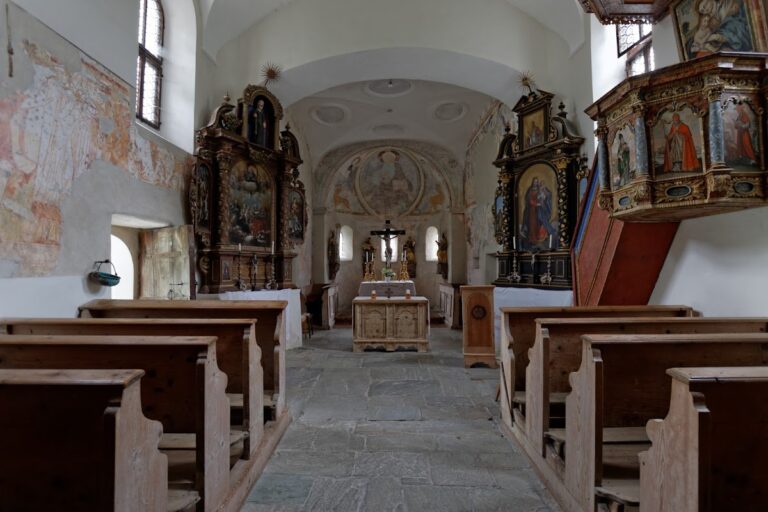
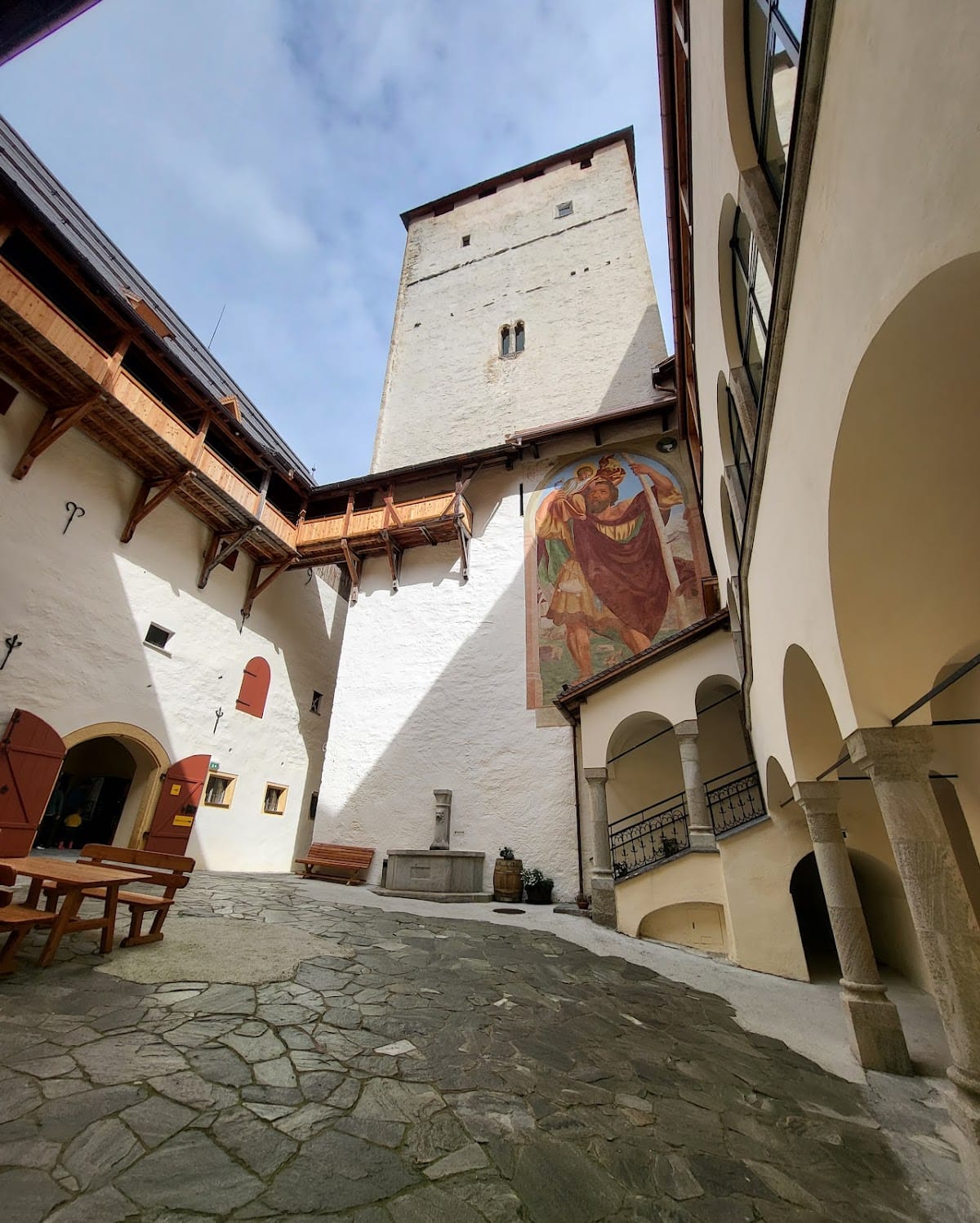
The castle is preserved and restored, with rooms adapted for museum displays that recreate aspects of the daily life of earlier residents. Part of the complex houses the Lungau Regional Museum, while other premises accommodate a restaurant and catering operation. Additional spaces are used for conferences and cultural events, giving the restored rooms functions that build on the site’s long administrative history.