Lismore Castle: A Gothic Revival Residence in Ireland



Site at a Glance
- Rating
- 4.5
- Popularity
- Medium
- Country
- Ireland
- Primary era
- Modern
- External website
- Open
- Eras represented
- Early Modern, Modern
- Civilizations
- British, English
- Site type
- Domestic
- Remains
- Castle
On this page11 sections
History
Lismore Castle is a Victorian Gothic Revival castle in Lismore, Ireland, whose history reaches back to an important monastery founded in the early seventh century. The site developed beside a crossing of the River Blackwater and became an ecclesiastical centre, later serving as a fortified residence and an aristocratic country house.
Monastery and medieval castle
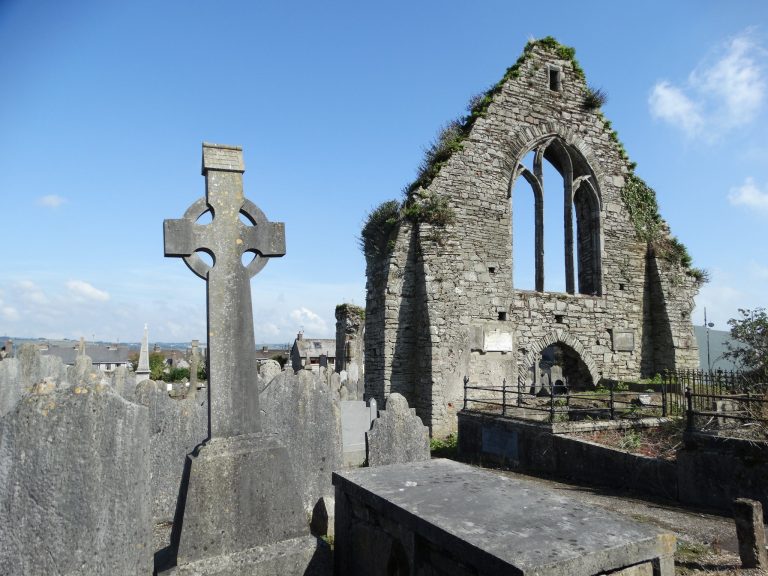
Lismore Abbey was established in the early seventh century and became a notable monastery and centre of learning. Its ecclesiastical importance continued into the twelfth century. Henry II of England stayed at Lismore in 1171, when the settlement still functioned as a religious centre. Except for a short interval after the castle was built, Lismore also remained the residence of the local bishop, meaning that the site retained an episcopal role alongside its defensive one.
In 1185, Prince John of England, later King John, ordered a castle to be constructed at Lismore. It was intended to serve as a sister castle to Ardfinnan Castle and to guard the river crossing. The medieval castle was replaced twice during the sixteenth century, reflecting successive changes to the site and its role.
Desmond and Boyle ownership
Lismore later became a possession of the Earls of Desmond. Their lands were broken up during the plantations that followed the killing of Gerald FitzGerald, Earl of Desmond, in 1583. Sir Walter Raleigh leased Lismore and acquired it in 1589. While imprisoned for high treason in 1602, he sold the property to Richard Boyle, who was later created 1st Earl of Cork.
Richard Boyle made Lismore his principal seat and transformed the castle into a major residence. The property subsequently passed to Richard Boyle, 3rd Earl of Burlington and 4th Earl of Cork, an important patron of Georgian architecture. Robert Boyle, the natural philosopher whose work helped establish modern chemistry, was born at Lismore in 1626.
War, restoration, and the Cavendishes
During the Cromwellian wars, the conflicts associated with the English parliamentary conquest of Ireland under Oliver Cromwell, a Catholic Confederate force commanded by Lord Castlehaven sacked Lismore town and castle in 1645. Richard Boyle, 2nd Earl of Cork, restored the damaged building sufficiently to make it habitable again, although neither he nor his successors lived there.
The Cavendish family acquired Lismore and other Boyle properties in 1753 through the marriage of Lady Charlotte Boyle, daughter and heiress of the 3rd Earl of Burlington and 4th Earl of Cork, to William Cavendish, later 4th Duke of Devonshire. The 5th Duke improved the estate and commissioned a bridge over the River Blackwater in 1775. A replacement bridge was built in 1858.
Nineteenth-century rebuilding
William Cavendish, the 6th Duke of Devonshire, inherited Lismore in 1811 and shaped much of its present character. He commissioned William Atkinson to rebuild the castle in the Gothic style between 1812 and 1822. From 1850, he also engaged Sir Joseph Paxton, the architect and garden designer associated with the Crystal Palace, for extensive additions and improvements. These works established the castle’s Victorian Gothic Revival appearance.
After the 6th Duke died in 1858, the castle remained substantially unaltered. It became the residence of Lord Charles Cavendish, a younger son of the 9th Duke of Devonshire, and his wife Adele Astaire. Following Lord Charles’s death in 1944, Adele continued to use Lismore until shortly before her death in 1981.
Modern use
Andrew Cavendish, the 11th Duke of Devonshire, used Lismore for brief annual visits and later made it available for short-term rental. The 12th Duke, who inherited the title in 2004, continued to live mainly at the family’s Chatsworth estate. In 2005, his son and heir, Lord Burlington, converted the derelict west range into Lismore Castle Arts, a contemporary art gallery. The castle remains the Duke of Devonshire’s Irish residence, with residential, cultural, and garden functions continuing on the estate.
Remains
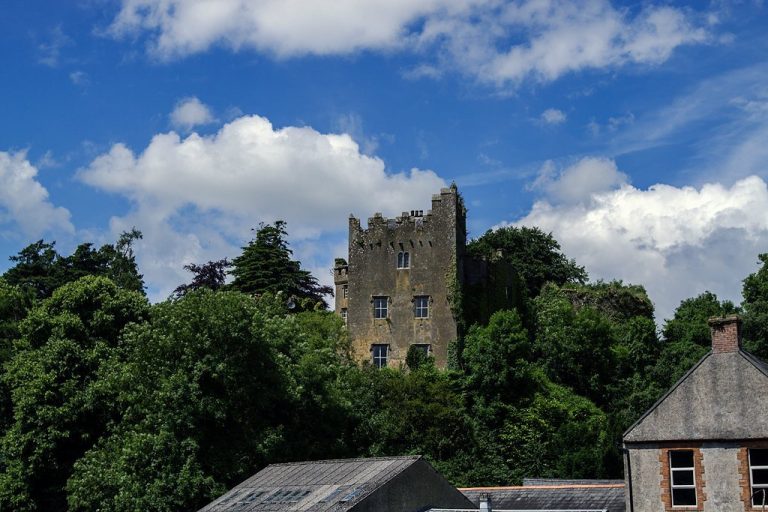
Lismore Castle is a hilltop complex associated with the River Blackwater crossing. Its surviving fabric combines rubble-stone construction and nineteenth-century cut stone shipped from Derbyshire. The castle is arranged around a courtyard, with substantial ranges, a castellated outer wall, and a gatehouse forming the principal architectural elements. Atkinson’s rebuilding supplied its Gothic character, while Paxton’s later work accounts for much of the present skyline.
Courtyard and principal residence
Richard Boyle’s seventeenth-century rebuilding created impressive gabled ranges on each side of the courtyard. He also added the castellated outer wall and the Riding Gate, a gatehouse that controlled entry to the residence. The principal apartments were richly finished with fretwork plaster ceilings, tapestry hangings, embroidered silks, and velvet. Later nineteenth-century work altered the external character of the complex while retaining its role as an aristocratic residence.
Chapel and Gothic Revival interiors
The ruined chapel of the former Bishop’s Palace was converted into a medieval-style banqueting hall. Its decoration included a large Perpendicular-style stained-glass window, whose strong vertical tracery reflects a late medieval English Gothic manner, together with choir stalls and Gothic stencilling on the walls and roof timbers.
A chimney-piece designed by Augustus Pugin and Myers was exhibited at the Medieval Court of the Great Exhibition in 1851. Originally intended for Horsted Place in Sussex, it was rejected there and later acquired for Lismore. The original Barchard family emblems were replaced by the Irish inscription “Cead Mille Failte,” meaning “a hundred thousand welcomes.” Pugin also designed other chimney-pieces and furnishings for the castle, while John Gregory Crace continued to provide furnishings in the Puginesque manner after Pugin’s death.
River bridge
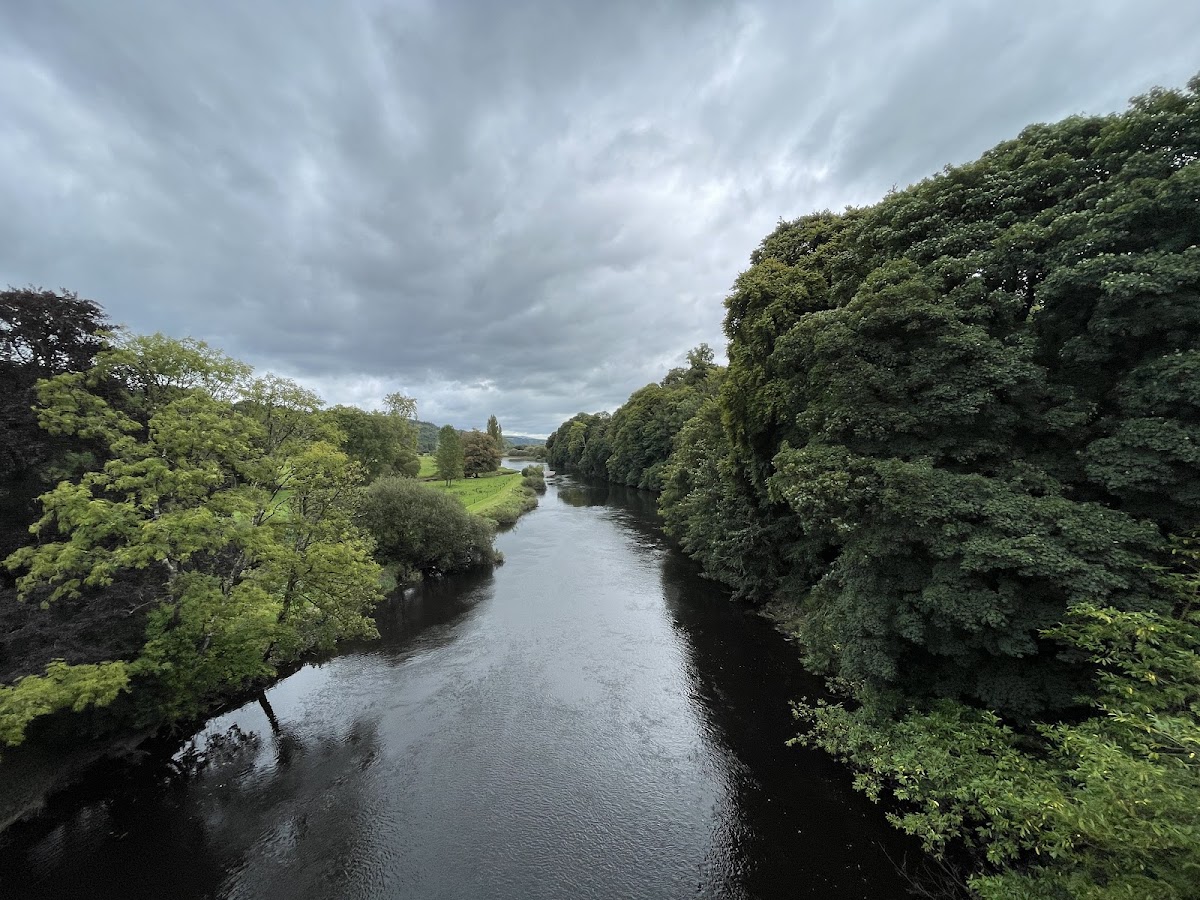
The estate’s crossing of the River Blackwater was marked first by the bridge commissioned in 1775. Thomas Ivory designed that structure. It was replaced in 1858 by a bridge designed by Charles Tarrant and built by E. P. Nagle and C. H. Hunt, linking the castle’s historic setting with the later development of the estate.
Gardens and west range
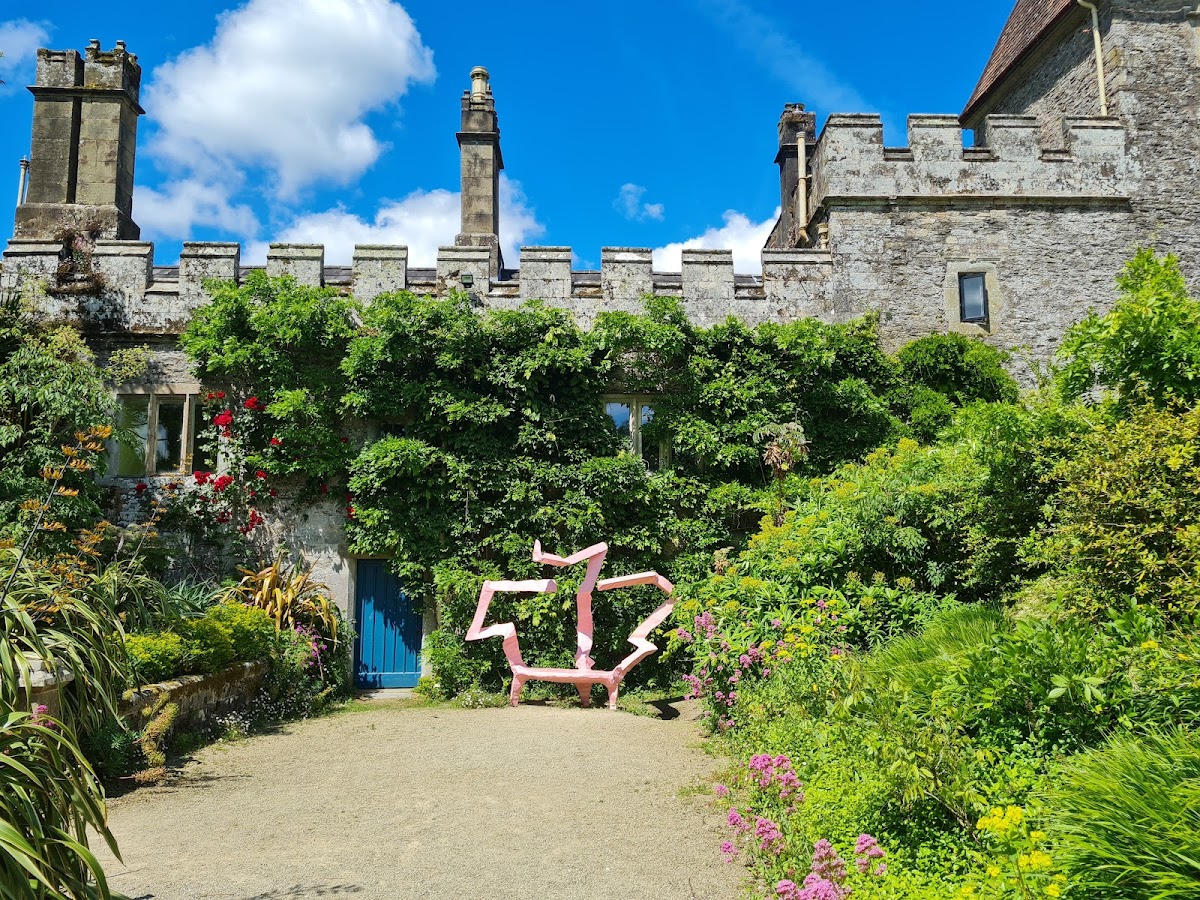
The upper garden is a seventeenth-century walled garden, while most of the informal lower garden was laid out in the nineteenth century. Later planting expanded the garden landscape, and contemporary sculptures were installed, including works by Antony Gormley, Marzia Colonna, and Eilis O’Connell. The derelict west range was converted into Lismore Castle Arts in 2005, giving part of the historic complex a contemporary cultural use.