Burg Hammerstein: A Medieval Imperial Castle Ruin in Germany
Site at a Glance
- Rating
- 4.4
- Popularity
- Low
- Country
- Germany
- Primary era
- Medieval
- Eras represented
- Medieval
- Civilizations
- Holy Roman Empire
- Site type
- Military
- Remains
- Castle
On this page8 sections
History
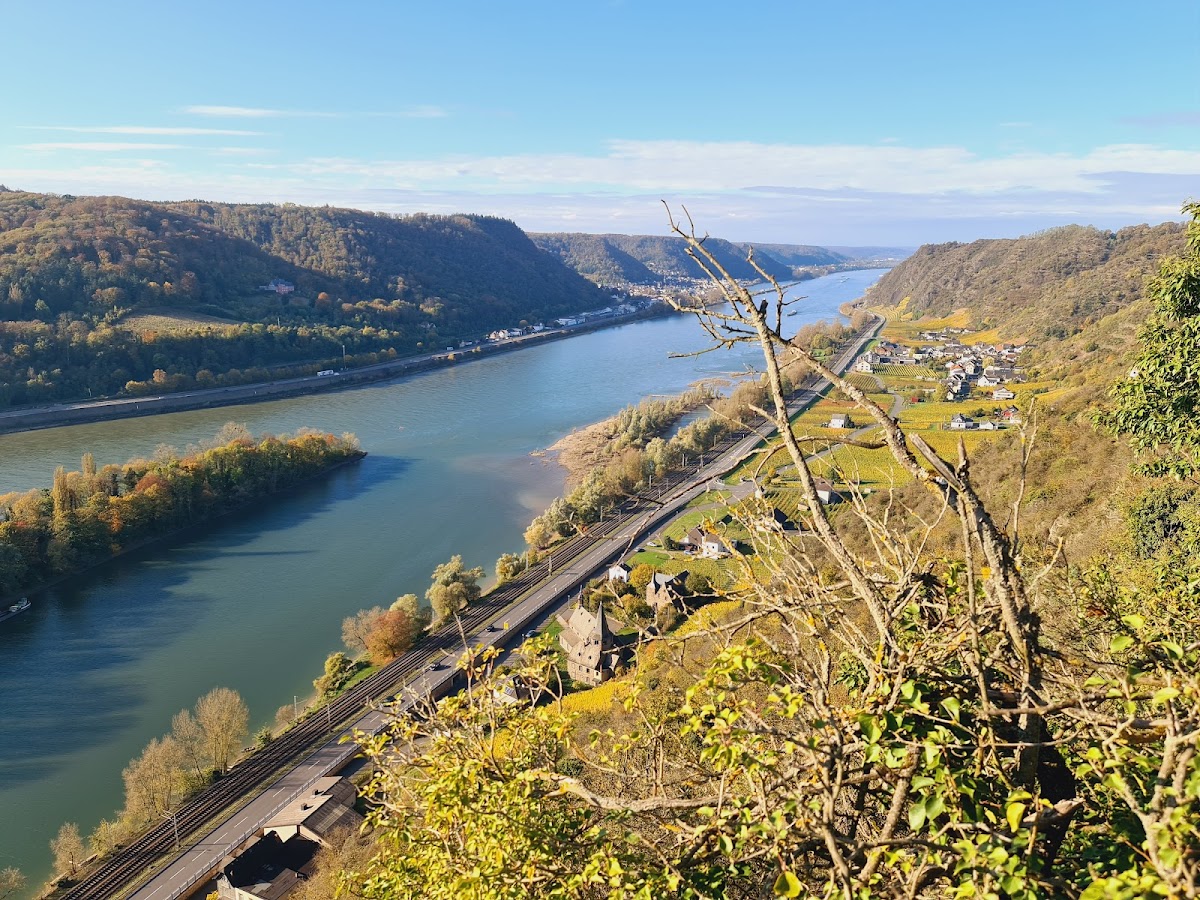
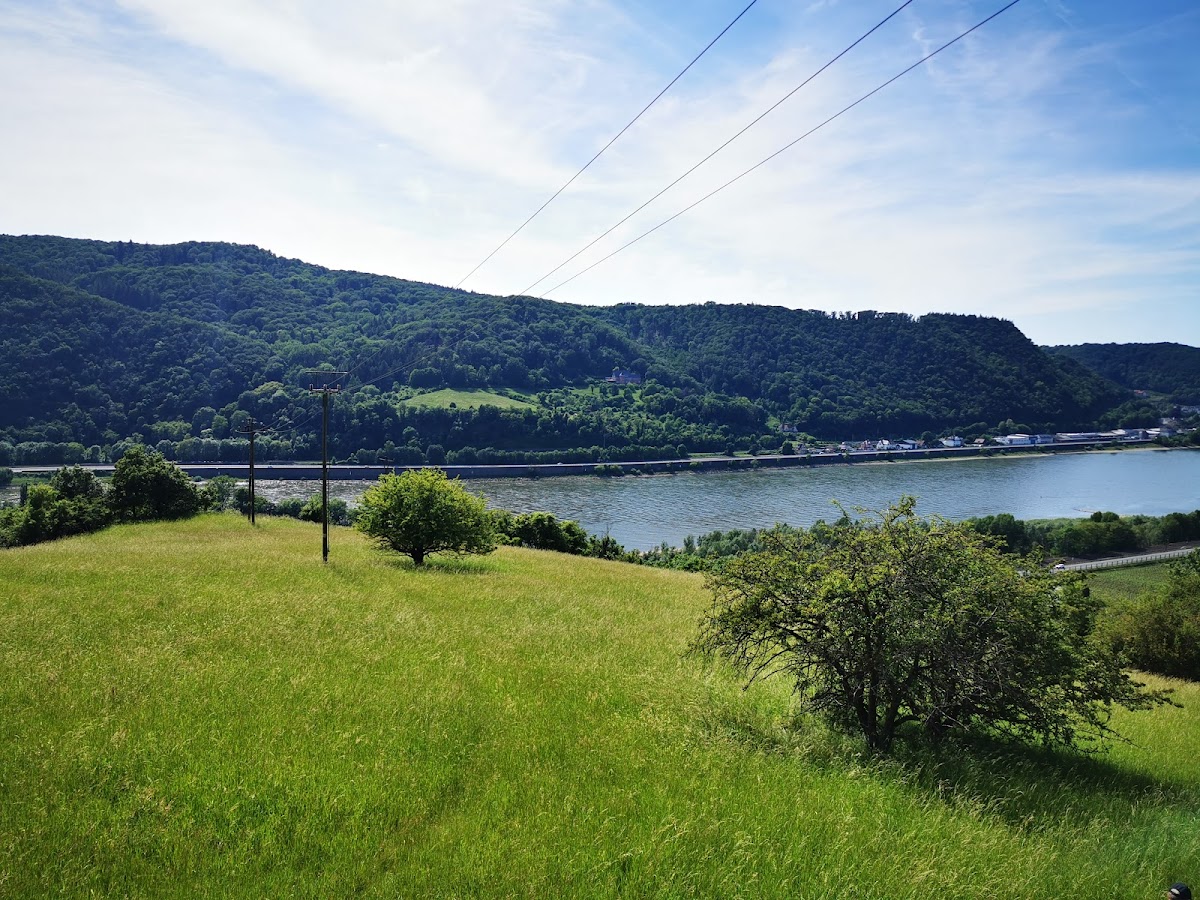
Burg Hammerstein is a tenth-century mountain castle ruin in Germany, built by the Conradines, a powerful aristocratic family whose members held major offices in the East Frankish and early German kingdoms. Located south of Hammerstein on the east bank of the Rhine, it was probably the oldest castle in the Middle Rhine Valley and was mentioned as an imperial castle in 1002. An imperial castle, or Reichsburg, was a fortified site held under the authority of the Holy Roman Emperor rather than by a local lord.
The Hammerstein family and the siege of 1020
The castle became the seat of the burgraves of Hammerstein. A burgrave was an official or noble responsible for governing and defending a castle and its surrounding territory. The family exercised authority there until about 1417, when its genealogical record disappears.
One of the most important episodes in the castle’s early history involved Otto von Hammerstein, Count of Engersgau, and his wife Ermengarde of Verdun. Their close kinship made the marriage unacceptable to the Church on political and canonical grounds. When Otto refused to dissolve the union, he attacked Archbishop Erkanbald of Mainz and detained members of the archbishop’s entourage at Hammerstein.
Emperor Henry II besieged the castle in autumn 1020. The defenders, weakened by hunger, surrendered on 26 December. After the siege, Hammerstein fell into disrepair, although its position and imperial connections later brought it back into use.
Imperial administration and royal custody
Emperor Henry IV restored the castle in 1071. A customs post was established there in the same year, allowing duties to be collected on goods or traffic. A mint, an institution authorized to produce coinage, followed in 1215.
Hammerstein also held the imperial regalia, the ceremonial insignia and associated objects representing the authority of the elected Holy Roman Emperor. In 1105, the regalia were retrieved from the castle after Henry IV was deposed at Ingelheim by his son, Henry V. Henry V kept them at Hammerstein again in 1125. The later Roman-German king William of Holland visited the castle in 1225, while the settlement of Oberhammerstein received town rights in 1337.
Transfer, occupation, and destruction
Burg Hammerstein remained an imperial castle until 1374, when Emperor Charles IV transferred feudal sovereignty over the castle and its associated possessions to the Electorate of Trier. This was an ecclesiastical principality of the Holy Roman Empire ruled by the archbishop of Trier, who was also one of the electors of the emperor. In 1431, Archbishop Raban of Helmstatt pledged the castle and the Hammerstein valley to Count Ruprecht of Virneburg. Ruprecht received authorization in 1434 to spend 1,500 gulden on additional construction at the castle.
Spanish forces occupied Hammerstein from 1632 to 1646 during the Thirty Years’ War, a major European conflict fought mainly between 1618 and 1648 amid religious, dynastic, and territorial struggles. From 1646 to 1654, troops of Charles IV, Duke of Lorraine, used the castle as a base for raids and continued to hold it after the war. Forces from Trier and Wied eventually captured Hammerstein, and Trier troops demolished the castle when they withdrew in 1654.
Later ownership and memory
The ruin passed to Prussia in 1815 and has belonged to the Barons of Hammerstein since 1893. The site is associated with the Hammersteiner Ley and with a memorial at the foot of the castle rock commemorating the siege of 1020.
Remains
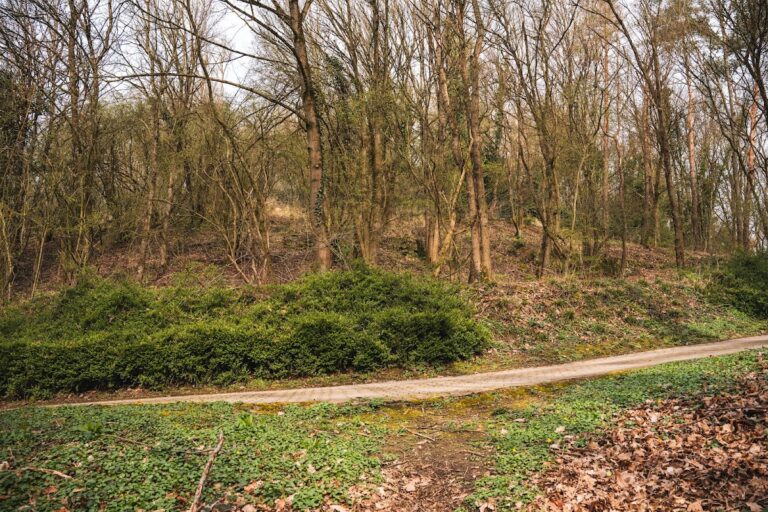
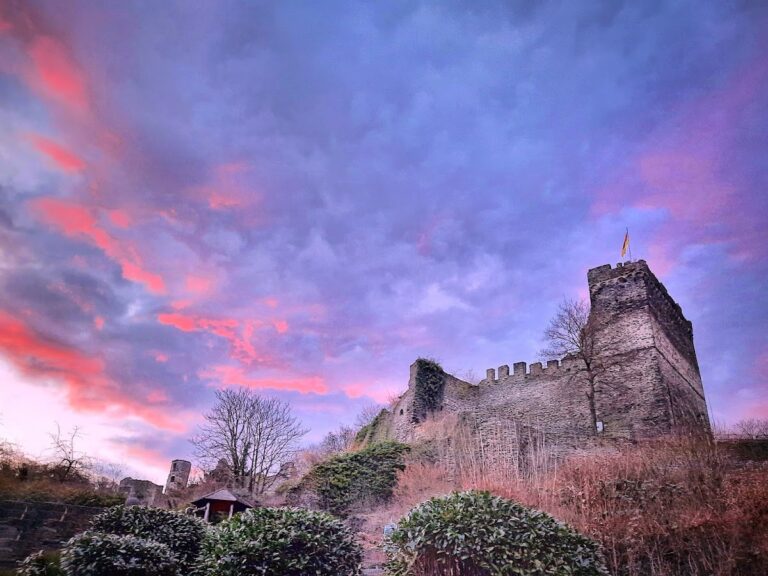
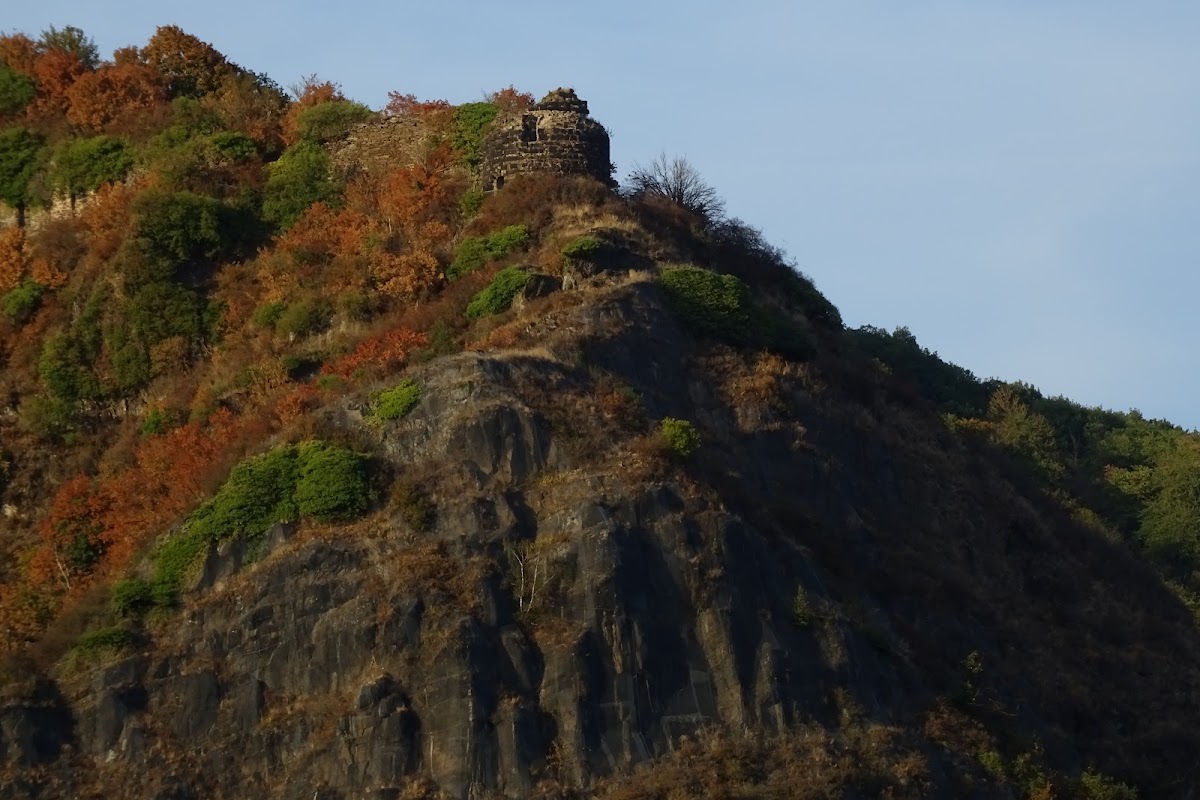
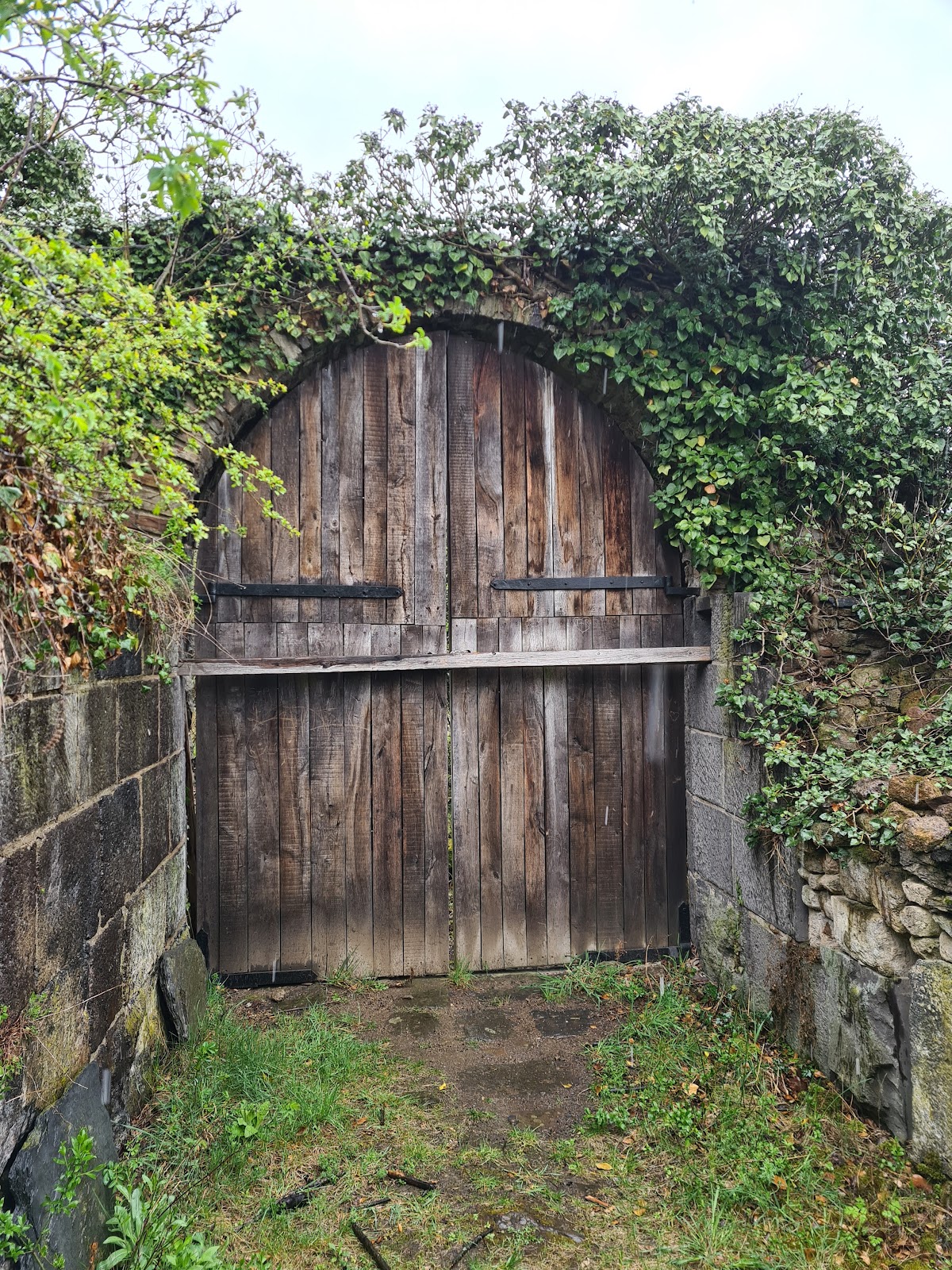
Burg Hammerstein occupies a hill at 195 metres above sea level on the Rhine’s east bank, south of the village of Hammerstein in the district of Neuwied, Rhineland-Palatinate. The hilltop enclosure survives as a ruin, with sections of defensive wall and a reconstructed castle gate defining parts of its former arrangement.
Walls and defensive features
The enclosure wall contains infill masonry, a construction technique once used to argue for a Roman origin but now understood as an obsolete interpretation. Surviving defensive features include part of the eastern wall with its wall-walk, a passage along the top of a defensive wall, and a former postern gate, a small secondary entrance used for controlled access or sorties. A narrow opening known as the Barbarossa Wall loophole survives in the wall. The name refers to Frederick I, the medieval emperor known as Barbarossa.
Round tower and reconstructed gate
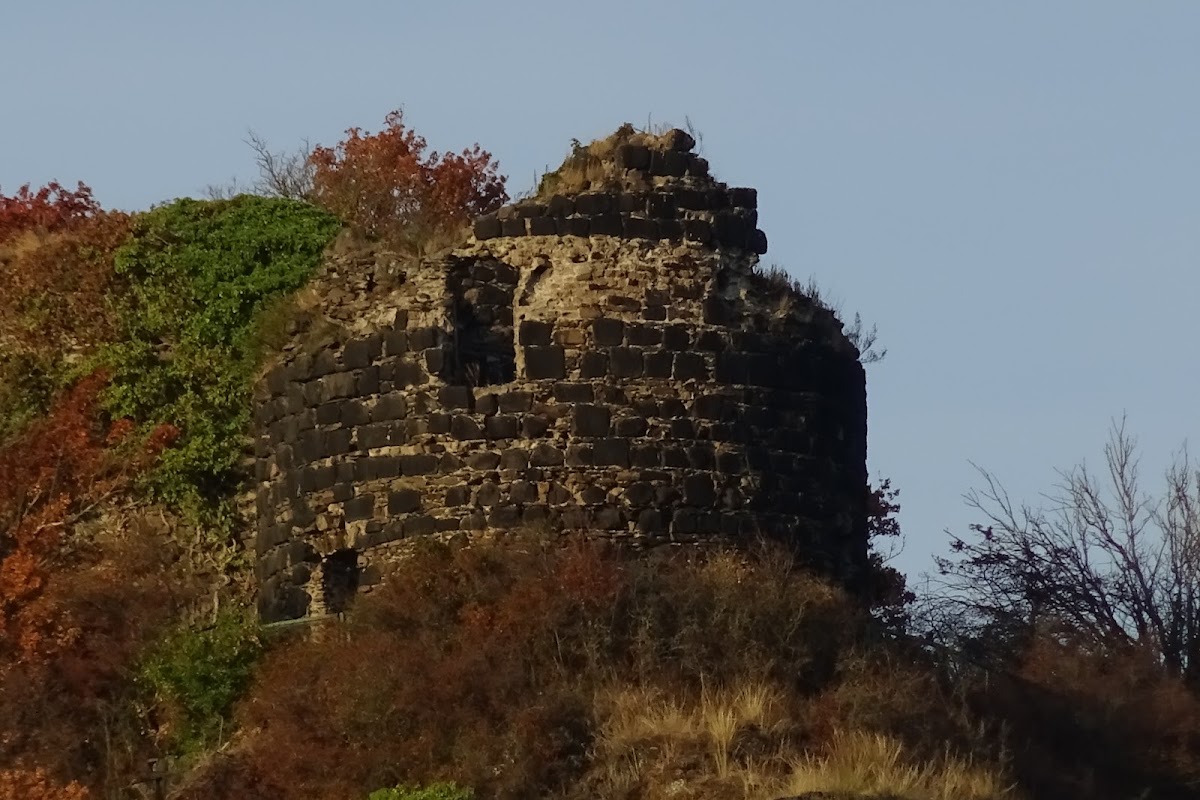
Part of a round watchtower remains within the ruin. The fragment still overlooks the Rhine and forms one of the site’s most clearly preserved vertical elements. A castle gate has been reconstructed, while the round-tower fragment and adjoining sections of the defensive walls remain preserved as surviving parts of the demolished stronghold.
Nearby sites