Matsunoo-dera Temple: A Shingon Buddhist Temple in Maizuru, Japan


Site at a Glance
- Rating
- 4.1
- Popularity
- Low
- Country
- Japan
- Primary era
- Early Modern
- External website
- Open
- Eras represented
- Medieval, Early Modern
- Civilizations
- Ashikaga shogunate, Tokugawa
- Site type
- Religious
- Remains
- Monastery
On this page12 sections
History
Matsunoo-dera Temple is a Buddhist temple in Japan, located in Maizuru on the southern slope of Mount Aoba. Affiliated with the Daigo-ha branch of Shingon Buddhism, it is traditionally dated to 708 and remains an active temple. Its formal name is Aoba-san Matsunoo-ji, and its principal image is Batō Kannon Bosatsu, the horse-headed manifestation of Kannon, the bodhisattva of compassion.
Foundation and early traditions
Temple tradition attributes the foundation to Iko, a Chinese monk who came from Tang China. During the Keiun era, from 704 to 708, he is said to have climbed Mount Aoba and perceived Batō Kannon beneath a great tree. In 708, he established a hermitage and installed an image of the deity. Another tradition links Iko’s foundation with the conversion of Empress Genmei, an eighth-century Japanese sovereign. The early history remains closely associated with these traditional accounts.
The mountain setting and the story of a hermit founder have been interpreted as indications of an early connection with mountain worship and Shugendō, a Japanese religious tradition combining Buddhist, Shinto, and ascetic practices. This association places the temple within a wider history of religious activity in mountainous landscapes.
Imperial patronage and medieval growth
Matsunoo-dera first enters the historical record in 1119, when Emperor Toba visited the temple and granted estates producing 4,000 koku for its maintenance. A koku was a historical measure of rice that also served as an assessment of land revenue. Tradition further connects Toba’s visit with Bifukumon-in, his consort, and with the emperor’s concerns about the parentage of his son, Emperor Sutoku. The story says that they learned of the temple’s Batō Kannon, who was believed to destroy worldly passions.
The temple subsequently flourished. It is said to have possessed 65 subsidiary institutions and to have accommodated more than 600 monks during the twelfth century. Matsunoo-dera later became part of the Saigoku Kannon Pilgrimage, a circuit of 33 temples in western Japan associated with devotion to Kannon. It is recognized as the circuit’s 29th temple and as the 132nd stop on the Shinbutsu Reijō Pilgrimage Route, corresponding to the 52nd stop in Kyoto.
Destruction, rebuilding, and continuing worship
Repeated fires destroyed the temple at different times, leading to successive rebuilding campaigns. Its precincts were eventually destroyed completely by troops of Oda Nobunaga, a sixteenth-century military ruler whose campaigns affected numerous religious and political strongholds. Hosokawa Yūsai restored Matsunoo-dera in 1581, and the Kyōgoku family supported the temple during the period that followed.
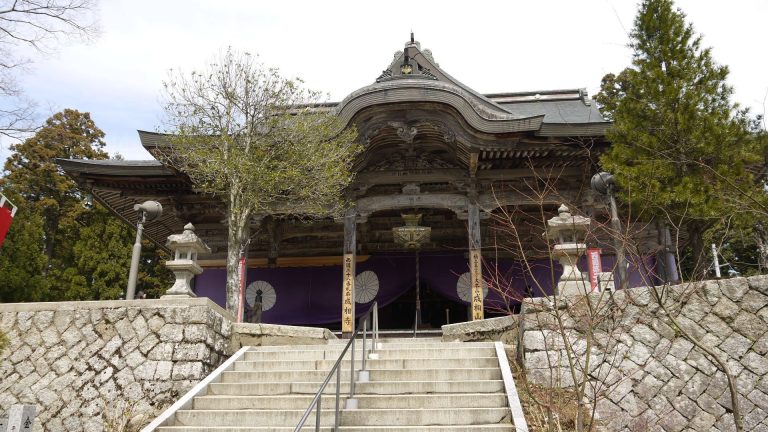
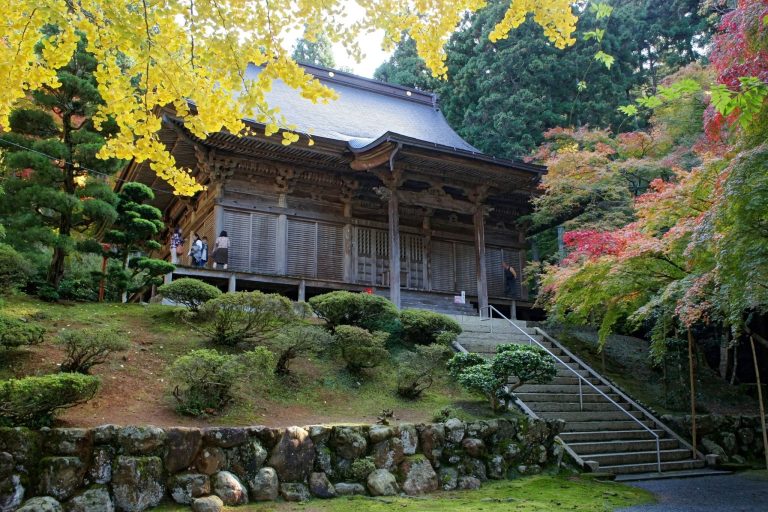
The present main hall belongs to the Edo period and was renovated in 1730 by Makino Hidenari, the daimyō, or major feudal lord, of Tango-Tanabe Domain. Religious observance continues through the annual Hotokemai Buddhist dance on May 8. Performed as a delayed observance of the Buddha’s bathing ceremony, Hotokemai combines dance and music in a religious service and is recognized as an Important Intangible Folk Cultural Property.
The principal image is a hibutsu, or hidden sacred image, normally kept from public view. It was displayed from October 1, 2008, to October 23, 2009, in connection with commemorations for the thousandth anniversary of the death of Cloistered Emperor Kazan and celebrations associated with the Saigoku pilgrimage. This was its first public viewing since 1931. Matsunoo-dera and its associated cultural properties include nationally and regionally protected heritage, including works designated by the Japanese national government, Kyoto Prefecture, and Maizuru City.
Remains
Matsunoo-dera occupies the southern slope of Mount Aoba, also known as Wakasa Fuji, at an elevation of about 250 meters. The mountain rises to 693 meters near the Sea of Japan, on the boundary between Maizuru and Takahama. The surviving temple complex includes Edo-period buildings, Muromachi-period gardens, and artworks and documents from the medieval and early modern periods. A map from the Muromachi period records the arrangement of the temple precincts.
Temple buildings and gardens
Main hall
The present main hall is an Edo-period building renovated in 1730. It houses the temple’s principal image, Batō Kannon Bosatsu, whose horse-headed form gives Matsunoo-dera a distinctive place within the Saigoku Kannon Pilgrimage. The image is concealed as a hibutsu, preserving its ritual status through restricted public display.
Sutra repository and Niōmon gate
The sutra repository and the Niōmon gate are also Edo-period buildings. Together with the main hall, they form part of the architectural fabric shaped by the temple’s rebuilding and support during the early modern period.
Muromachi gardens
The temple gardens date from the Muromachi period. Their historical value is also recognized by Maizuru City, which designates them as a place of scenic beauty. The Muromachi-period precinct map provides a further record of the site’s organization during that era.
Paintings and religious manuscripts
Painting of Fugen Enmei
Matsunoo-dera possesses a twelfth-century colored silk painting of Fugen Enmei, a Buddhist figure associated with longevity. The painting is traditionally said to have belonged to Bifukumon-in and is designated a National Treasure.
Kamakura-period works
Other associated works include a colored silk painting of Kujaku Myōō, Kamakura-period scrolls of the Lotus Sutra, and a Kamakura-period colored silk painting of a Lotus Mandala. These works, together with the Fugen Enmei painting, preserve evidence of the temple’s enduring connections with Buddhist image-making, scripture, and ritual practice.