Bodoň: A Medieval Castle in Slovakia
Site at a Glance
- Rating
- 4.7
- Popularity
- Very Low
- Country
- Slovakia
- Primary era
- Medieval
- Eras represented
- Medieval
- Civilizations
- Hungarian
- Site type
- Military
- Remains
- Castle
On this page7 sections
History
Prehistoric occupation
The hill at Bodoň in Slovakia was occupied long before the medieval castle was built. Neolithic settlement is represented by material associated with the Linear and Bukovohorská cultures, two Carpathian traditions identified in part through their pottery and settlement remains. Later activity took place there during the Late Bronze Age.
The medieval castle
Bodoň was a small castle in the Slanské Mountains, on the western slopes of the range southeast of Prešov. Its precise foundation date is uncertain. One interpretation attributes its construction to Budun of Ploské and places it in connection with the Tatar invasion of the lower Torysa region in 1285. In that view, the castle was a refugium, or fortified refuge, intended to protect Budun’s family during armed danger.
The castle appears in a record from 1299, when Count Stephen, a medieval noble or official in the Kingdom of Hungary, stated that Egid and Andronik, sons of John, had seized a castle called Makovica, also known as Mokoycha. The castle belonged to the sons of Budun and was associated with the village of Puch. A court judgment from the same year states that the castle had suffered serious damage. According to the interpretation linking its construction to Budun, his sons did not rebuild it, and the castle may have served for only about a decade.
Later evidence leaves the history of the site open. A charter issued in 1435 by Sigismund of Luxembourg, a medieval king and Holy Roman Emperor, listed the family properties of Sigismund, son of Martin of Ploské and captain of Bratislava Castle, as appurtenances of Makovica, also called Bodonvára. This wording allows for the possibility that the castle continued to exist after the proposed abandonment date. Another interpretation places its origin around the middle of the thirteenth century. The foundation and abandonment dates therefore remain unresolved.
At the end of the thirteenth century, Ploské and the lands around the Brestová stream and its tributaries belonged to Budun and his sons. After 1320, their original estates were divided, and the sons established manor residences on their respective shares. A small exploratory investigation in 1974 recovered prehistoric pottery and medieval material from the thirteenth and fourteenth centuries. Bodoň is protected as a national cultural monument.
Remains
Hilltop defenses and layout
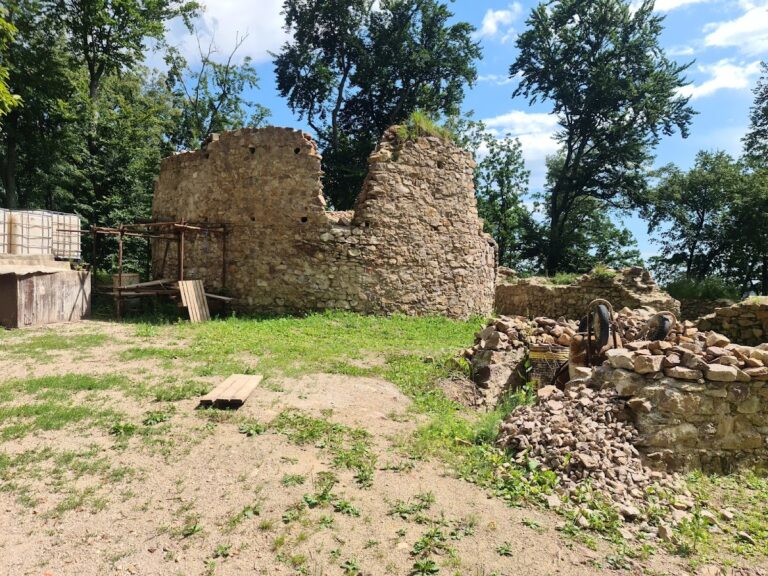
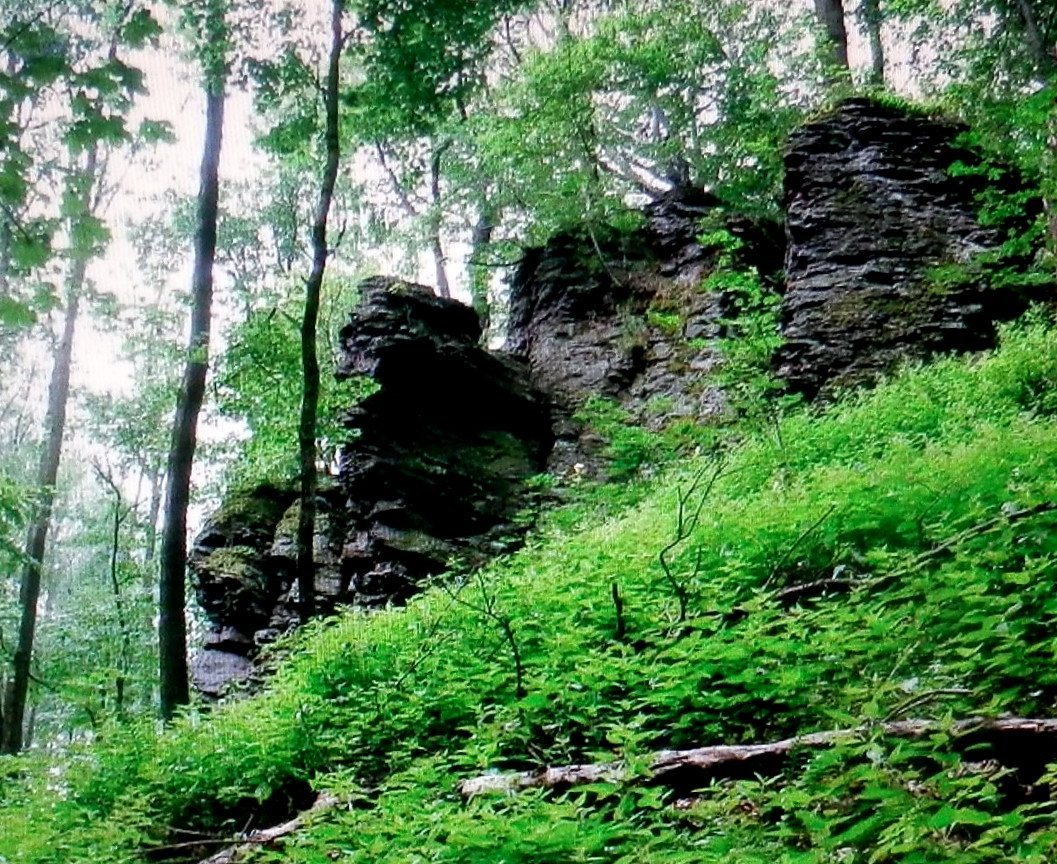
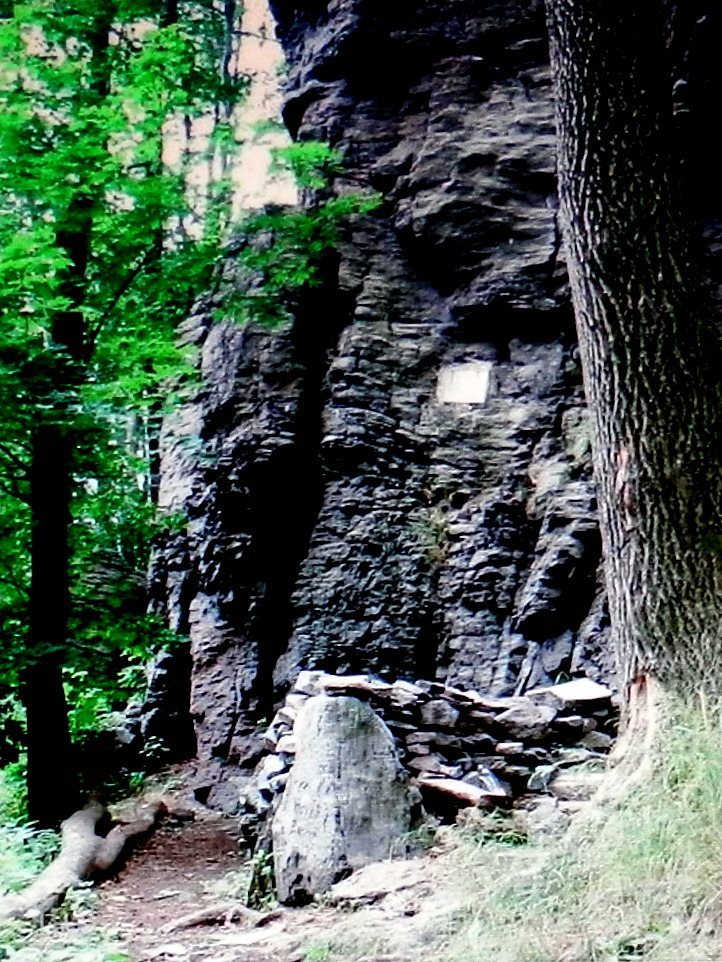
The remains lie on a wooded hill rising to about 868 metres north of Tuhrina, on a projecting rock outcrop associated with the administrative areas of Lesíček and Zlatá Baňa. The northern and western sides of the outcrop were naturally difficult to reach, while a substantial ditch cut into the bedrock defended the eastern and southern approaches.
Residential platform
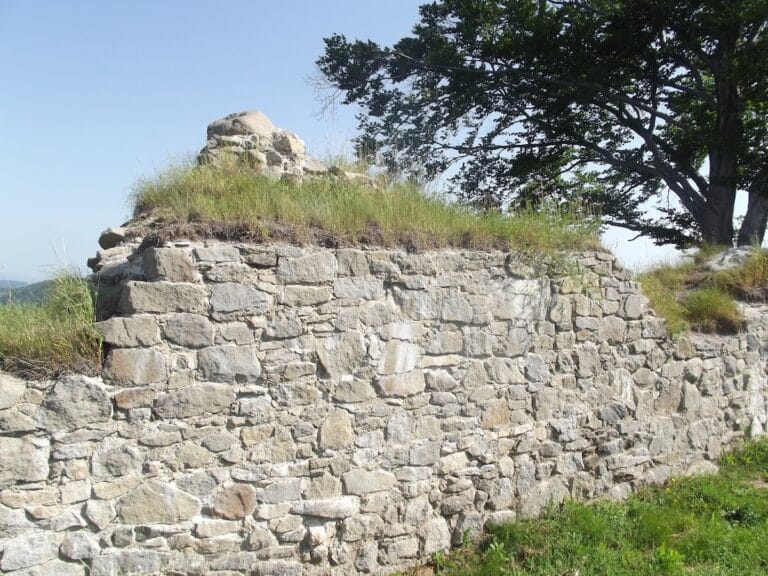
The summit forms an almost square platform measuring approximately 52 by 50 metres. This level area served as the castle’s residential core. Its edge was probably enclosed by perimeter fortifications, represented today by a large, regular rise around the platform. The arrangement also indicates that wooden residential and service buildings probably stood within the enclosure.
Circular tower
A circular stone tower occupied the highest part of the platform, on the northern side near the northeast corner. Built from local rhyolite, a hard volcanic stone, it had an internal diameter of about 3.6 metres and an external diameter of approximately 7.6 to 8 metres. Part of its masonry extended beyond the line of the perimeter fortification. The tower’s circular ground plan remains legible, while the surviving site consists chiefly of the rocky platform, the rise of the perimeter defenses, and the tower traces.