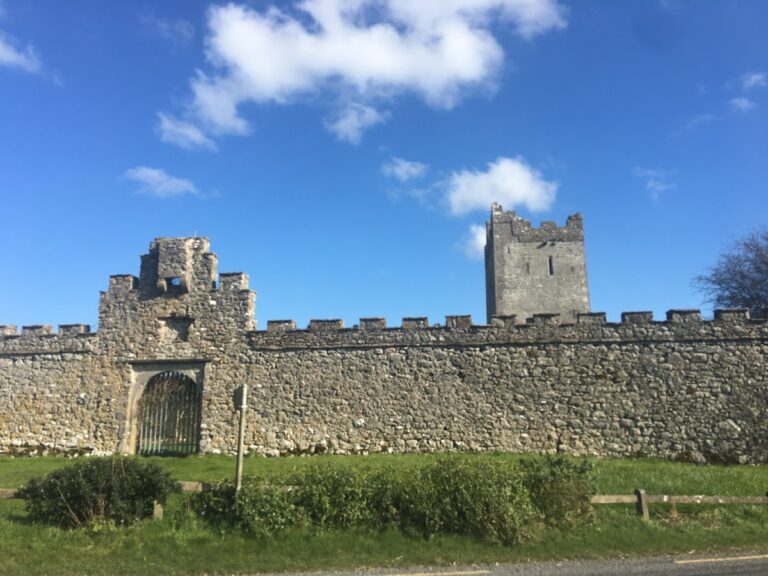
Redwood Castle: A Norman Fortified Residence and MacEgan Ancestral Home


Site at a Glance
- Rating
- 4.4
- Popularity
- Very Low
- Country
- Ireland
- Primary era
- Medieval
- External website
- Open
- Eras represented
- Medieval
- Civilizations
- Norman
- Site type
- Military
- Remains
- Castle
On this page6 sections
History
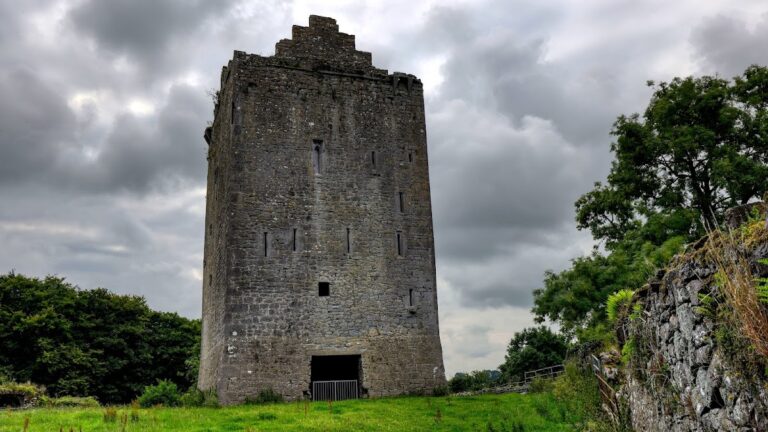
Redwood Castle is a Norman-style fortified building in Ireland, near Lorrha in County Tipperary, founded by Norman feudal lords around 1210. Its thick stone walls and defensive openings reflect its medieval military purpose. The castle later became the ancestral home of the MacEgan clan and a centre of legal and scholarly activity.
Norman foundation and MacEgan control
The Normans occupied Redwood Castle until about 1350. At that time, the MacEgan clan took control of the surrounding lands and the castle. The family enlarged and substantially renovated the building, with further alterations taking place on several later occasions.
The MacEgans were hereditary Brehons, specialists in traditional Irish law who served as judges or legal authorities before and alongside the development of English common-law institutions in Ireland. They established and supported a school of learning at Redwood Castle, which continued for several hundred years. The castle therefore served not only as a fortified residence but also as a setting for the preservation and teaching of legal knowledge.
Destruction, ruin, and restoration
Redwood Castle remained occupied and in MacEgan family ownership until about 1650. It was then confiscated and burned during Oliver Cromwell’s conquest and suppression of resistance in Ireland. The building stood in ruins for more than 300 years, leaving its exterior walls as the principal surviving fabric before modern restoration.
Michael J. Egan, a County Mayo lawyer and member of the MacEgan clan, purchased and restored the castle in 1972. It remains a private MacEgan residence. Redwood Castle is legally protected on the North Tipperary register as structure S329 and is included among County Tipperary’s protected historical and architectural monuments. Clan Egan gatherings held at the castle formed part of rallies in Ireland in 1996, 2000, 2004, and 2008.
Remains
Redwood Castle survives as a Norman fortified building with substantial stone walls and defensive features characteristic of Irish fortifications of its period. The building was enlarged and altered around 1350 and underwent additional renovations in later phases. After its long period as a ruin, the surviving exterior walls formed the principal basis for the restoration completed in 1972. The restored structure now functions as a private residence.
Defensive features
Openings in the castle’s defensive fabric include loopholes and arrow slits, narrow apertures through which defenders could observe or attack those outside. A murder-hole, an opening used to drop objects or pour substances onto people below, is also among the surviving defensive features.
Sheela na gig
The castle contains a Sheela na gig, a medieval carved figure usually depicting an exposed female form and found on some churches, castles, and other buildings in Ireland and Britain. Its original meaning remains debated, while later traditions associated such sculptures with protection against evil forces. At Redwood Castle, it forms an uncommon carved feature within an Irish fortified building.
Nearby sites