Bauska Castle: A Historic Fortress and Museum in Latvia
Visitor Information
Google Rating: 4.6
Popularity: Medium
Official Website: www.bauskaspils.lv
Country: Latvia
Civilization: Early Modern, Medieval European
Site type: Domestic
Remains: Palace
History
Bauska Castle is located in the municipality of Bauska, Latvia. It was originally constructed by the Livonian Order, a medieval military order active in the Baltic region, between 1438 and 1451. Built on the site of an earlier Semigallian hillfort and a late Bronze Age Baltic settlement, the castle was intended as a fortified stronghold to protect the border against the Grand Duchy of Lithuania and to oversee important trade routes connecting Riga with northern and western Russian cities.
Following a significant defeat of the Livonian Order at the Battle of Święta in 1435, the construction of Bauska Castle marked a crucial step in reinforcing military and regional control. The castle served as the residence of the local vogt, who managed judicial, financial, and military affairs in the Semigallia area. This role underscored the castle’s importance as a strategic center in the region during the 15th century.
Ownership of the castle shifted during the mid-16th century, reflecting the complex political changes of the period. In 1559, Bauska Castle was pledged to the Polish crown, and shortly after, in 1561, it became the property of Wilhelm von Brandenburg, the last Archbishop of Riga. The following year, Gotthard Kettler, the first Duke of Courland and Semigallia, acquired the castle. Kettler expanded the fortress into a ducal residence, introducing significant architectural modifications that reflected its new status.
Bauska Castle played a prominent political role by hosting three landtags—regional assemblies—of the Duchy of Courland and Semigallia in 1568, 1590, and 1601. Throughout its history, the castle was caught up in several military conflicts. It faced sieges and captures during the Livonian War and the wars between Poland and Sweden. Swedish forces took the castle in both 1625 and 1701, while Russian troops captured it in 1705. Following these conflicts, the castle’s fortifications were deliberately destroyed by the Russian army in 1706, leading to its decline into ruin.
In the 19th century, the castle ruins came under the ownership of Prince Paul von Lieven, who initiated restoration efforts. Further targeted restoration took place in the 1970s. Today, the preserved sections of Bauska Castle serve as a museum complex, reflecting centuries of historical transformation and conflict.
Remains
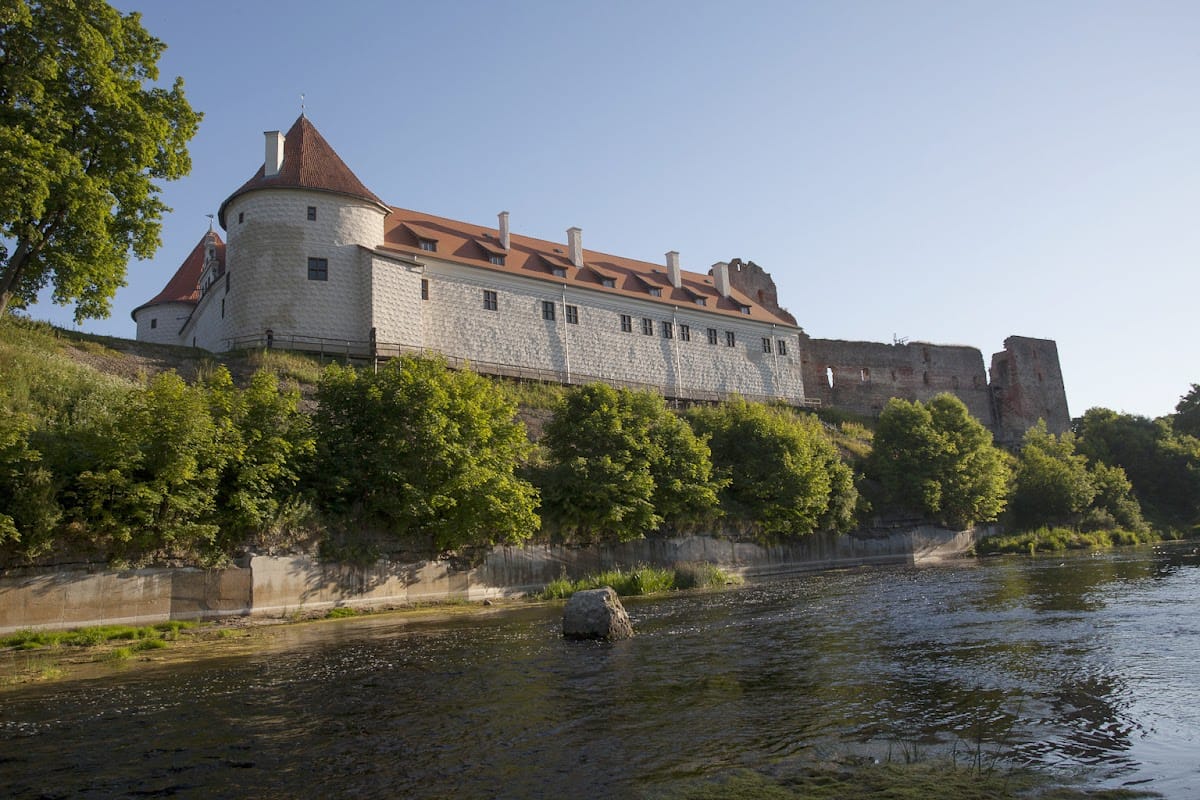
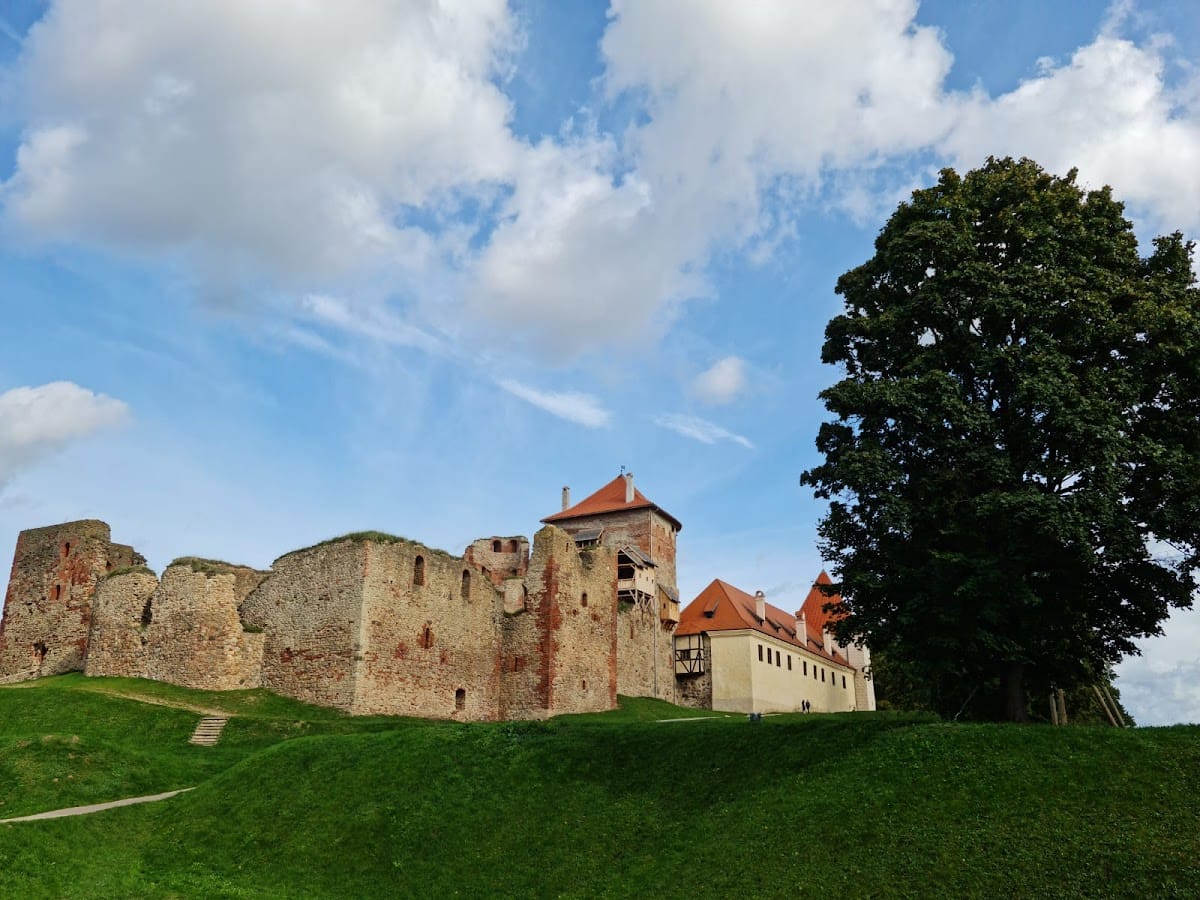
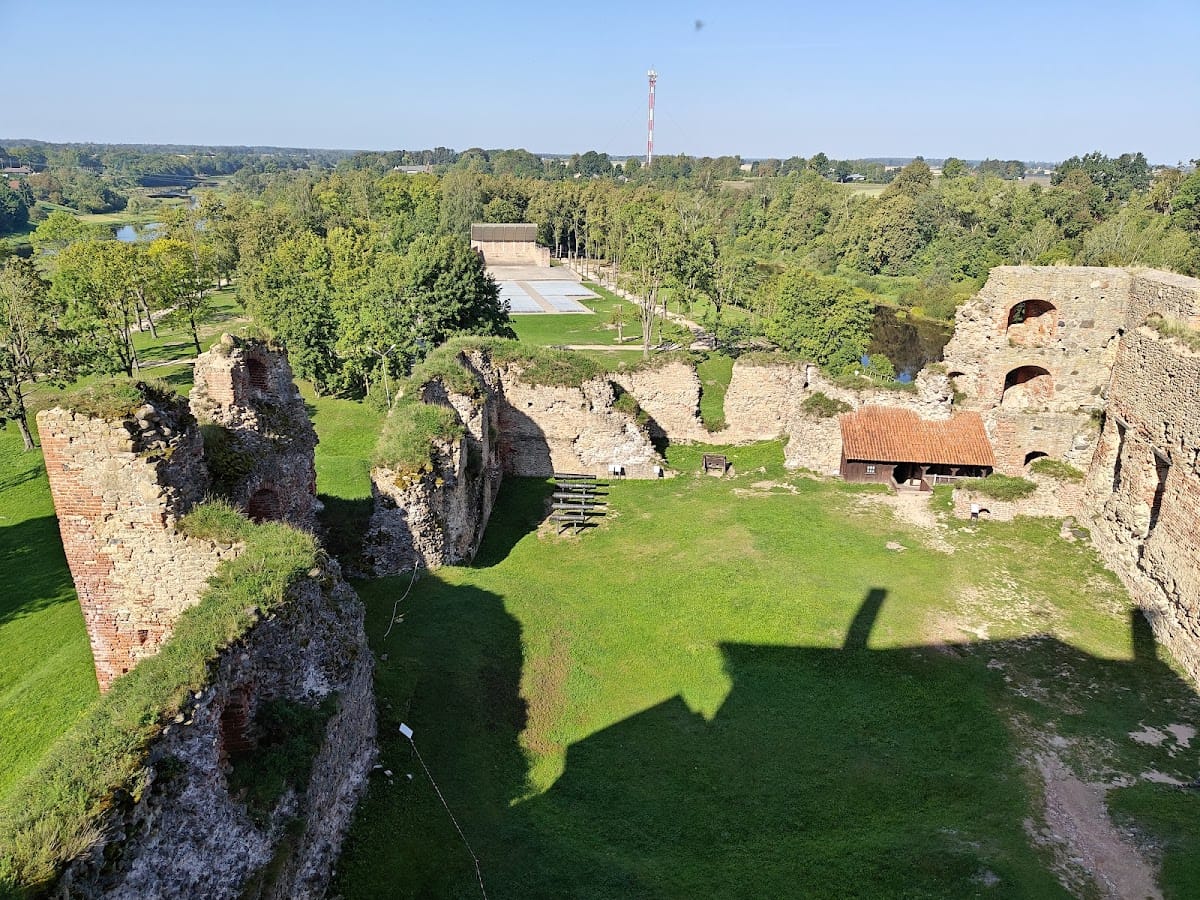
Bauska Castle occupies a narrow peninsula formed by the meeting of the Mūsa and Mēmele rivers, a location chosen for its natural defensive advantages. The original medieval fortress was an irregular quadrilateral, stretching approximately 124 meters in length and 43 meters in width, covering roughly 5,320 square meters. It was constructed primarily of red brick, with walls thickening up to 3.5–3.6 meters in vulnerable areas to enhance defense.
The fortress was fortified by five towers, uniquely positioned along the middle sections of the walls rather than at the corners, which was uncommon for castles of its type. Among these towers, the semicircular main tower stands out. Its vaulted ceilings included a cylindrical vault on the first floor featuring three openings called embrasures, allowing defenders to fire upon attackers, and a second floor adorned with an elaborate four-pointed star vault. This section housed living quarters with a fireplace and chimney, while the upper floors were designated for storage and command activities during combat.
A moat protected the eastern flank of the castle, though this was filled in during the 17th century. The entrance to the peninsula was secured by a drawbridge spanning the moat, providing controlled access. The castle incorporated a hypocaust heating system, which circulated warm air beneath floors and through walls to heat the rooms, a feature characteristic of some medieval fortifications.
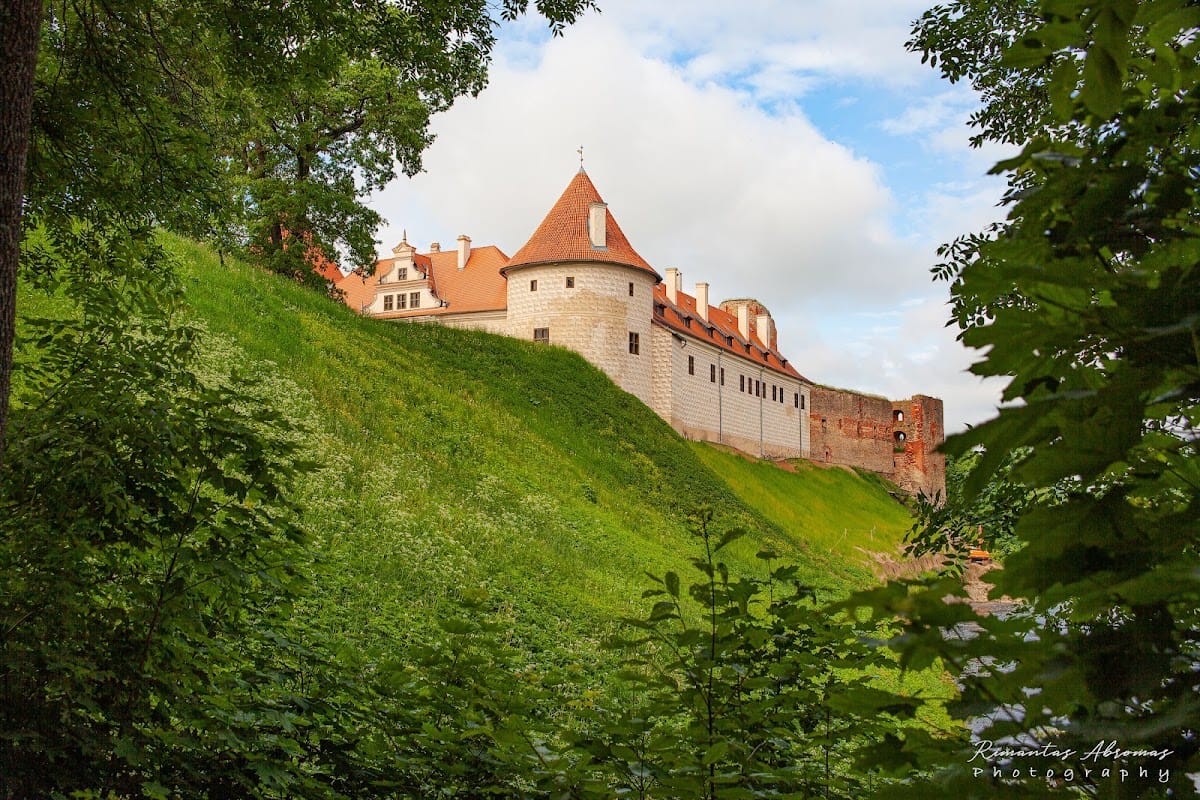
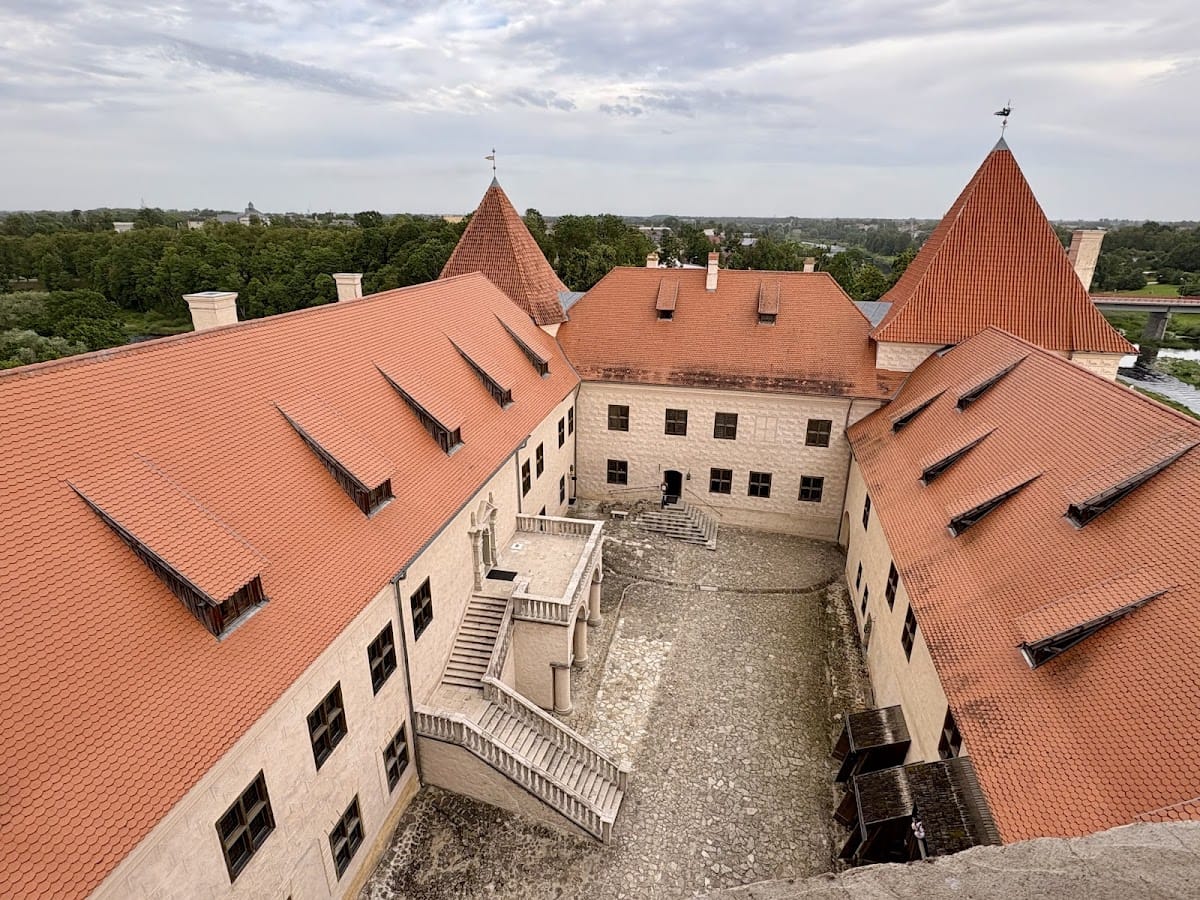
In the late 16th century, a new ducal palace in the Mannerist architectural style was built adjoining the medieval fortress. Completed in 1596, this addition incorporated two existing medieval towers and added three new wings that formed an inner courtyard. Its walls featured sgraffito, a decorative plaster technique creating illusionistic square patterns that enhanced the palace’s visual appeal. Today, the palace and parts of the original fortress remain restored and form an integrated complex.
The tallest tower in the castle complex rises to 22 meters and now includes a modern viewing platform. Beneath the castle lie vaulted basements that historically served as casemates—protected gun emplacements—and dungeons. Following the destruction in the early 1700s, the castle fell into ruin, and local residents often reused stones and bricks as building materials. Recent restoration efforts have secured the surviving sections, ensuring the preservation of this historic site.
Nearby sites


