Balio Towers in Erice: Medieval Fortifications and Civic Center
Visitor Information
Google Rating: 4.7
Popularity: Low
Country: Italy
Civilization: Early Modern, Medieval European, Modern
Site type: Military
Remains: Castle
History
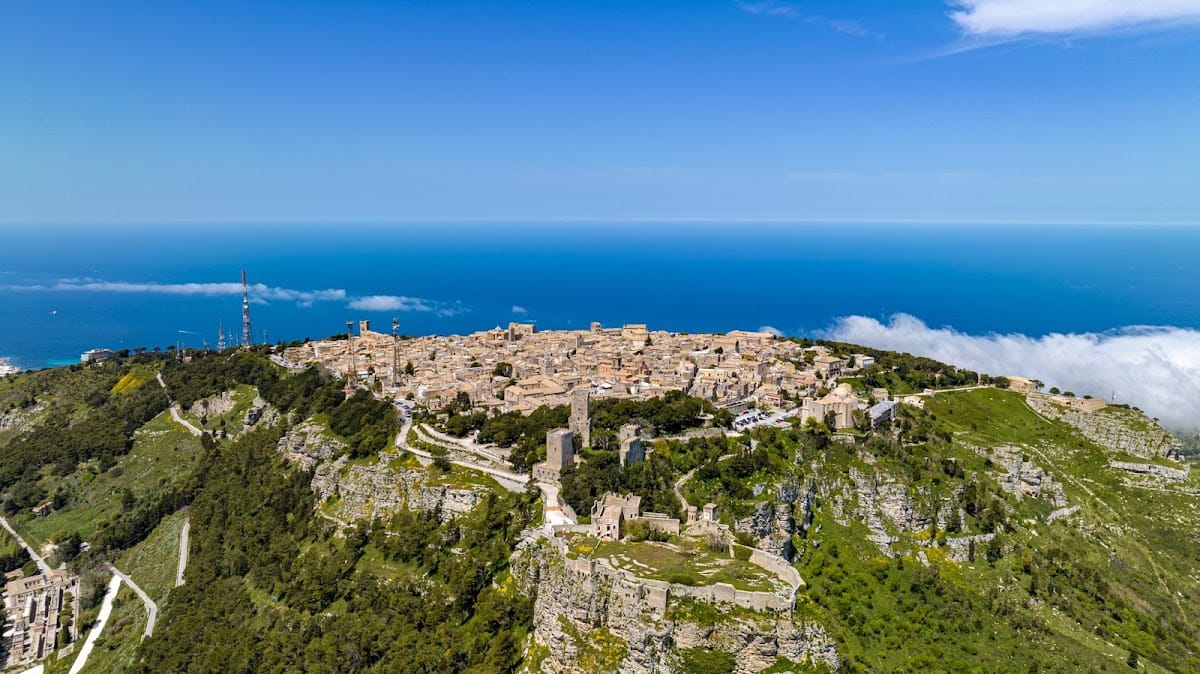
The Balio Towers are situated at the top of Monte Erice in the town of Erice, Italy. These fortifications were established during the Norman period, most likely in the 13th century, reflecting the influence of medieval European powers on Sicilian lands.
During the Middle Ages, the towers became the center of civic and administrative life in Erice. They functioned as the town hall and marked the terminus of the main street, originally known as the Royal Road. The name “Balio” comes from the medieval official called the “bajulo” or bailiff, who was responsible for overseeing royal justice and collecting taxes within the town. This position underscores the towers’ role as a hub of governmental authority.
Tradition associates the towers with the reign of King Frederick III of Aragon, particularly during the siege of nearby Trapani around 1314 to 1315. A coat of arms belonging to the Aragonese dynasty is still visible near the western entrance, suggesting either construction or significant restoration under Aragonese rule. Over time, the defensive complex expanded to include two main towers connected by a drawbridge to the adjacent Castle of Venus, allowing coordinated protection of the area.
Later, a third tower and an enclosing curtain wall with an access gate were added. This gate features the Spanish Habsburg coat of arms, marking the involvement of Spanish rulers who controlled Sicily after the Aragonese. The changes in the fortification near the gate highlight the evolving political powers overseeing the site.
By the 18th and 19th centuries, the military role of the Balio Towers diminished as their civic functions increased. Around 1861, municipal offices relocated from the towers to a new town hall within the growing urban fabric. Following this, the site fell into disuse and was leased for pasture.
Restoration began in 1872 under Count Agostino Sieri Pepoli. He rebuilt a tower that had been demolished in the 17th century due to concerns over threats from the nearby Spanish garrison in the Castle of Venus. Pepoli’s reconstruction gave the tower a distinctive five-sided shape and introduced an English-style public garden surrounding the complex, now called the Balio Gardens, which remains maintained by the local municipality.
Remains
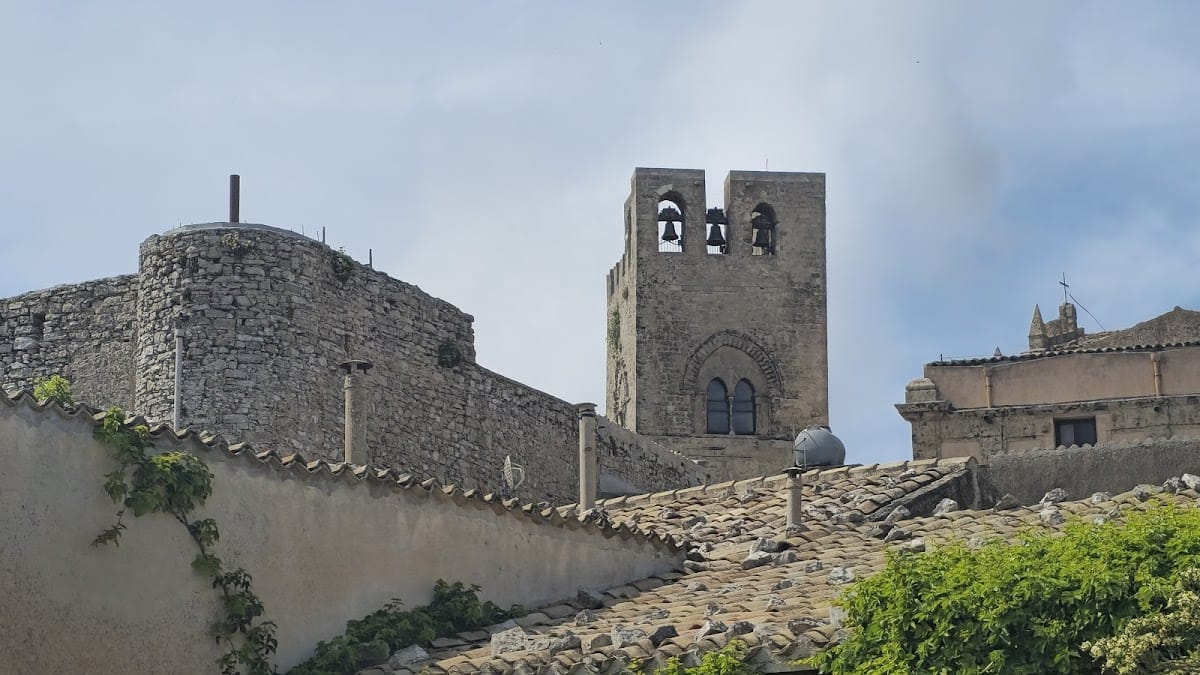
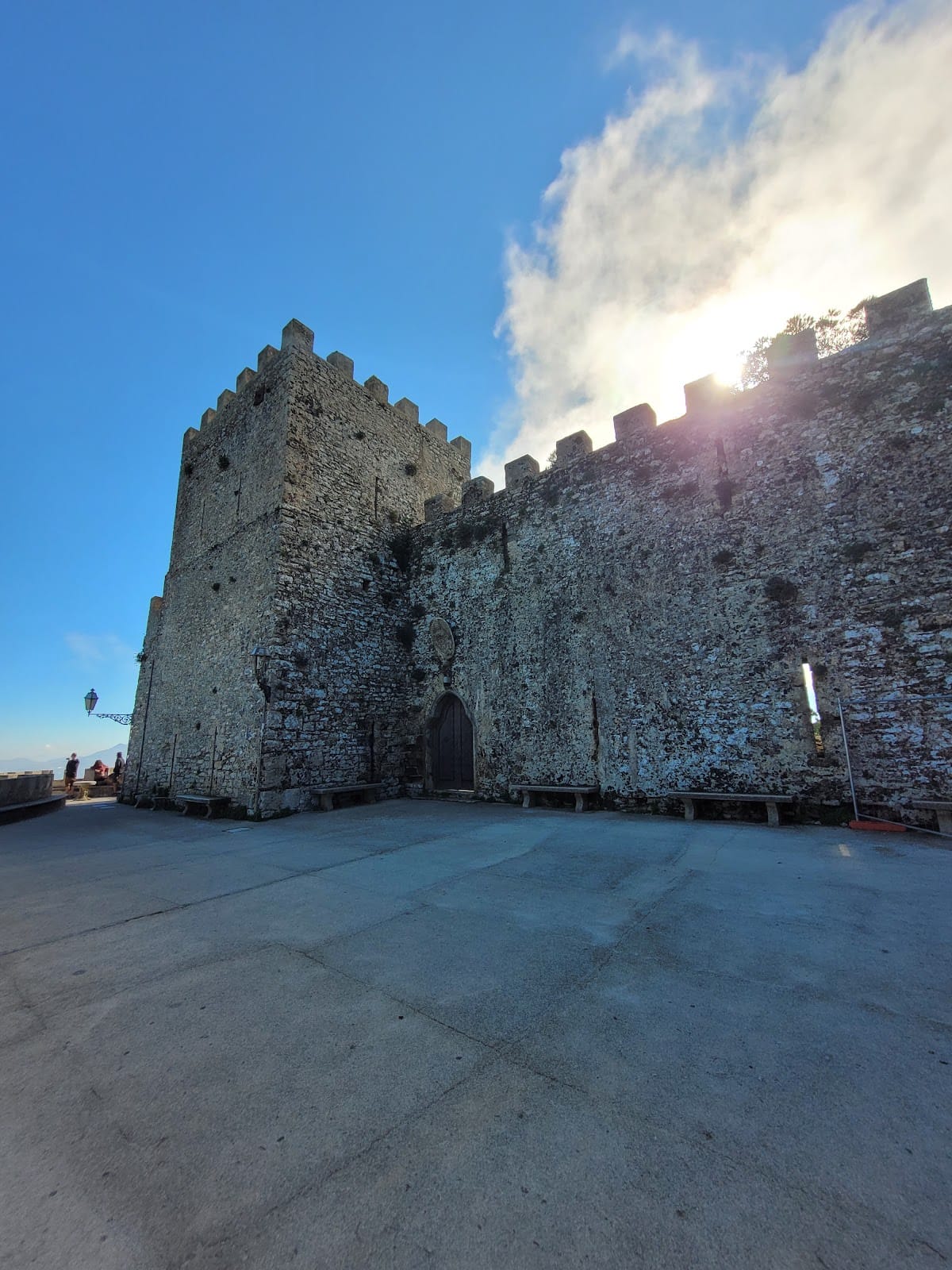
The Balio Towers are composed of three connected towers enclosed within a high curtain wall built from roughly hewn stone blocks. This crenelated wall not only provided defense but also clearly divided the area used for civic administration from the military zones. The curtain wall contains three known points of access: the main western entrance through the Balio Gardens and two additional staircases on the southern and northern sides, offering various approaches into the enclosed space.
One of the original towers was torn down in the 17th century over fears it could be used by forces garrisoned in the neighboring Castle of Venus. This tower was carefully reconstructed in the 19th century by Count Sieri Pepoli, who shaped it with a unique pentagonal (five-sided) plan, distinguishing it from the other structures.
Historically, the three towers were linked to the Castle of Venus by a drawbridge, establishing an integrated defensive complex atop Monte Erice. This arrangement allowed control over access between the fortifications and enhanced the town’s protection.
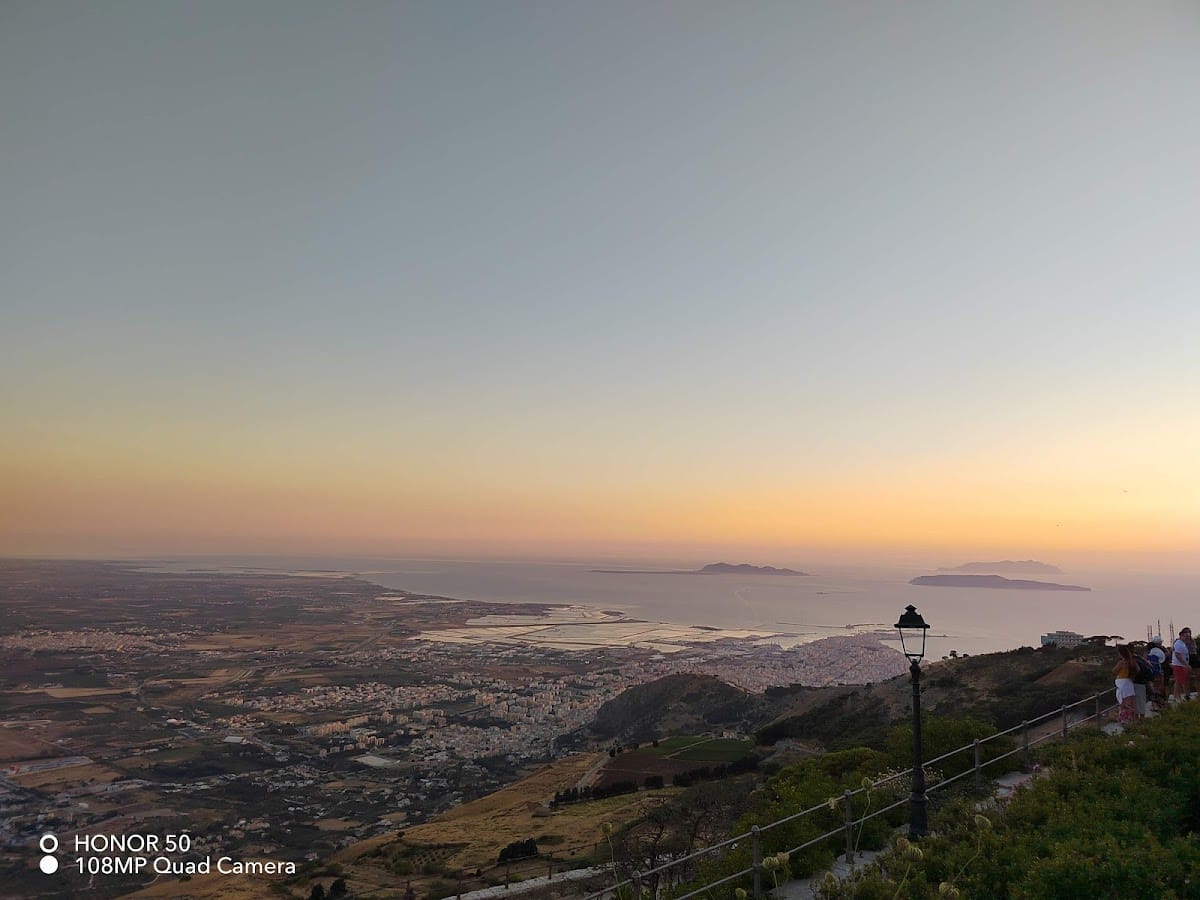
Near the western entrance, visitors can find a small terrace for viewing the surrounding landscape. This terrace is equipped with stone benches carved directly into the wall and a central marble table, features that belong to the restoration work commissioned by Count Pepoli. From this vantage point, one can observe the Pepoli Turret, another construction associated with his efforts to enhance the site.
The entrance gate within the curtain wall is capped by an arch displaying the Spanish Habsburg coat of arms, a heraldic emblem confirming the involvement of Spanish authorities in later construction or restoration phases.
Surrounding the towers, the Balio Gardens reflect a 19th-century English landscaping style. These gardens were conceived during the restoration period to provide a public green space around the historic structures and remain cared for by the municipality, blending the site’s medieval origins with later aesthetic developments.
Nearby sites