Bakuya Kofun: A Late Kofun-Period Burial Mound in Japan
Site at a Glance
- Rating
- 3.9
- Popularity
- Very Low
- Country
- Japan
- Primary era
- Medieval
- External website
- Open
- Eras represented
- Medieval
- Civilizations
- Unclassified
- Site type
- Burial
- Remains
- Burial Mound
On this page10 sections
History
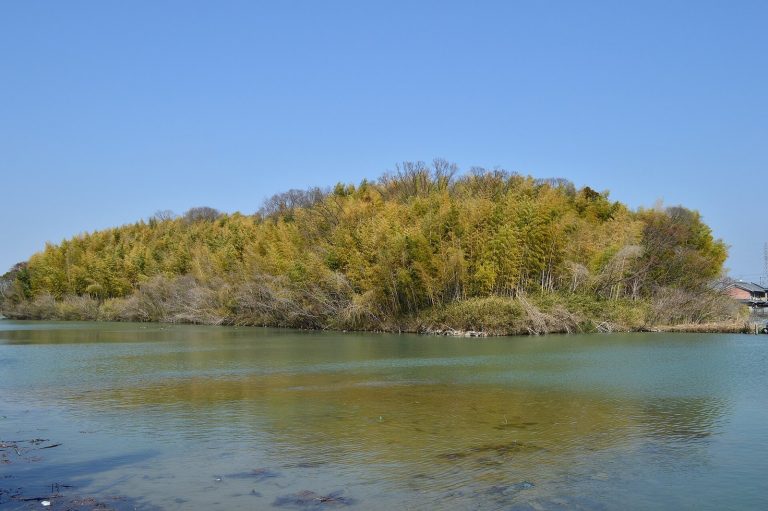
Bakuya Kofun is a late sixth-century Japanese burial mound in Koryo, Nara Prefecture, Japan, constructed during the latter part of the Kofun period. It stands in the central group of the Umami Kofun cluster in the Umami Hills of western Nara Prefecture. Its large mound, exceptional stone chamber, and rich burial assemblage indicate a burial of notable status for its period.
Construction and burial
The mound was built around the end of the sixth century, probably between the latter half and the close of that century. Bakuya Kofun is one of the few mounds in the Umami Kofun cluster with a horizontal-entry stone chamber, meaning that the burial room is reached through a passage from outside the mound. Its chamber design has been compared with that of Akasaka-Tennozan Kofun in Sakurai. Because Akasaka-Tennozan is strongly regarded as the tomb of Emperor Sushun, one interpretation suggests that a group of stonemasons connected with the imperial family constructed Bakuya Kofun.
The person buried at Bakuya Kofun is unknown. A prominent theory identifies the occupant as Prince Osasakahikohito, the eldest son of Emperor Bidatsu, a sixth-century emperor of Japan. The proposed connection rests on the mound’s size, its unusually large stone chamber, the quantity of grave goods, its date, and its location, but the evidence is not conclusive.
The proposed identity of the occupant
Prince Osasakahikohito was regarded as a leading possible successor to the throne. He was supported by opponents of the Soga clan, including Mononobe no Moriya, a powerful court leader. The prince later disappeared from the historical record, and one tradition says that Soga no Umako, a leading Soga statesman, had him assassinated.
The Engishiki names the distant tomb of Prince Osasakahikohito as the Nariai Tomb in Hirose District of Yamato Province. It describes a designated area measuring 15 by 20 cho, a historical Japanese unit used in describing the tomb’s allotted ground, and assigns five households to its maintenance. The Imperial Household Agency, the Japanese institution responsible for the imperial family and imperial mausolea, has not officially identified a tomb for the prince. Niki-yama Kofun, also called the Miyoshi Imperial Tomb Reference Site, was once considered a candidate, but its early fifth-century date places it before the prince’s lifetime. The proposed identification of Bakuya Kofun therefore remains unconfirmed.
Excavation and preservation
Bakuya Kofun was excavated in fiscal year 1983 as part of preparations for the historic-site area, and the results were reported in 1987. More than 20,000 burial items were recovered despite extensive robbery of the burial chamber. The mound was designated a National Historic Site on June 19, 1957, and has been conserved as Bakuya Historical Site Park.
Remains
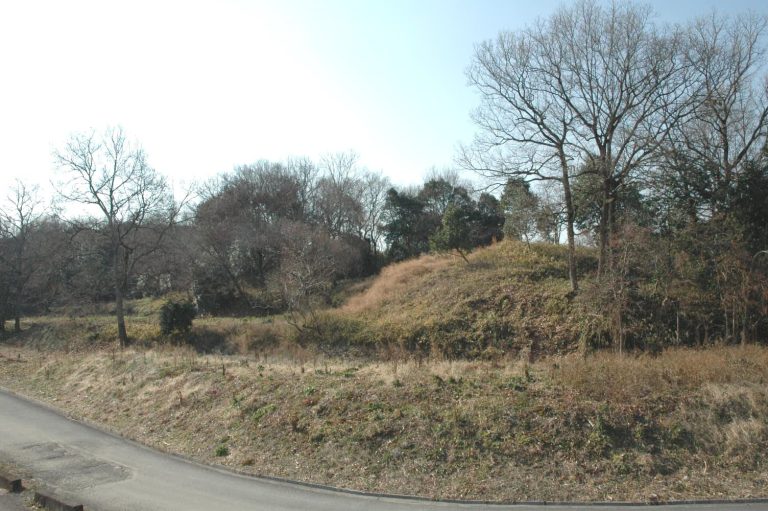
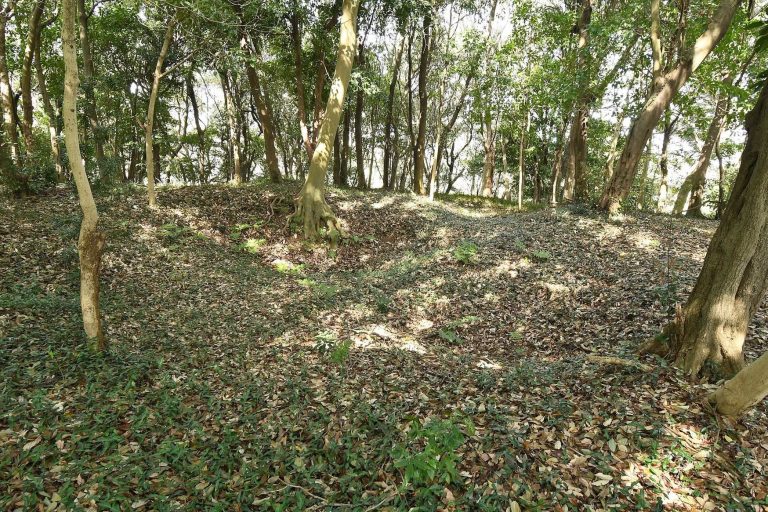
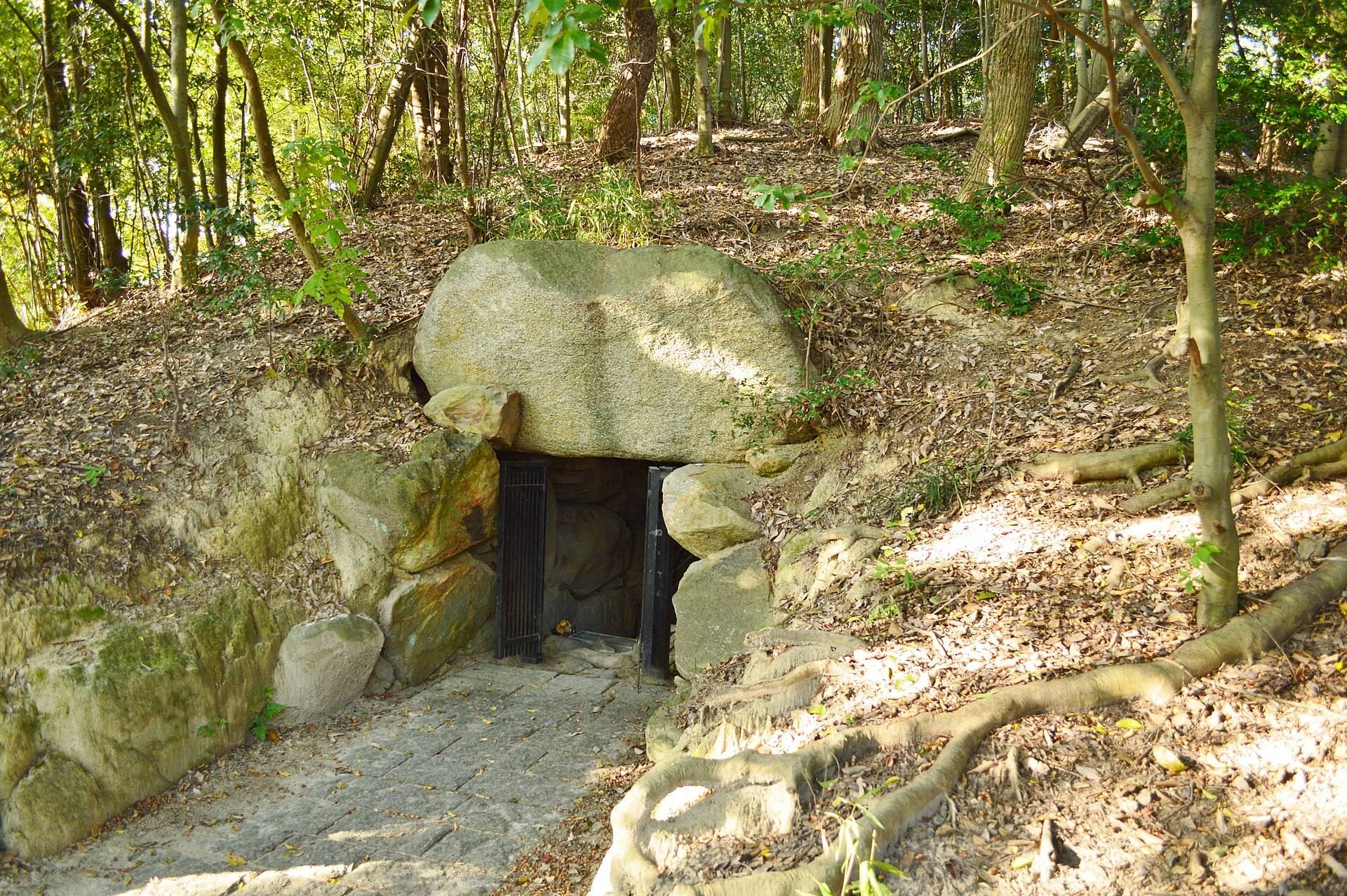
Bakuya Kofun is a large circular mound built against the end of a small ridge in the central Umami Hills. It measures approximately 48 to 60 meters across and stands about 13 meters high. The mound has three tiers, but its position against the hillside means that only the upper tier forms a complete circle. Fragments of haniwa, clay objects placed on or around ancient Japanese burial mounds, were found on the exterior. None remained in its original position, and the fragments are thought to have been taken from other mounds to dress the surface.
Stone burial facility
Stone chamber
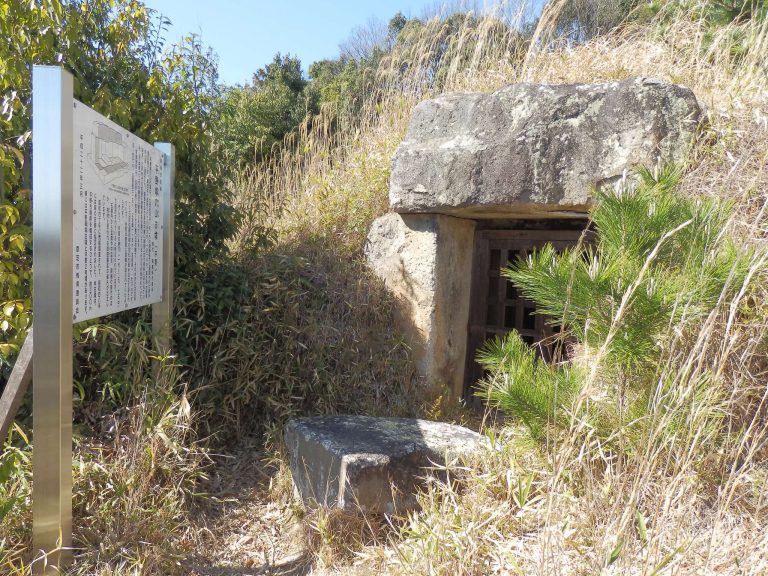
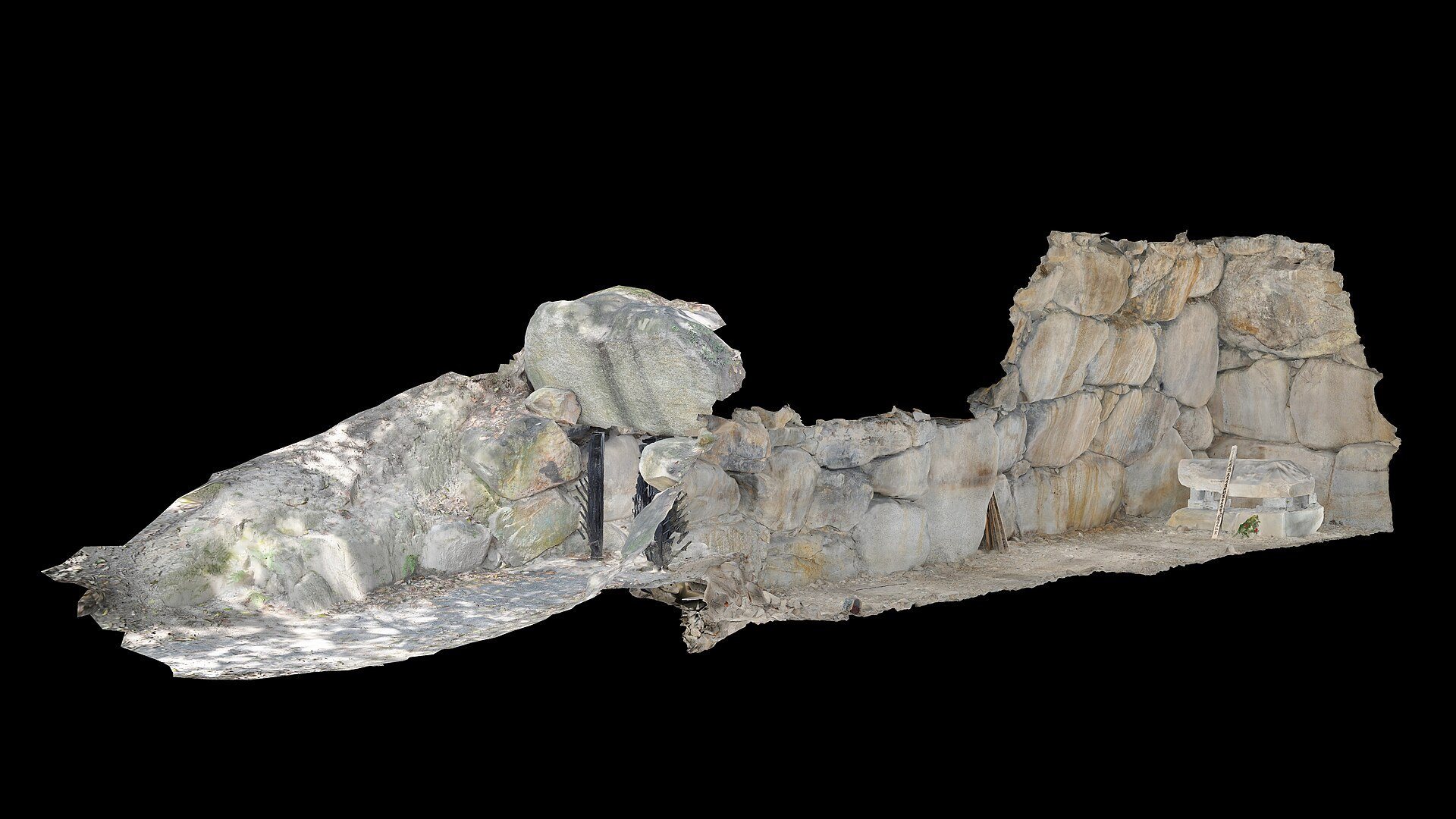
The burial facility is a two-sided horizontal-entry stone chamber set into the mound’s second tier, with its entrance facing south. A two-sided chamber has projecting side walls on both sides of the entrance. The entire chamber and passage measure 17.1 meters, making it one of the largest stone chambers in Nara Prefecture. Enormous granite blocks form the structure, although the clay hills around Umami do not naturally produce this stone. The largest block weighs nearly 60 tons, described as the second-largest stone used in a Nara burial chamber after the capstone of Ishibutai Kofun.
The chamber measures 6.73 meters along its left side wall and 6.70 meters along its right. Its width is 3.3 meters at the rear wall and 3.2 meters at the entrance, while its height reaches 4.5 meters. The lower sections measure 0.70 meters on the left and 0.74 meters on the right. The side walls lean inward toward the top, and clay fills the gaps between the stones. A gravel floor covers a drainage channel that runs around the chamber walls, joins near the entrance, and continues through the passage to the exterior. Blocking stones remain at the entrance.
Entrance passage
The passage measures 10.24 meters along its left side wall and 10.70 meters along its right. It is 1.8 meters wide at the inner entrance and 1.77 meters wide at the outer entrance. Its height is 2 meters at the inner entrance and 2.2 meters at the outer entrance. The drainage channel continues beneath the passage, carrying water from around the burial chamber toward the outside of the mound.
Stone coffins
Two house-shaped stone coffins were placed inside the chamber. The rear coffin is a hollowed-out, single-block coffin made from tuff, a relatively soft rock formed from consolidated volcanic ash. It was positioned perpendicular to the chamber’s main axis against the rear wall. Robbers removed the sides of the coffin body and destroyed much of its lid, including one-third of the lid and its rope-holding projections.
The front coffin was an assembled house-shaped coffin placed parallel to the chamber’s main axis in front of the rear coffin. Robbers destroyed it completely, leaving only fragments. The two coffins are thought to have been installed at the same time. Their surviving remains, together with the chamber and its entrance structures, are conserved within the historic-site park.
Burial assemblage
Excavation recovered grave goods around the coffins and in the passageway. The finds included gold rings, gilt-bronze gardenia-shaped beads, small glass beads, millet-shaped beads, and two sets of horse equipment. Horse-related objects included gilt-bronze-plated iron stirrups, a metal-rimmed fitting, a heart-shaped cheek plate, and apricot-leaf-shaped fittings.
Other objects comprised a silver-plated iron sword, nearly 400 iron arrowheads, a gilt-bronze-plated wooden container, and 58 pieces of Sue ware. This high-fired gray pottery was made with kiln technology introduced from the Korean Peninsula. Together with the associated objects, it supports a date between the second half and the end of the sixth century. Peaches found near the coffins, possibly originally placed on top of them, have prompted interpretations of the chamber as a setting connected with ideas about the land of the dead. Containers concentrated in the passageway have likewise been interpreted as food for the dead, although their exact function is uncertain.