Hirose Shrine: A Shinto Shrine of Water Worship in Nara, Japan
Site at a Glance
- Rating
- 3.8
- Popularity
- Very Low
- Country
- Japan
- Primary era
- Early Modern
- External website
- Open
- Eras represented
- Early Modern, Modern
- Civilizations
- Japanese, Tokugawa
- Site type
- Religious
- Remains
- Sanctuary
On this page13 sections
History
Hirose Shrine is a Shinto shrine in Japan, located in Kawai, Nara Prefecture, at the confluence of the Yamato, Takada, Soga, and Asuka rivers. Its foundation is traditionally attributed to the ninth year of Emperor Sujin’s reign, and its setting has long supported worship connected with water.
Foundation and Water Worship
According to shrine tradition, the village head Hirose no Omi Fujitoki received a divine revelation. A marsh called Mizuashi Pond then became dry land overnight and produced numerous tachibana trees. A shrine was established at the site, where the deity was enshrined as Omiketsu-no-Kami.
Hirose’s water deity was traditionally paired with the wind deity of Tatsuta Shrine. The Nihon Shoki states that the Omimi deity was worshipped at the river bend at Hirose and the wind deity at Tatsuta on April 10, 675. This observance is regarded as the origin of the Oimi Festival, which is held in April and July.
Court Recognition and Medieval Power
The tenth-century Engishiki, a compilation of court regulations and ritual procedures, lists Hirose as a Myojin-taisha of Yamato Province. This category identified especially revered shrines that received state ritual recognition. Hirose received imperial offerings during the court’s Tsukinami and Niiname rituals and later became one of the Twenty-Two Shrines, a medieval group of major shrines receiving direct attention from the imperial court.
The principal deity received successive court ranks. These included Junior Fifth Rank, Lower Grade, in 822; Junior Fifth Rank, Upper Grade, in 850; Junior Fourth Rank, Lower Grade, and Junior Third Rank in 852; Senior Third Rank in 859; and Senior First Rank in 1081.
During the Muromachi period, a major medieval era lasting from the fourteenth to the sixteenth century, the shrine possessed more than 500 cho of shrine land. In 1506, Akazawa Tomotsune, a retainer of Hosokawa Masamoto, burned the shrine. The fire destroyed its treasures and historical documents, while its lands were subsequently usurped. During the Tensho era, a late-sixteenth-century period of the Azuchi-Momoyama era, Toyotomi Hidenaga confiscated the shrine estates.
Deities and Ritual Traditions
Hirose Shrine venerates Wakaukanome-no-Mikoto as its principal kami, or sacred being, together with Kushitama-no-Mikoto and Honoikazuchi-no-Mikoto. Shrine tradition identifies Wakaukanome with Toyokehime-no-Okami of the Outer Shrine at Ise Jingu and with Ukanomitama-no-Kami of Fushimi Inari Taisha. The same tradition associates the deity with the wind kami of Tatsuta.
Kushitama-no-Mikoto is identified by shrine tradition with Nigihayahi-no-Mikoto. The hereditary Higuchi priestly family is traditionally regarded as descended from the Mononobe lineage, which in turn claims descent from Nigihayahi. A subsidiary shrine dedicated to Nigihayahi is maintained at the Higuchi family estate outside the main precinct.
The February 11 Sunakake Festival, also called the rice-planting festival, derives from the water-inlet rite associated with the Oimi Festival. It is a ceremony for praying for rain. Sand represents rain, and ritual rice planting takes place before the worship hall. Participants then throw sand among worshippers and people dressed as field workers and oxen. Kawai designated the Sunakake Festival an intangible folk cultural property in 2009.
Modern Status
Hirose Shrine was classified as a Kanpei-taisha in 1871, a first-rank imperial shrine in Japan’s prewar state-sponsored shrine system. After the Second World War, it came to be called Hirose Taisha and was added to the Association of Shinto Shrines’ Beppyo Shrine category in 1948. It remains classified as a Myojin-taisha, one of the Twenty-Two Shrines, and a Beppyo Shrine.
Remains
Main Shrine Buildings
Principal Sanctuary
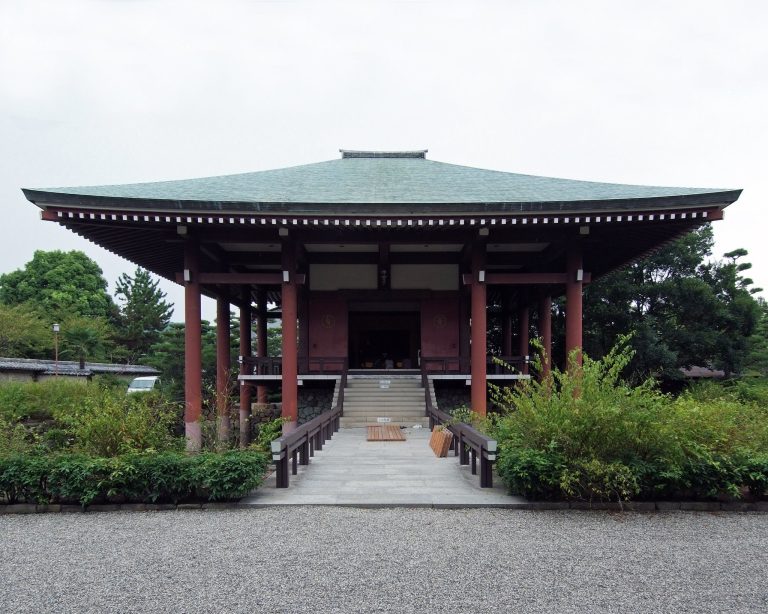
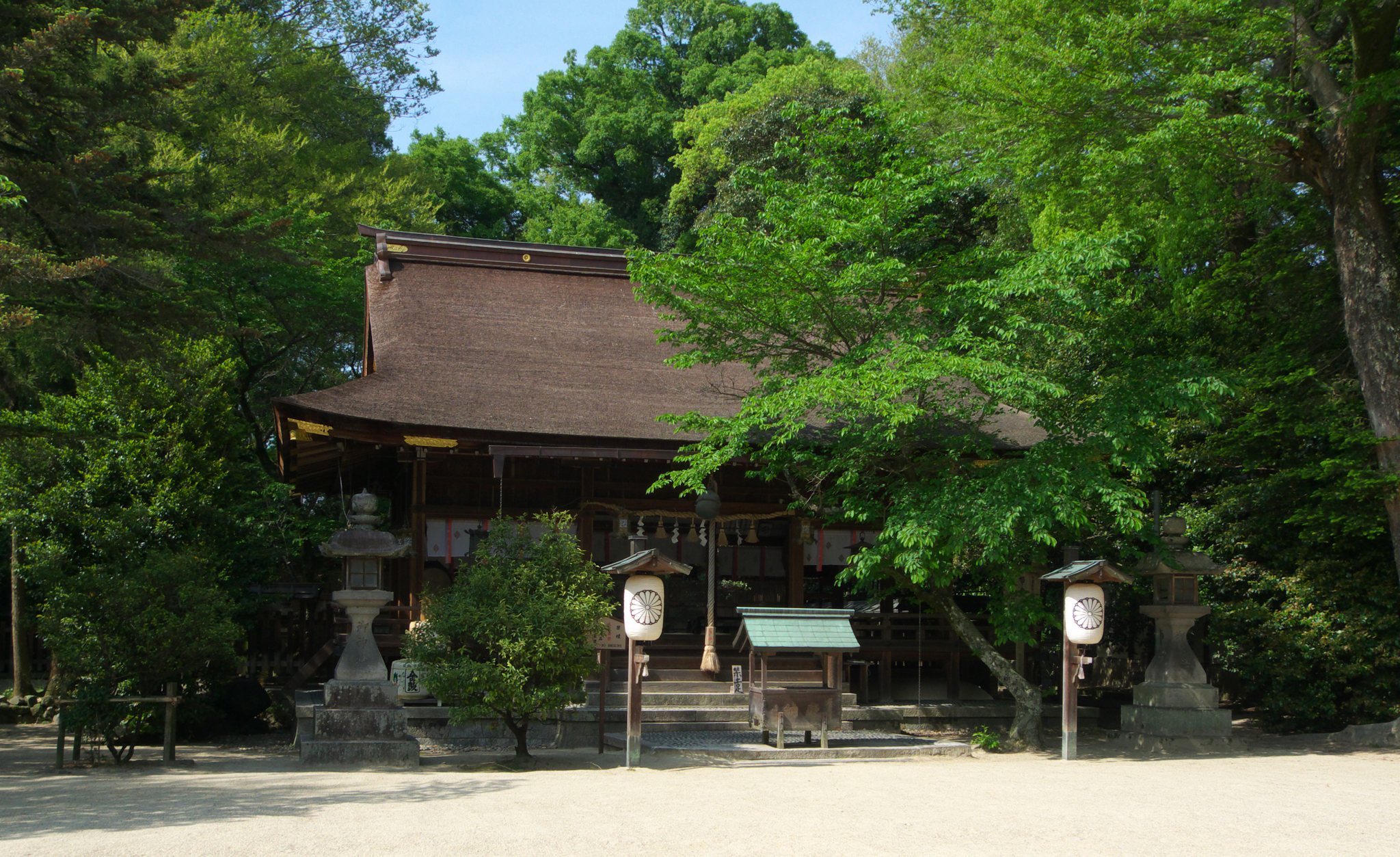
The principal sanctuary, or honden, follows the Kasuga-zukuri style. This form is characterized by a compact sanctuary with a projecting covered front porch and a gabled roof. The building was rebuilt in 1711 and was designated a tangible cultural property by Nara Prefecture in 1988.
Worship Hall
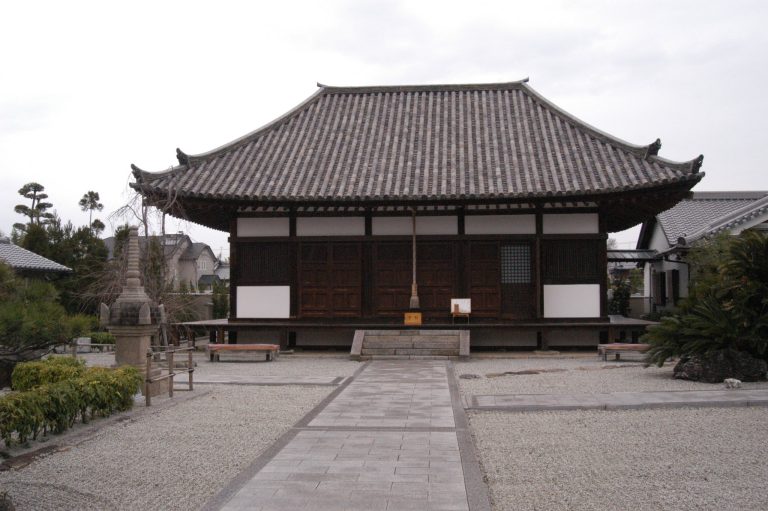
The worship hall, or haiden, was rebuilt during the Meiji period. The open space before the hall serves as the symbolic rice field during the Sunakake Festival, linking the present precinct layout with the ceremony’s ritual planting.
Other Precinct Buildings
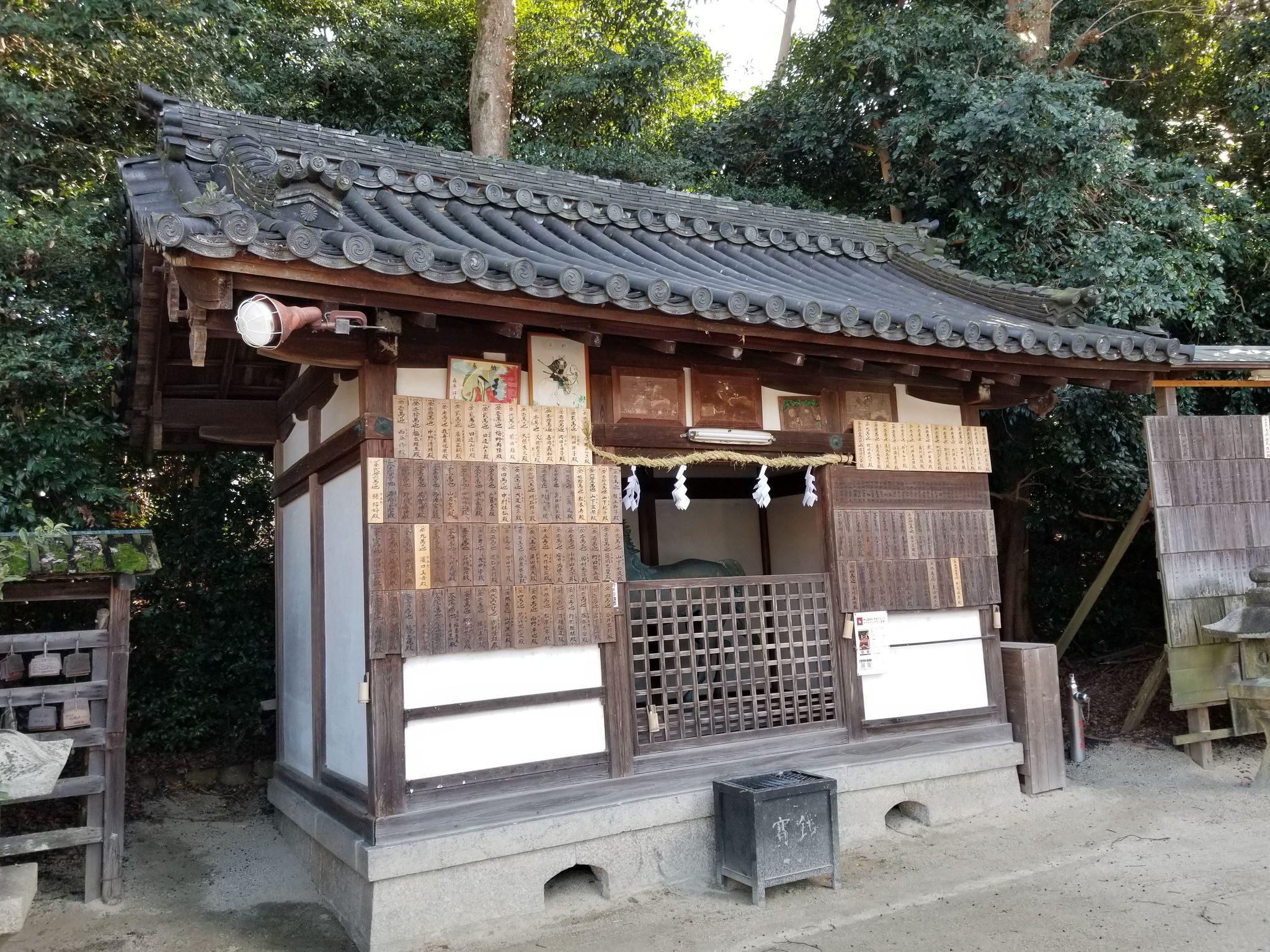
The precinct also includes a heiden, a hall used for presenting offerings, together with a shrine office and a stable for the sacred horse.
War Trophy and River Setting
Russian Field Gun
A Russian field gun and its shells, taken as war spoils during the Russo-Japanese War, were dedicated to the shrine and are displayed within the precincts.
River Confluence
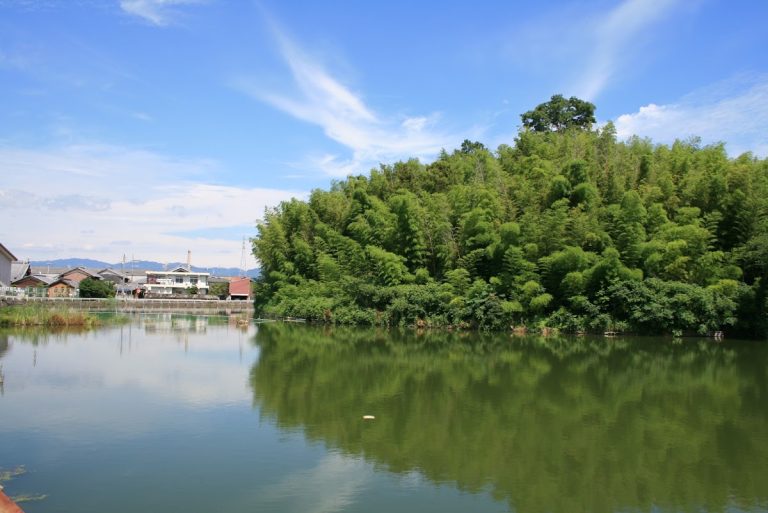
The shrine’s associated natural setting is the confluence of the Yamato, Takada, Soga, and Asuka rivers. This river landscape forms the physical setting for the shrine’s longstanding association with water worship.