Ushizuka Kofun (Mibu): A Late Kofun-Period Burial Mound in Japan
Site at a Glance
- Rating
- 4.2
- Popularity
- Very Low
- Country
- Japan
- Primary era
- Classical
- External website
- Open
- Eras represented
- Classical
- Civilizations
- Yamato
- Site type
- Burial
- Remains
- Burial Mound
On this page6 sections
History
Late Kofun-period setting
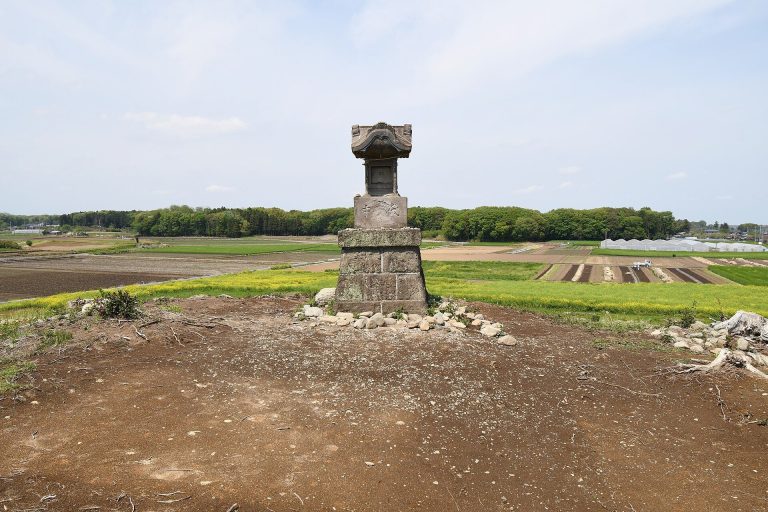
Ushizuka Kofun (Mibu) is a late Kofun-period burial mound in Japan, built around the end of the sixth century AD. The Kofun period was an era, broadly spanning the third to the seventh centuries AD, when ruling and elite families were buried in large mounds. Ushizuka Kofun forms part of the Shimotsuke Kofun Group in the Mibu area of Tochigi Prefecture and belongs to a late and terminal phase of the period that helps examine the political circumstances of ancient Shimotsuke.
Within the tumuli of the Kurokawa River valley around Mibu, Ushizuka Kofun is placed after Atagozuka Kofun and before Kurumazuka Kofun. During the late sixth century, Shimotsuke, the historical name for the area broadly corresponding to present-day Tochigi Prefecture, was governed by semi-independent local kings who owed allegiance to the centralized Yamato state. Ushizuka Kofun’s scale and its position near other large burial mounds and the site of Shimotsuke Kokubun-ji indicate the area’s importance during this period. Kokubun-ji were provincial Buddhist temples established by the ancient Japanese state to promote Buddhism and reinforce state administration.
Investigation and protection
Archaeological investigations took place in fiscal years 2015 and 2016, and their results were reported in 2018. The burial facility has not been investigated, so its associated grave goods remain unknown. It is tentatively thought to lie in front of the mound’s anterior section. The kofun site area was designated a National Historic Site of Japan on February 24, 1926.
Remains
Mound and moat
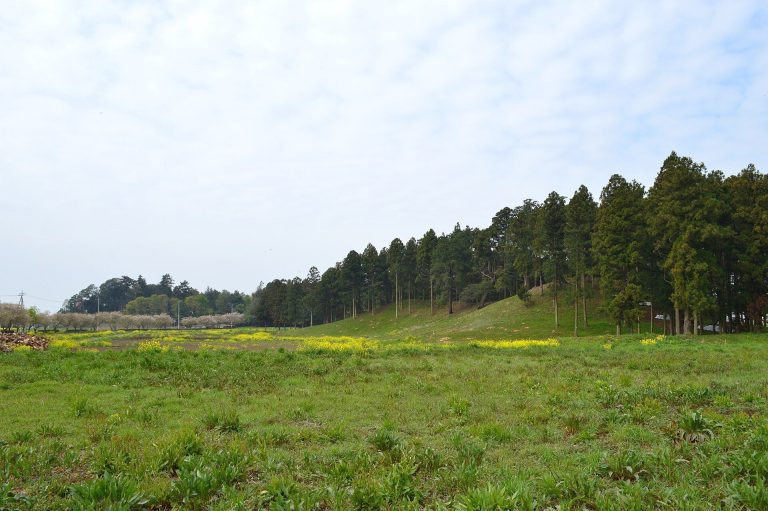
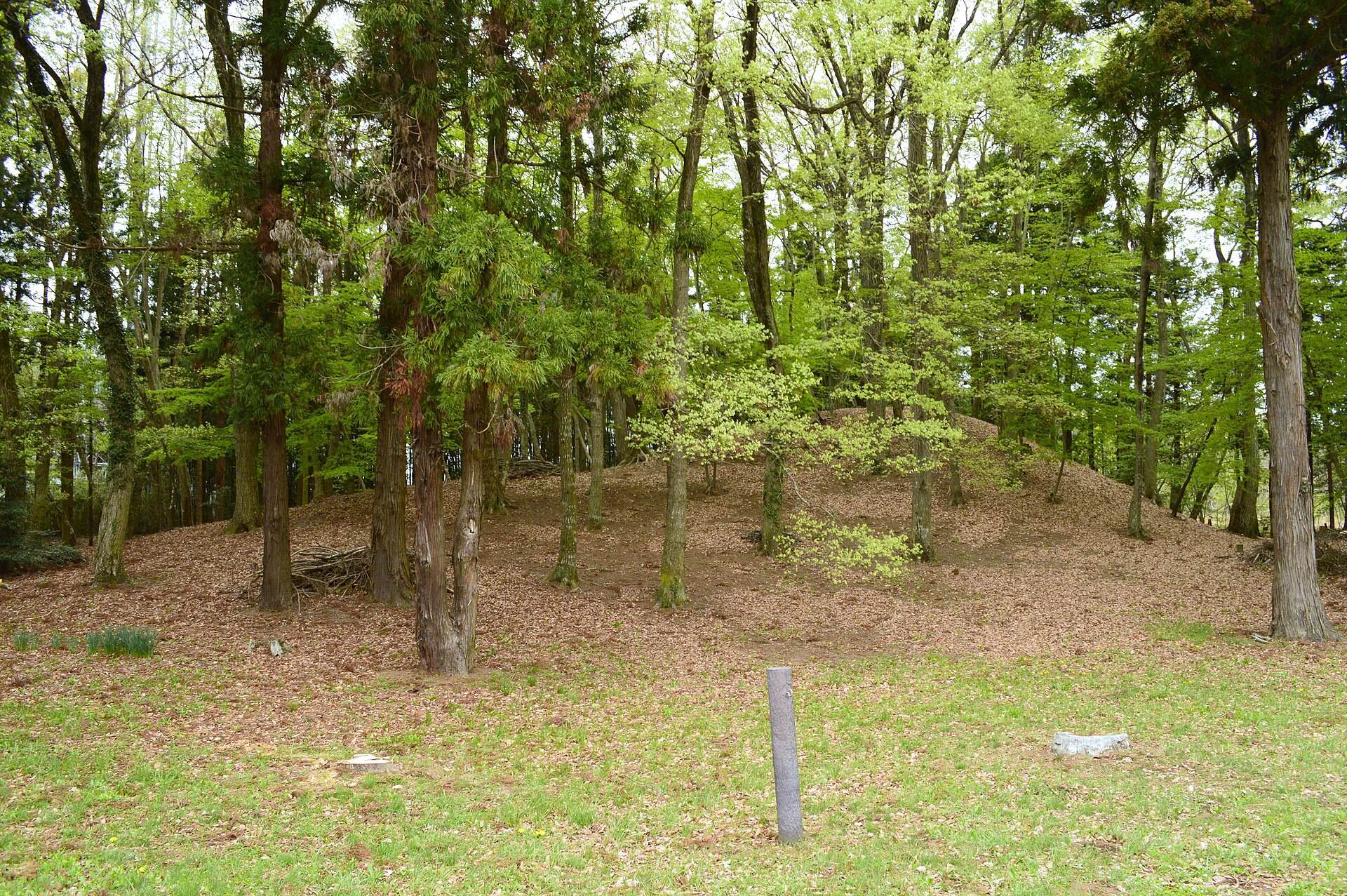
Ushizuka Kofun is a scallop-shaped mound, a form known as hotategai-gata kofun, with a short, broad rectangular front directed southward. Related to the keyhole-shaped mound, this plan gives the anterior section an unusually short and wide form. The mound is also described as a large circular mound with a short frontal projection, representing the regional Shimotsuke-type form. It has two construction tiers, of which the lower tier is a notably flat, platform-like base.
The mound measures 49.5 meters in overall length. Its basal platform is 46.5 meters long and consists of a circular platform 34.5 meters in diameter with a rectangular extension 25 meters wide. This platform rises five meters. Above it, the circular upper section is approximately 40 meters long and 27.6 meters in diameter, joined to the short rectangular extension.
A moat surrounds the mound. Builders first excavated the area shallowly and then deepened its central portion, creating a two-level excavation. The mound and moat together extend for approximately 70 meters across. The form of the mound, together with fragments of haniwa recovered nearby, supports its estimated date in the late sixth century. Haniwa are ceramic objects placed on or around burial mounds, sometimes shaped as people, animals, buildings, or ritual forms.
Landscape setting
The kofun stands on a plateau along the south, or left, bank of the Kurokawa River. Kurumazuka Kofun lies immediately to the east, while Atagozuka Kofun is approximately 450 meters to the south. These surviving spatial relationships place Ushizuka Kofun within a concentration of major burial mounds associated with the Mibu area.