Bagatti Valsecchi Museum: A Neo-Renaissance Historic House Museum in Milan


Site at a Glance
- Rating
- 4.7
- Popularity
- Medium
- Country
- Italy
- Primary era
- Modern
- External website
- Open
- Eras represented
- Modern
- Civilizations
- Italian
- Site type
- Domestic
- Remains
- Elite Residence
On this page9 sections
History
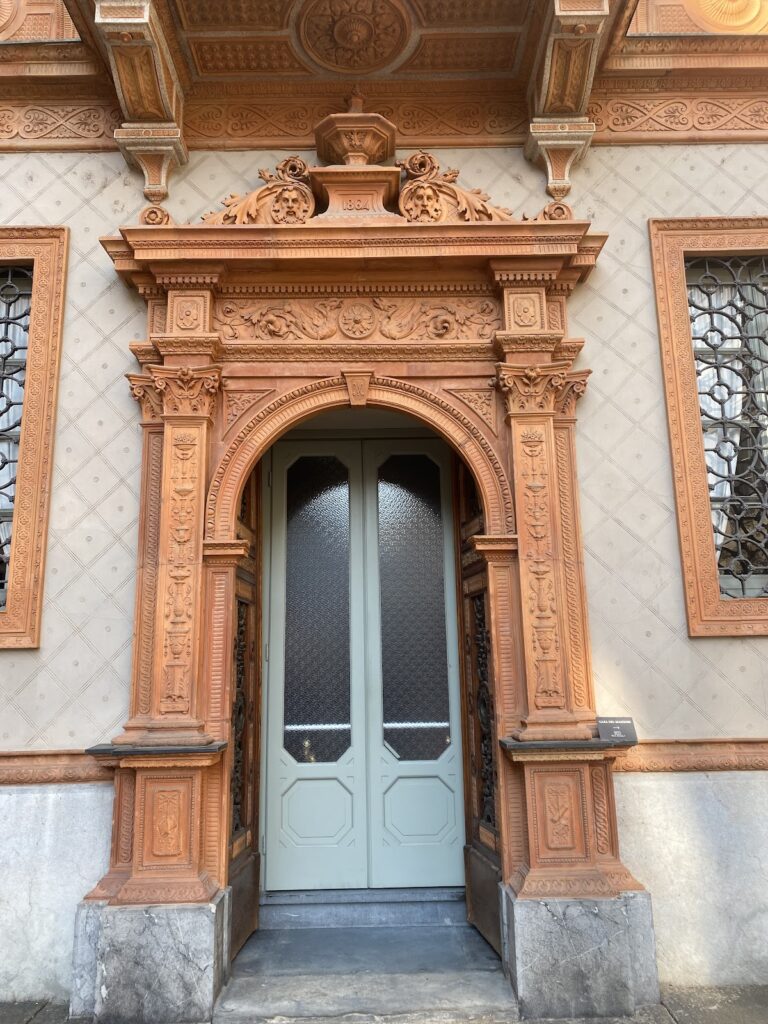
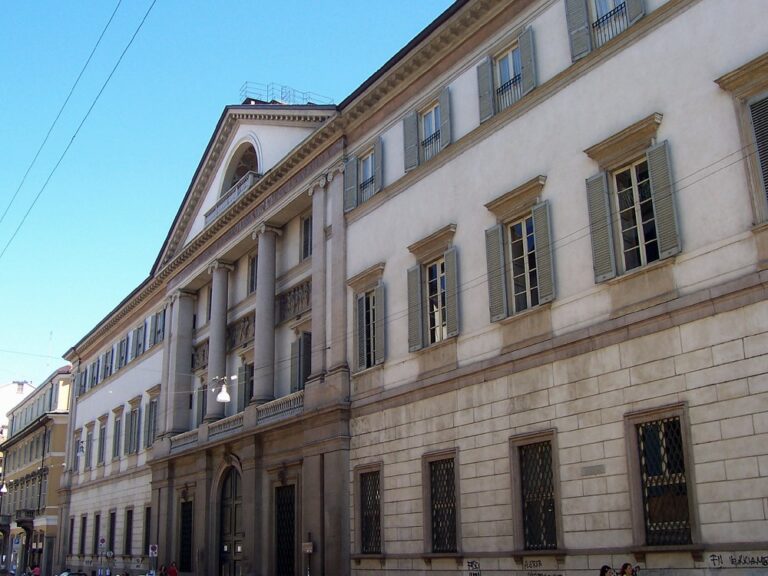
The Bagatti Valsecchi Museum is a historic house museum in Milan, Italy, occupying the nineteenth-century residence of the Bagatti Valsecchi family. Conceived by the brothers Fausto and Giuseppe Bagatti Valsecchi, the house was transformed from the 1880s into a Neo-Renaissance residence inspired by Lombard aristocratic palaces of the fifteenth and sixteenth centuries. Its architecture, decoration, furnishings, and works of art were planned as one historical environment rather than as unrelated elements.
Creation of the Neo-Renaissance residence
Fausto and Giuseppe came from Varedo and set out to create a home that would evoke an idealized sixteenth-century Lombard aristocratic residence. Their project deliberately pursued continuity with Lombard Renaissance architecture instead of combining several unrelated historical periods. They acquired paintings, sculptures, furniture, and applied-arts objects, chiefly from the fifteenth and sixteenth centuries, so that these works could be integrated into the rooms.
The transformation began around 1875, when their mother, Carolina Bagatti Valsecchi, started restoring the palace. The work eventually became a complete reconstruction of the residence. The brothers continued and expanded the remodelling, which extended between Via Gesù and Via Santo Spirito. The facade on Via Santo Spirito was inaugurated in 1883. By the end of the nineteenth century, contemporaries viewed the house as a model of aristocratic housing, and the critic Paravicini described it in 1885 as a completed example of an upper-class residence.
The brothers did not initially intend to create a museum. Their aim was to reconstruct a seigneurial residence of approximately the mid-sixteenth century, using objects of different types within a unified domestic setting. Some furnishings combined old fragments with newly made elements, while other Neo-Renaissance pieces were produced by artisans for the project. The collection also includes objects regarded as fakes, particularly among certain Venetian glass pieces.
A historical environment with modern technology
The residence combined Renaissance-inspired forms with conveniences associated with the late nineteenth century. Fausto and Giuseppe installed heating, running water, and electric lighting, incorporating modern technology into a house designed to recall an earlier period. This combination helped make the building an integrated artistic work, in which the rooms, fixed decoration, furniture, and collections were intended to operate together.
The collections were assembled through art dealers and antiquarians, including Guglielmo Alemansi in Venice. In parts of the interior, authentic materials replaced imitation oak-wood wallpaper, imitation-leather hangings, and imitation-marble dadoes. The resulting house expressed both a historical ideal and the choices of a wealthy nineteenth-century family constructing its own version of the Renaissance past.
Family ownership, wartime damage, and restoration
After Fausto died in 1914 and Giuseppe in 1934, ownership of the palace and collections passed to Fausto’s son Pasino and Pasino’s wife, Carolina Venini. During the Second World War, part of the collection was moved to their residences at Varedo and Cardeno for safety. Bombing damaged the palace, but restoration work made it habitable again in 1951.
Foundation and public museum
The Region of Lombardy acquired the palace during the 1970s. On 24 July 1974, the Bagatti Valsecchi Foundation was established and received the collection. The acquisition was facilitated by the relationship between Pier Fausto Bagatti Valsecchi and Piero Bassetti, then president of the region. The foundation began the first restoration, inventory, and cataloguing operations.
A first exhibition area opened on the palace’s ground floor in 1977, although the complete building was not yet open as a museum. During the 1980s, some rooms were used for inventory and cataloguing, while others housed offices of the Region of Lombardy. Rosanna Pavoni became museum director in 1984 and remained in the post until 2002.
In 1990, the foundation and the regional government agreed on a new museum plan. Twenty-five rooms opened to the public in 1994, the year in which the museum is recorded as having opened. The Association of Friends of the Bagatti Valsecchi Museum was created in 1996. A feasibility plan for restoration followed with regional support in 1998, together with a preliminary intervention plan prepared by restoration students at the Polytechnic University.
In the 2000s, the palace became part of Lombardy’s network of historic house museums. Since October 2008, it has also belonged to the Case Museo di Milano circuit. The Bagatti Valsecchi Foundation manages the museum, preserving the house and making the brothers’ Renaissance and Neo-Renaissance collections accessible. It supports research, cataloguing, museological work, and cultural interpretation. The family archive remains inside the palace and preserves material on the family, the house, its property and wealth, family activities, and individual members. The museum has Italian cultural-property protection.
Remains
The palace and its domestic layout
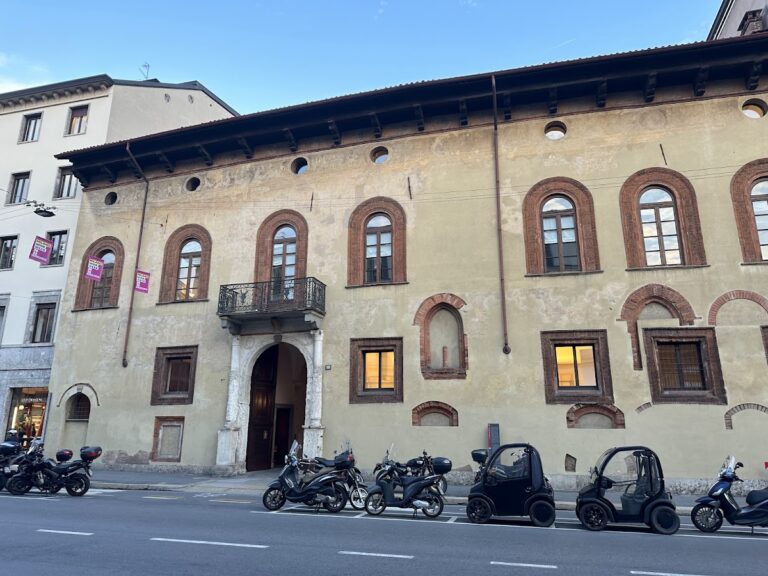
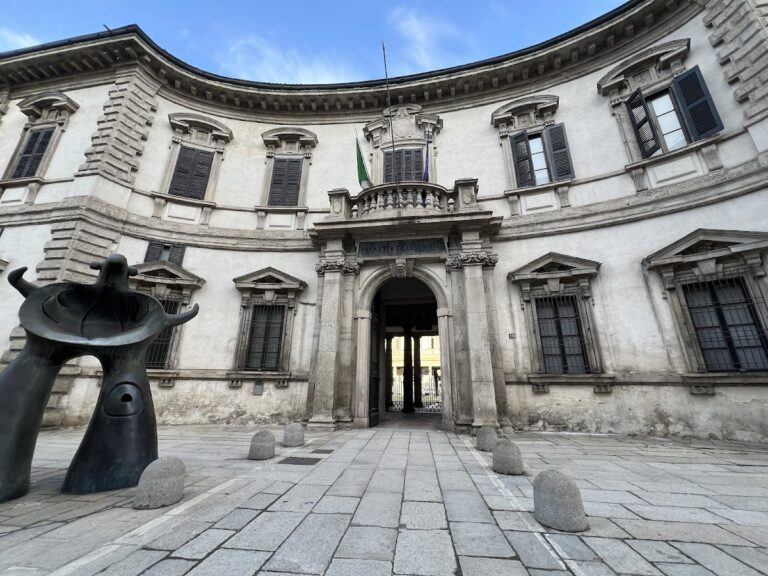
The museum occupies approximately 1,000 square metres within a Neo-Renaissance residence extending between Via Gesù and Via Santo Spirito. The palace was formed through numerous alterations and a major nineteenth-century remodelling, with the Via Santo Spirito facade completed in 1883. Its rooms were planned as parts of a unified historical environment, allowing architecture, fixed decoration, furnishings, and art to correspond with one another. The interiors preserve the arrangement and functions established for the Bagatti Valsecchi residence as far as later museum use permits.
The public route passes through the palace’s rooms, many of which retain names connected with their original domestic roles. These include Giuseppe and Carolina’s bedroom, known as the Red Room, and the dining room. The residence’s historical appearance is balanced by the surviving late-nineteenth-century installations of heating, running water, and electric lighting.
Paintings and sculpture
The collection contained approximately 1,491 objects in 2018. Its Renaissance works include Saint Justina by Giovanni Bellini, dating from around 1470. The tempera painting on panel measures 129 by 55 centimetres and is displayed in the Red Room. Giovanni Bellini was a major Venetian Renaissance painter, and the work forms part of the room’s carefully assembled historical interior.
In the Hall of the Fresco is The Mystic Marriage of Saint Catherine with Saints by Girolamo di Benvenuto, dating from the beginning of the sixteenth century. This tempera painting on panel measures 200 by 200 centimetres. The courtyard on Via Gesù contains the Madonna of Mercy, a marble work of the Lombard school from the second half of the fifteenth century, measuring 76 by 74.5 centimetres.
Other paintings include Portrait of Lorenzo Giustiniani by Gentile Bellini, from the second half of the fifteenth century. Executed in tempera and oil on panel, it measures 40 by 29 centimetres. Saint Francis and Mary Magdalene by Lorenzo di Niccolo is dated 1409 and is a 136 by 70 centimetre tempera painting on panel. The collection also includes Madonna of Mercy between Saints Peter and Mary Magdalene, Musical Angels, and Donors, attributed to Antonio Boselli and dated 1495. The fresco measures 233 by 355 centimetres.
Decorative arts and scientific objects
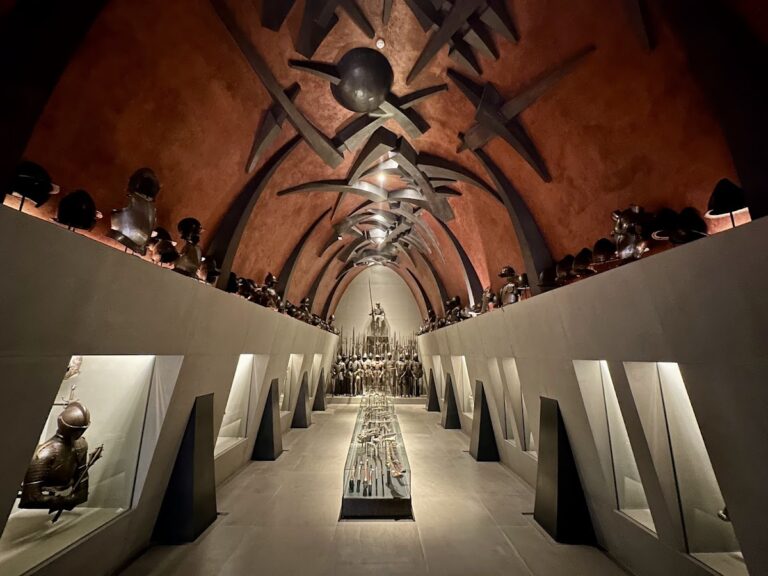
The holdings extend beyond paintings and sculpture. They include furniture, musical instruments, scientific instruments, stained glass, ivories, glasswork, ceramics, textiles, metalwork, jewellery and other goldsmiths’ work, leather objects, clocks, weapons, and an armoury. The combination of Renaissance works, nineteenth-century Neo-Renaissance imitations, reconstructed furnishings, and newly made pieces reflects the house’s purpose as a complete historical interior.
The library contains the brothers’ documentary and research collection. Its 480 titles include treatises by Vitruvius, an ancient Roman architect and architectural theorist, and Sebastiano Serlio, a sixteenth-century Italian architect and architectural writer. It also holds Cesare Vecellio’s Habiti antichi e moderni, writings by Camille Boito and Alfredo Melani, Italian and foreign periodicals, and exhibition and museum catalogues, including catalogues from the Louvre and the museum of Brescia.
Among the scientific objects is an eighteenth-century microscope made by an English manufacturer. It stands 16 centimetres high and combines ivory, fish skin, glass, and cardboard. Located in the library, it represents the range of objects incorporated into the residence alongside artworks, furnishings, and books.
Nearby sites