Awaji Kokubun-ji Temple: Successor to Awaji Province’s Provincial Monastery

Site at a Glance
- Rating
- 4
- Popularity
- Very Low
- Country
- Japan
- Primary era
- Medieval
- External website
- Open
- Eras represented
- Medieval, Early Modern
- Civilizations
- Unclassified
- Site type
- Religious
- Remains
- Monastery
On this page9 sections
History
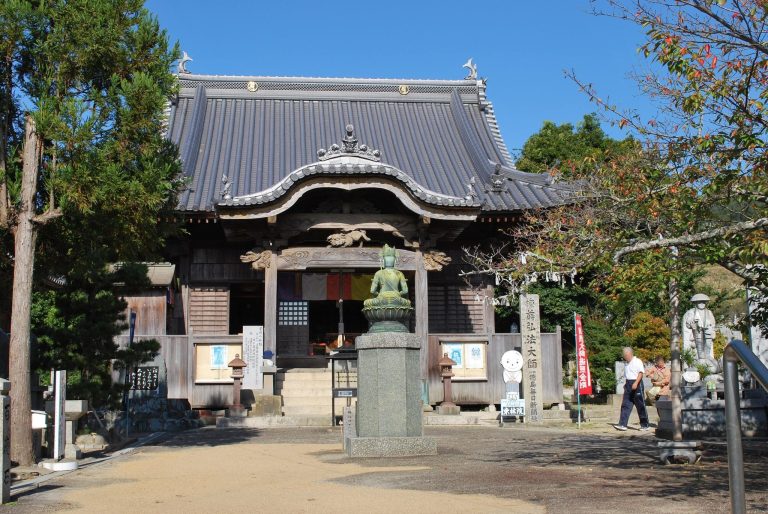
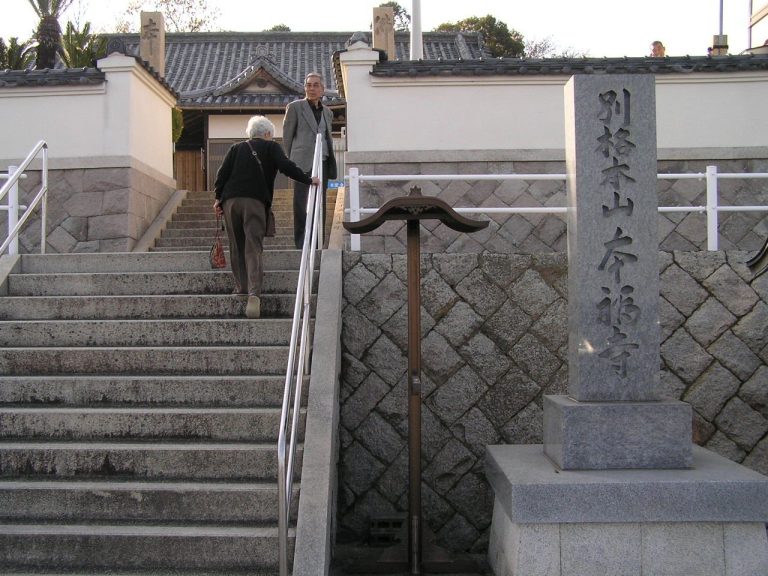
Awaji Kokubun-ji is a Buddhist temple in Minamiawaji, Japan, and the successor to the provincial monastery established in the latter part of the Nara period under Japan’s state-supported Buddhist system. The monastery belonged to the network of kokubunji, provincial Buddhist institutions promoted by Emperor Shōmu, and the present Ritsu-sect temple retains Shaka Nyōrai, the Japanese name for Shakyamuni Buddha, as its principal deity.
Foundation in the Nara period
The exact foundation date is unknown. Roof tiles place the monastery’s establishment after an order issued in 756 that urged completion of the provincial monasteries. A story in the Nihon Ryōiki, a collection of Buddhist tales, indicates that Awaji Kokubun-ji had been completed by 775. The ancient monastery stood in southern Awaji Island near the presumed location of the provincial capital, the province’s second-ranking shrine, and an ancient station. Together, these institutions made the surrounding area a long-established political and cultural center.
Awaji Kokubun-ji appears in records from the Heian period. The Engishiki, completed in 927, assigned the provincial monastery an allowance of 5,000 bundles of rice. A document from 955 concerning the replacement of a deceased monk places the institution under the authority of the provincial government. The associated provincial nunnery was a separate institution, and its location remains uncertain. It is thought to have stood near an Inari shrine in Yagi Shinjo, north of the monastery, but this identification has not been established.
Decline and medieval revival
By the early Kamakura period, the monastery appears to have lost much of its earlier position. An entry from 1190 in the Azuma Kagami links “Kokubunji” with undeveloped land subject to obligations to Ise Grand Shrine. This suggests that the area had become part of a shōen, a privately controlled landed estate outside the direct provincial administration, while the temple itself had declined.
The monastery had largely declined further by the Muromachi period. Its principal image was made in 1340, and the institution was revived in 1525 by Shunsen, an itinerant monk. Warfare during the Tenshō era, from 1573 to 1592, then brought destruction by fire.
Early modern reconstruction
Shōun revived the temple again in 1665. The rebuilding included the Main Hall, residential quarters for the monastic community, the Dainichi Hall, the Bell Tower, and the Rakan Hall. A Dainichi Hall is dedicated to Dainichi, the Buddha associated with Mahāvairocana and esoteric Buddhist worship, while a Rakan Hall is devoted to images of spiritually advanced Buddhist disciples. In 1666, Awaji Kokubun-ji became a subsidiary temple of Tōshōdai-ji in Nara, a major institution of the Ritsu tradition, which emphasizes monastic discipline and formal ordination precepts.
Archaeological investigation
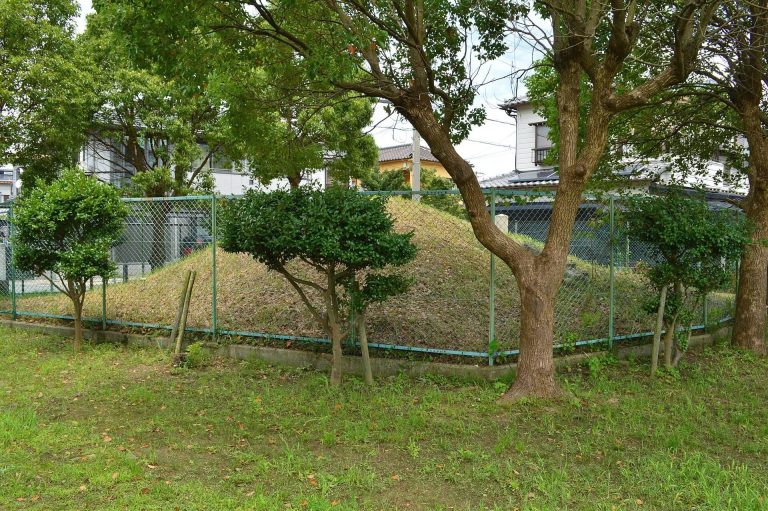
The ancient tower foundations received designation as a National Historic Site on June 9, 1951. Excavations followed in 1967, 1981, 1984 to 1988, and 2002 to 2003. The later investigations also examined the site of the temple’s roof-tile kiln. These studies have identified important parts of the ancient monastery, although its detailed arrangement remains unresolved.
Remains
The temple and the ancient monastery occupy a river terrace on the right bank of the middle reaches of the Mihara River. The ancient precinct covered approximately 170 meters from east to west and 210 meters from north to south. An earthen boundary wall and a ditch about 2 meters wide enclosed the area. Foundations of the Main Hall and pagoda survive within this broad precinct, while the relationship between the excavated features and the complete monastery plan remains under study.
Main Hall and pagoda foundations
The foundation platform of the ancient Main Hall measures approximately 13 to 14 meters on each side and overlaps the present Dainichi Hall. One proposed interpretation gives the monastery a layout similar to that of Kii Kokubun-ji, although the full arrangement has not been resolved. The pagoda is represented by five foundation stones, including four cornerstones and a central stone 1.36 meters in diameter. The central stone contains a recess for the building’s central pillar. None of the five stones remains in its original position.
Roof tiles and kiln site
Roof tiles from the monastery’s foundation period include eaves-end tiles of the Kōfuku-ji type. The molds used for these tiles were also used at Kii Kokubun-ji. Other combinations of concentric-ring and multiple-frame designs indicate influence from Awa Kokubun-ji. The tiles were produced at the Kokubu archaeological site west of the monastery.
Excavations at the Kokubu site in 2002 and 2003 uncovered two flat kilns. Their firing floors were used to produce the foundation-period tiles, connecting the manufacturing area with the construction of the ancient monastery.
Buddhist images
The present principal image is a wooden seated statue of Shaka Nyōrai made during the Nanbokuchō period. It is 294.8 centimeters high, and an ink inscription on its rear gives the date 1340. The statue represents the six-shaku image of Shaka traditionally associated with provincial monasteries. Awaji Kokubun-ji is identified as the provincial monastery where this type of image remains the principal image. The sculpture was designated a national Important Cultural Property in 1901.
A seated Hiten figure from the latter Heian period is 53.7 centimeters high and is designated a tangible cultural property by Hyogo Prefecture. Hiten are Buddhist celestial figures commonly shown in flight or in musical and dancing poses. The figure’s back is flat, indicating that it was made for attachment to a halo, wall, or similar surface. It crouches with the right knee raised and the left knee lowered. Both arms are missing, but the pose is understood as representing the playing of a musical instrument or a dance. Burn marks on the sculpture indicate that a building was destroyed by fire sometime after the latter Heian period.