Tōrin-in Temple: A Shingon Buddhist Temple in Naruto, Japan


Site at a Glance
- Rating
- 4.1
- Popularity
- Very Low
- Country
- Japan
- Primary era
- Modern
- External website
- Open
- Eras represented
- Modern
- Civilizations
- Japanese
- Site type
- Religious
- Remains
- Temple
On this page9 sections
History
Tōrin-in Temple is a Koyasan Shingon Buddhist temple in Naruto, Japan, traditionally founded in 733 during the Nara period by the priest Gyoki. Formally known as Hachiyozan Jinguji Tōrin-in, it has Yakushi Nyorai, the Buddha associated with healing, and Aizen Myoo, a deity linked with the transformation of desire into spiritual aspiration, as its principal images.
Foundation and religious importance
Tōrin-in was formerly the betto temple, or leading temple, of Otani Hachiman Shrine, now called Ushihiko Shrine. The name “Jinguji” referred to the principal temple among the many Buddhist compounds once connected with the shrine. Tōrin-in was counted among the eight leading temples of Awa Province and held sixteen subsidiary temples, giving it an important institutional position in the region.
Temple tradition places a visit by Kukai, also known as Kobo-Daishi and the founder of the Shingon school in Japan, in 808–809. He is said to have taught Shingon doctrines to local residents, encouraged farming, sowed rice and wheat with a hoe, and performed rites intended to avert disasters. These traditions gave rise to the names Tanemaki-Daishi and Tanemaki-Kobo-Daishi, meaning the Seed-Sowing Daishi.
Fire, pilgrimage, and later remembrance
A major fire around 1700 destroyed most of the temple complex, after which Tōrin-in was reduced in scale. Its religious connections continued through pilgrimage. The temple serves as the oku-no-in, or inner sanctuary, of Ryōzen-ji, the first temple of the Shikoku 88-temple pilgrimage. It is also the first temple of the Shinshikoku Mandala Reijō pilgrimage and the sixteenth temple of the Awa Hokurei Yakushi pilgrimage.
Tōrin-in has also remained connected with local memory and craft traditions. A grave long revered by people associated with Otani ware as that of the craft’s founder was identified by an Otani-ware researcher as the grave of another person. The identity of the person traditionally regarded as the founder and the individual associated with the grave therefore remains uncertain. Tōrin-in hosts the Otani Ware Kiln Festival, a ceramics market, on the second Saturday and Sunday of November each year.
An atomic-bomb flame was lit at Ryōzen-ji from 1990 until 2010 and has burned at Tōrin-in since August 6, 2012. The temple’s wooden seated statue of Miroku Bosatsu, the bodhisattva Maitreya who is believed to become the future Buddha, is designated an Important Cultural Property of Japan.
Remains
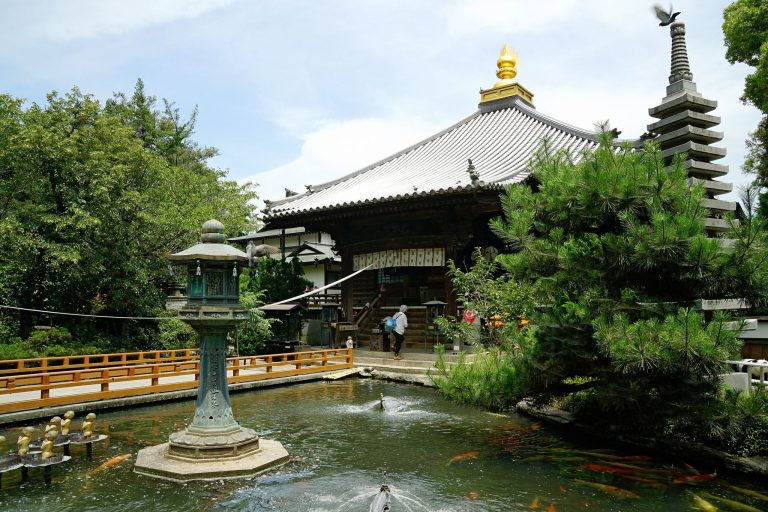
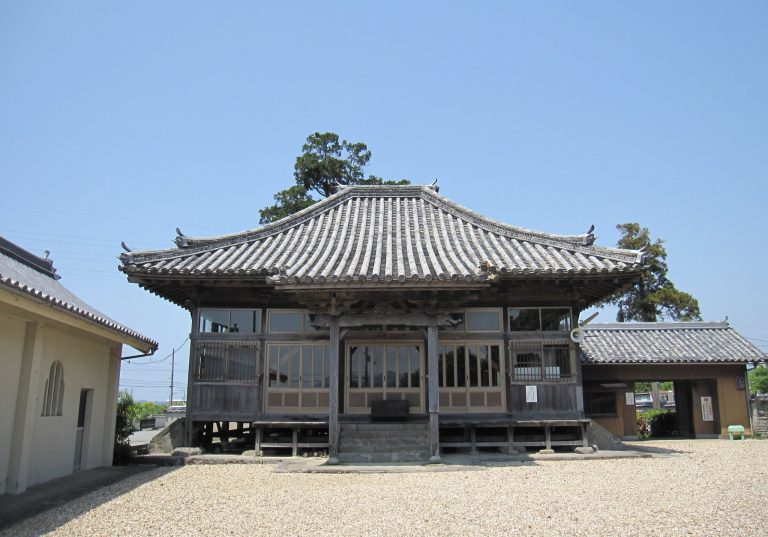
The surviving temple complex includes the main hall, Daishi Hall, Miroku Hall, the honbo or main residential compound, a bell tower, the Ana Kannon burial mound, and the installation known as the atomic-bomb flame. The parking area lies in front of the honbo, while the Daishi Hall stands farther to the right and the smaller main hall to its left.
Worship halls
Main hall
The main hall houses Yakushi Nyorai, the principal image associated with the temple’s pilgrimage role. It stands to the left of the Daishi Hall and is smaller than that building.
Daishi Hall
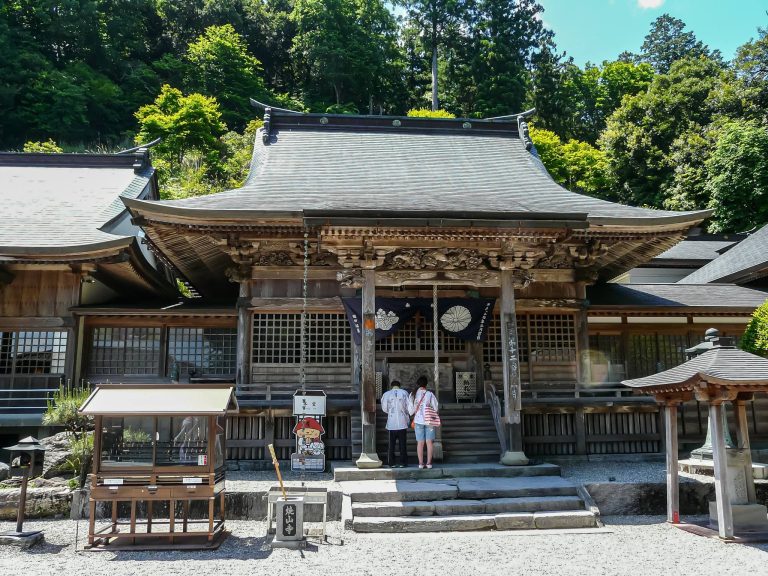
The Daishi Hall contains the image of Kukai as Tanemaki-Daishi. It is slightly larger than the main hall and forms the principal focus of worship at Tōrin-in. The statue itself is kept in a separate repository behind the hall.
Miroku Hall
Completed in February 2023, Miroku Hall enshrines a wooden seated statue of Miroku Bosatsu at its center. The statue dates from the Heian period and can be viewed from outside through glass. Ossuary spaces flank it, and its profile can also be seen through glass from within those spaces. The building received the Grand Prize of the sixth Shikoku Architecture Award in September 2024.
Residential compound and grounds
The honbo, newly constructed in 1984, houses Aizen Myoo as its principal image. The grounds also contain the Ana Kannon burial mound and a bell tower, while the atomic-bomb flame has been maintained at the temple since August 6, 2012.