Astley Hall: A Country House in Chorley, Lancashire
Site at a Glance
- Popularity
- High
- Country
- United Kingdom
- Primary era
- Early Modern
- Eras represented
- Early Modern, Modern
- Civilizations
- British, English
- Site type
- Domestic
- Remains
- Elite Residence
On this page11 sections
History
Astley Hall is a country house in Chorley, Lancashire, United Kingdom, first built by the Charnock family around 1575–1600. It combines Elizabethan and Jacobean styles, named for the reigns of Elizabeth I and James I. In 1922, the house and its contents were given to the town as a memorial to local men killed in the First World War; it now serves as a museum and art gallery.
Charnock and Brooke ownership
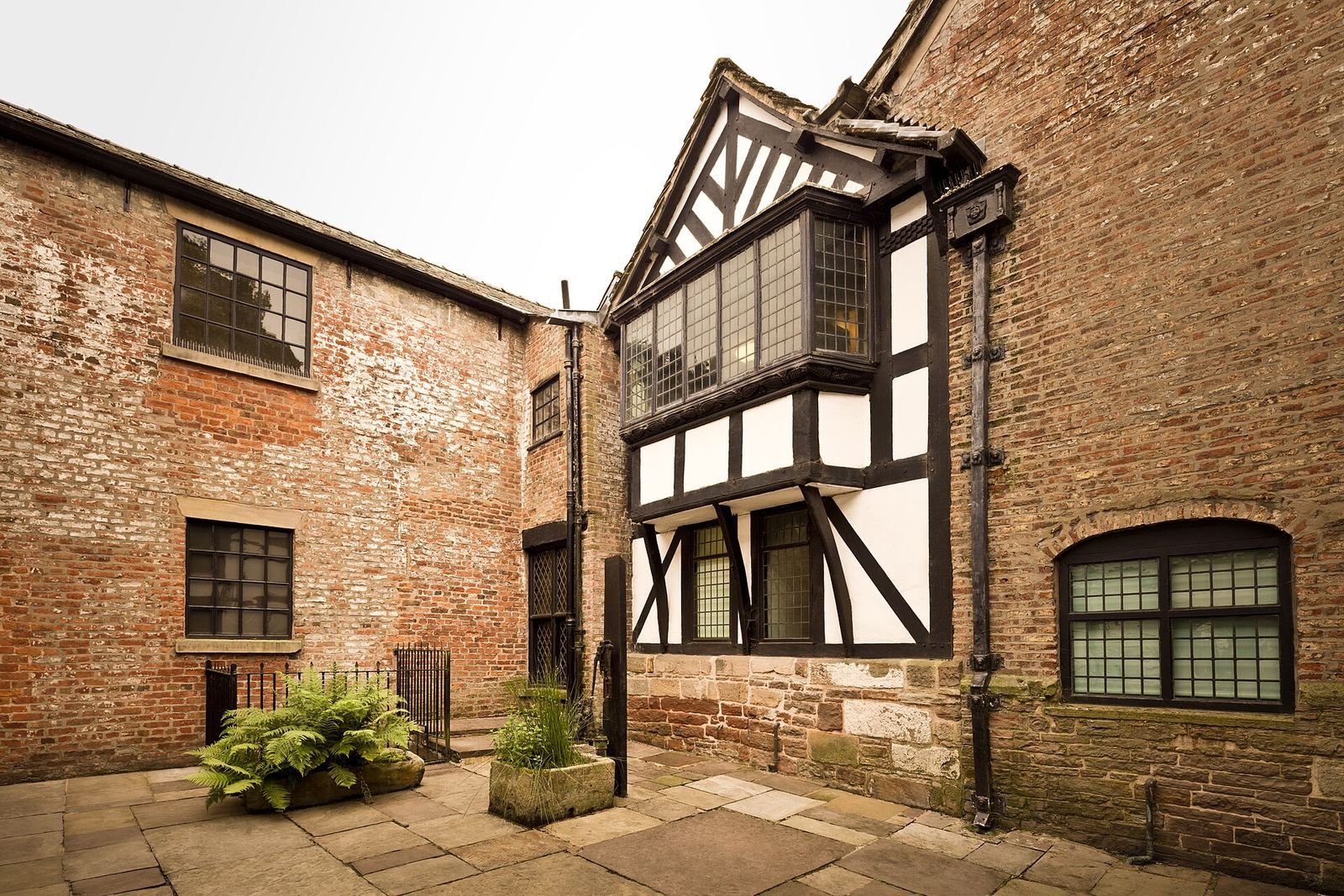
The Charnock family acquired the estate in the fifteenth century from the Knights of St John of Jerusalem, a religious order that combined monastic life with caring for pilgrims and military service. Their first house was timber-framed. In 1665, Margaret Charnock married Richard Brooke of Mere in Cheshire, son of Sir Peter Brooke. Margaret and Richard built the hall’s principal front range.
The recorded succession began with Robert Charnock and continued to Richard Charnock, a member of Parliament whose tenure ended in either 1648 or 1653. Margaret Charnock held the estate from 1648 or 1653 until 1715. Brooke owners followed: Peter (1715–1721), Thomas (1721–1734), Richard (1734–1748), another Peter (1748–1786), and a second Peter (1786–1787). Susannah Brooke held it from 1787, though the end of her tenure is uncertain.
Parker family and public ownership
After the Brooke male line ended, the hall passed to Robert Townley Parker of Cuerden. In 1825 he added the south wing and had the exterior coated with stucco, a plaster-like finish. The work was probably designed by Lewis Wyatt, an architect who had also worked for Parker at Cuerden Hall. The subsequent owners were Robert Townley Parker until 1879, Thomas Townley Parker from 1879 to 1906, and Reginald Arthur Tatton from 1906 to 1922.
Tatton gave the house and its contents to Chorley Corporation in 1922. The corporation was the town’s municipal governing authority. Chorley Council now owns and manages the hall. A local tradition says Oliver Cromwell stayed there during the Battle of Preston, an engagement in the seventeenth-century civil wars, and left his boots behind. The boots may not have been his, though their uncertain identity does not rule out a visit.
Restoration of the hall began in 2020 and was completed in 2022. The work removed the exterior coating and included repairs to the interior. Astley Hall was listed as a Grade I building on 21 December 1966, the highest listed-building category in England, reserved for buildings of exceptional interest. Astley Park was entered on the National Register of Historic Parks and Gardens on 1 April 1986, a register of historic parks and gardens considered to be of special interest.
Remains
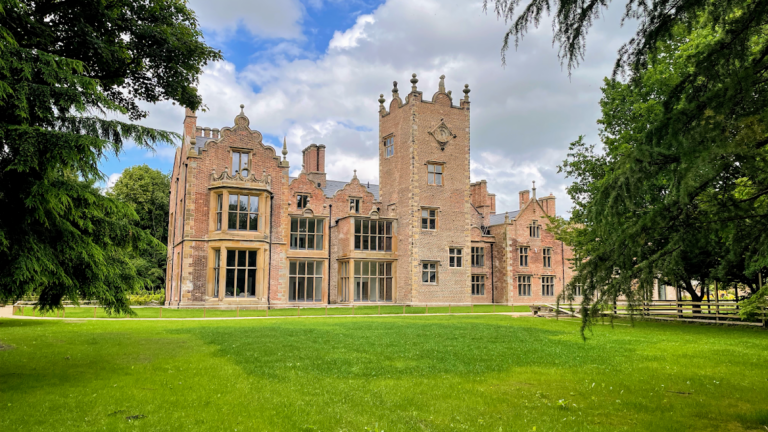
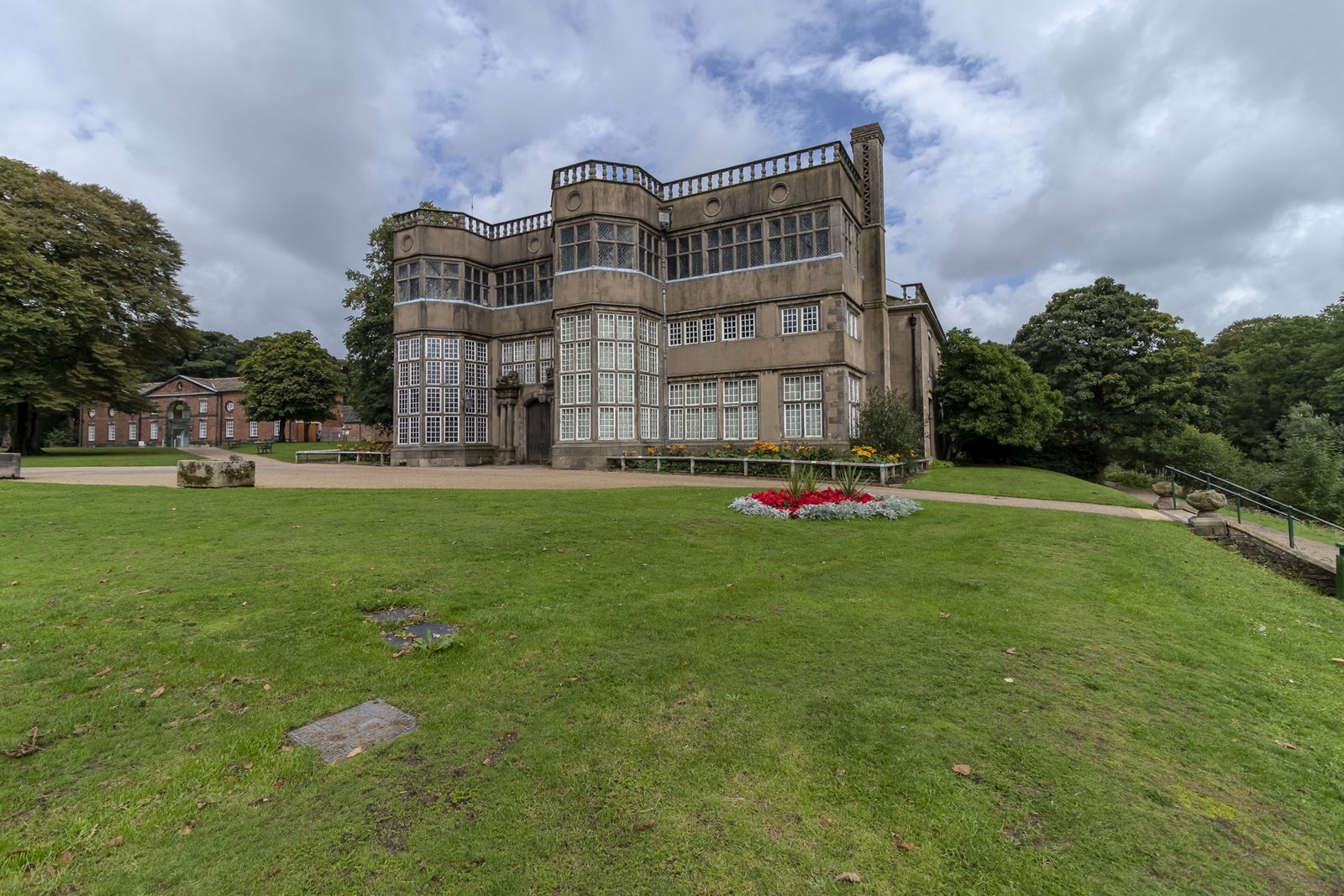
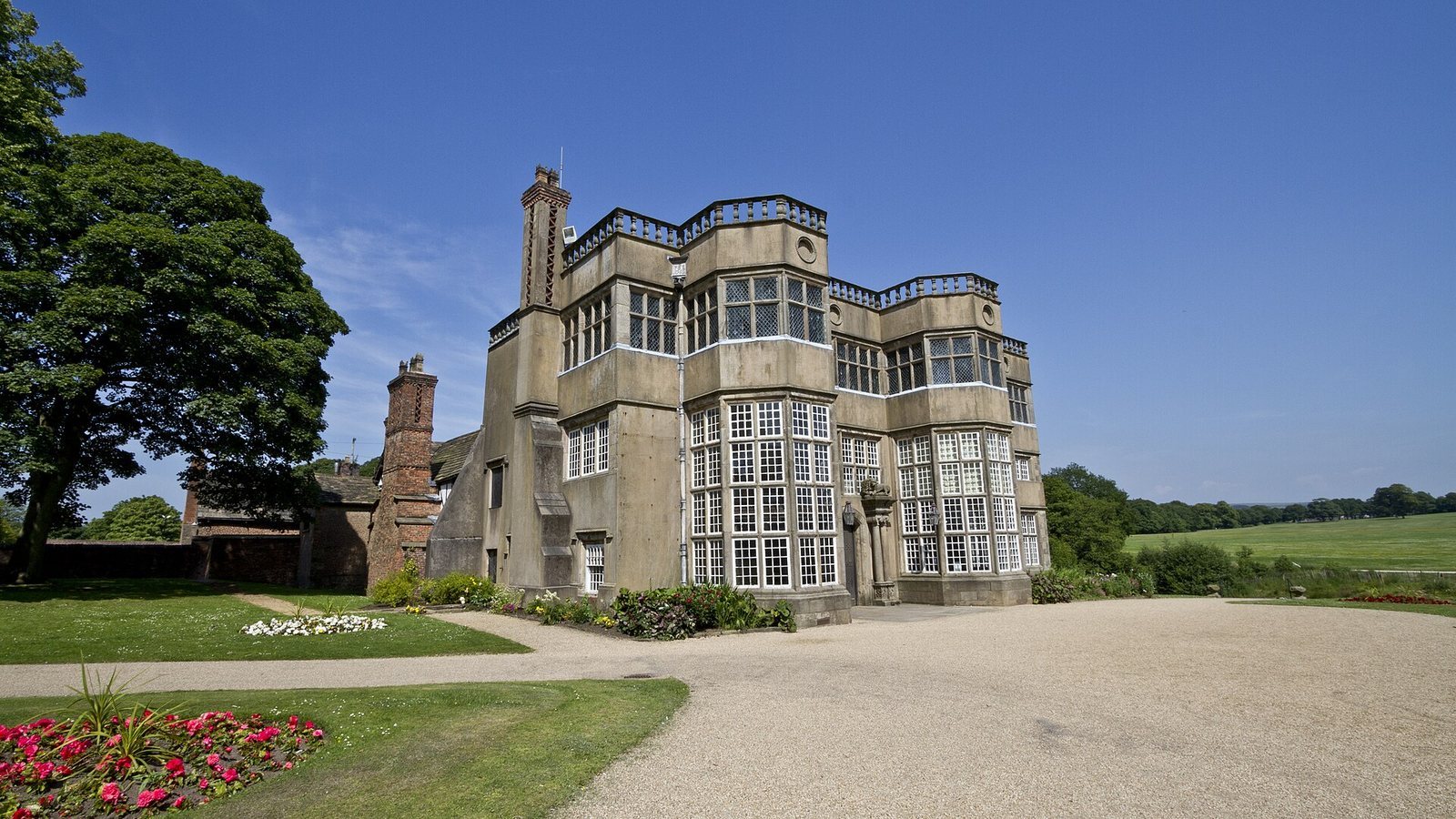
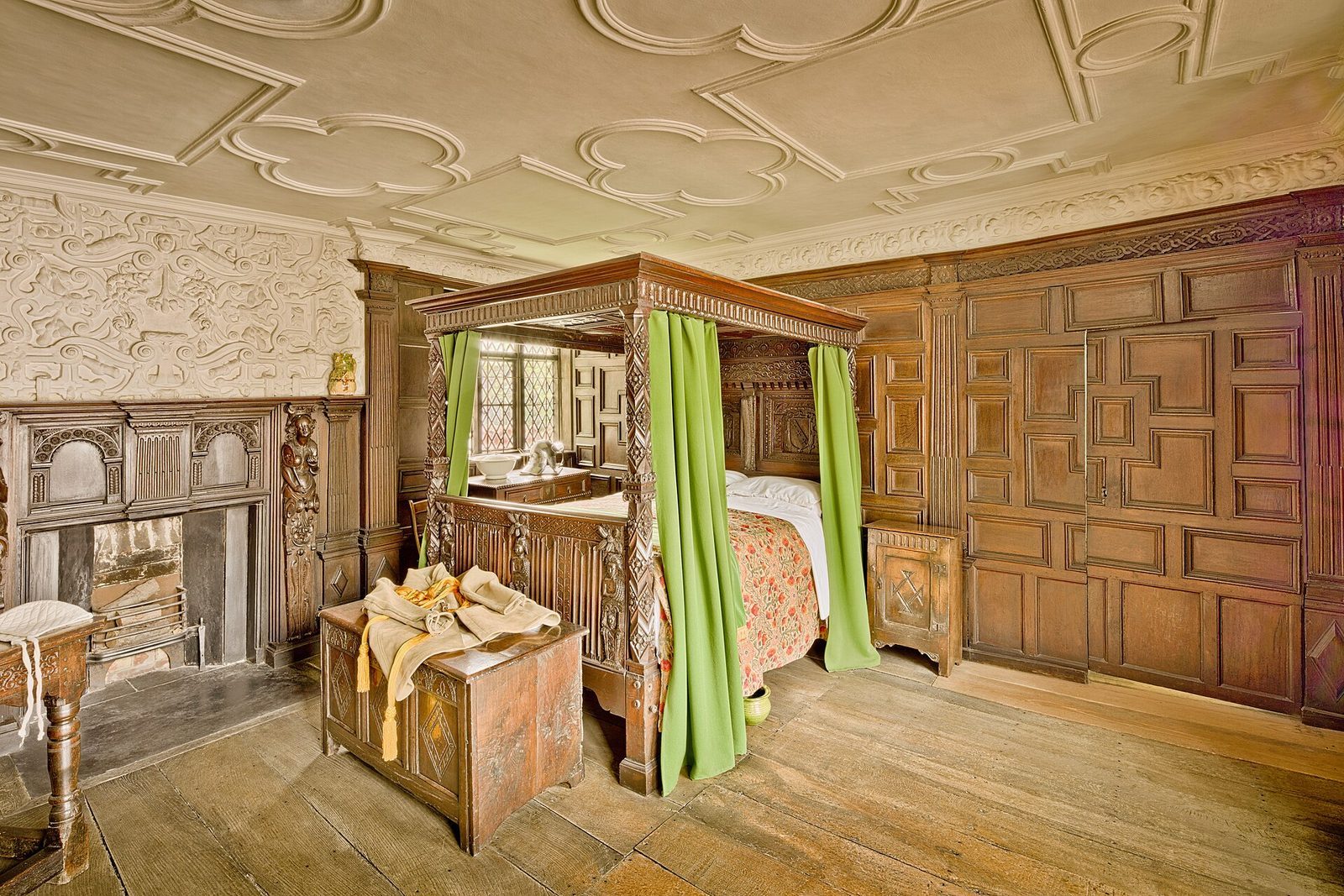
The hall’s original timber-framed building was arranged around a small courtyard. Its principal front is an asymmetrical brick range, part of a complex that combines Elizabethan and Jacobean forms. The hall’s interiors preserve decorative plasterwork, carved woodwork, painted panels, and historic furnishings.
The house
Plan and principal front
The brick front has two large bay windows, with vertical dividers and horizontal crossbars, and a doorway framed by rustic Ionic columns. The columns have scroll-shaped capitals. The hall’s south wing contains an early nineteenth-century dining room fitted with inlaid sixteenth-century panelling brought from another location.
Ceilings and staircase
Heavy wreaths and cherubs decorate the mid-seventeenth-century plasterwork ceilings in the Great Hall and drawing room. Some moulded details are made from lead or leather rather than stucco, and the figures are relatively awkwardly modelled. The seventeenth-century staircase has a roughly carved but vigorous railing decorated with stylized acanthus leaves. Its square end posts, called newels, are topped with flower vases.
Paintings, gallery, and furnishings
Paintings set into the lower wall panelling include Protestant figures Elizabeth I and William the Silent, who led the Dutch revolt against Spanish rule, alongside Catholic figures Philip II of Spain and the Spanish commander Ambrogio Spinola. Other subjects include the navigators Christopher Columbus and Ferdinand Magellan, and Ottoman sultans Bayezid I and Mehmed II. These paintings may be older than the other interior decoration and could date to the time of Thomas Charnock, a member of Parliament who died in 1648.
A long gallery spans the upper floor and contains a 23.5-foot (7.2-metre) shovelboard table, used for sliding weights towards scoring areas. The hall also holds a bird’s-eye painting by an unknown artist that depicts the building around 1710, including small tower-like gazebos at the corners of the forecourt. Oak furniture, Flemish tapestries, and wooden panelling form part of the interior furnishings.
Park and associated buildings
Astley Park
The grounds, now known as Astley Park, include a small lake and a winding stream running through a wooded ravine. The landscape was laid out by John Webb, an English landscape designer. The park also contains a walled garden and a seventeenth-century ha-ha, a sunken boundary designed to contain livestock without interrupting views across the landscape. Restoration in 2022 repaired the ha-ha and included removing silt from the lake and felling trees. The walled garden was also renovated.
Stable block and Coach House
The stable block, dating to around 1800, is a plain brick building in a classical style, with a central section topped by a pediment. The park’s Coach House was extensively renovated in 2022, alongside the walled garden.