Lichtenstein Castle (Greifenstein): A Medieval Hill-Spur Castle
Site at a Glance
- Rating
- 5
- Popularity
- Very Low
- Country
- Germany
- Primary era
- Medieval
- Eras represented
- Medieval
- Civilizations
- Holy Roman Empire
- Site type
- Military
- Remains
- Castle
On this page4 sections
History
Lichtenstein Castle, also called Grünwieser Castle, was a small castle built on a projecting ridge near Holzhausen in Greifenstein, Germany. It was probably founded in the 13th century by the Lords of Lichtenstein, close relatives of the Lords of Greifenstein, although its builders and date are uncertain.
Origins and destruction
One possibility places the castle’s construction around 1225. Conrad of Lichtenstein, who appears in records from 1225 and 1229, may not have belonged to the Greifenstein branch of the family. Another proposal dates the building to around 1250, sometimes specified as 1255, and attributes it to the brothers Werner and Kraft of Lichtenstein.
In 1298, Count John of Nassau, Count Henry of Solms-Burgsolms, and forces from the Wetterau imperial cities captured and destroyed the castle. These cities were towns directly subject to the Holy Roman Emperor. The Lichtenstein and Greifenstein families had supported Albert of Habsburg, a rival claimant to the German kingship, against King Adolf of Nassau. Nassau and Solms leaders also accused them of behaving like robber knights. Unlike Greifenstein Castle, Lichtenstein was not rebuilt. The family probably moved to a farmstead at nearby Wallendorf, while retaining the ruins.
Changes of ownership
In 1360, the ruins passed through the marriage of Irmgard, heir to Wittekind of Lichtenstein, to Kraft of Rodenhausen. Wittekind was the last male member of the Lichtenstein line. Three years later, Kraft sold the castle hill, its ruins, and other family holdings to Count John of Nassau-Hadamar.
In March 1395, John II of Solms-Burgsolms, known as “Springsleben,” and his son John III acquired the hill and ruins from Count Philip I of Nassau-Saarbrücken-Weilburg, along with other estates Philip had obtained from Kraft and Irmgard in 1363. John III was the last member of the Solms-Burgsolms line. John II had taken up residence at rebuilt Greifenstein after a federation of the imperial cities of Wetzlar, Friedberg, and Gelnhausen destroyed his castle at Burgsolms in 1384.
Remains
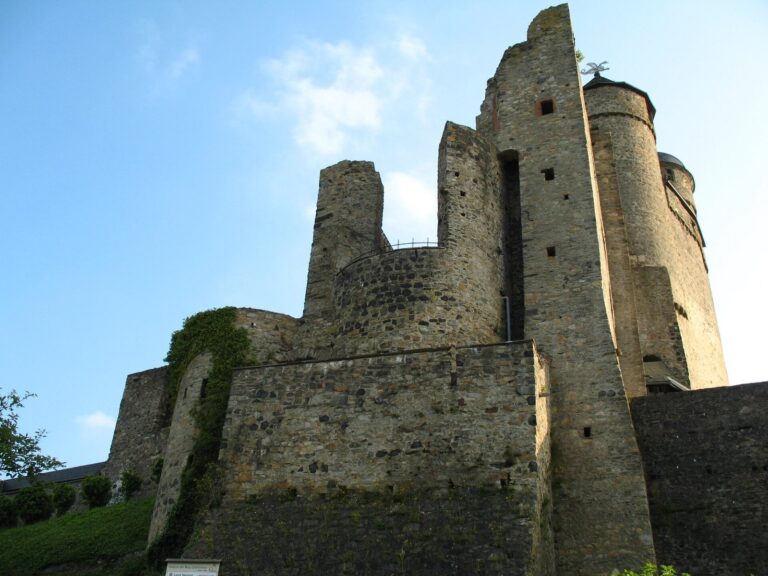
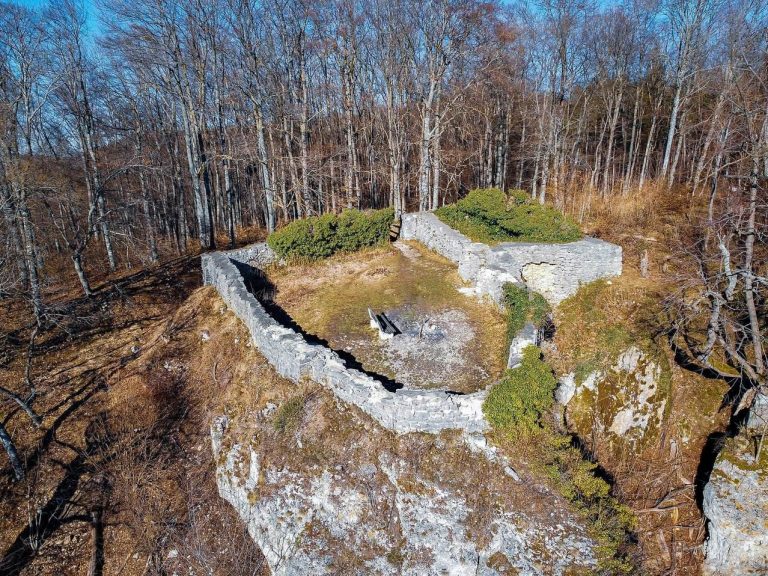
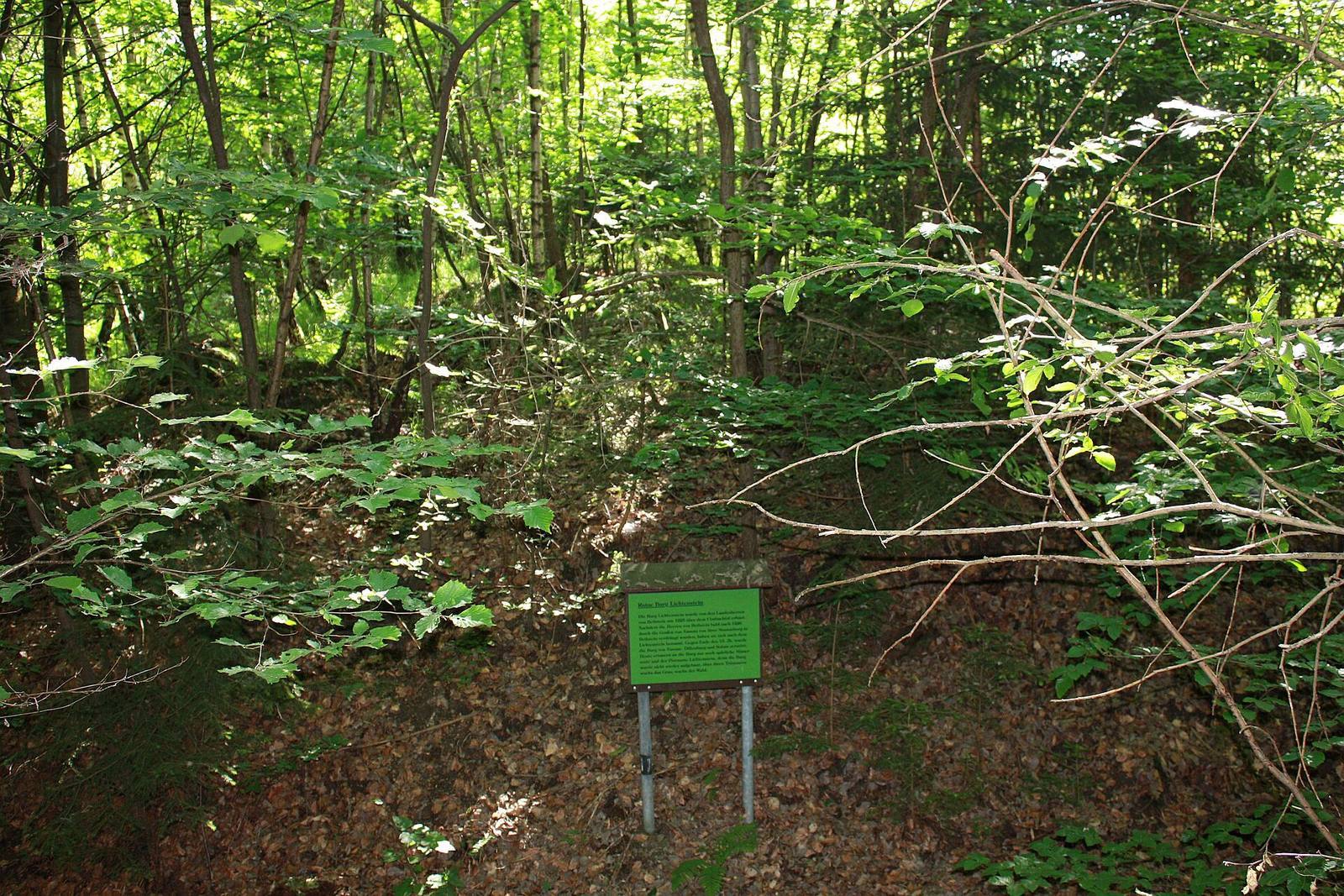
The small castle occupied a projecting ridge of Burgberg Lichtenstein, at about 315 metres above sea level. The site lies above the Ulmbach Reservoir and beside the old High Road, which ran from Frankfurt through Wetzlar toward Cologne. The former castle area has been levelled. Its surviving features include a defensive ditch cut across the narrow approach below the summit plateau and slight traces of walls.