Smithills Hall: A Historic Manor House on the West Pennine Moors
Site at a Glance
- Popularity
- Medium
- Country
- United Kingdom
- Primary era
- Medieval
- Eras represented
- Medieval, Modern
- Civilizations
- British, English
- Site type
- Domestic
- Remains
- Manor House
On this page9 sections
History
Smithills Hall is a historic manor house on the slopes of the West Pennine Moors in the United Kingdom. Its oldest surviving parts date to the 15th century, and the building was enlarged and modernized in the 19th century. The estate passed through several local families, and the hall was the site where Protestant preacher George Marsh was examined in 1554.
The manor and the Radcliffes
The name Smithills comes from Old English words meaning “smooth hill.” The place-name appears as Smythell in 1322. In 1335, William Radcliffe acquired the manor from the Hultons, who held it from the Knights Hospitaller, a medieval religious and military order. When William died in 1369, his son Sir Ralph inherited the estate. Sir Ralph served as Lancashire’s High Sheriff, a senior county office-holder, from 1384 to 1387, and represented the county in Parliament twice.
Later families and George Marsh
The Radcliffe male line ended in 1485, and the manor passed to the Bartons, wealthy sheep farmers who made Smithills their home for nearly two centuries. In 1554, George Marsh, a preacher from Deane near Bolton, was examined at the hall before being sent to Chester for trial on a charge of heresy. He was convicted and executed at Boughton in Chester during the religious persecutions under Mary I. The estate passed by marriage to the Belasyse family in 1659. The Byroms of Manchester bought the manor in 1722 and retained it until the Ainsworths acquired the hall and estate in 1801.
Ainsworth ownership and public use
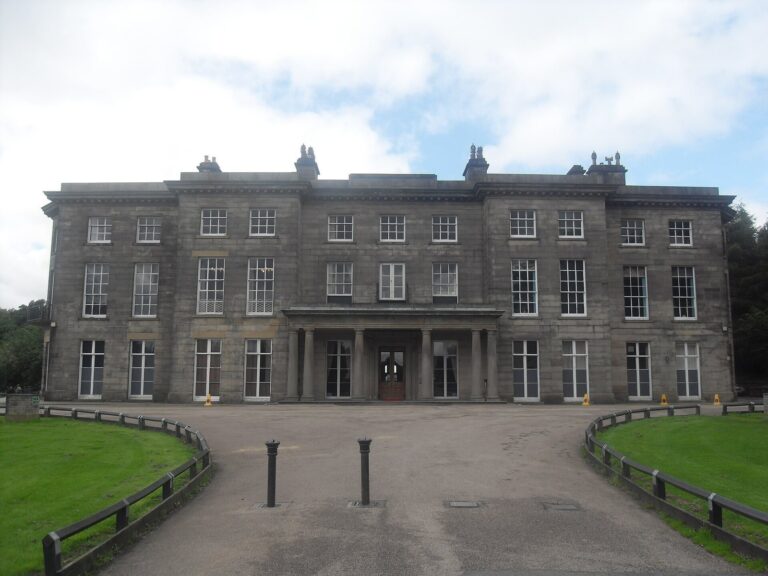
The Ainsworths had built their wealth through bleachworks at Barrow Bridge. In 1855, Nathaniel Hawthorne, an American novelist then serving as United States consul in Liverpool, visited and described the hall. Around 1875, Richard Henry Ainsworth commissioned architect George Devey to extend and modernize it.
In 1896, Colonel Henry Ainsworth’s restrictions on moorland access, including the closure of Coal Pit Road for private shooting, prompted a mass protest at Winter Hill. The road linked Bolton with Rivington and Horwich and gave people access to open countryside amid industrial pollution and difficult living and working conditions. About 12,000 people joined the protest, breaking down a gate to press for the removal of the obstructions. A stone on Coalpit Road commemorates the demonstration, which preceded the 1932 Kinder Scout mass trespass, a protest for access to open countryside. Coal Pit Road became a public right of way in 1996.
The Ainsworths sold Smithills Hall to Bolton Corporation in 1938. Parts of the building were later used as a residential home and day centre, a use that ended when the centre closed in the 1990s. The oldest parts opened as a museum in 1963, and the museum later expanded into some of the 19th-century additions. The west wing was restored in 1999, and the Devey Room was refurbished in 2018. Bolton Metropolitan Borough Council owns the hall. It was listed at Grade I in 1952, the highest listed-building category in England, and became a scheduled monument in 1991, a form of legal protection for an archaeological or historic site.
Remains
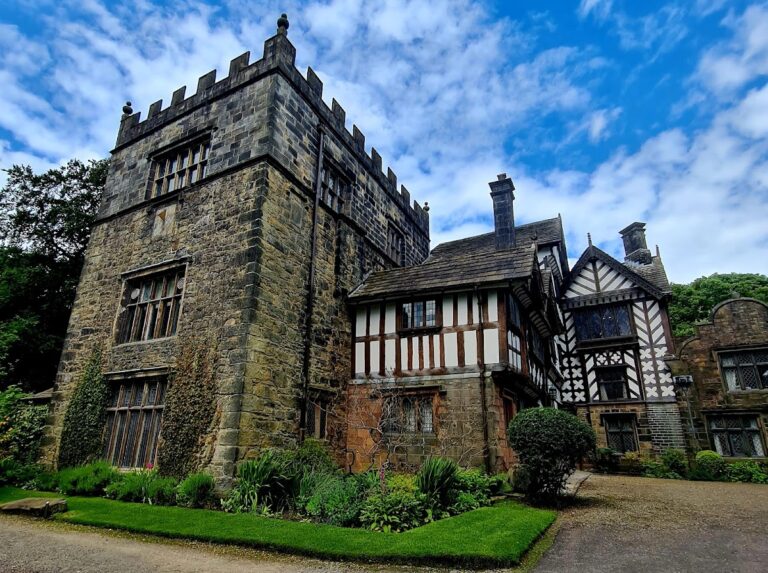
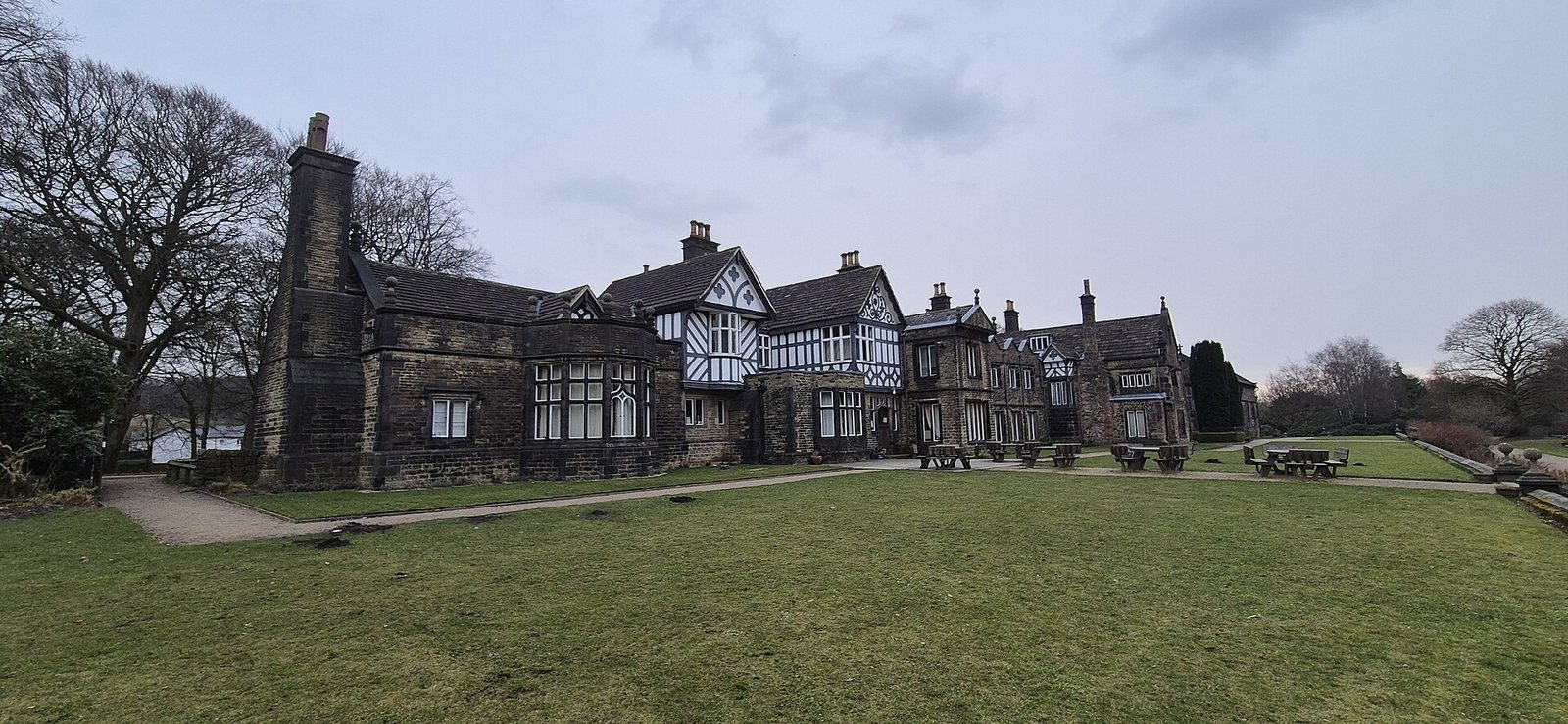
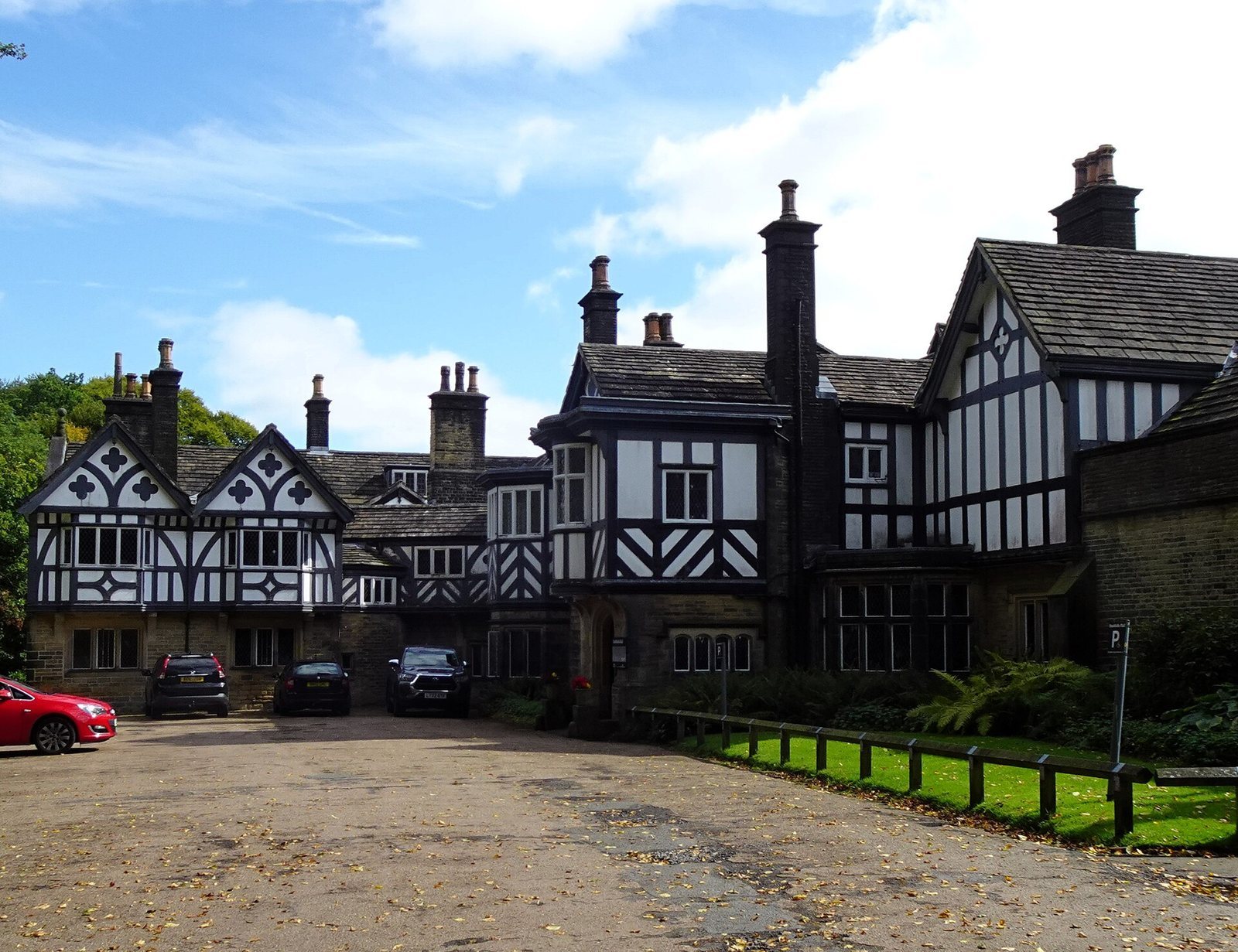
Three ranges enclose an open court, and the hall’s fabric combines early timber framing and roughly coursed rubble masonry with later stonework and decorative timber framing. The building stands on a formal terrace on the south side of a steep valley shaped by a tributary of Raveden Brook.
The medieval north range
The great hall in the north range is among the oldest parts of the complex and dates to the 15th century. It was once surrounded by a moat. Although the hall has been altered, it retains its original plan and medieval features. Timber framing characterizes the earliest parts of the building, while its oldest stonework consists of roughly coursed rubble.
The west wing
The 19th-century west wing is built of coursed, squared stone and includes decorative timber framing. Its roof is covered with stone flags, a feature shared with the hall’s other ranges.
Gardens and grounds
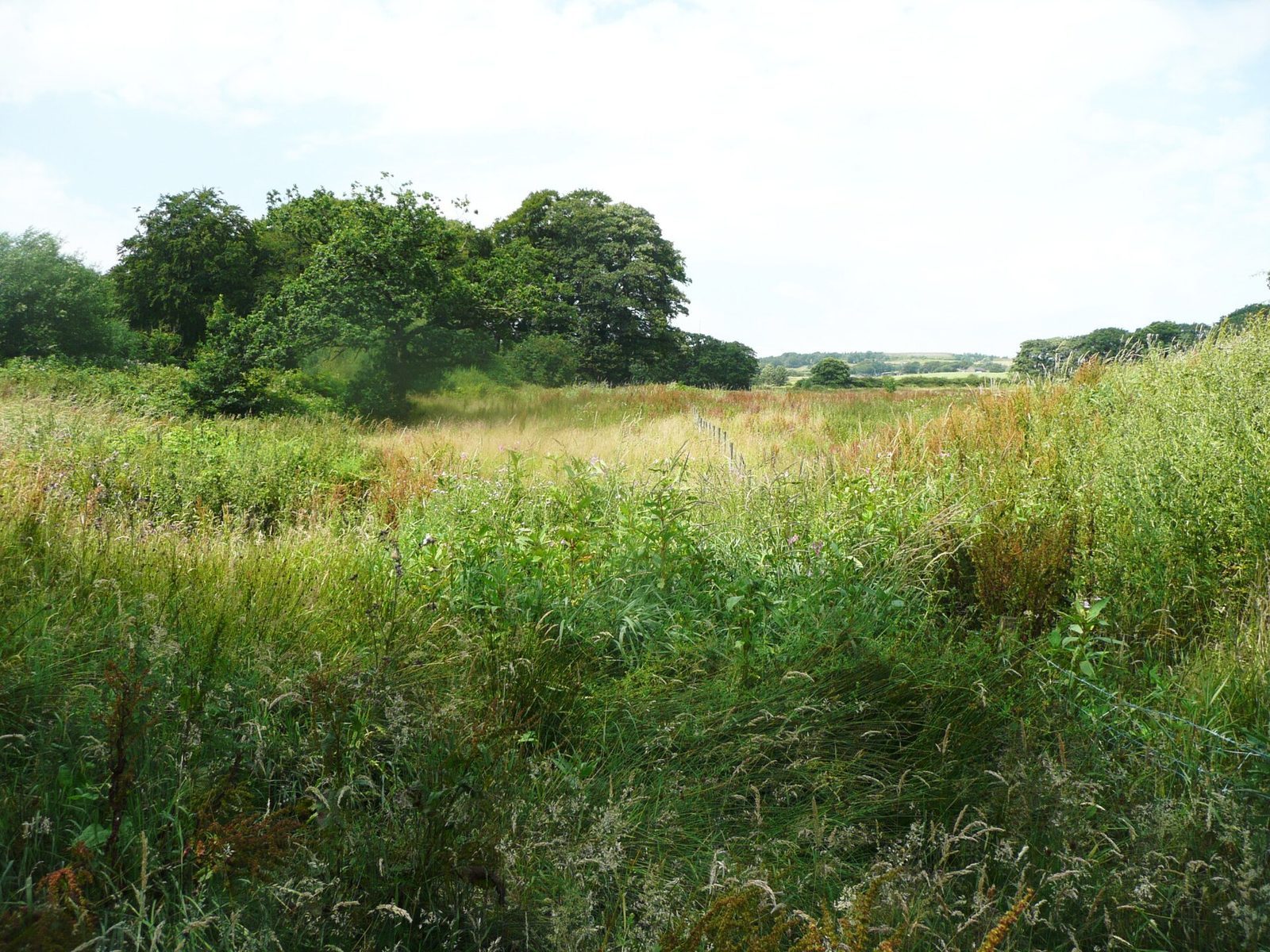
The gardens and pleasure grounds extend across 48 hectares (120 acres) of south-facing slopes at the edge of the moorland. They include formal gardens around the hall, a steep wooded valley and a lake to the north. The hall stands about 500 feet (150 metres) above sea level near Astley and Raveden Brooks.
George Marsh’s footprint
A footprint at the hall is attributed to George Marsh. Local tradition holds that it bleeds each year on 24 April, the anniversary of his execution.