Armadale Castle: Historic Seat of Clan MacDonald on the Isle of Skye
Visitor Information
Google Rating: 4.4
Popularity: Medium
Official Website: www.armadalecastle.com
Country: United Kingdom
Civilization: Early Modern, Modern
Site type: Domestic
Remains: Palace
History
Armadale Castle is situated in Armadale Sleat on the Isle of Skye, Scotland. It was established by the Scottish Clan MacDonald, who settled in this part of Scotland from the 15th century onwards.
Initially, the MacDonalds lived in two farmhouses at Armadale between 1650 and 1690. After this period, they moved their residence to Duntulm Castle. Around 1790, the clan returned to Armadale and constructed a new mansion house, marking the beginning of a significant building phase. This residence was enhanced in 1815 with the addition of a Tudor-Gothic style wing designed by James Gillespie Graham. This expansion took the form of a decorative mock-castle, emphasizing appearance rather than military defense.
In 1855, a fire severely damaged the oldest and central parts of the building. Reconstruction was carried out three years later by architect David Bryce, who designed a new central section in the Gothic style. Despite the restoration, the castle suffered from ongoing maintenance challenges. Eventually, in 1925, the MacDonald family left Armadale Castle, allowing it to fall into a state of gradual decay.
The estate changed course in 1971 when the Clan Donald Lands Trust acquired the property. Since then, parts of the castle have been partly restored, especially the northern wing from the original 1790 construction, which was adapted for events and cultural activities. The castle grounds also became the site of the Museum of the Isles and the Clan Donald Centre, preserving the legacy of the clan.
The castle and its gardens have been acknowledged for their heritage value, receiving various conservation listings for buildings and gardens on the estate. Recently in 2025, financial difficulties led the Clan Donald Lands Trust to announce plans to offer the Armadale Estate and its associated buildings for private sale.
Remains
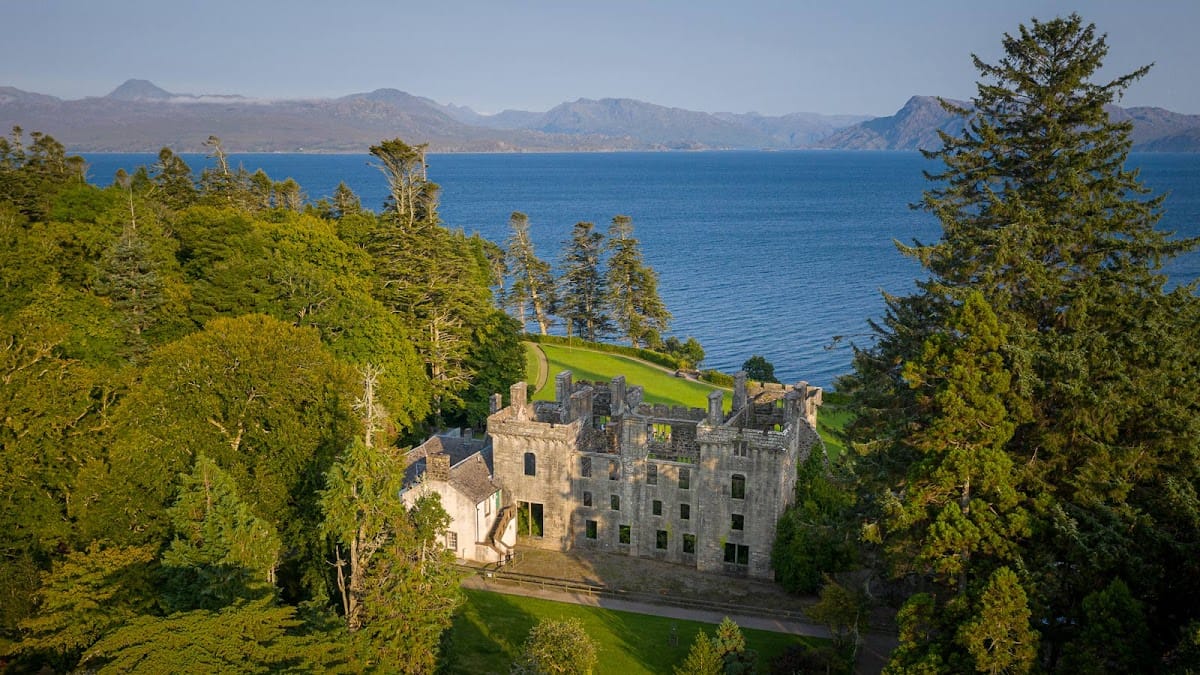
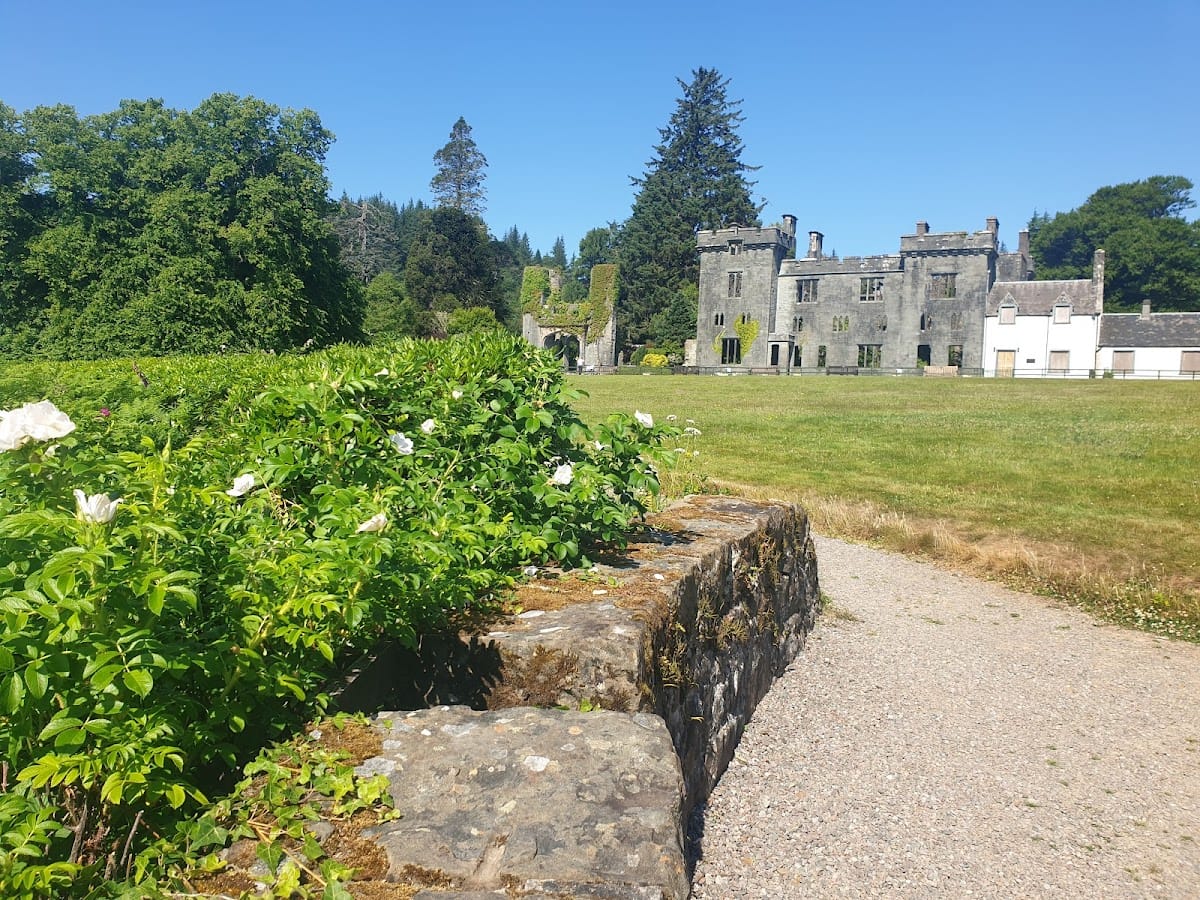
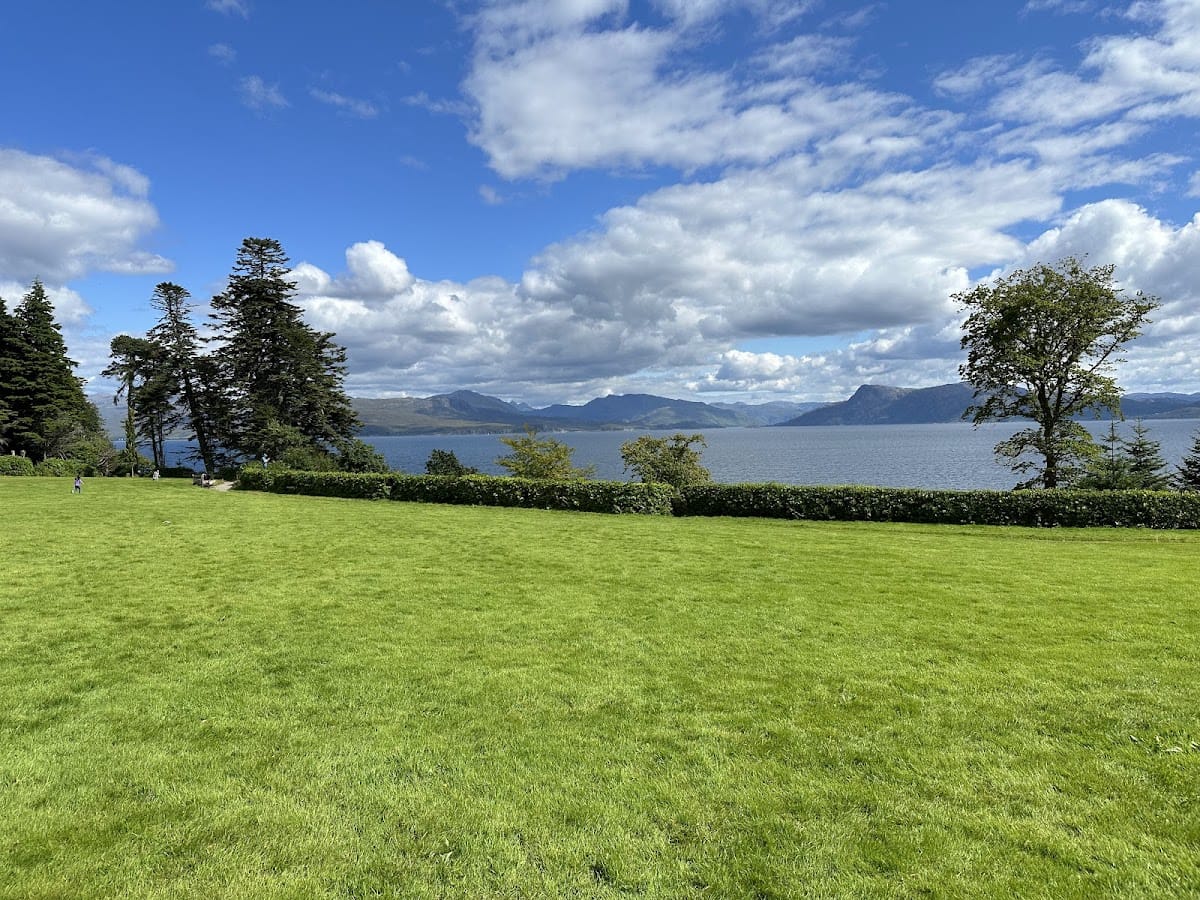
Armadale Castle’s complex reflects a layered history of construction and alteration, centered around a mansion and later a Tudor-Gothic style mock-castle set within extensive gardens. The northern wing, originating from the mansion built around 1790, remains restored and is still in use today. This section faces southeast, overlooking the Sound of Sleat, and was originally surrounded by gardens planted with various exotic species, sustained by a climate influenced by the nearby Gulf Stream.
The 1815 southern expansion by architect James Gillespie Graham formed a square Tudor-Gothic style mock-castle designed more for its visual impact than for defense. This southern part of the castle was largely demolished in 1971, leaving the layout less complete. The design displayed typical Gothic revival features, emphasizing aesthetics over fortification.
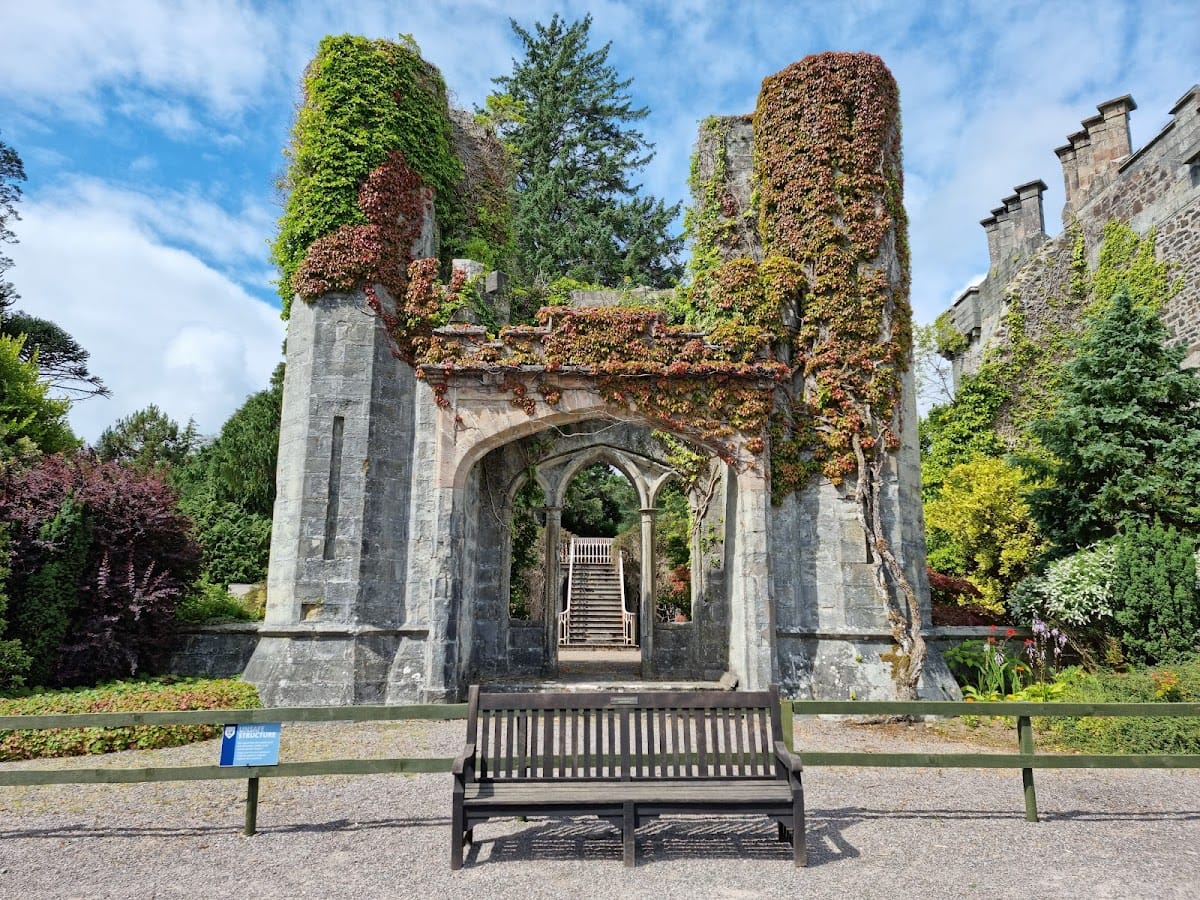
Following the fire in 1855, the central portion of the castle was reconstructed by David Bryce in a Gothic style. This replacement wing today stands as a roofless ruin and is designated as a category C listed building, indicating its deteriorated condition and historical importance.
Separate from the main castle structures, the estate contains several ancillary buildings with assigned heritage listings. The stables, noted for their architectural significance, are protected as category A listed buildings, reflecting their exceptional interest. Along the main approach road, a home farm and a bridge are recognized as category B listed, denoting regional importance. Additionally, a laundry building dating from the 1820s holds category C listing.
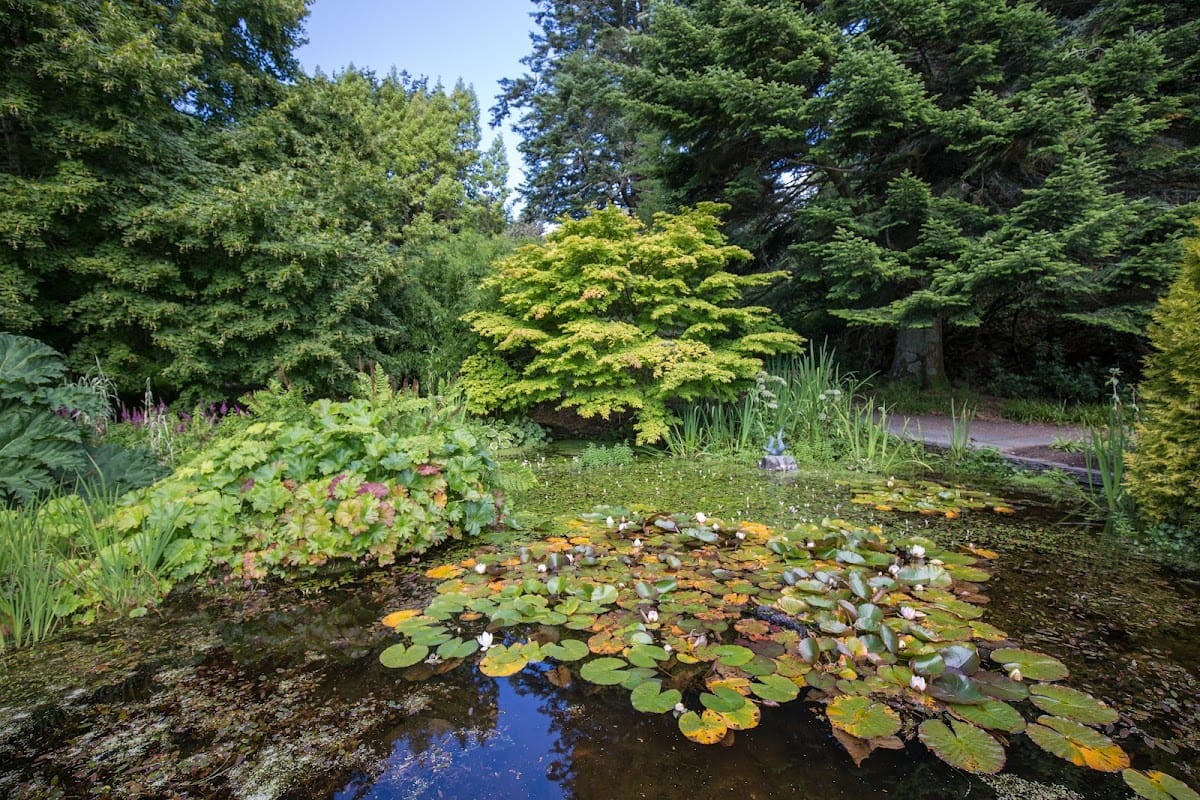
The castle sits within a vast estate spanning approximately 20,000 acres. Its gardens, crafted during the late 18th and 19th centuries, have been preserved and carefully restored since the 1970s, maintaining a variety of exotic plants introduced during that period. These grounds are included in Scotland’s Inventory of Gardens and Designed Landscapes, highlighting their designed character and botanical value.
Together, the ruins, restored wings, and ancillary structures compose an estate that reflects the successive phases of development, destruction, and heritage conservation of Armadale Castle and its surrounding lands.
Nearby sites