Ameku-gū: A Royal Shinto Shrine of the Ryukyu Kingdom


Site at a Glance
- Rating
- 4.2
- Popularity
- Low
- Country
- Japan
- Primary era
- Medieval
- External website
- Open
- Eras represented
- Medieval
- Civilizations
- Ryukyu Kingdom
- Site type
- Religious
- Remains
- Sanctuary
On this page9 sections
History
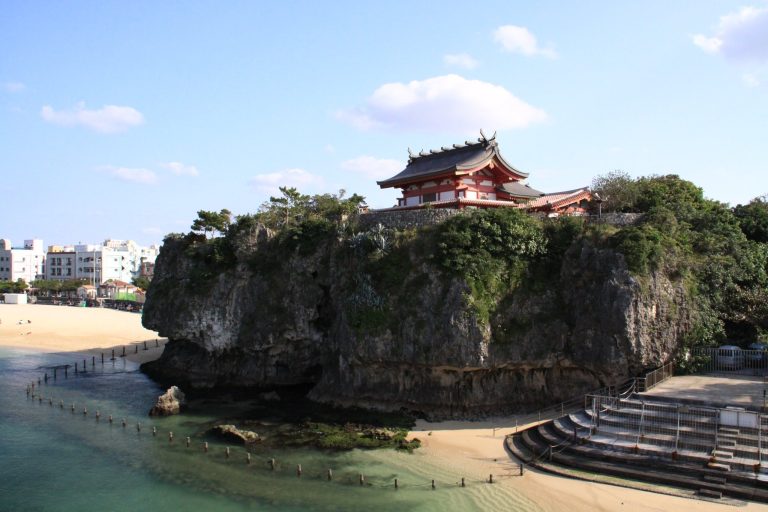
Ameku-gū is a Shinto shrine in Naha, Japan, traditionally founded during the Chenghua period from 1465 to 1487. It became one of the Ryukyu Eight Shrines, the officially recognized shrines that held special status under the royal government of the Ryukyu Kingdom. The present shrine follows a much older foundation tradition connected with Mount Ameku, a spring, and the appearances of two sacred figures.
Foundation tradition
The foundation story tells of a man from Mekaru village who repeatedly saw a dignified woman and a Buddhist monk in robes near a small cave containing a spring on Mount Ameku. After the king ordered officials to investigate, incense placed beside the cave ignited by itself. A shrine was then built at the site.
A divine revelation identified the monk as Kumano Gongen, a sacred manifestation associated with the religious traditions of the Kumano region, who had appeared for the benefit of living beings. The woman was identified as Benzaiten, a Buddhist goddess associated especially with water, music, and eloquence. This account appears in the Record of Ryukyu Shinto, first published in 1648, and in the Ryukyu Kingdom Records, completed in 1713.
Royal patronage and religious administration
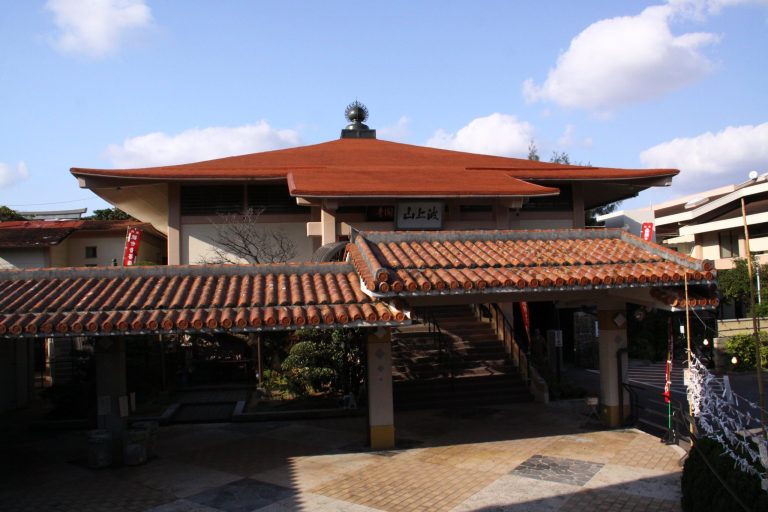
During the Second Sho dynasty, the ruling house of the Ryukyu Kingdom from 1470 until the kingdom was abolished in 1879, Ameku-gū functioned as an official shrine supported by the royal government. Seigenji, one of the kingdom’s eight official Shingon Buddhist temples, served as the shrine’s associated temple and remains beside it. Shingon Buddhism is an esoteric tradition centered on ritual practice, sacred texts, and symbolic forms and images.
Royal support provided stipends for shrine personnel and money for repairs. The shrine employed ritual officials, female attendants, and shrine youths. The royal administration responsible for temples and shrines also supplied the clothing worn by officials and attendants during sacred music and dance.
Decline, loss, and rebuilding
After the Ryukyu Kingdom ended and Okinawa Prefecture was established during the Meiji period, Ameku-gū became an unranked shrine within Japan’s modern shrine-ranking system. The prefectural administration considered classifying it as a village shrine, but financial constraints and the poor condition of its buildings and facilities prevented that change.
Without government financial support, the shrine declined severely. The worship hall deteriorated and disappeared, while the main sanctuary overturned and collapsed with a loud crash in 1937. Another chronology states that the shrine buildings were destroyed by fire during the October 10 air raid of 1944. The sequence between the collapse and the fire remains uncertain.
After the buildings were lost, worship continued for a time as an utaki, a sacred place in the Ryukyus associated with a natural feature such as a grove, rock, or spring and used without a conventional shrine building. The present shrine buildings were erected in 1972, when an enshrinement ceremony was also held. The principal deities are Izanami-no-Mikoto, Hayatamao-no-Mikoto, and Kotosakao-no-Mikoto. Izanami is a major creator deity, while Hayatamao and Kotosakao are associated with Kumano worship. The annual festival takes place on May 15, corresponding to the fifth day of the fourth month in the traditional lunar calendar.
Remains
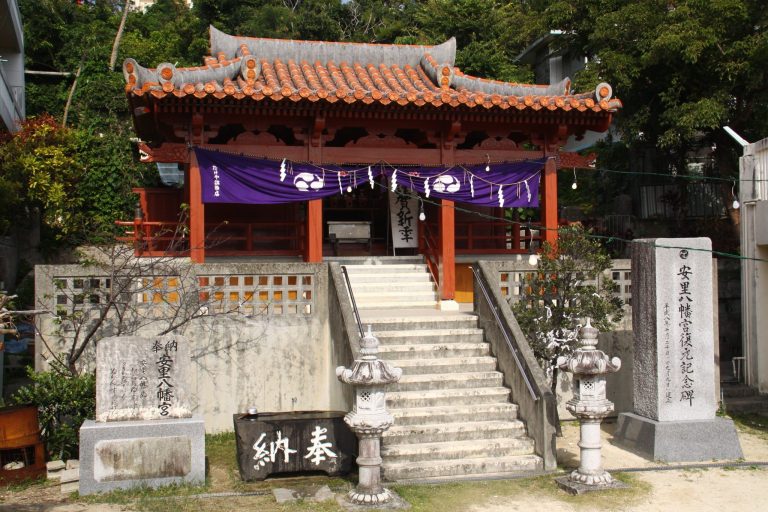
Ameku-gū’s present physical form dates from the 1972 reconstruction. The shrine stands at 3-19-3 Tomari in Naha, while its foundation tradition centers on a small cave partway up Mount Ameku. The cave contains a flowing spring and provides the natural setting for the appearances of Kumano Gongen and Benzaiten in the shrine’s origin story. The reconstructed sanctuary and the sacred mountain feature therefore represent both the current shrine complex and the older landscape associated with its foundation.
Shrine buildings and sacred setting
Main sanctuary
The main sanctuary is built in the Shinmei-zukuri style, a simple timber form with an ancient-looking character and a gabled roof. It belongs to the 1972 rebuilding of Ameku-gū and provides the architectural setting for the shrine’s enshrined deities.
Mountain cave and spring
The small cave lies partway up Mount Ameku, with water flowing from a spring inside it. In the foundation tradition, this cave is where the monk and woman appeared before the shrine was established. Its spring remains the central natural feature associated with the shrine’s sacred origins.
Associated Buddhist temple
Seigenji stands directly beside Ameku-gū. The temple served as the shrine’s associated institution during the Ryukyu Kingdom and belonged to the official group of eight Shingon Buddhist temples. Its physical adjacency preserves the connection between the shrine and the Buddhist temple that was linked to it administratively and ritually.