Nariai-ji Temple: A Buddhist Pilgrimage Temple in Miyazu, Japan


Site at a Glance
- Rating
- 4.4
- Popularity
- Medium
- Country
- Japan
- Primary era
- Early Modern
- External website
- Open
- Eras represented
- Early Modern, Modern
- Civilizations
- Japanese, Tokugawa
- Site type
- Religious
- Remains
- Sanctuary
On this page21 sections
History
Nariai-ji Temple is a Buddhist temple in Miyazu, Japan, traditionally founded in 704 during the reign of Emperor Mommu. It is associated with the Shingon tradition of esoteric Japanese Buddhism and is the 28th temple on the Saigoku Kannon Pilgrimage, a route linking 33 temples dedicated to Kannon, the bodhisattva of compassion.
Traditional Foundation and Early History
The temple’s formal name is Nariai-san Nariai-ji. Temple tradition attributes its foundation to the monk Shin’no, who established it as a place for prayers on behalf of the imperial household. Emperor Mommu ruled from 697 to 707, placing the traditional foundation within his reign. The earlier history of Nariai-ji remains uncertain because reliable evidence for the period before the medieval era is limited.
A story preserved in the Konjaku Monogatari explains the special reputation of the temple’s principal image. According to the legend, a starving monk prayed to Kannon before eating meat from a dead deer. The food later appeared to have changed into wood chips, while a piece of the Kannon image’s thigh was missing. The event was understood as Kannon giving part of itself to preserve the monk’s life, and the image became associated with the idea of a self-sacrificing or substitute Kannon.
Mountain Practice and Relocation
Nariai-ji originally stood higher on Mount Tsuzumigatake and served as a training center for Shugendo, a Japanese mountain religious tradition combining Buddhist, Shinto, and ascetic practices. Its practitioners used demanding mountain training as spiritual discipline. The temple was also traditionally counted among five places in Japan inhabited by holy beings.
A landslide in 1400 led to the temple’s relocation to its present site. The mountain was formerly called Senosan, and the Muromachi-period painter Sesshu depicted the temple in his Amanohashidate Map, now held by the Kyoto National Museum. The map identifies it as “Senosan Nariai-ji,” preserving an earlier form of the site’s name.
Later Institutional History
The present Main Hall was rebuilt during the eighteenth century. Nariai-ji remained connected with the Koyasan Shingon school, a major institutional lineage within Shingon Buddhism, until it became independent in 2007 and joined the Hashidate Shingon sect.
The principal image is a Heian-period statue kept as a hidden image, or hibutsu, meaning a sacred image normally concealed and shown only on prescribed occasions. It was traditionally displayed once every 33 years. The image was opened to the public in 2005 and again during commemorative openings in 2008 and 2009, held in connection with the thousandth memorial of Hanayama Ho-o. The retired Emperor Hanayama later became a Buddhist religious figure and is traditionally regarded as the reviver of the Saigoku Kannon Pilgrimage.
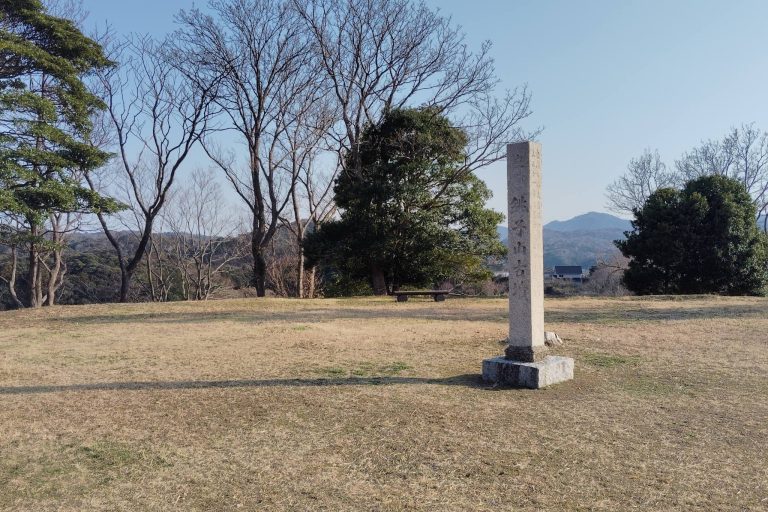
The former precincts of Nariai-ji were designated a National Historic Site in 2016. In 2017, the temple became part of the Japan Heritage “Tango Chirimen Corridor” cultural-story designation. It continues to be associated with the Saigoku Kannon route and is also known for its rhododendrons.
Remains
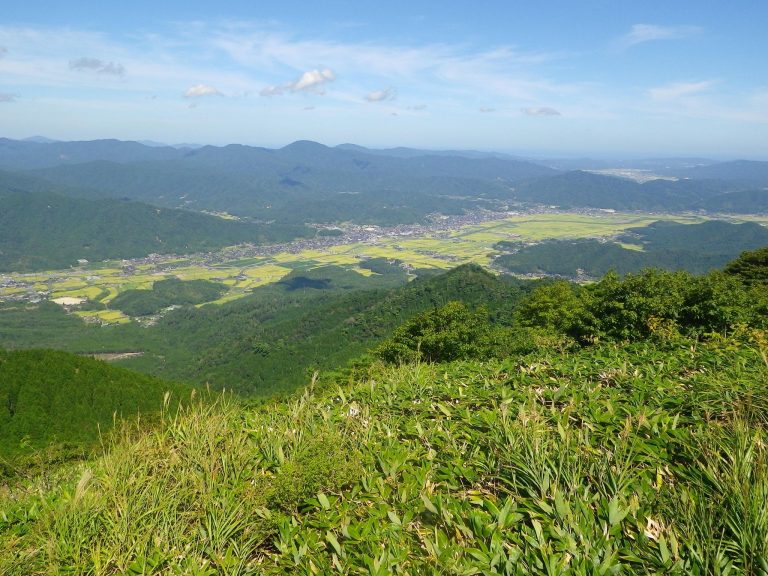
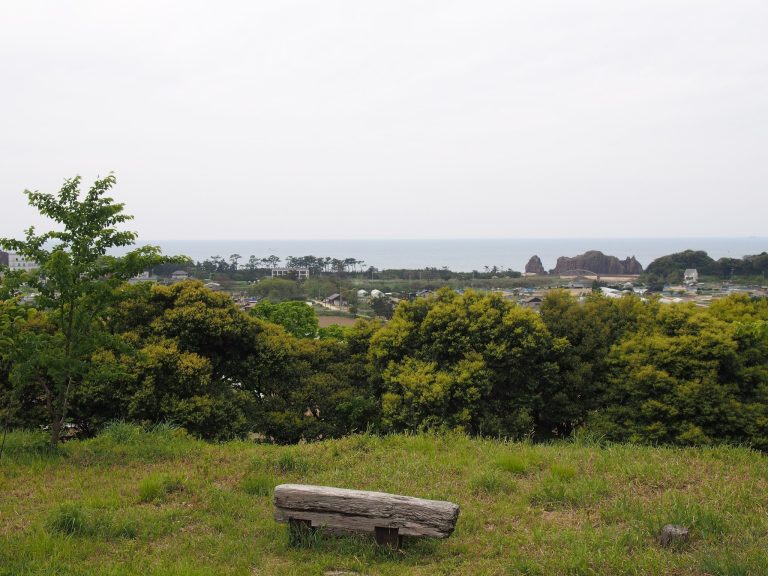
Nariai-ji stands at approximately 328 metres on the southeast slope of Mount Tsuzumigatake, whose summit reaches 569 metres. The precinct overlooks Amanohashidate, one of Japan’s Three Scenic Views. Its surviving complex includes the Main Hall, an older guardian shrine, halls for Buddhist images, a bell tower, ponds, gates, a pagoda, and observatories positioned at different heights on the mountainside.
Main Hall and Sacred Images
Main Hall
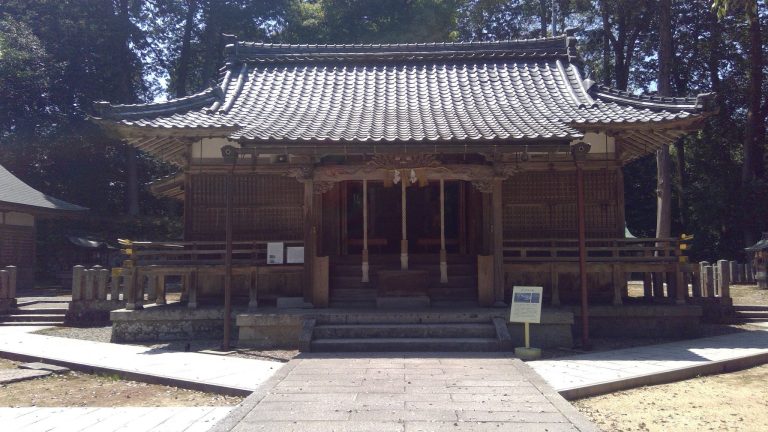
Rebuilt in the eighteenth century, the Main Hall is a Kyoto Prefecture Tangible Cultural Property. The inner sanctuary contains the concealed principal image in a central cabinet. A standing image of Sho-Kannon is positioned before it, with a seated Jizo Bodhisattva to the left and a standing Senju Kannon, the thousand-armed form of Kannon, to the right. Above the right side of the inner sanctuary is a carving called “Dragon Facing Forward,” traditionally attributed to the sculptor and woodcarver Hidari Jingoro.
Jizo Bodhisattva
The seated Jizo is a wooden statue from the Heian period and is an Important Cultural Property. It was transferred to Nariai-ji from another temple in the Kinki region around the end of the twentieth century. Its presence adds a Heian-period image to the group arranged within the Main Hall’s inner sanctuary.
Kannon Hall
The Kannon Hall contains 33 images modeled on the principal images of the temples belonging to the Saigoku Kannon Pilgrimage. Together, they reflect the pilgrimage route’s complete cycle of sacred destinations within a single temple complex.
Guardian, Bell, and Ritual Structures
Kumano Gongen Shrine
The Kumano Gongen Shrine, also called the guardian shrine, was built in 1676. It consists of a simple protective building over a guardian-shrine structure and is described as the oldest building at Nariai-ji. The shrine is a Kyoto Prefecture Tangible Cultural Property.
Ten Kings Hall
The Ten Kings Hall houses images of King Enma and Kujaku Myoo. These figures form the hall’s principal group of religious images within the temple precincts.
Iron Bathing Vessel
An iron bathing vessel made by the caster Yamakawa Sadakiyo bears an inscription dated 1290. It stands to the left in front of the Main Hall and has been reused as a basin for washing the hands. The vessel is an Important Cultural Property, linking a medieval metal object with a later function within the temple.
Bell Tower and Bell
The Bell Tower is an Edo-period rebuilding in the hakama-koshi form, in which the lower structure flares outward. It is a Kyoto Prefecture Tangible Cultural Property. The bell was cast in 1608 and is a Miyazu City Tangible Cultural Property. It is known as the “Bell That Is Not Struck.” A tradition says that a child watching the casting fell into the crucible. Because the child’s crying was later believed to be heard whenever the bell was rung, the bell was no longer struck.
Gates, Pond, and Pagoda
Mountain Gate
The mountain gate, also called the Nio Gate, is a single-story entrance with eight supporting legs and an irimoya roof. This traditional roof combines a gabled upper section with a hipped lower section. The name Nio Gate refers to the two Buddhist guardian kings traditionally associated with such temple entrances.
Benten Pond and Shrine
Benten Pond is a lotus pond traditionally called the “Bottomless Pond.” A Benzaiten Shrine stands nearby, adding a small shrine structure to the pond area.
Five-Story Pagoda
A wooden five-story pagoda was completed in 1998. It stands below the Main Hall beside the open area near the mountain gate and reproduces architectural forms associated with the Kamakura period.
Mountain Observatories
Panorama Observatory
A panorama observatory lies above the Main Hall. In clear weather, it provides views of Amanohashidate and Miyazu Bay, with occasional views extending to the Echizen Coast and Mount Hakusan.
Mount Benten Observatory
A second observatory stands on Mount Benten. It is reached by stairs near the temple pond and occupies a higher position than Kasamatsu Park, forming another elevated point within the temple’s mountain setting.