Sōgen-ji: A Royal Ancestral Temple of the Ryūkyū Kingdom
Site at a Glance
- Popularity
- High
- Country
- Japan
- Primary era
- Medieval
- Eras represented
- Medieval
- Civilizations
- Ryukyu Kingdom
- Site type
- Religious
- Remains
- Temple
On this page9 sections
History
Sōgen-ji, formally Reitoku-san Sōgen-ji, was a Rinzai temple, belonging to a school of Japanese Zen Buddhism, in Tomari, Naha, Japan. Founded in the Ryūkyū Kingdom, it was regarded as one of the kingdom’s two foremost temples. Its Chinese-style buildings were arranged around a main shrine, and its foundation is estimated at about 1527, shortly after Shō Sei became king.
Royal temple and ancestral rites
An inscription dated 1527 on a stone dismount stele helps establish the estimated foundation date. Sōgen-ji served as a royal ancestral shrine, holding spirit tablets, memorial objects used in East Asian ancestral rites, for rulers from Shunten, traditionally regarded as an early Ryūkyū king, to Shō Tai, the kingdom’s last king.
Royal memorial tablets were installed in 1496, and their enshrinement at Sōgen-ji continued for many centuries from 1521. The temple was not a royal burial place. The kings’ tombs were at Tama-udun, the royal mausoleum near Shuri Castle.
Before a new king’s investiture at Shuri Castle, Chinese envoys carried out the San’o Yusai ceremony at Sōgen-ji to console the spirit of the previous king. Investiture was the formal recognition of a Ryūkyū king by the Chinese imperial court. Those entering the grounds, including the king, dismounted and continued on foot as a gesture of respect.
Changes to royal memorials
In 1699, the tablets for Shō Shoku and Shō Kyū were transferred to Tennō-ji, while the tablet for Shō I was moved to Tenkai-ji.
War and later history
Before the 1945 Battle of Okinawa, the main shrine and stone gate had been designated National Treasures. Both were destroyed during the battle. After the war, the temple grounds became Sōgen-ji Park.
The Government of the Ryukyu Islands, Okinawa’s governing authority under U.S. administration, designated the gate a Special Important Cultural Property in 1955. It received Important Cultural Property status in 1972. Naha began investigating the site in 2020, and Sōgen-ji was designated a National Historic Site in 2025.
Remains
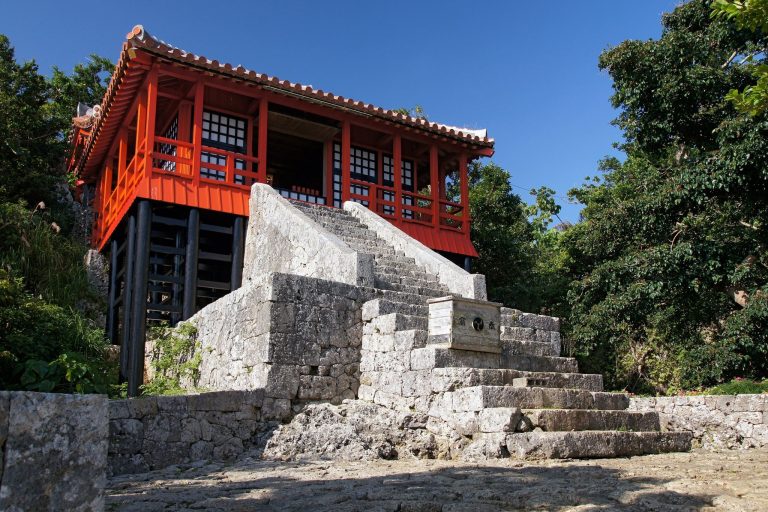
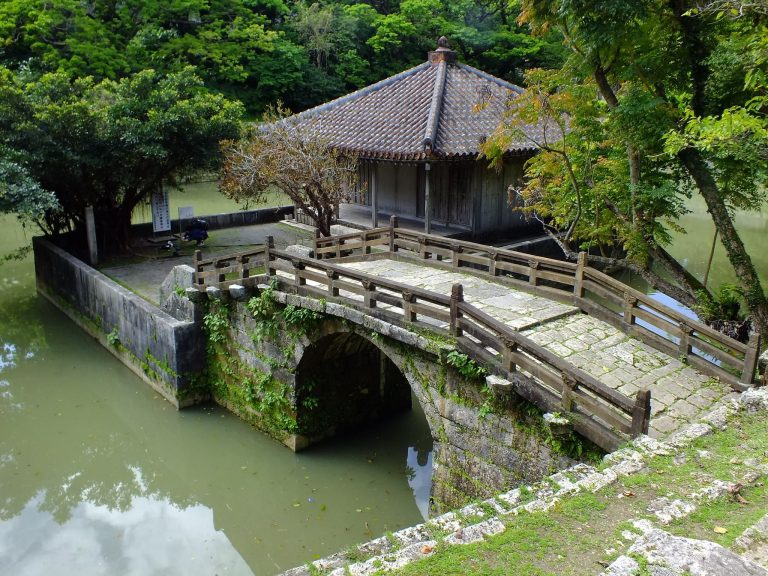
The complex consisted of Chinese-style buildings arranged around a main shrine. At its entrance, the First Gate stood with stone walls; foundations and steps preserve evidence of structures within the grounds.
Entrance and stone enclosure
First Gate and walls
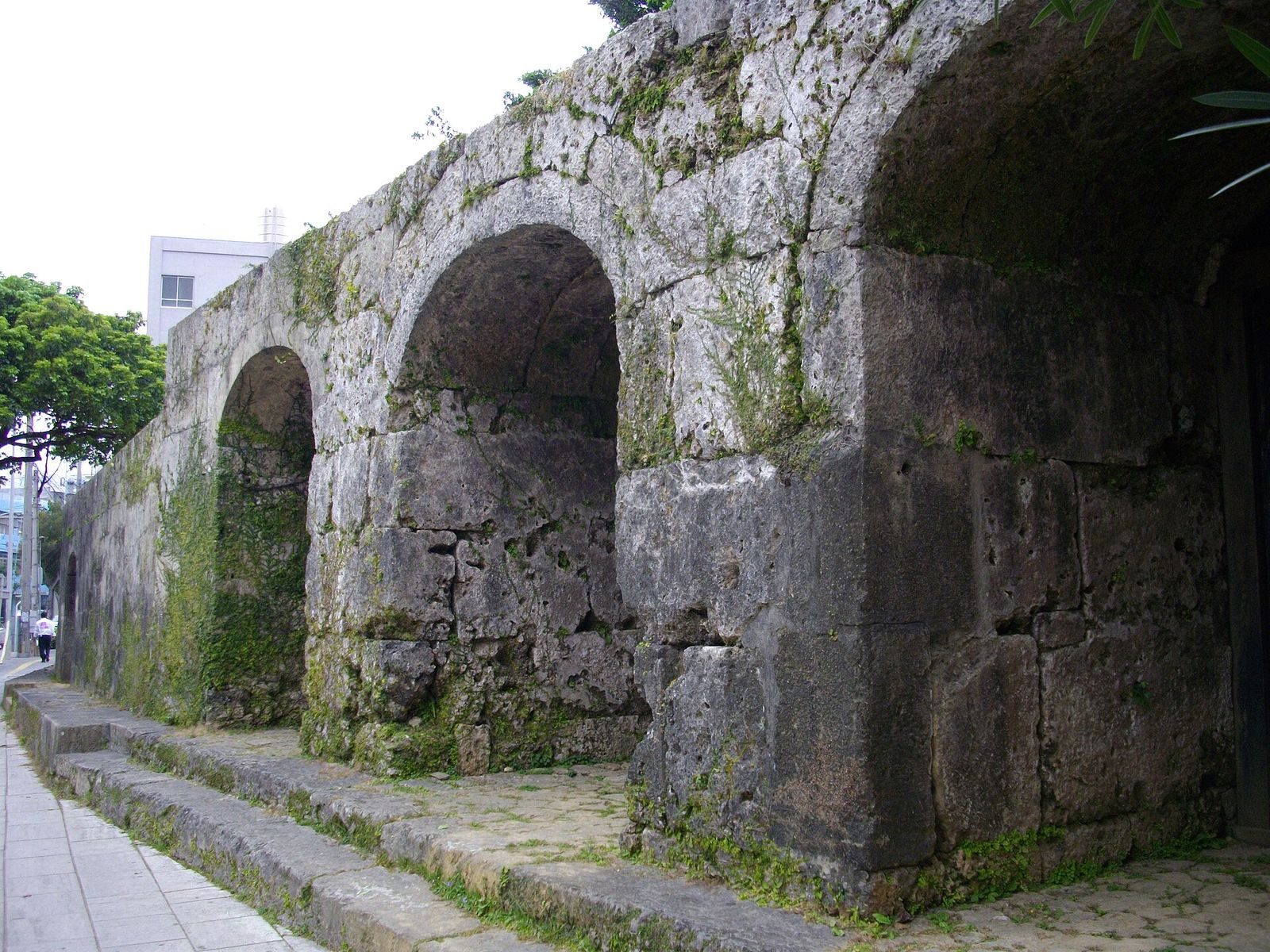
The First Gate and its flanking walls were built before 1527, in the late Muromachi period. Made of stone, the gate has three arches. The walls extend a combined 66.3 metres and each contains a smaller gate. The gate and walls are regarded as representative examples of Okinawan stone architecture. The gate was restored after the Battle of Okinawa.
Eastern dismount stele
A stone dismount stele remains east of the gate. Its inscription gives the date 1527 and instructs local lords and lower officials to dismount there. The reverse repeats the order for officials and others.
Foundations and excavated steps
Foundations and steps form part of the remains within the temple grounds. Archaeological investigation confirmed stair remains. A preservation project begun in 2021 produced a 1:150 model of the prewar complex and a four-metre-square diorama in synthetic resin that partly reconstructs the excavated stairs.