Agamemnoneion of Mycenae: A Sanctuary Associated with Agamemnon
Site at a Glance
- Popularity
- Very Low
- Country
- Greece
- Primary era
- Classical
- Eras represented
- Classical
- Civilizations
- Ancient Greek
- Site type
- Religious
- Remains
- Sanctuary
On this page9 sections
History
The Agamemnoneion of Mycenae is a small ancient Greek sanctuary in Greece, founded in the late eighth century BC. It probably served as a shrine for Agamemnon, the legendary king of Mycenae and a central figure in Greek epic tradition. It is also known as the Shrine by the Bridge.
Foundation and cult
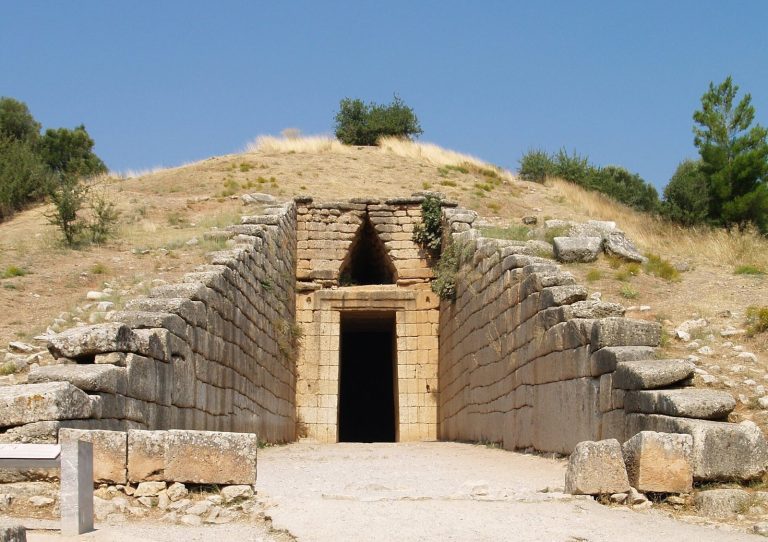
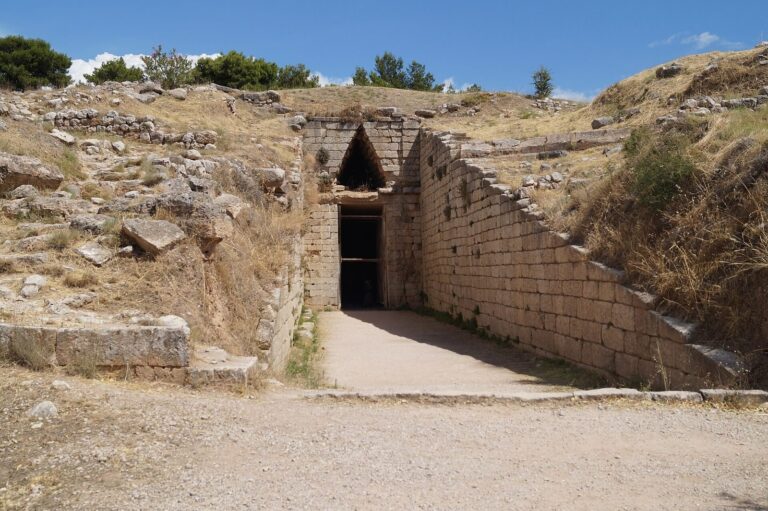
John Manuel Cook proposed that worship of Agamemnon began at Mycenae when the Iliad, an ancient Greek epic traditionally attributed to Homer and centered on the Trojan War, reached the area in the late eighth century BC. He compared this timing with the establishment of a sanctuary for Menelaus and Helen near Sparta. Cook also noted that the Agamemnoneion was not beside the Treasury of Atreus, a monumental Mycenaean tomb, or another circular, beehive-shaped burial chamber. He suggested that the tombs’ locations might not have been known when worship at the sanctuary began.
Spyridon Marinatos offered a different interpretation. He proposed that Hera, a major Greek goddess, was worshipped there first, and that the sanctuary later became a shrine for Agamemnon. He connected the earlier cult with the sanctuary’s position outside the city wall on the road toward Hera’s sanctuary at Argos. Cook’s interpretation is the one generally followed.
Destruction and later use
The sanctuary was destroyed sometime in the fifth or fourth century BC. One possible date is 468 BC, when Argos destroyed Mycenae. It was restored during the Hellenistic period, following Alexander the Great’s campaigns and lasting from the late fourth to the first century BC, and continued in use until the second century BC.
Archaeological investigation
Bernhard Steffen had noted walls north of the Cyclopean Bridge. Alan Wace investigated the area in 1949, followed by Cook’s excavations in 1950 and further work by Elisabeth Wace in August 1952.
Remains
Layout and construction
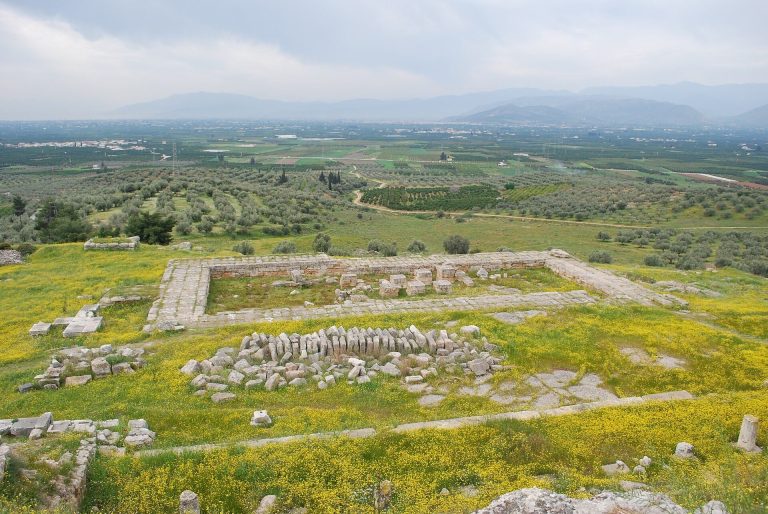
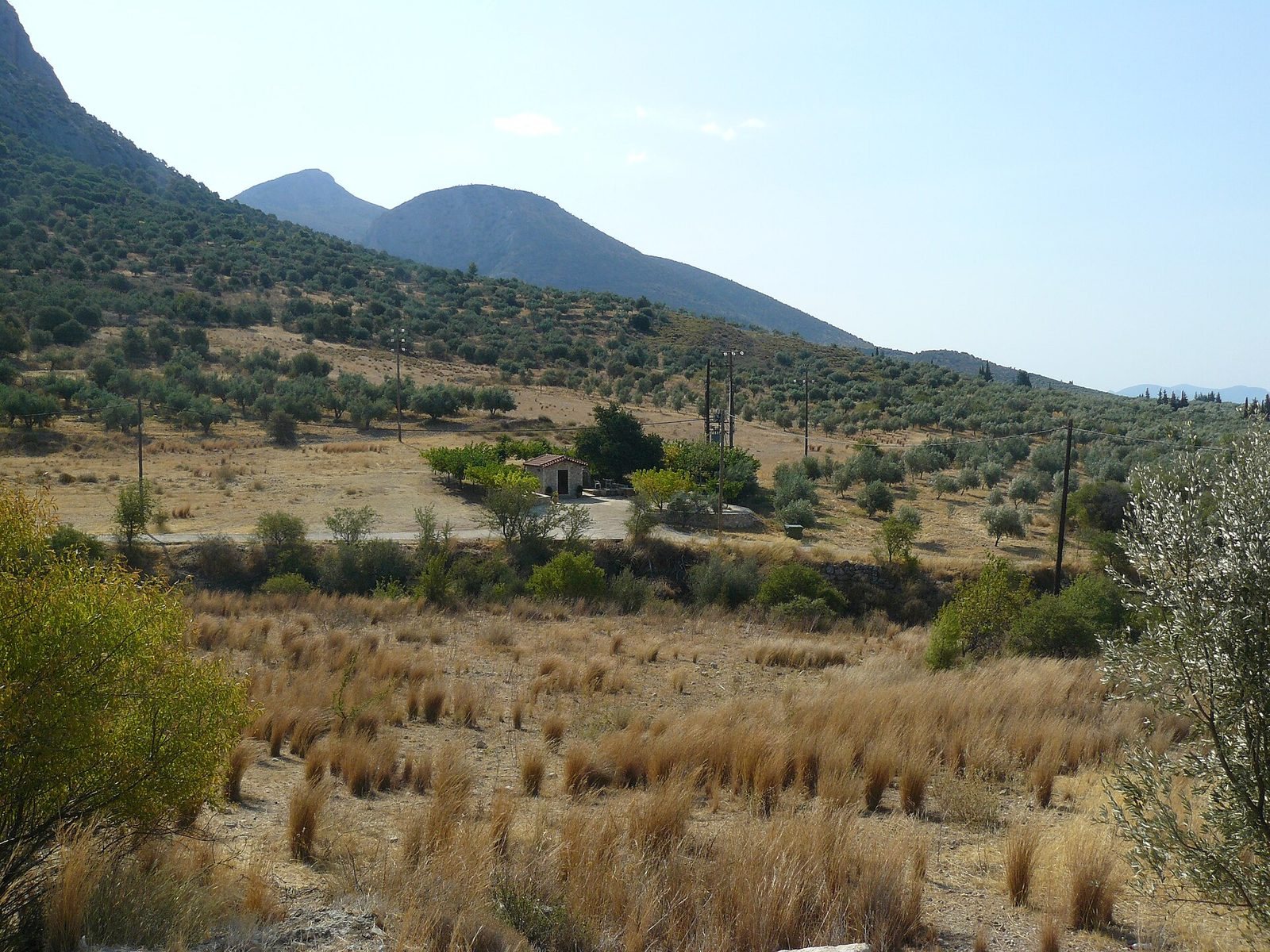
The sanctuary had an approximately rectangular plan beside the Chavos, with a retaining wall supporting its northern side. About 24 m of that side and the southeastern end have been exposed.
River-side wall and internal divisions
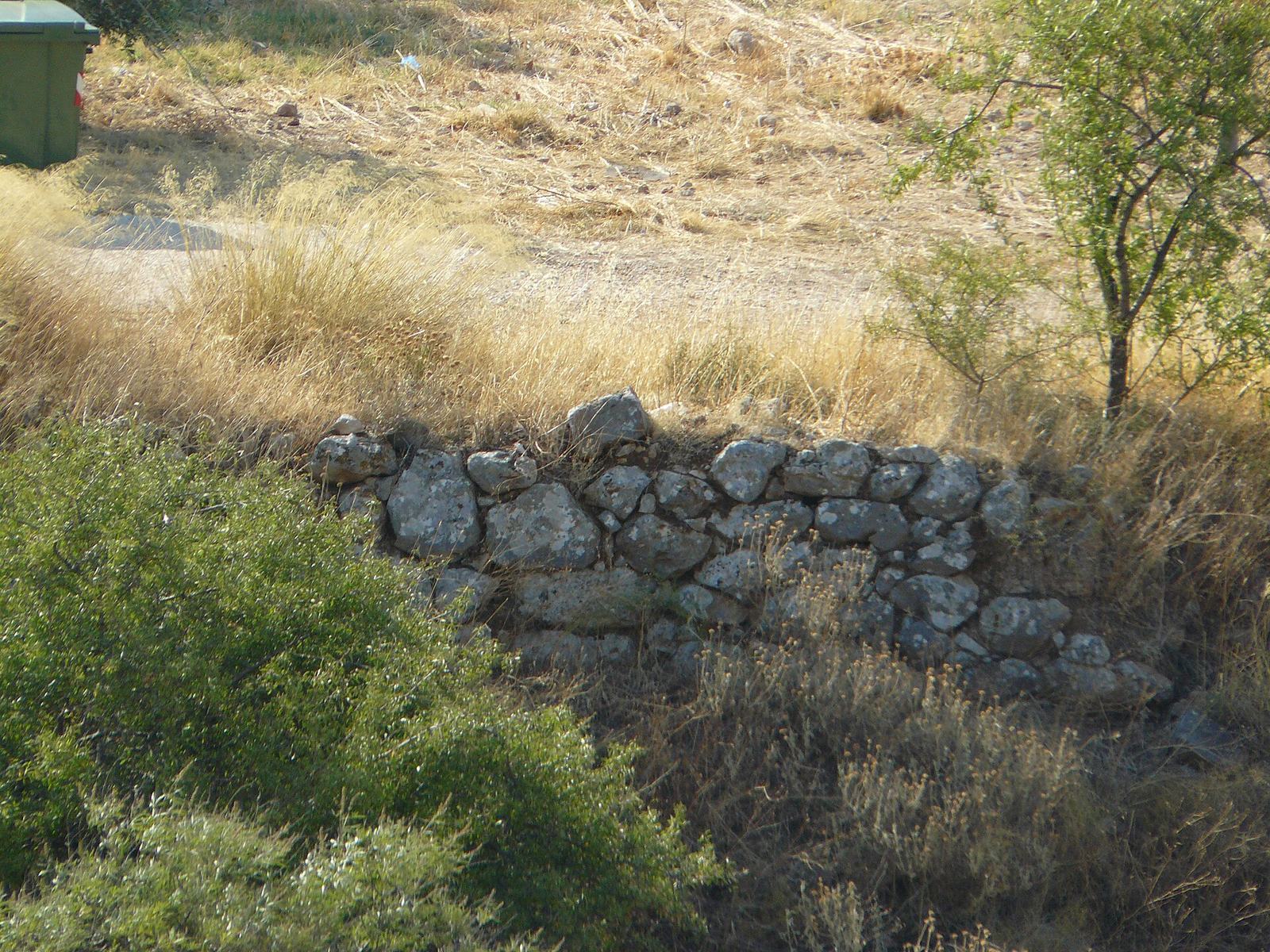
A rough retaining wall, about 1.25 m thick, supported the northern wall on the side facing the river. A section about 5 m long remains visible on the riverbank, roughly 30 m west of the church of Agios Ioannis and 40 m northeast of the Cyclopean Bridge. An entrance may have stood at the northeastern corner. About 17 m southwest of that point was a crosswall, followed by a second about 3 m farther on; each was approximately 2.4 m long.
A large concentration of Hellenistic roof tiles west of the second crosswall indicates that the western room had a roof. Inscriptions on the tiles identify the sanctuary as a public building of Argos. A few roof tiles and other architectural fragments belong to the sanctuary’s earliest phase.
Paved floor and pit
Slate slabs, 2–5 cm thick, paved the floor. In the eastern part, a pit had been dug about 0.5 m into the ground. It measured 1.4 m by 0.75 m and contained animal bones, ash, and pottery from the Archaic period, a later phase of ancient Greek history and art. A broken millstone covered the pit.
Finds
Finds include numerous figurines of a goddess, mounted figures carrying weapons, footed bowls for mixing wine and water, and large two-handled drinking cups. Pottery fragments from the fourth century BC bear Agamemnon’s name. The many goddess figurines figured in Marinatos’s interpretation of an early cult of Hera, while Cook cited the drinking vessels and armed riders in support of his view. Geometric-period pottery fragments, from an earlier era of Greek history and art, were found northeast of the bridge on the left bank of the Chavos. The finds are displayed at the Archaeological Museum of Mycenae.