Abbeyshrule Monastery: A Cistercian House in County Longford
Site at a Glance
- Popularity
- Very Low
- Country
- Ireland
- Primary era
- Medieval
- Eras represented
- Medieval, Early Modern
- Civilizations
- British, English, Irish
- Site type
- Religious
- Remains
- Monastery
On this page12 sections
History
Abbeyshrule Monastery is a ruined Cistercian abbey in County Longford, Ireland, founded by the O’Farrell family on an existing Christian settlement, probably around 1150, though 1200 is also proposed. The Cistercians were a monastic order that developed from Benedictine reform, and the abbey’s church was Gothic. Abbeyshrule was regarded as one of Leinster’s major Cistercian houses, although it was probably never wealthy. If the earlier foundation date is correct, it was Ireland’s fifth Cistercian house.
Foundation and affiliation
Abbeyshrule was a daughter house of Mellifont, meaning it was affiliated with that senior monastery, and belonged to the Clairvaux line, connected to one of the Cistercian order’s principal abbeys. In 1228, during the resolution of the Mellifont conspiracy, the house was temporarily separated from Mellifont and placed under Bective.
The monastery was also associated with the Latin names Benedictio Dei (“Blessing of God”) and Flumen Dei (“River of God”). The latter attribution is uncertain and may have resulted from confusion with Kilbeggan Abbey.
O’Farrell control and conflict
The Gaelic O’Farrell family, associated with local leadership in Longford, gained increasing control of the abbey and administered it entirely by the fifteenth century. After Abbot Gilbert’s death in 1430, Kenan O’Farrell took control as commendatory abbot, an office-holder who received an abbey’s revenues without necessarily belonging to its community. He was still in office in 1455, when a monk accused him of mismanagement. The abbey held extensive lands west of Ballnamanagh.
The monastery was besieged twice, once by forces from the Pale, the area of Ireland under English administration and control, probably in 1476, and once by Hugh Ruadh O’Donnell, a Gaelic lord and military leader. English troops burned the abbey in 1476, though the extent of the damage is unknown.
Dissolution and later use
Before the dissolution, the O’Farrells had taken most of the abbey’s property, and the monastic community probably ended by 1540. The property was granted to Robert Dillon of Dunimoney in 1569. Formal dissolution followed in 1592, during the reign of Elizabeth I, when the abbey was granted to John Lye.
After the monks left, the church continued to serve as a parish church for about two centuries. An attempt to restore the monastery in 1648 failed. The Flemish claimant John Francis de Lattre had himself named abbot in the hope of gaining support, but Bishop Patrick Plunkett of Ardagh objected to papal nuncio Rinuccini, a diplomatic representative of the pope, because Gerald O’Farrell already held the office. Rinuccini did not accept the objection, but the abbey was never restored.
Remains
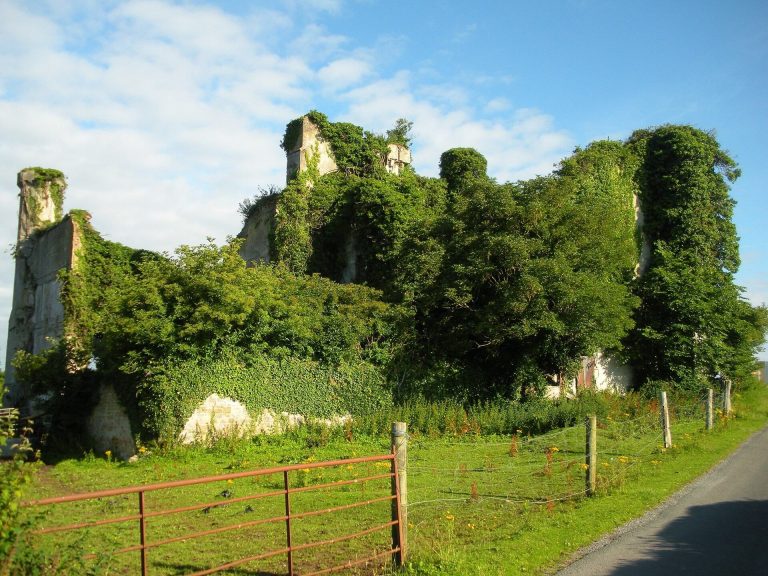
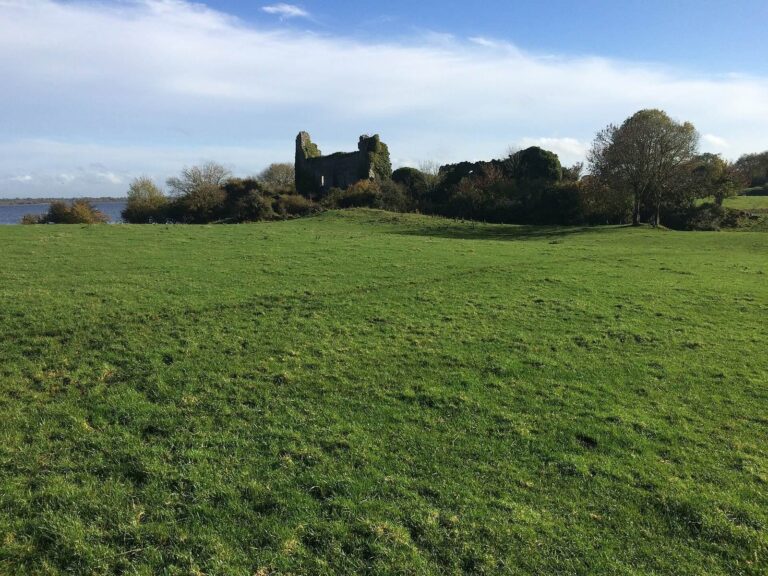
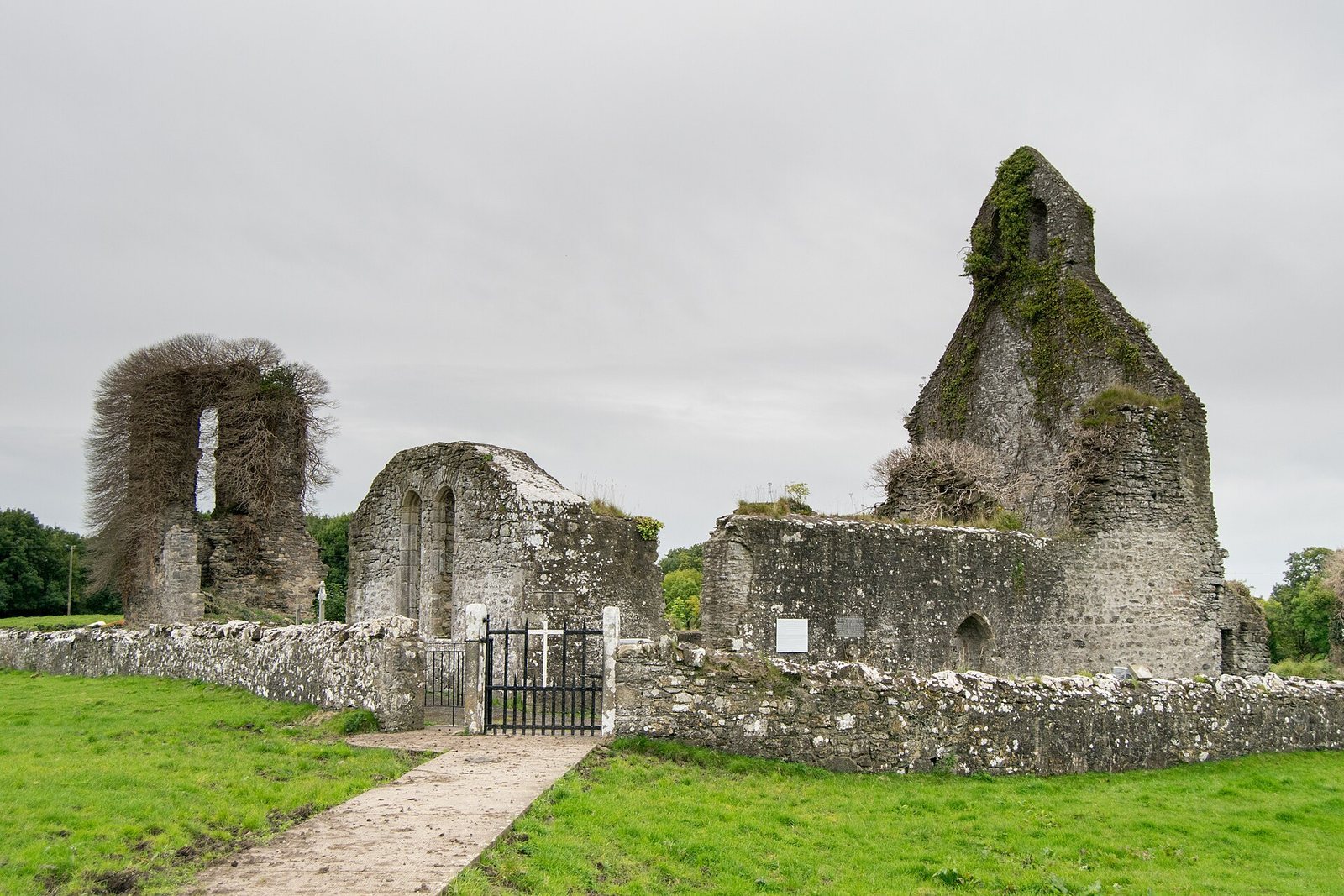
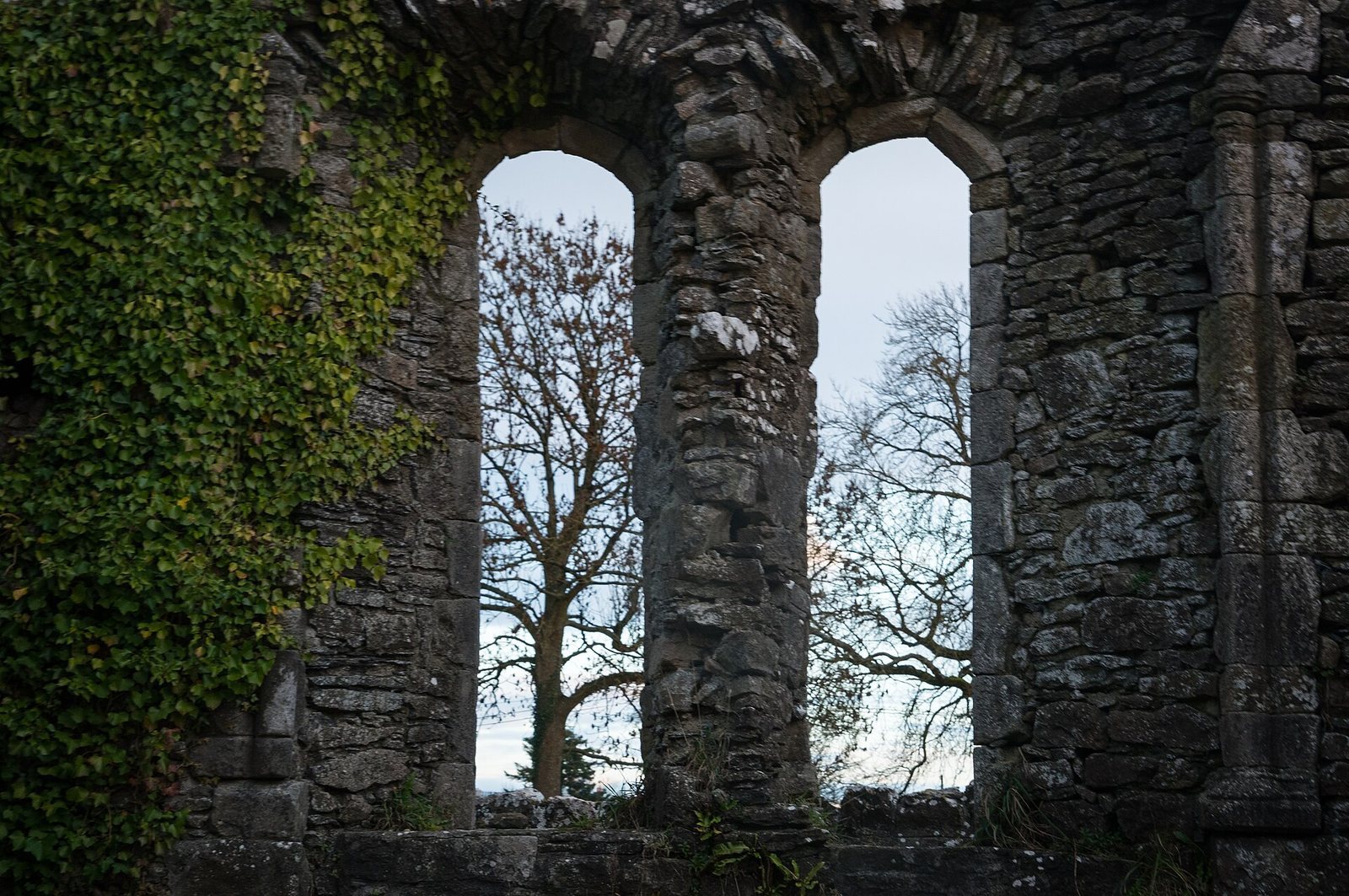
The monastery stands on the left bank of the River Inny, upstream from Ballymahon and just downstream from Abbeyshrule village on the opposite bank. It lies about 7 km east-northeast of Ballymahon, near the County Westmeath boundary. The Gothic church was aligned east to west, and the monastery contained numerous cells. The surviving remains are ruinous and overgrown, while foundations found beyond the visible buildings indicate that the complex extended across a wider area.
Church and cloister
Abbey church
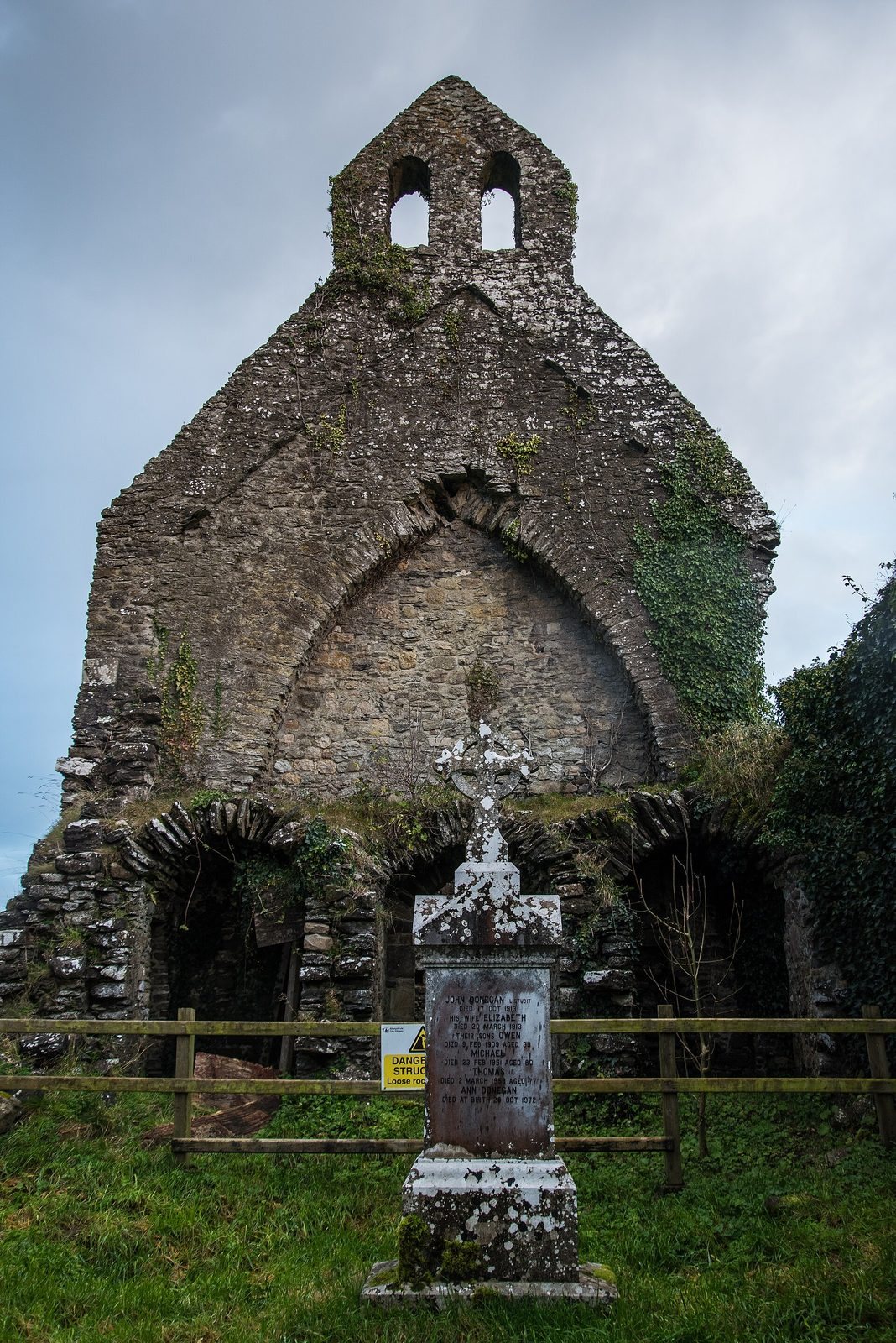
Parts of the church date to the thirteenth century. Work in the fifteenth and sixteenth centuries reduced its size for monastic use; further alterations in the seventeenth and eighteenth centuries made it smaller for parish worship. A chapel was inserted into the presbytery, the part of the church around the altar, during the seventeenth or early eighteenth century.
Cloister tower
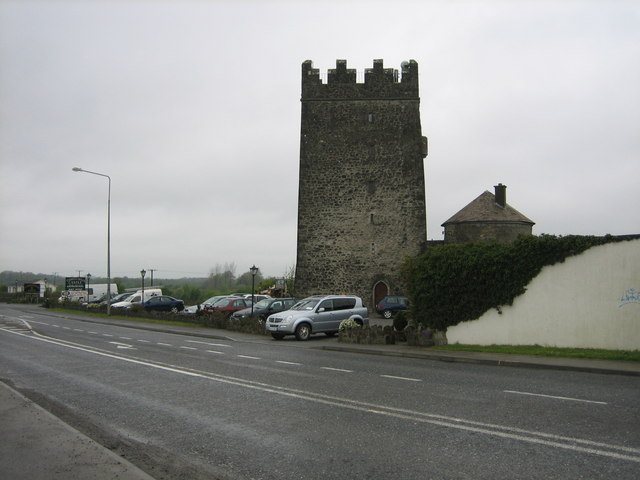
A massive tower stands at the southeast corner of the cloister. Its form is highly unusual among Cistercian buildings, and it may have been erected after the monastery’s period of monastic use. The tower survives.
Grounds and associated features
High cross
A high cross, a monumental freestanding cross, about one metre tall once stood in the monastery grounds. The original is now kept in the sacristy of Abbeyshrule’s Catholic church, and a reproduction stands at the entrance to the monastery grounds.
Fortified residence
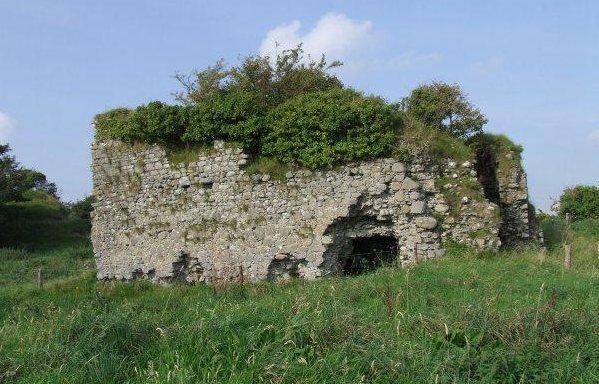
A fortified residence built after the Reformation, the sixteenth-century movement that led to the emergence of Protestant churches in Western Europe, stands about 30 m south of the church.
Burials
Numerous skeletons were found east of the church’s eastern end. Their discovery gave rise to a legend that all the monks had been massacred.