Roman Sites in Bulgaria: Explore Baths, Mosaic Villas and Walled Towns
Roman sites in Bulgaria include high-walled public baths, fortified spa towns, marble-decorated villas, painted tombs and early Christian mosaic floors. The collection extends from the Black Sea coast to inland Thrace and the Danube. It includes buildings designed around natural hot springs as well as rooms heated by furnaces and underfloor channels.
The examples below concentrate on surviving architecture and decoration: the bathing halls of Varna, the enclosure of Diocletianopolis, a villa’s columned courtyard and interiors whose paintings or mosaics preserve the arrangement of individual rooms.
Primary Function: All
Type: All
Popularity: All
Rating: All
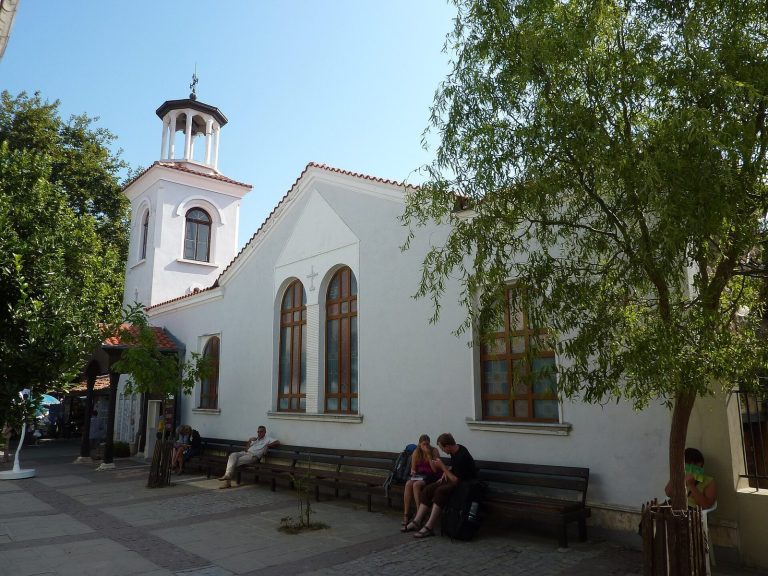
The Church of Saint George in Sozopol is a Bulgarian Orthodox church built in 1860, preserving important Christian relics and nineteenth-century…
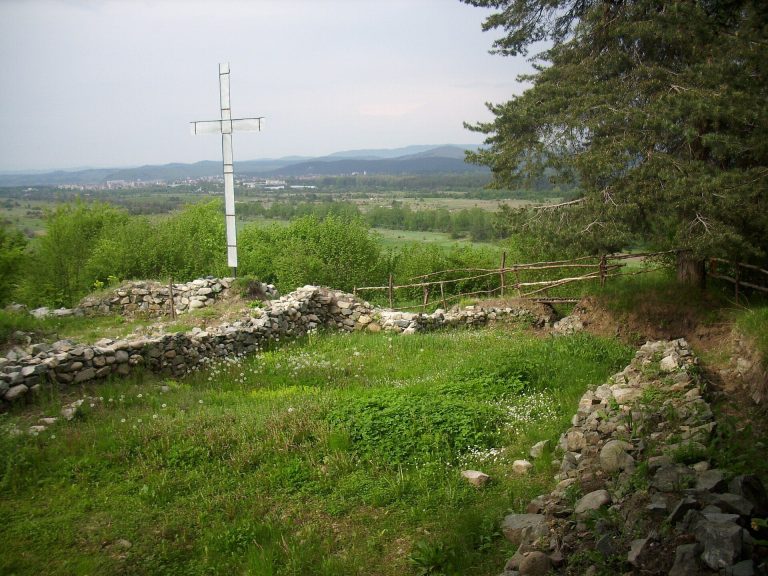
Shishmanovo kale, near Samokov, preserves the remains of an ancient and medieval fortified city, an episcopal center, and churches linked to…
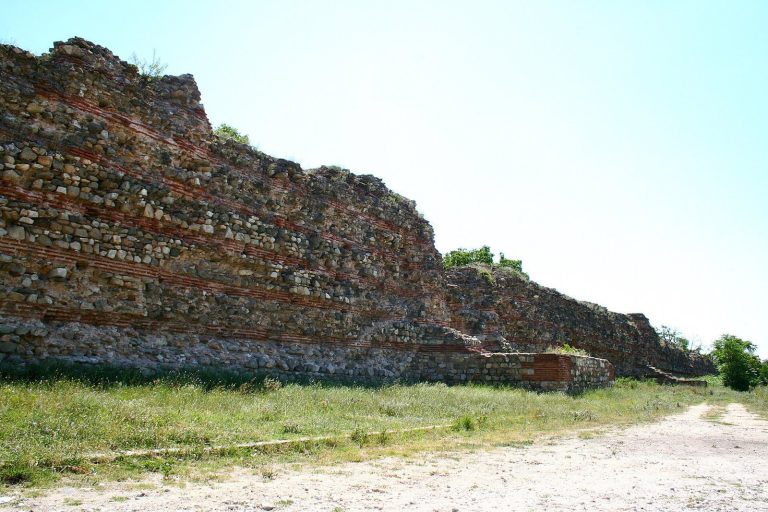
Diocletianopolis, in modern Hisarya, developed from a Thracian settlement into a Roman spa city and Christian centre. Its surviving walls, gates,…
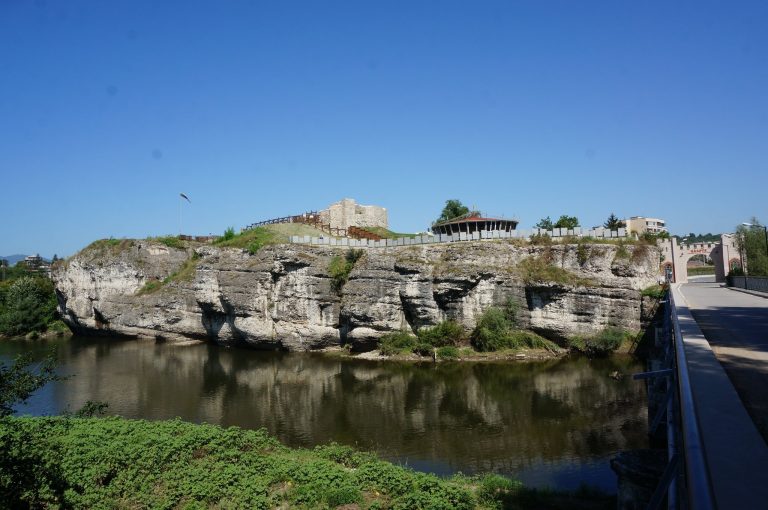
Mezdra Fortress, also called the Kaleto Archaeological Complex, preserves about 7,000 years of settlement, ritual, military, and cultural history on…
For details on how to use the maps, which sites are included, how popularity and ratings are determined, and how sites are classified, see the help page.
On this page6 sections
Varna’s public bathing halls
The Roman Thermae at Varna, ancient Odessus, preserve tall brick-and-stone walls from a large public bathing establishment. Entrances on the northern side led through vestibules and changing rooms, while the heated bathing spaces occupied the southern part of the symmetrical complex. A colonnaded exercise court connected with the principal halls.
The sequence included cold, warm and hot rooms. Furnaces heated air beneath raised floors and through cavities in the walls, while a water tank and channels supplied the bathing installations. Storage galleries along the sides of the building held fuel. These service arrangements supported the large rooms above them, where marble facing, columns and sculpture once decorated the interiors.
Diocletianopolis: walls around a spring-fed town
At Diocletianopolis, now Hisarya, extensive stone-and-brick defences enclosed a town centred on hot mineral springs. Towers and gateways survive along the circuit, while an additional defensive line strengthened the exposed northern side. Barracks were built along parts of the walls to accommodate the garrison.
Inside the enclosure, the bathing complex used the naturally hot water in its heating and bathing arrangements. Pools and rooms formed part of a broader system for distributing the spring water through the town. This offers a useful counterpart to Varna’s furnace-heated establishment: both places contain public baths, but their water and heat sources shaped different practical solutions.
Villa Armira’s marble courtyard and mosaics
Villa Armira preserves the decorated residential part of a large estate. Rooms surrounded a courtyard with a central pool, bordered by Corinthian columns and carved marble fittings. Reception spaces, bedrooms, service rooms and baths occupied different parts of the house, with underfloor heating serving selected interiors.
The pool retained a largely preserved white marble mosaic, while the surrounding porticoes have predominantly black-and-white geometric pavements. Some surfaces show wear and ancient repairs. The marble colonnade has been partly restored using original elements, so the present courtyard combines surviving floors with reassembled architectural features.
Later enlargement added a substantial reception and dining hall. The house therefore developed beyond its earlier courtyard arrangement, expanding the rooms used for receiving guests as well as the service and heating installations behind them.
Bird mosaics in the Episcopal Basilica of Philippopolis
The Episcopal Basilica of Philippopolis in Plovdiv preserves extensive mosaic floors from a large early Christian church. Its nave and aisles led towards an eastern apse, while an entrance court and porticoes occupied the western end. Columns and masonry supports divided the long interior.
Successive mosaic layers record changes in the decoration. Geometric patterns, vessels, plants and numerous birds cover the surviving floors, with peacocks among the most recognisable figures. These pavements belong to the late antique Christian phases of the city. A modern protective building presents the archaeological remains; the ancient basilica does not survive as a complete roofed church.
Painted attendants in the Roman tomb at Silistra
The Roman tomb at Silistra contains a compact burial chamber covered by a curved brick vault. Its painted walls show a couple opposite the entrance, approached from either side by male and female attendants carrying clothing and other objects. The procession is arranged across a sequence of framed panels.
Birds, plants and hunting imagery add further decoration to the chamber. The processions advance towards the couple on the wall opposite the doorway, placing them at the centre of the painted composition.
Explore the collection
Explore sites on the map or in the grid. Map icons reflect each site’s primary function, helping you identify different kinds of places at a glance. Narrow the results by primary function, site type or era, with additional filters for popularity and rating. Select a map marker to view the site’s details and open its article, or open the article from its grid entry.