Castles in Belarus: Explore Medieval Towers, Royal Residences and Columned Palaces
Castles in Belarus include substantial medieval towers, royal residences on former fortified hills and later palaces whose battlements were architectural decoration. This collection uses the broader castle and residence group, allowing defensive structures and country houses to appear together on the map.
The examples below concentrate on standing masonry and palace arrangements. They also distinguish later rebuilding from earlier fabric: several prominent residences were restored or substantially reconstructed after damage, and their present appearance cannot be assigned to a single medieval or early modern phase.
Primary Function: All
Type: All
Civilization: All
Popularity: All
Rating: All
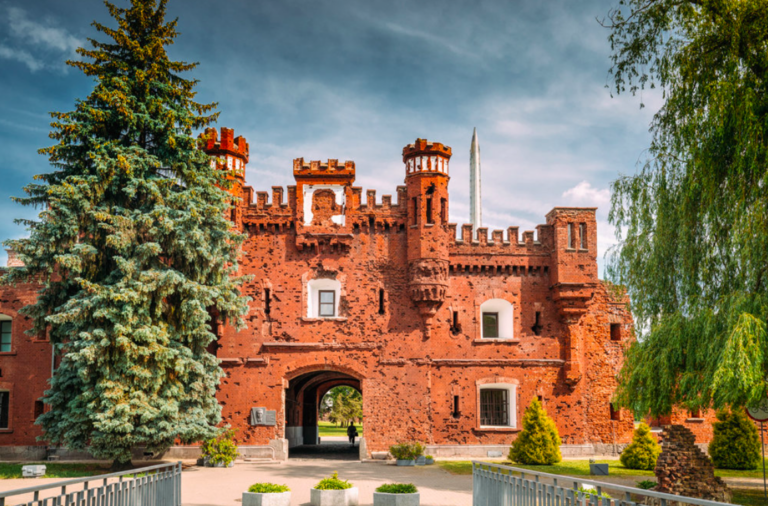
Brest Fortress was built by the Russian Empire between 1833 and 1842 at a strategic river and canal junction. After serving as a frontier fortress,…
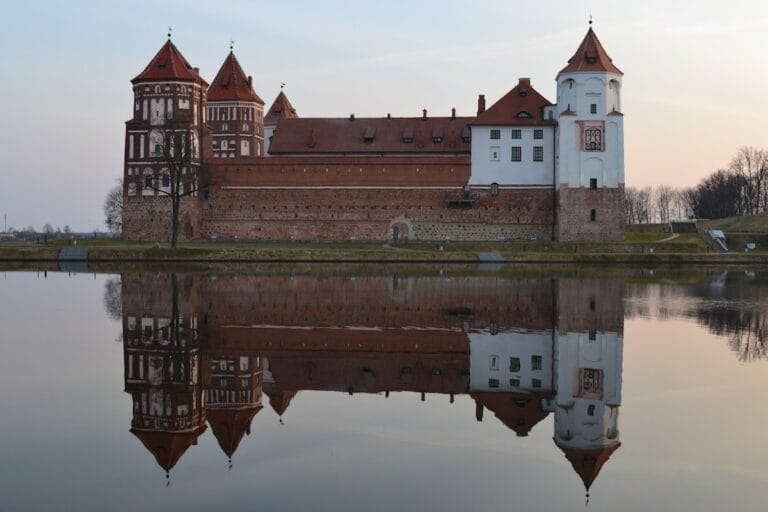
Mir Castle Complex developed from a sixteenth-century fortified residence into a Radziwill princely palace, later enduring war, abandonment,…
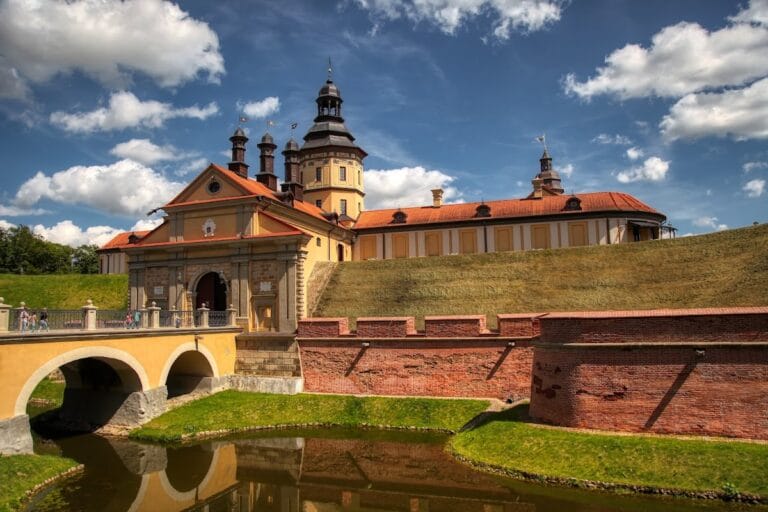
Nesvizh Castle in Belarus developed from a sixteenth-century Radziwill residence into a major fortified complex, later rebuilt after wartime…

Lida Castle was built in the 1320s under Grand Duke Gediminas as a frontier stronghold of the Grand Duchy of Lithuania. Its surviving walls, towers,…
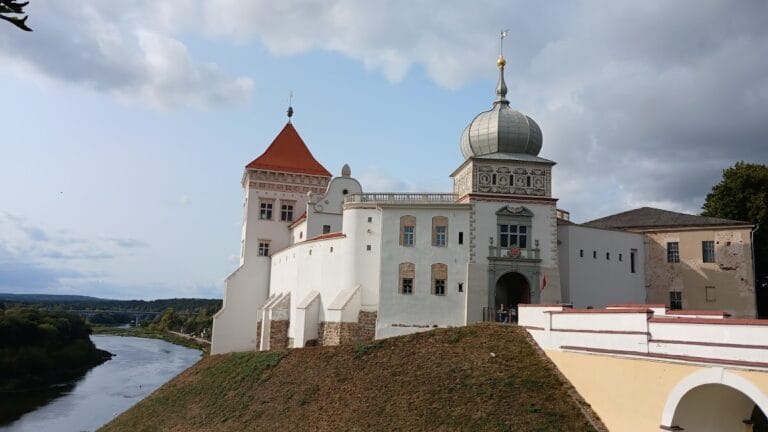
Old Grodno Castle in Hrodna developed from an early fortified settlement into a princely seat, frontier stronghold, and Renaissance royal residence.…

Kosava Castle is a nineteenth-century Neo-Gothic palace in Belarus, built by the Pusłowski family and later damaged by war and fire. Its restored…
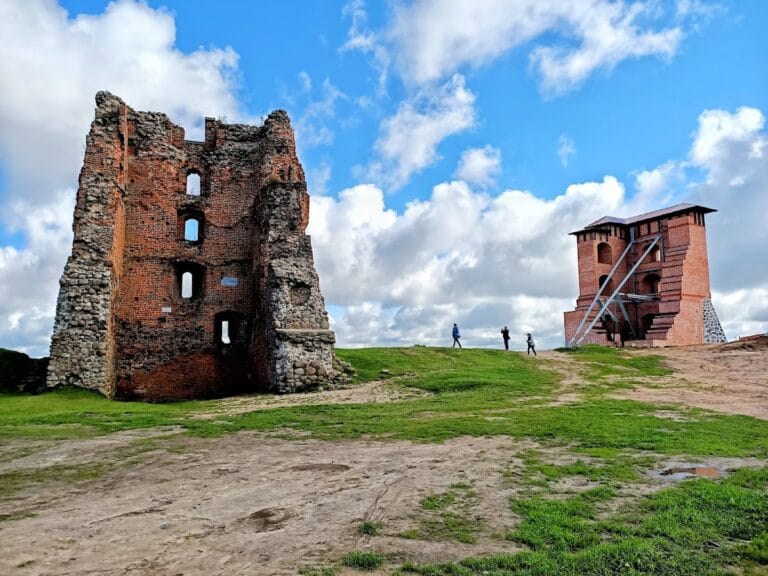
Navahrudak Castle developed from an eleventh-century wooden stronghold into a major political, residential, and defensive center of the Grand Duchy…
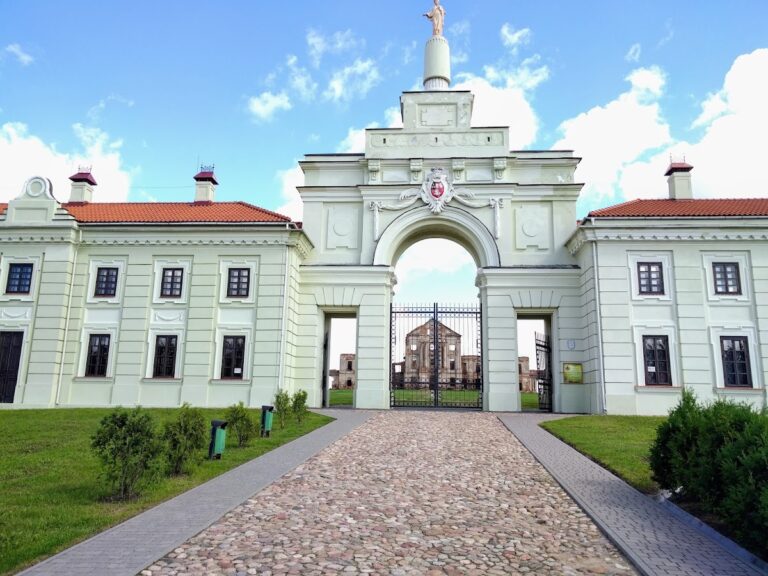
Ruzhany Palace in Belarus developed from a sixteenth-century estate into a Baroque and early Classical residence of the Sapieha family. War,…
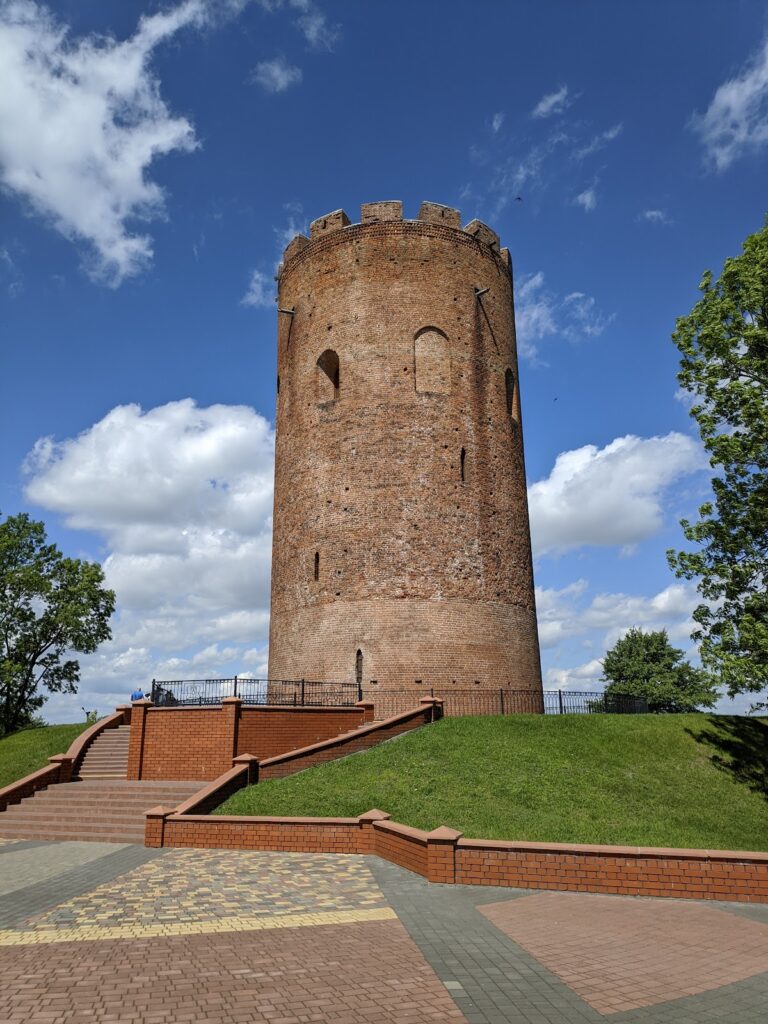
Founded in 1276 by the Volhynian prince Vladimir Vasilkovich, Kamyenyets protected the northern frontier of his principality. Its principal surviving…
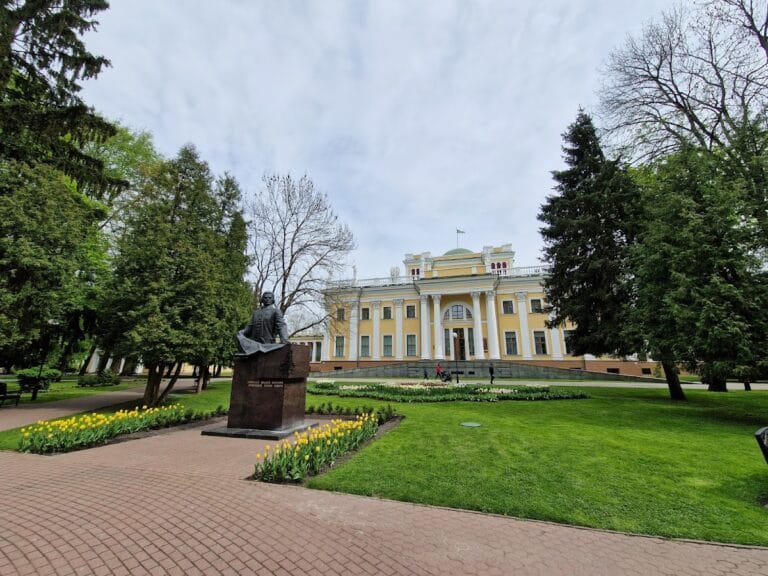
Homel Castle was a wooden-and-earth fortress and administrative centre on the Sozh River, serving the Grand Duchy of Lithuania and later the…
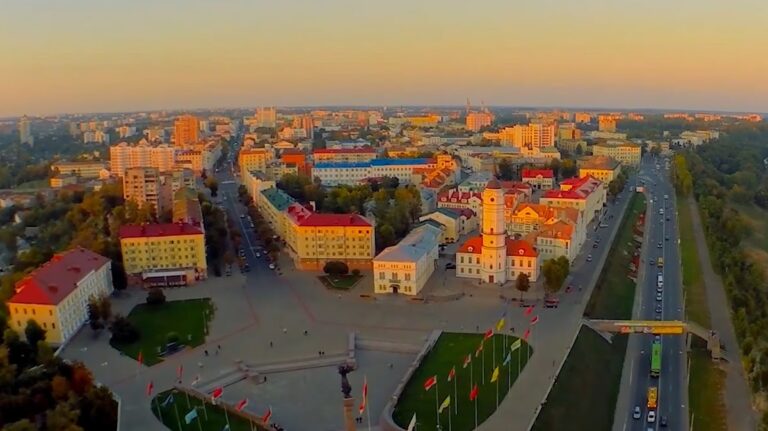
Mahilioŭ Castle was the principal fortification of Mogilev from the sixteenth to the nineteenth century. Built in 1526 on Mogila Hill, it developed…
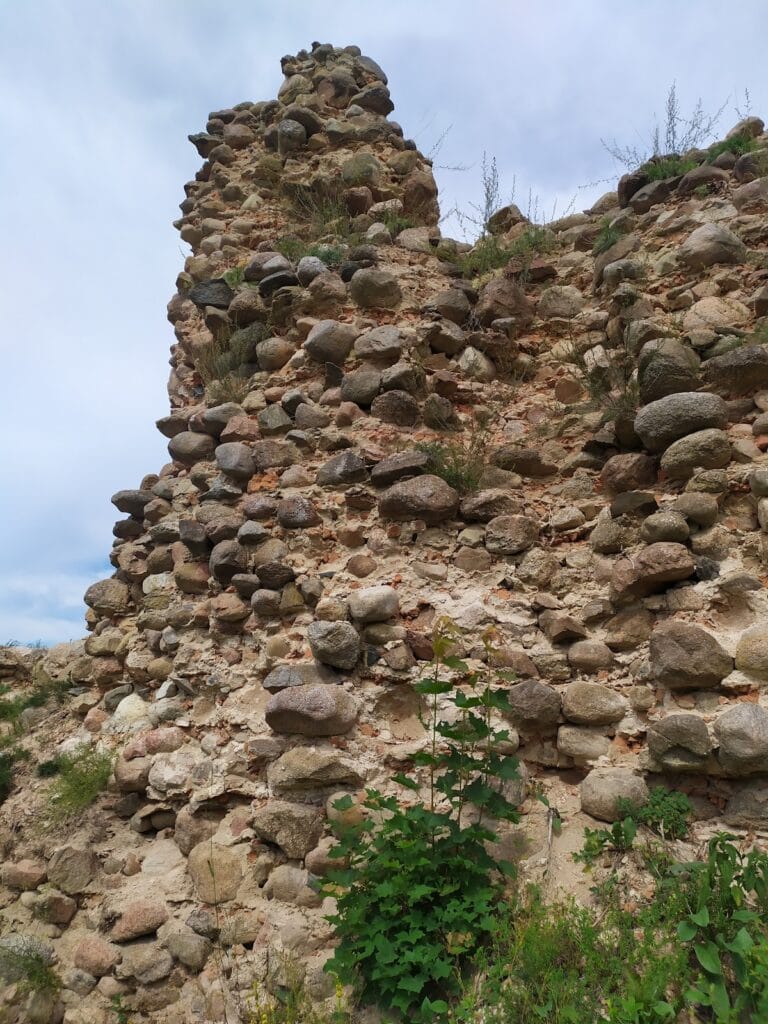
Kreva Castle in Belarus was an early masonry stronghold of the Grand Duchy of Lithuania, a dynastic residence and the setting of major events in…
For details on how to use the maps, which sites are included, how popularity and ratings are determined, and how sites are classified, see the help page.
On this page5 sections
Kamyenyets: a medieval brick tower
The tower at Kamyenyets is the substantial survivor of a fortified centre once protected by timber walls, an earthen rampart and a water-filled ditch. Built in the late thirteenth century, the round brick structure rises about 30 metres. Its elevated fighting position covered the vulnerable area near the fortress entrance.
The tower belongs to a regional tradition associated with Volhynia, in which a tall masonry strongpoint stood within a broader defensive enclosure. The vanished timber perimeter should not obscure the scale of the standing brickwork. Here the tower itself is the principal historic structure, rather than one part of a complete surviving castle circuit.
Royal residences at Grodno
Old Grodno Castle occupies a steep hill bounded by the Neman and Gorodnichanka. Its irregular outline follows the ground that earlier timber and stone fortifications defended. In the sixteenth century, Stephen Bathory developed a Renaissance royal residence within the site, with decorated facades and carved window surrounds.
The complex underwent major reconstruction beginning in the 2010s, based on a Renaissance interpretation of the castle. Restored facades and recreated interiors therefore need to be distinguished from surviving earlier masonry. Its position above the rivers still explains the choice of the hill, while the palace work explains the later emphasis on royal accommodation.
Nearby, New Grodno Castle was planned as a palace with a central block and side wings surrounding an open court. Its gate retains stone sphinxes, but the main building’s appearance changed substantially in the mid-twentieth-century reconstruction. A large six-column Doric portico replaced the earlier Baroque treatment. Comparing the two castles is useful precisely because both are royal sites whose visible architecture includes major later rebuilding.
Kosava Castle: a Neo-Gothic palace
Kosava Castle was built as a palace in the nineteenth century. Its symmetrical central block and connecting wings use orderly residential planning, while pointed arches, crenellated towers and slit-like openings give the exterior a fortified appearance. The towers rise to different heights across the facade.
These Gothic forms were part of the design of a grand residence. They belong to a different architectural purpose from the defensive brick tower at Kamyenyets. Kosava also forms part of a palace-and-park composition, with terraces and a central axis directed through the building and grounds. Extensive modern restoration has repaired the structure and reconstructed parts of its interior, including the ceremonial staircase.
Bulhak Palace: columned halls and estate buildings
Bulhak Palace in Žyličy presents a different kind of country residence. A six-column Corinthian portico marks the main entrance, and matching smaller porticoes articulate the ends of the principal block. A long wing incorporates a chapel and additional accommodation, with service structures belonging to the wider estate.
Inside, rooms combine aligned doorways with corridors. The ceremonial hall is divided by columns and decorated with a broad relief frieze, gilded capitals and a coffered ceiling. Other rooms contain painted ornament, stucco and scenes from classical mythology. The palace, surviving service buildings and park allow the residence to be understood as the centre of an estate, beyond the columned entrance alone.
Explore the collection
Explore sites on the map or in the grid. Map icons reflect each site’s primary function, helping you identify different kinds of places at a glance. Narrow this collection by primary function, by a site type within the castle and residence group, or by civilization and era. Additional filters cover popularity and rating. Select a map marker to view the site’s details and open its article, or open the article from its grid entry.