Homel Castle: A Frontier Fortress of Belarus


Site at a Glance
- Rating
- 4.8
- Popularity
- Medium
- Country
- Belarus
- Primary era
- Unclassified
- External website
- Open
- Eras represented
- Unclassified
- Civilizations
- Unclassified
- Site type
- Domestic
- Remains
- Elite Residence
On this page15 sections
History
Homel Castle was a wooden-and-earth defensive and administrative stronghold in Homel, Belarus, on a high right-bank site above the Sozh River and the Gomeyuk stream. Developing from an earlier fortified settlement, it served as a frontier castle of the Grand Duchy of Lithuania from the fourteenth century and remained in use until the eighteenth century.
From fortified settlement to frontier castle
Homel grew from a settlement established at the end of the first millennium AD. Its early fortified centre, known as a detinets, was the protected central district of an East Slavic town and functioned as its political, military, and administrative core. Occupying a promontory between the Sozh and Gomeyuk, the settlement was strengthened by ramparts and ditches during the eleventh and twelfth centuries. Over time, it developed into a feudal castle.
By the late first third of the fourteenth century, Homel had become a fortified frontier town on the southeastern edge of the Grand Duchy of Lithuania, a major medieval and early-modern state whose frontier castles served both military and administrative purposes. The castle formed part of the defensive belt along the Sozh region and was repeatedly reinforced as military pressure increased.
The siege of 1535 and renewed defenses
In June 1535, an army of Sigismund I the Old besieged Homel under the command of Grand Duchy of Lithuania Hetman Yuri Radziwill, Crown Hetman Jan Tarnowski, and Kiev Voivode Andrei Nemira. A voivode was a high-ranking territorial governor or military official. The besieging army used artillery and mining specialists. After sustained bombardment, the flight of the Russian governor Dmitry Shchepin-Obolensky and other officers, and the departure of the boyar children and handgunners, the remaining defenders surrendered the town and castle.
The castle was soon repaired and supplied with saltpeter, gunpowder, bullets, and lead by the Grand Ducal treasurer Ivan Gornostai. In 1537, Sigismund I temporarily exempted the townspeople of Homel and the surrounding district from compulsory castle labor, apart from minor emergency repairs. The local administrator, Prince Vasily Tolochinsky, nevertheless seized the privilege, compelled residents to work, and imprisoned those who resisted, at times holding their wives and children as pledges. The king condemned this treatment because frontier communities were expected to receive more lenient administration.
Raids and the Livonian War
Repeated destructive raids by Crimean Tatars increased the castle’s defensive importance. Nearby towns sent grain and mounted watch detachments, while weapons and ammunition arrived from the Vilnius arsenal in 1552, 1562, and 1563. The Chechersk district maintained a watch detachment at its own expense, and Rogachev supplied rye and oats for the castle stores.
In 1557, the garrison was raised to 200 drabs, infantry soldiers serving in the forces of the Polish–Lithuanian Commonwealth. Residents of Chechersk, Propoisk, and other towns and districts in the Dnieper and Sozh regions were mobilized for repairs. During the Livonian War of 1558–1583, a conflict involving the Russian state and its rivals over control of territories around the eastern Baltic, forces of Ivan IV the Terrible briefly captured Homel. A detachment led by Yuri Radziwill retook the town in July 1576. On 5 May 1581, tsarist troops attacked at night and burned the town, but they failed to take the castle.
Seventeenth-century conflicts
During the war between Russia and the Polish–Lithuanian Commonwealth in 1614–1615, Homel Castle held 40 Cossacks and 40 soldiers, supported by the town militia. In 1633, the town and castle repelled attacks by the Cossack hundreds of Bohdan Bulhakau and Ivan Yermolin.
In October 1648, Ukrainian Cossacks led by Colonel Holovatsky and Belarusian peasants occupied Homel. They plundered members of the szlachta, the legally privileged noble estate of the Polish–Lithuanian Commonwealth, along with other wealthy inhabitants. Bohdan Khmelnytsky, the Cossack hetman who led the major uprising against the Commonwealth from 1648, soon recalled Holovatsky’s detachment to Ukraine.
After the Battle of Korsun, townspeople helped Colonel Martyn Nebaba’s Cossacks occupy Homel in 1649. The Treaty of Zboriv that year enabled Lithuanian Hetman Janusz Radziwill to gather forces against the uprising in the Homel region and recapture Homel, Chechersk, and other towns. In 1651, Khmelnytsky sent forces under Colonels Pavel Zabela and Oksha toward Homel during another advance into the southern Belarusian towns.
The siege of 1654
The uprising in Belarus and the threat from the Russian state led to larger garrisons in the frontier castles of the Sozh region. Hetman Radziwill sent 700 infantrymen to Homel Castle in March 1654. By summer, the garrison may have numbered 2,000, chiefly German and Hungarian infantry together with a Tatar company.
In June 1654, at the beginning of the Russo-Polish War of 1654–1667, a prolonged conflict between the Russian state and the Polish–Lithuanian Commonwealth over territories in eastern Europe, an army of 20,000 commanded by Hetman Ivan Zolotarenko advanced from Novhorod-Siverskyi and besieged Homel. The army brought substantial artillery and ammunition. Four assaults launched by 11 July were repelled, while the defenders made sorties. Zolotarenko then tried to force a surrender by depriving the castle of food and water and appealed to the defenders in the name of Tsar Alexei Mikhailovich and Bohdan Khmelnytsky. They refused.
The besiegers placed several small guns on the Church of the Savior beyond the Gomeyuk and fired heated shot, causing a fire. A sortie intended to destroy the artillery position failed. The besiegers subsequently found and blew up the concealed passage leading to the Sozh. With the water supply cut, the castle’s position became untenable. After more than a month and a half of siege, its inhabitants, colonels, captains, and other defenders surrendered on 13 August 1654.
Rebuilding and transformation
The war brought extensive devastation to Homel, although records from 1660 indicate that the castle still retained its strength. In 1737, Prince Mikhail Czartoryski, owner of the Homel starostvo, an administrative district or estate in the Polish–Lithuanian system, built a new strong wooden castle with towers and walls. He deepened the ditches and repaired the drawbridge.
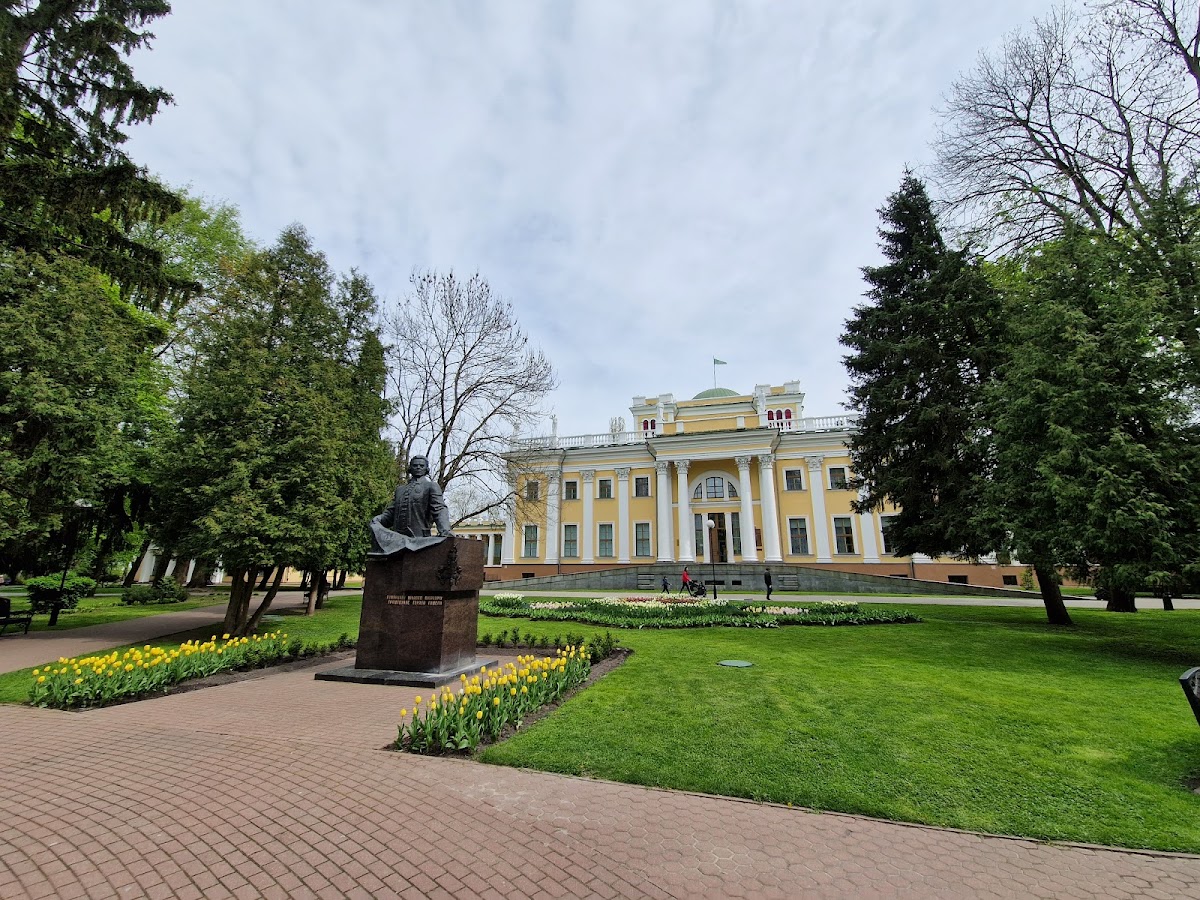
After eastern Belarus became part of the Russian Empire in 1772, Homel was presented to Count Pyotr Rumyantsev. He found a powerful castle surrounded by a palisade, a defensive barrier of closely set vertical wooden stakes. The fortifications still existed in 1780. Their wooden towers and walls were later dismantled and the ramparts levelled, and construction of the stone Rumyantsev–Paskevich Palace began on the former castle site in 1785. Homel Castle is included in the State List of Historical and Cultural Values of the Republic of Belarus under code 313B000026. Visual reconstructions have drawn on research by A. A. Makushnikov, with graphics by Yuri Lupinenko and a model by Anton Bazylenka.
Remains
The castle occupied a high promontory terrace between the Sozh and Gomeyuk. Its early fortified area covered about 1 hectare and was separated from surrounding ground by a deep ditch. The twelfth-century detinets expanded to about 1.4 hectares, while the later feudal castle occupied approximately 1.3 hectares. The castle had an elongated oval plan about 200 metres long and 90 metres wide, with a segment-shaped fortified area enclosed by a defensive perimeter of roughly 460 metres.
Fortified enclosure
Ramparts and timber defenses
In the eleventh and twelfth centuries, the side facing the Sozh was reinforced with an earthen rampart and a wooden palisade. The wooden structures above the rampart burned in the thirteenth century. Later defenses included a substantial rampart, multi-level wooden towers, and log-built walls with a fighting gallery. The walls were coated with clay to a considerable height, a treatment that protected the timber from decay and helped shield it from fire.
Town ditch and entrance
Urban settlement extended around the castle on its western and southern sides. A defensive ditch about 30 to 35 metres wide separated the castle from the town, while steep, high slopes toward the Sozh and Gomeyuk strengthened the position. An entrance gate was reached by a drawbridge spanning the ditch. The bridge was called a vzvod.
Water passage
A concealed underground passage connected the castle with the Sozh and allowed defenders to collect water during sieges. During the 1654 siege, the besiegers located the passage and blew it up. The destruction of this water supply contributed directly to the surrender of the castle on 13 August.
Later wooden castle and palace site
The 1737 reconstruction
The castle rebuilt in 1737 had wooden towers and walls, numerous loopholes, or small openings for firing weapons, deeper ditches, and a repaired drawbridge. A palisade surrounded the later fortification. Its towers, walls, and ramparts were eventually removed after the site passed into the Russian Empire.
Rumyantsev–Paskevich Palace
Construction of the stone Rumyantsev–Paskevich Palace began on the former castle site in 1785. The palace remains as the principal surviving architectural presence associated with the location of Homel Castle.
