Castles in Armenia: Explore Mountain Fortresses, Basalt Towers and Walled Monasteries
Castles in Armenia often use steep slopes and deep gorges as part of their defences. Massive basalt walls reinforce exposed approaches, while gates, cisterns and passages show how a garrison entered and supplied a stronghold. The collection also includes fortified monasteries, where substantial churches and vaulted halls stand within protected compounds.
The examples below concentrate on those standing structures, from the mountain walls of Amberd and Smbataberd to the enclosed spaces of Haghpat and Akhtala. A later circular fortress at Gyumri adds a different form and building period.
Primary Function: All
Type: All
Civilization: All
Popularity: All
Rating: All
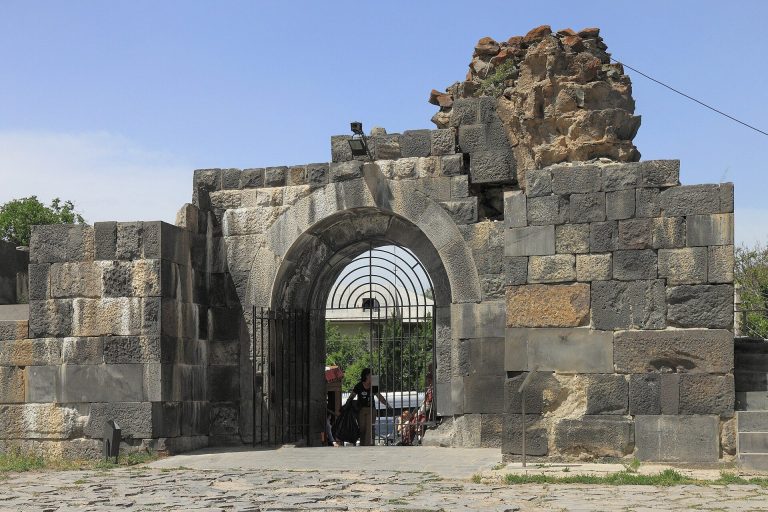
Garni Fortress in Armenia developed from an Iron Age settlement into a major royal residence, military station, and urban center. Its remains include…
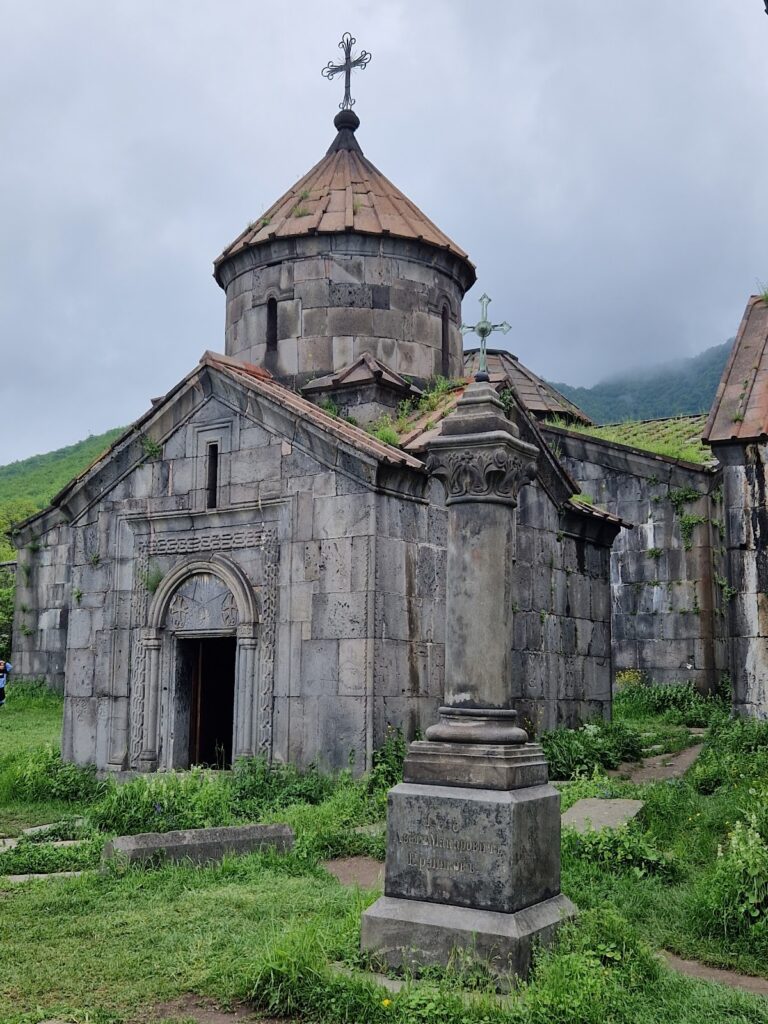
Founded in 976 in northern Armenia, Haghpat Monastery developed into a major medieval center of worship, education, manuscript production, and…
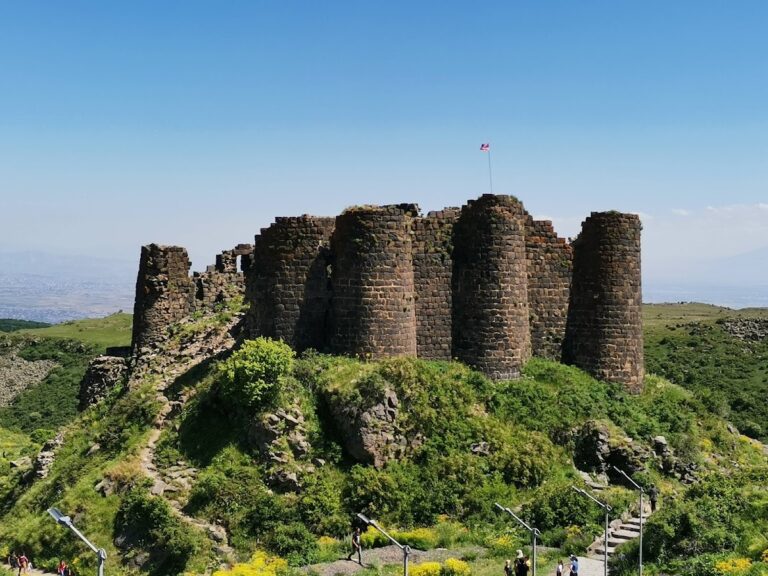
Amberd is a high-altitude Armenian fortress whose history spans prehistoric settlement, Bagratuni and Pahlavuni rule, Seljuk conquest, Zakarian…
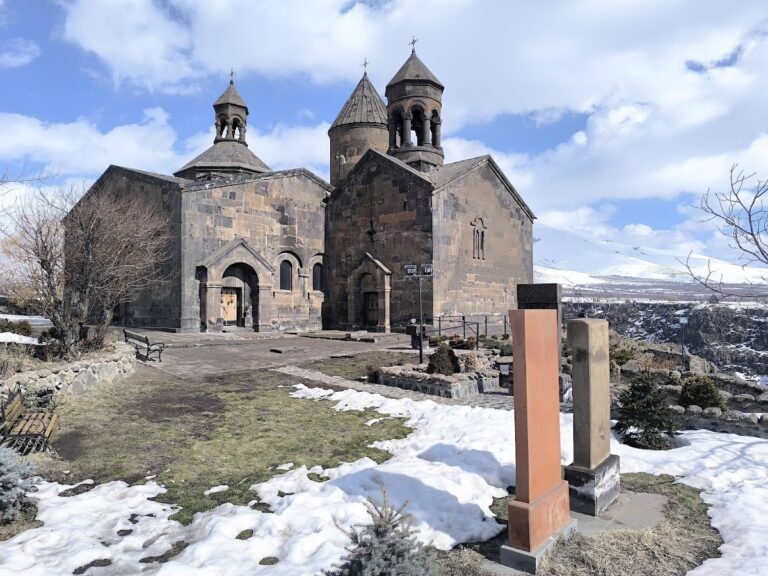
Saghmosavank is a medieval Armenian monastic, educational, and manuscript-producing center above the Kassagh River, with churches, a gavit, chapel,…
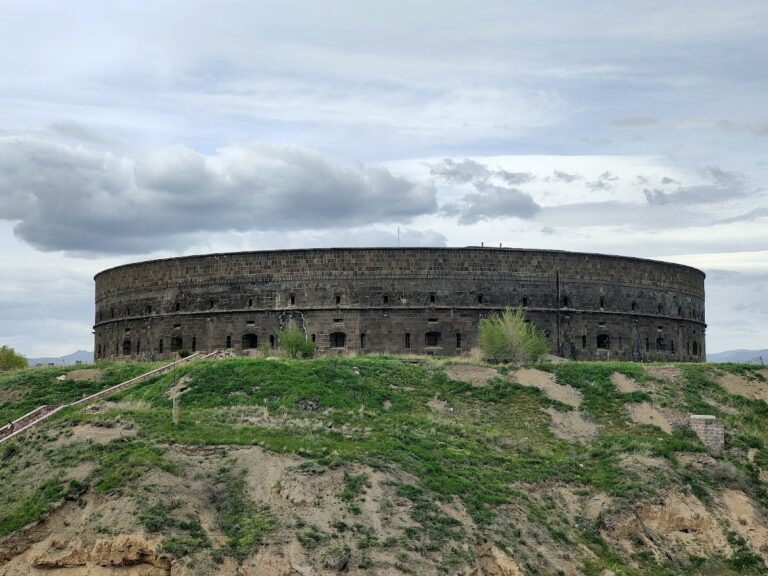
Sev Berd is a nineteenth-century Russian Imperial fortress in Gyumri, Armenia, built as a military outpost near the Ottoman border and later…
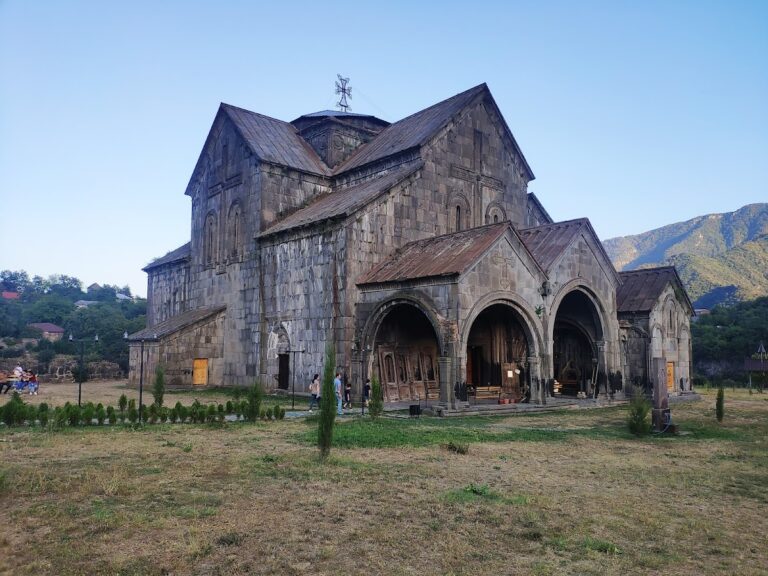
Akhtala Monastery in Armenia is a medieval religious and defensive complex known for its fortress walls, dynastic burials, inscriptions, and…
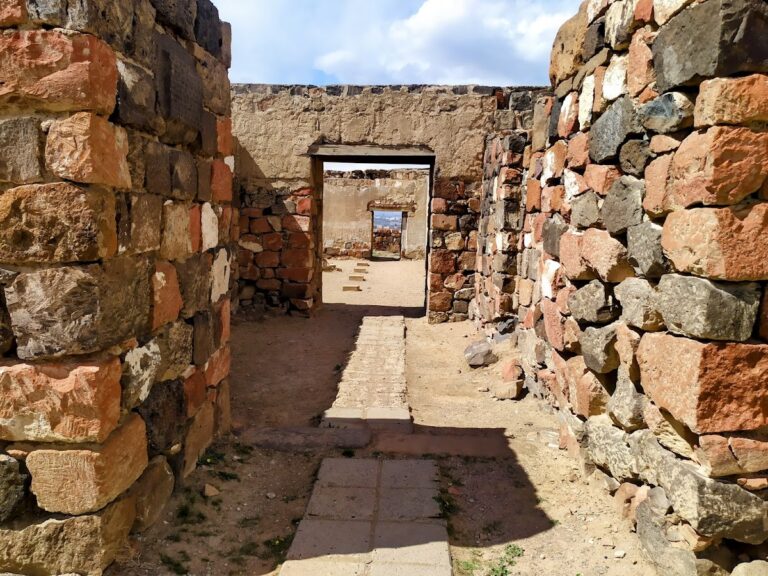
Erebuni Fortress, founded in 782 BC on Arin Berd hill in Yerevan, was a major Urartian military, administrative, economic, and religious center. Its…

Harichavank Monastery in Armenia developed from an early medieval foundation into an important Armenian religious, educational, and cultural center.…
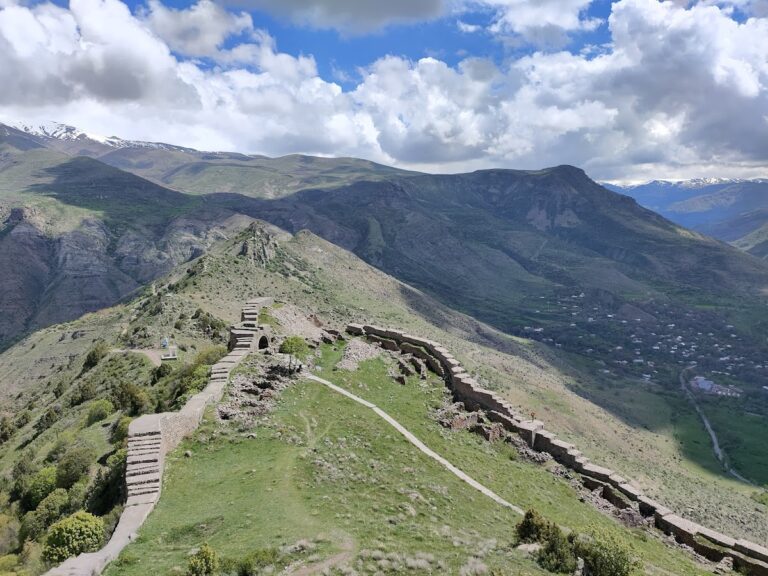
Smbataberd is a medieval fortress in Vayots Dzor associated with the Syuni and Orbelian dynasties. Its walls, citadels, entrances, towers, and water…
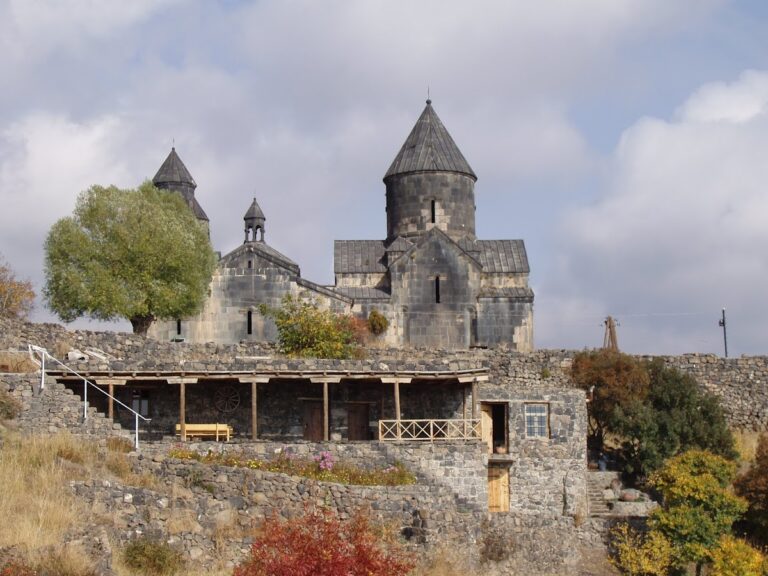
Tegher Monastery is a thirteenth-century Armenian Apostolic complex on the slopes of Mount Aragats, known for its domed church, gavit, inscriptions,…
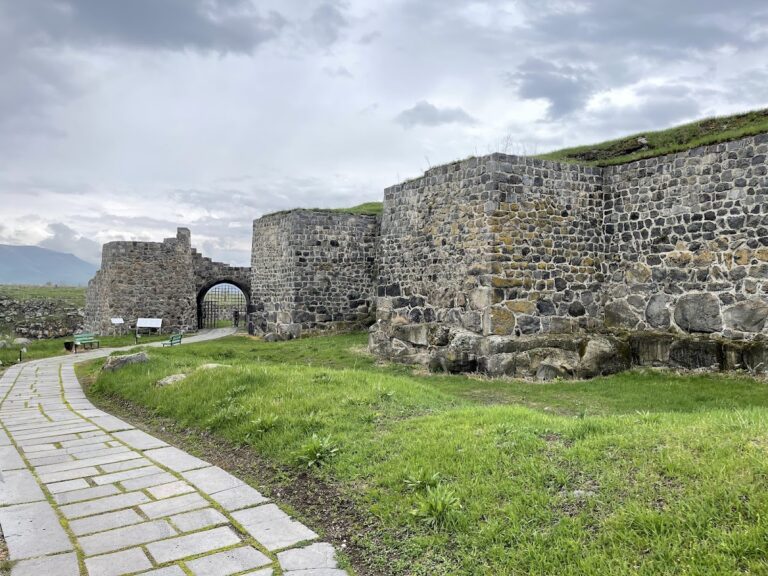
Lori Berd Fortress was founded in the tenth century and became the capital of the Kingdom of Tashir-Dzoraget in 1065. Its surviving walls, bridges,…
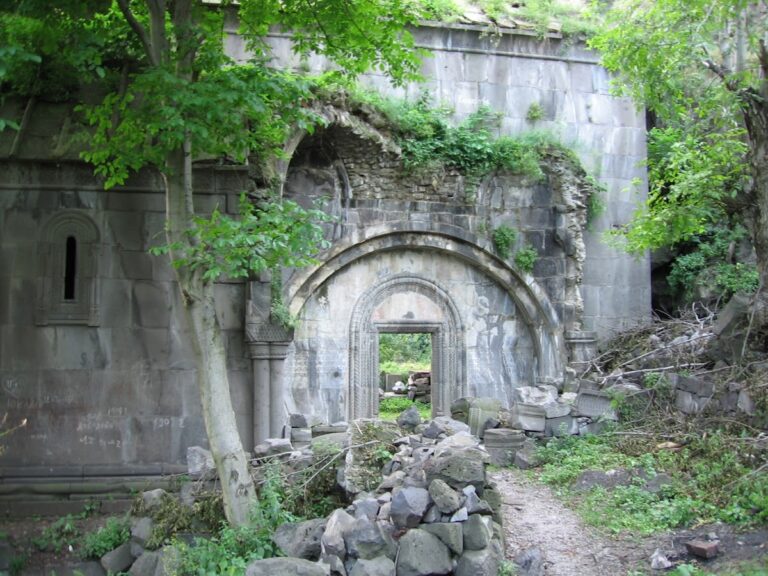
Kobayr monastery in northern Armenia developed from a Kyurikian foundation into a major Armenian-Chalcedonian complex associated with the Zakaryan…
For details on how to use the maps, which sites are included, how popularity and ratings are determined, and how sites are classified, see the help page.
On this page5 sections
Amberd: castle walls, bathhouse and water supply
Amberd stands high on the slopes of Mount Aragats between two river gorges. Large basalt blocks form its walls and towers, with heavily defended entrances supplementing the difficult terrain. The castle’s lost wooden floors once divided the interior into several storeys, including reception and private rooms above the lower accommodation.
The bathhouse south of the castle gives a more enclosed view of life within the complex. Its domed bathing rooms used heating beneath the floors and through the walls. Water reached the fortress through a long terracotta pipeline from higher reservoirs, while a concealed route down to the river offered another supply during an attack. Together with the surviving church, the bathhouse makes Amberd more than a circuit of military walls.
Smbataberd: mountain walls and semicircular towers
Smbataberd extends across a steep spur above the surrounding valleys. Cliffs protect several sides, while substantial perimeter walls and semicircular towers strengthen the boundary. The line of masonry follows the changing ground over a much larger area than a compact tower castle.
An internal wall divided the stronghold, and vaulted passages formed part of its entrances. The perimeter is the clearest substantial feature: many buildings inside survive only as lower remains. Water reservoirs and a pipeline from springs outside the fortress supplied the enclosed settlement. Seen alongside Amberd, Smbataberd gives greater emphasis to a long defensive circuit and the placement of towers across a mountain position.
Fortified monasteries and vaulted halls
Haghpat Monastery was enclosed with defensive walls and towers in the thirteenth century. Within that boundary, the Church of Surb Nshan and adjoining halls form a compact group adapted to the plateau. The church has a broad cylindrical dome and an exterior relief showing two royal patrons holding a model of the building.
Its western gavit, an entrance and assembly hall, is covered by intersecting arches that support a central skylight. The refectory uses another substantial vaulted arrangement, with columns dividing the dining hall into two roofed sections. These large communal interiors give the fortified-monastery part of the collection a different architectural focus from military towers and barracks.
At Akhtala Monastery, deep canyons protect three sides of the rocky site, while walls and towers reinforce the approach. The Church of the Holy Mother of God stands inside the fortress. Carved stone frames surround its windows, and extensive painted decoration covers the interior walls and structural surfaces. Much of the main fresco campaign belongs to the early thirteenth century. The church’s original dome has been lost and its upper covering replaced, but the surviving murals remain central to the building’s character.
Sev Berd: a circular basalt fortress
Sev Berd at Gyumri introduces nineteenth-century military construction to the collection. Built under the Russian Empire, it takes a circular form in black basalt, the material behind its name, “Black Fortress.” An entrance arch leads into the fortification’s interior spaces.
Its continuous curved outline is a useful counterpart to the irregular mountain circuits of Amberd and Smbataberd. Here the overall form and dark masonry are the main features, without the attached churches and monastic halls that shape several earlier examples.
Explore the collection
Explore sites on the map or in the grid. Map icons reflect each site’s primary function, helping you identify different kinds of places at a glance. Narrow this collection by primary function, by a site type within the castle and residence group, or by civilization and era. Additional filters cover popularity and rating. Select a map marker to view the site’s details and open its article, or open the article from its grid entry.