Roman Thermae of Maximinus: A Roman Bath Complex in Braga, Portugal


Site at a Glance
- Rating
- 4.2
- Popularity
- Medium
- Country
- Portugal
- Primary era
- Classical
- Eras represented
- Classical
- Civilizations
- Roman
- Site type
- Sanitation
- Remains
- Baths
On this page7 sections
History
The Roman Thermae of Maximinus is a Roman bath complex in Braga, Portugal, built in the later 1st century AD, probably during the Flavian period. It formed part of the urban renewal of Bracara Augusta, the Roman city that developed into modern Braga and served as the provincial capital of Gallaecia, a Roman province in the northwestern Iberian Peninsula. The public complex stood near the forum and later included a theatre, making it part of a major civic area.
Early construction and expansion
Archaeological evidence divides the site’s development into three broad phases. The earliest was a pre-bath phase associated with the periods of Julius Caesar and Claudius. During the Flavian and Antonine periods, the earlier structure was adapted to include public baths. The Flavian dynasty ruled from AD 69 to 96, while the Antonine period followed during the 2nd century.
The baths were constructed in the later 1st century AD and continued to be used in some form into late antiquity. From around the 2nd century, the complex also included a theatre. Its position near the forum placed bathing and theatrical activities within the central urban development of Bracara Augusta.
Late Roman remodelling
A third phase brought major remodelling and reduced the courtyard and overall area of the complex. This work belonged to the redesign of Bracara Augusta during the late 3rd century, when the city served as the capital of Gallaecia under Diocletian. Diocletian, emperor from AD 284 to 305, reorganized the Roman imperial administration, including its provincial structure.
By the 4th century, the theatre had been deactivated and its stones were reused in the city walls. The bath building and the wider complex were abandoned by the 5th century, although the site had remained in use in some form into late antiquity.
Excavation and protection
Excavation began in August 1977, when the site was discovered and late hypocaust channels were identified. A hypocaust was a Roman underfloor-heating system that circulated hot air beneath raised floors and through related channels. From 1977 to 1980, the investigated area expanded to about 800 square metres. Work between 1980 and 1986 examined the chronology and architecture of the complex.
In 1994, Braga’s municipal council sought assistance from the president of IPPAR, Portugal’s former Institute for Architectural Heritage, in acquiring land for an archaeological reserve at Colina de Maximinos. Excavations in 1999 revealed the theatre. A municipal archaeological project supported by the Culture Operational Plan began in 2004, followed by excavations by the University of Minho’s Archaeological Unit in 2005 and 2006, which focused on uncovering the Roman theatre. The site has been classified as a National Monument since 1986.
Remains
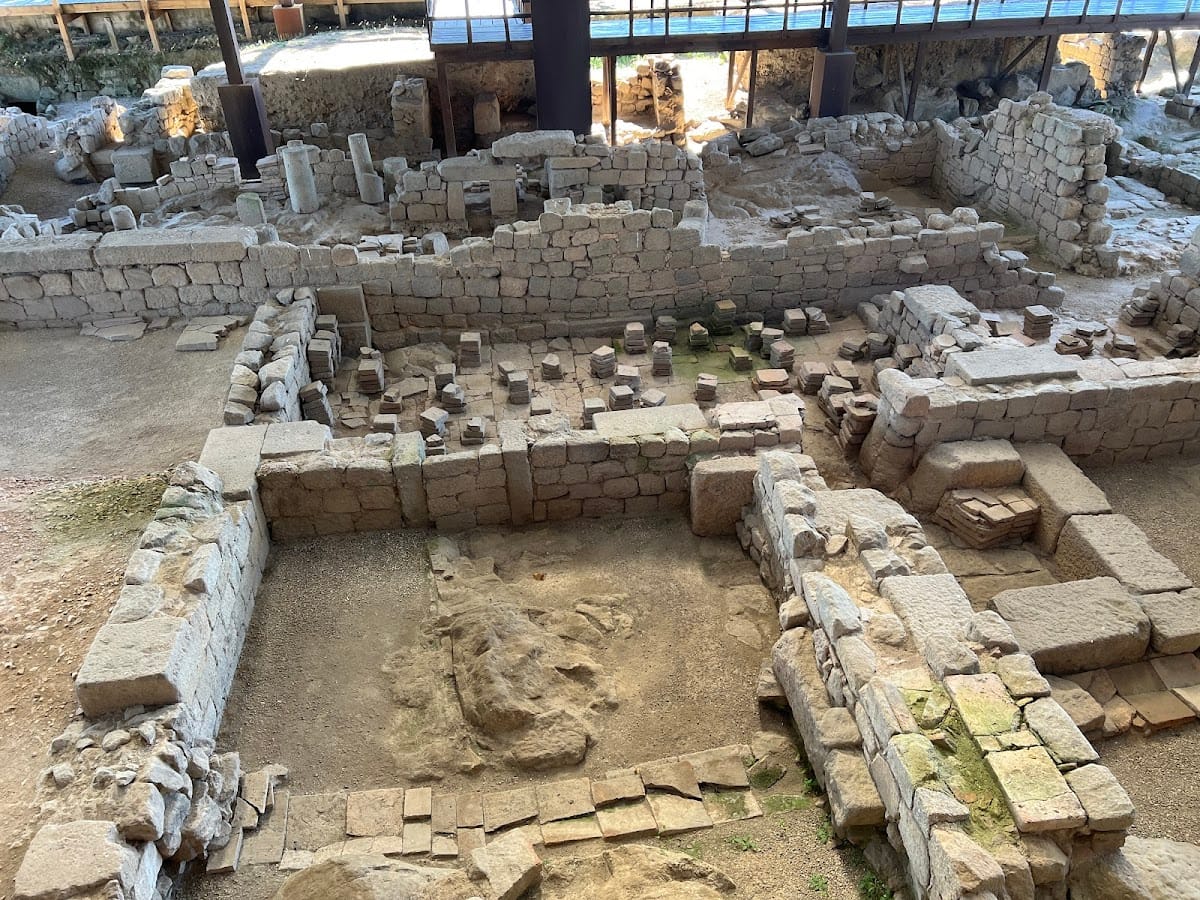
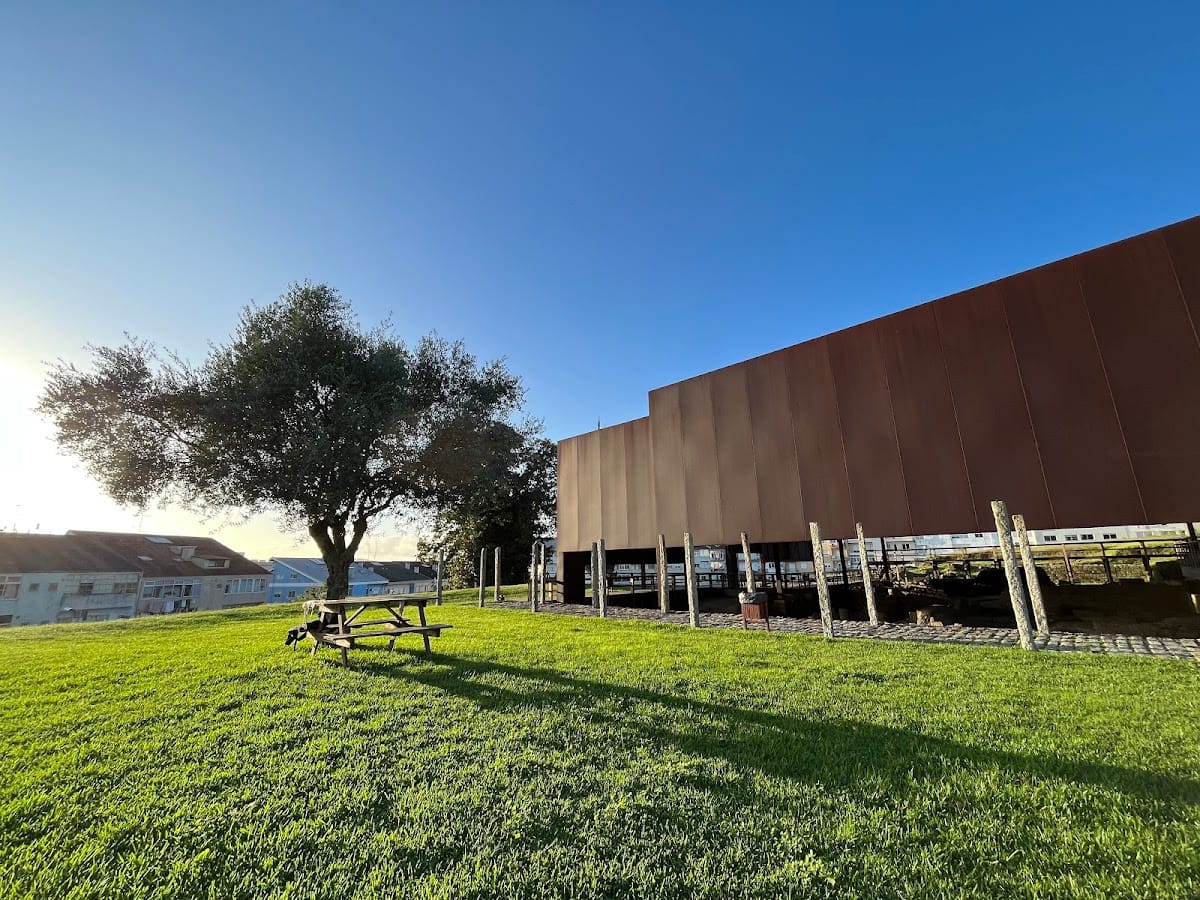
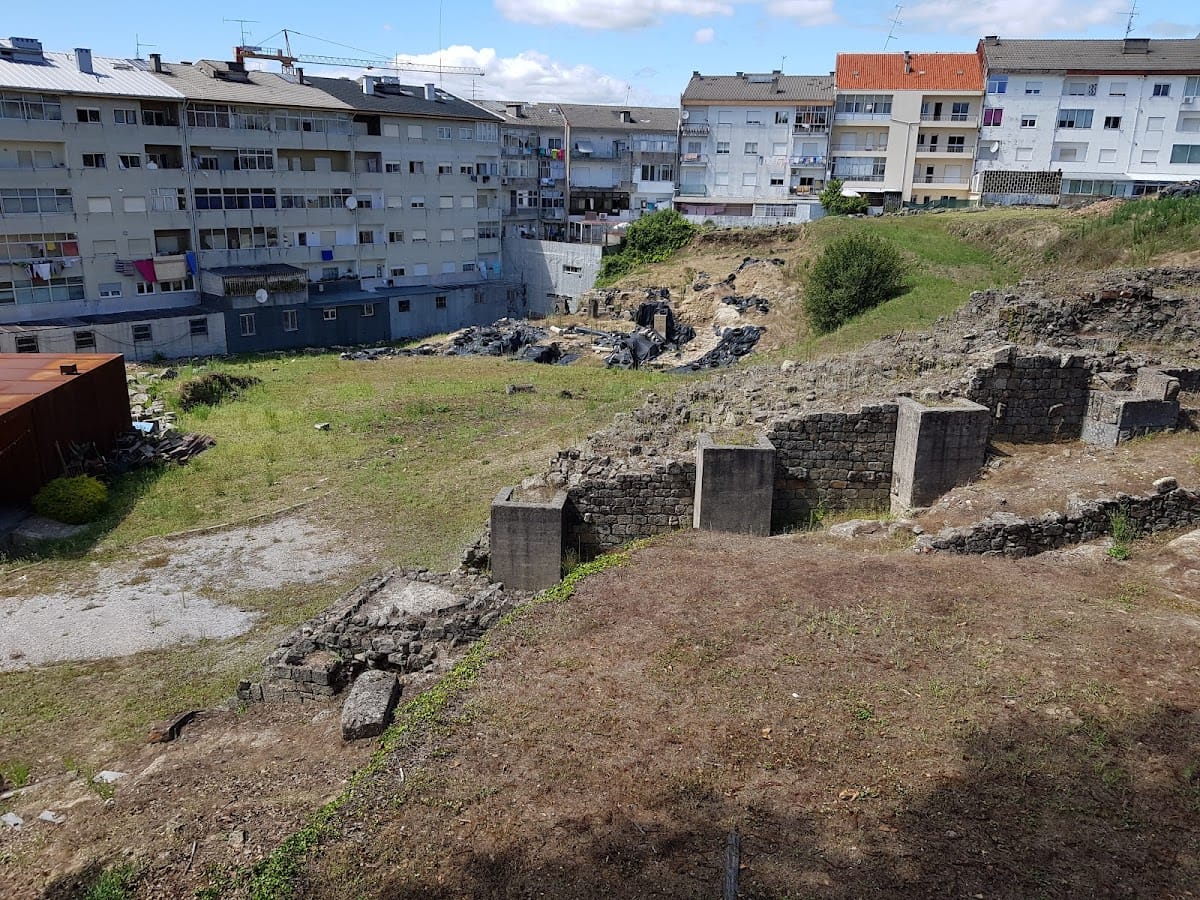
The ruins occupy a high point in Braga, at Alto da Cividade or Colina de Maximinos. The recorded complex measures approximately 35 metres by 31 metres, although its full plan has not been uncovered. The excavated area covers about 850 square metres, and the baths extended beyond the investigated portion. The surviving evidence includes a bathing sequence, heated rooms, underground heating structures, and a pool to the south of the main building.
Bath complex
The original layout contained two hot areas and probably two separate service areas. Remodelling during the 3rd and 4th centuries substantially reduced these spaces, as well as the courtyard and the overall area. A narrow corridor separated the main building from a hypocaust and a pool to the south, indicating that the bathing complex continued beyond the excavated rooms.
The recorded circulation sequence began at the entrance and led to an apodyterium, or dressing room, and a natatio, an open cold pool. It then continued through a palaestra, or exercise area, followed by a frigidarium, the cold-bath room, a tepidarium, the warm room, and a caldarium, the hot room. This sequence expresses the main stages of bathing represented by the excavated remains.
Heat was produced in a praefurnium, or furnace, and carried beneath the rooms through hypocausts. These underground spaces were supported by arches or pillars, allowing hot air to circulate below the floors. Four hot rooms belonging to the Flavian phase retain relatively well-preserved hypocausts. The internal circulation route and the functions of some adjoining rooms remain undefined.
Theatre
The complex also contained a theatre, whose remains were uncovered archaeologically in 1999. Its stones were later reused in the city walls after the building was deactivated by the 4th century. The theatre therefore forms part of the surviving evidence for the changing use of the public complex during late Roman urban remodelling.