Castle of Pietra Ligure: A Coastal Defensive Stronghold in Italy


Site at a Glance
- Rating
- 4.2
- Popularity
- Very Low
- Country
- Italy
- Primary era
- Early Modern
- Eras represented
- Medieval, Early Modern
- Civilizations
- Genoese
- Site type
- Military
- Remains
- Castle
On this page9 sections
History
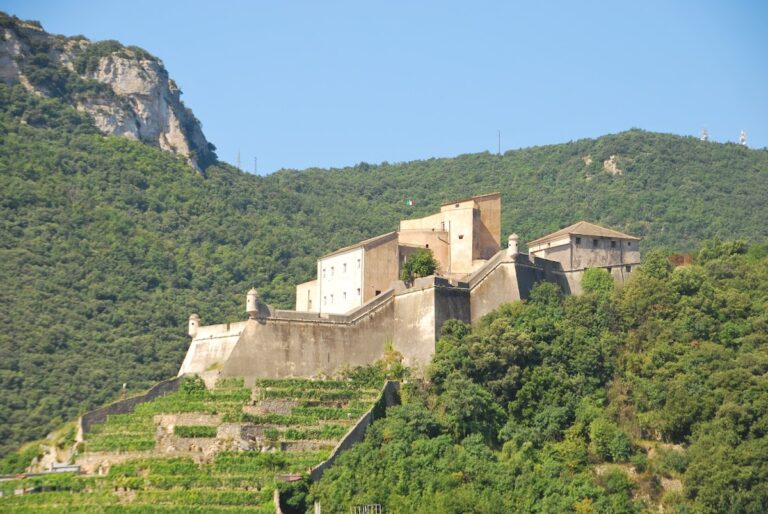
The Castle of Pietra Ligure in Italy, behind the historic center of Pietra Ligure, is a defensive stronghold whose origins include a Roman fortification built on a limestone outcrop. The rock gave the settlement its earlier name, La Pietra, and its position helped the castle protect Pietra Ligure as part of the local defensive system.
Roman and medieval origins
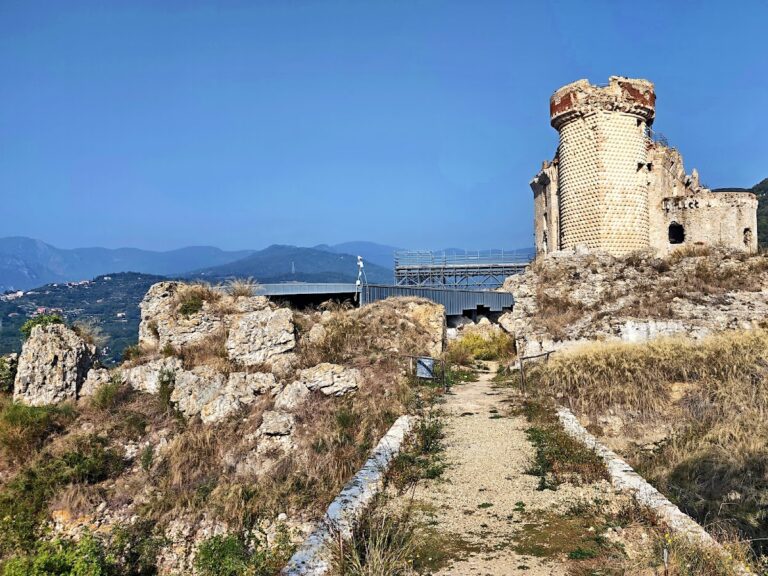
The Romans established a castrum, or fortified military position, on the easily defended rock. It is believed to have served as a frontier strongpoint between Byzantine territories, governed by the Eastern Roman Empire, and the lands of the Lombards, a Germanic people who established a kingdom in Italy. The fortification was probably destroyed by Rotari, a Lombard king of the seventh century.
A medieval castle was established on the same site during the twelfth century. It became a stronghold of the bishops of Albenga, who faced repeated attacks from the Del Carretto family of Finale. The castle was enlarged during the period of Saracen and other incursions between the sixth and ninth centuries, and its episcopal ownership continued until the bishops of Albenga transferred it to the Arnaldo family at the end of the fourteenth century. It later passed to other patrician families.
Genoese control and sixteenth-century expansion
The settlement west of the castle was ceded by Pope Urban VI to Genoa in 1385. Genoa was a powerful maritime republic with strategic interests along the Ligurian coast, and Pietra Ligure became an advanced position between the Finalese territory around Finale and Loano, then a fief of the Doria, a prominent Genoese patrician family.
In 1550, the castle reached its present dimensions through the addition of a southwest wing, an arch on the eastern side, and two sentry boxes. Saracen raids led to the installation of two large cannons in the upper courtyard. Toward the end of the eighteenth century, when a French invasion was anticipated, the cannons were sent to Genoa.
Restoration and later use
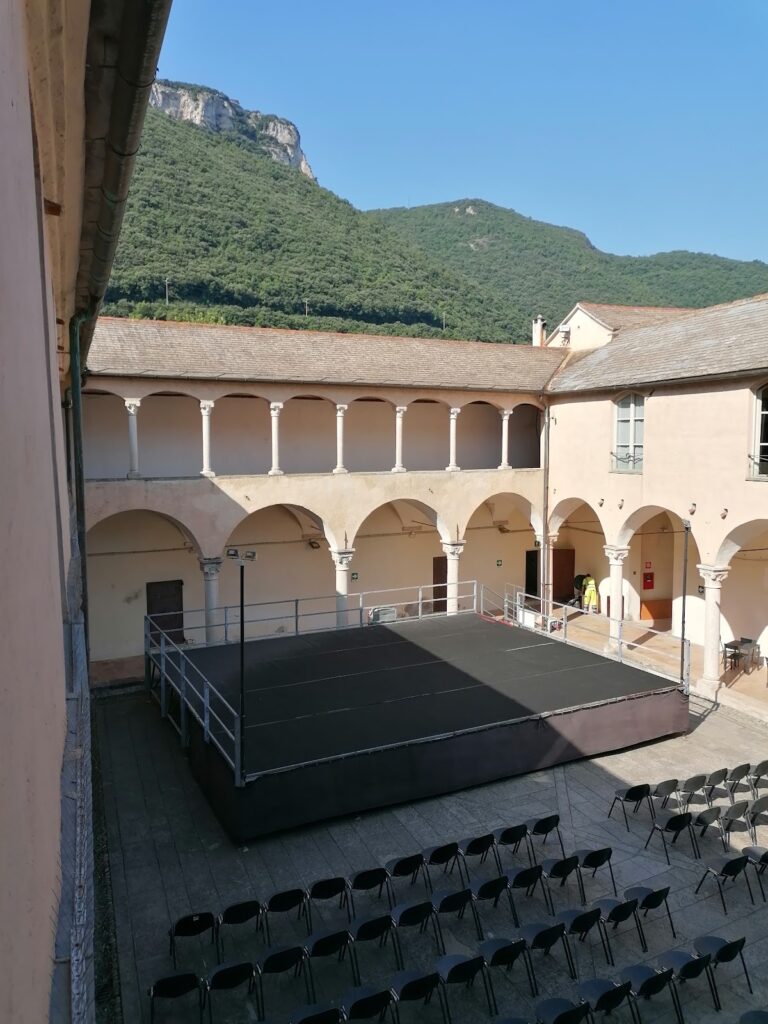
The medieval section was restored during the 1960s and converted into a social venue in May 1967. This intervention changed the use of the surviving medieval structure while retaining the castle’s place within the historic defensive fabric of Pietra Ligure.
Remains
Setting and settlement defenses
The castle stands on a prominent limestone outcrop east of the settlement, behind the historic center. Its masonry is built directly on the rock, and the difficult position contributed to its defensibility. The settlement west of the castle was enclosed by walls with towers and five gates, forming the wider defensive setting of the stronghold.
The Marina Gate was protected by a southern bastion, a projecting defensive structure. To the north stood the Santa Caterina Gate, near the rural oratory of the same name. The Portino Gate was protected by the tower on Via Rocca Crovara, while the Royal Gate stood to the west and the Slaughterhouse Gate to the east.
Castle structures and interior spaces
Sixteenth-century additions
The surviving castle includes the southwest wing added in 1550, the eastern arch, and two sentry boxes. The upper courtyard formerly held two large cannons, which were later removed to Genoa. These elements belong to the castle’s later defensive enlargement.
Rock-supported walls and prison rooms
Solid walls rise directly from the rock, alongside vaulted passages and low underground rooms known as the Grimaldina. These prison rooms are associated with the imprisonment of two Grimaldi brothers of Monaco, a ruling and aristocratic family connected with Monaco, at the end of the fourteenth century. The castle is in good condition, allowing these rock-supported and underground features to remain part of its surviving architectural fabric.