Château de Boro: A Historic Defensive Residence in France
Site at a Glance
- Rating
- 4.8
- Popularity
- Very Low
- Country
- France
- Primary era
- Early Modern
- Eras represented
- Early Modern, Modern
- Civilizations
- French
- Site type
- Domestic
- Remains
- Castle
On this page7 sections
History
Château de Boro is a historic defensive and residential estate in France, in Saint-Vincent-sur-Oust, Brittany. Its present main building dates from the beginning of the eighteenth century, but the site had been occupied since Antiquity and served as a defensive point along the Oust.
Early defensive role
A defensive line along the Oust existed by the sixth century. Count Waroc established it to defend against the Franks. Boro therefore formed part of a wider system protecting the river corridor, which separates the present-day departments of Ille-et-Vilaine and Morbihan.
The present château occupies the site of an earlier building that existed in the thirteenth and fourteenth centuries. The name Boro, written in earlier forms as “Borro” and “Bouro,” first appears in the fourteenth century. It is said to combine the Breton words bod, meaning habitation, and roc’h, meaning fortified rock.
The medieval châtellenie
Boro became a châtellenie, a territorial jurisdiction centered on a lordly residence and its associated courts, after the lands of the lord of Molac were divided. It was held directly from the duke of Brittany and later from the king of France. Its authority included high, middle, and low justice, the three levels of seigneurial judicial jurisdiction.
In 1390, Boro was held by Geoffroy Garin, whose family ranked among the most powerful in the lordship of Rieux. Later holders belonged to the Davy, Rio, Launay, Castellan, Pioger, and Le Bastart de Villeneuve families. The estate has remained in the same family since 1677.
Conflict and resistance
During the Hundred Days in 1815, the period between Napoleon’s return from exile and his final defeat, Bonapartist inhabitants of Redon surrounded and looted the château. They acted in retaliation for an attempted seizure of Redon by local royalists.
During the Second World War, Boro became a base for F2, a reception network operating with the British Special Operations Executive, which supported resistance and clandestine missions in occupied Europe. Doctor Queinnec, Gaston Sébilleau, and Pierre Régent were among those involved. With the support of Pierre de Villeneuve, then the owner, Allied airmen were received at the château and later taken to beaches in the Côtes-du-Nord or Finistère for secret passage across the English Channel.
From 9 to 12 June 1944, 27 Waffen-SS militiamen and members of the Bezen Perrot occupied the château. The Waffen-SS was the armed branch of the SS, while the Bezen Perrot was a Breton collaborationist militia. Some people connected with the resistance were tortured and deported, and six resistance members were executed in the nearby Bois de la Grée du Houssac. The resistance network linking Saint-Vincent-sur-Oust, Rieux, Béganne, Saint-Jean-la-Poterie, and Caden was dismantled.
Remains
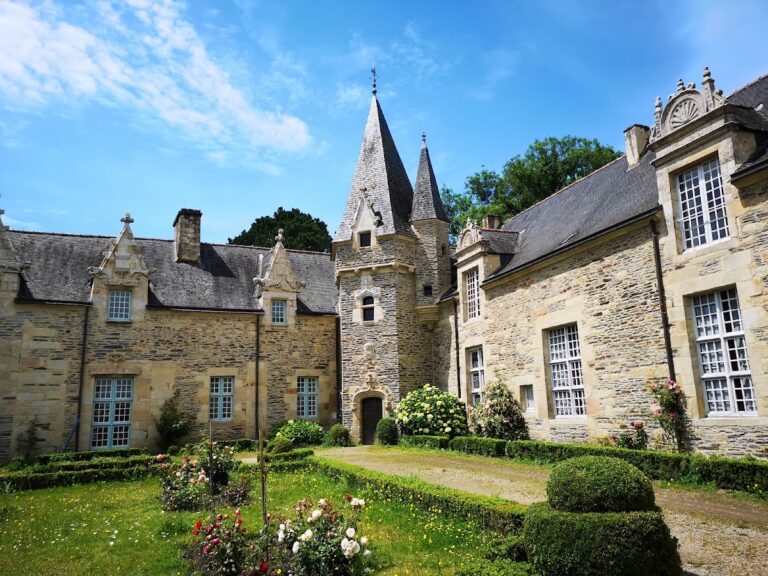
Château de Boro occupies a hill overlooking marshes and woodland beside the Oust. The surviving estate combines the principal residence with service and agricultural buildings, reflecting the site’s long dual purpose as a place of defense and habitation.
Main residence
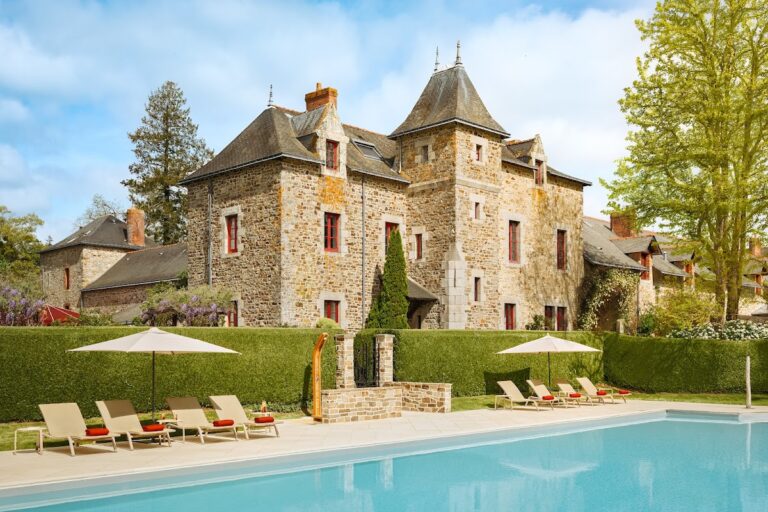
The present main building dates from the beginning of the eighteenth century. Two pavilions were added later, in 1840 and 1890, extending the château’s built form. An oratory, a private prayer space, was fitted out within the château in 1855.
Estate buildings and former religious structures
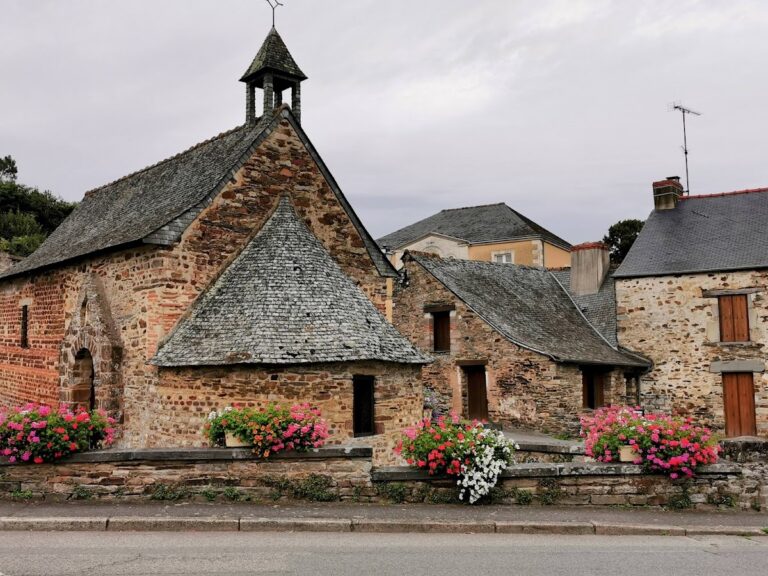
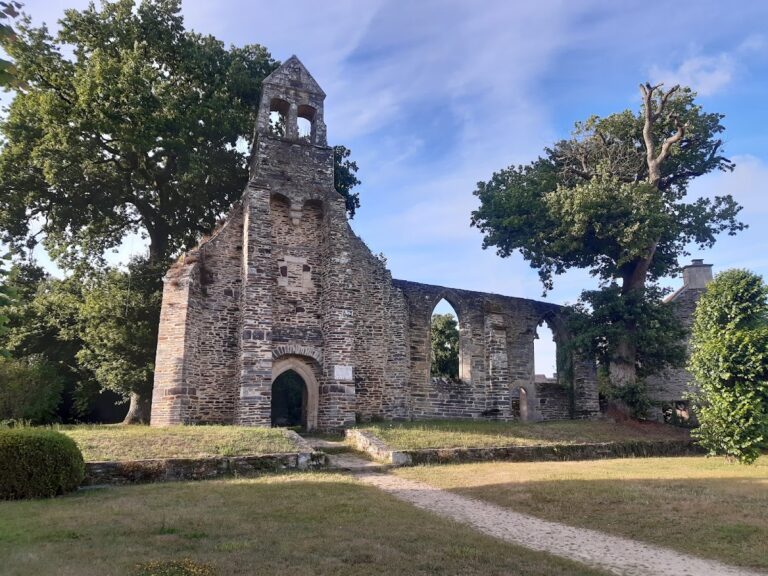
The estate includes two service wings, a former tenant farm, and a woodshed. It also contains a former chapel once dedicated to Saint William. Together with the main building and its pavilions, these structures preserve the arrangement of a residence supported by domestic, agricultural, and religious facilities. The château remains privately owned and serves as a private residence.
Nearby sites