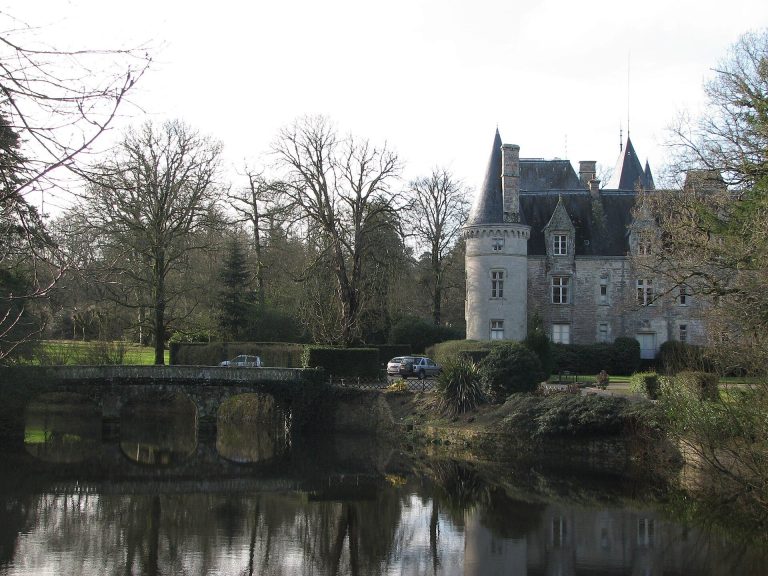
Chapel of the Madeleine of Malestroit: A Ruined Medieval Chapel in France
Site at a Glance
- Rating
- 4.3
- Popularity
- Very Low
- Country
- France
- Primary era
- Medieval
- Eras represented
- Medieval, Early Modern
- Civilizations
- Duchy of Brittany, French
- Site type
- Religious
- Remains
- Chapel
On this page7 sections
History
The Chapel of the Madeleine of Malestroit is a ruined medieval chapel in France, located in the Madeleine suburb of Malestroit. Its origins lie in a leper hospital that became a priory of Marmoutier Abbey in 1129. The original building was Romanesque, a medieval architectural style known for heavy masonry and rounded arches. It later served as a Catholic chapel dedicated to Mary Magdalene, a major saint in Catholic tradition, and was used for worship and prayer. The site was also known as the Priory of the Madeleine or Malestroit Priory.
Medieval expansion and diplomacy
The chapel was enlarged southward during the fifteenth century, creating a Gothic double-nave extension. Gothic architecture is associated with pointed arches, larger openings, and tracery. The complex received further additions during the seventeenth or eighteenth century. One of the site’s most notable historical events took place in 1343, when plenipotentiaries representing Philip VI of Valois, king of France, and Edward III, king of England, signed the Truce of Malestroit at the chapel. Their agreement came during the wider Anglo-French conflicts of the fourteenth century.
Revolutionary violence and decline
On 4 January 1795, during the French Revolution, Republican soldiers fought Chouans at the chapel. The Chouans were counter-revolutionary royalist insurgents active mainly in western France, and they were massacred inside the chapel’s walls. The episode was later depicted by Alexandre Bloch in an 1886 painting, The Chapel of the Madeleine at Malestroit, now held by the Musée des Beaux-Arts de Quimper.
The building began to deteriorate from the late seventeenth century and was disused in 1870. A fire destroyed the chapel in 1880. As the structure declined, the mayor removed its stained-glass windows and stored them in the presbytery attic for protection. Emile Zola bought the windows in 1889 for his study, and William Randolph Hearst purchased them in 1903 for 12,000 francs. They were given to Saint David’s School in 1958 and installed in the school chapel. The ruins have been registered as a historic monument since 20 December 1934 and are owned by the commune of Malestroit. Severe weather, including the bad weather of the preceding weeks, caused the belfry to collapse on 23 January 2026.
Remains
Romanesque bell-gable
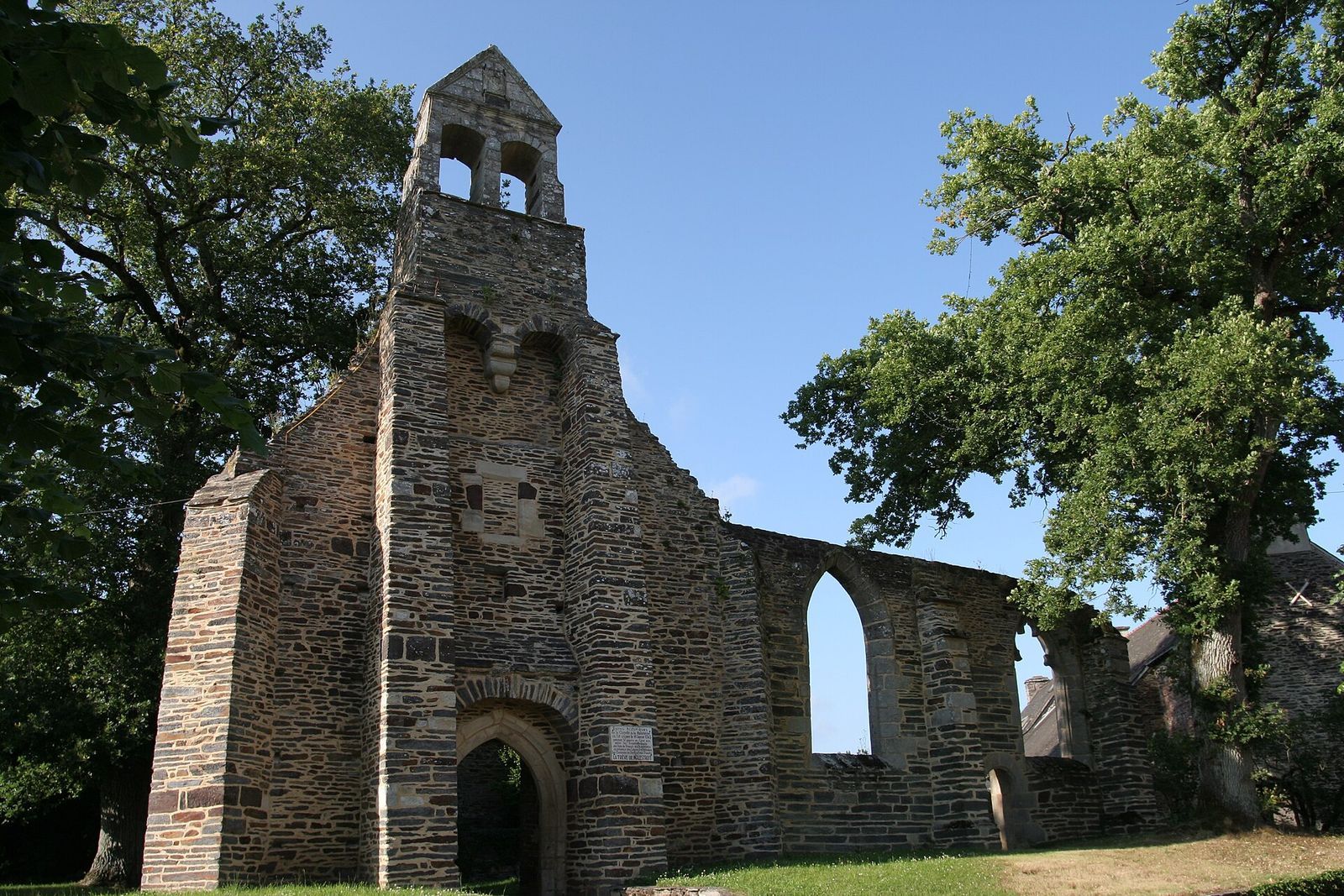
The surviving chapel combines a Romanesque section, a fifteenth-century Gothic extension, and later additions. Its fortified bell-gable, reputedly the oldest in the Morbihan department, is the oldest part of the ruined building. The Romanesque gable is reinforced by four buttresses. The two central buttresses frame a semicircular arch, while a recessed doorway with a pointed arch opens in the gable. Above it, corbelled arches connect the central buttresses, meeting at the center on a corbel, a projecting support block. These arches carried a small rectangular belfry with two openings. A pediment with a coat of arms, added during the seventeenth or eighteenth century, completed the belfry.
Fifteenth-century nave and surviving sculpture
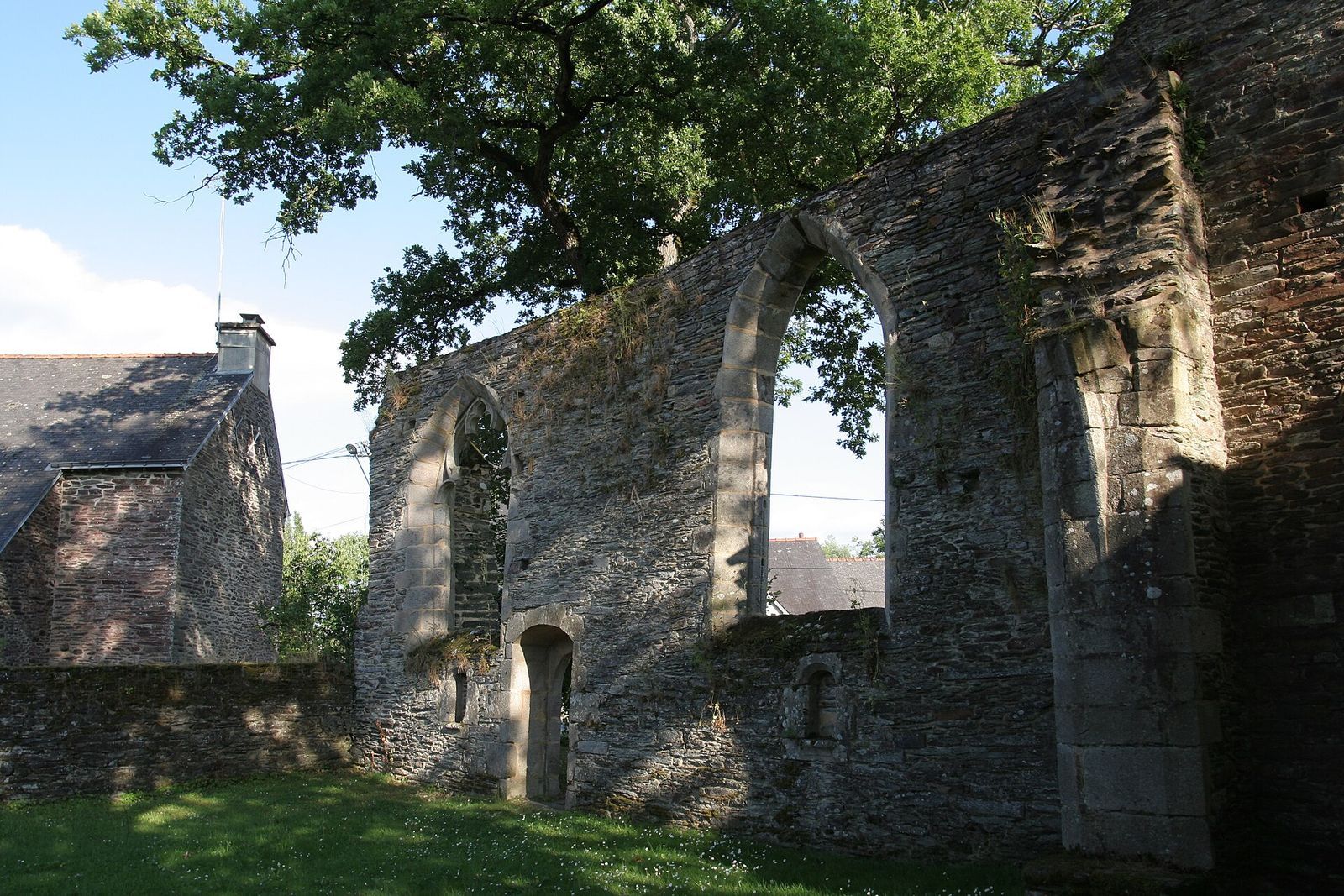
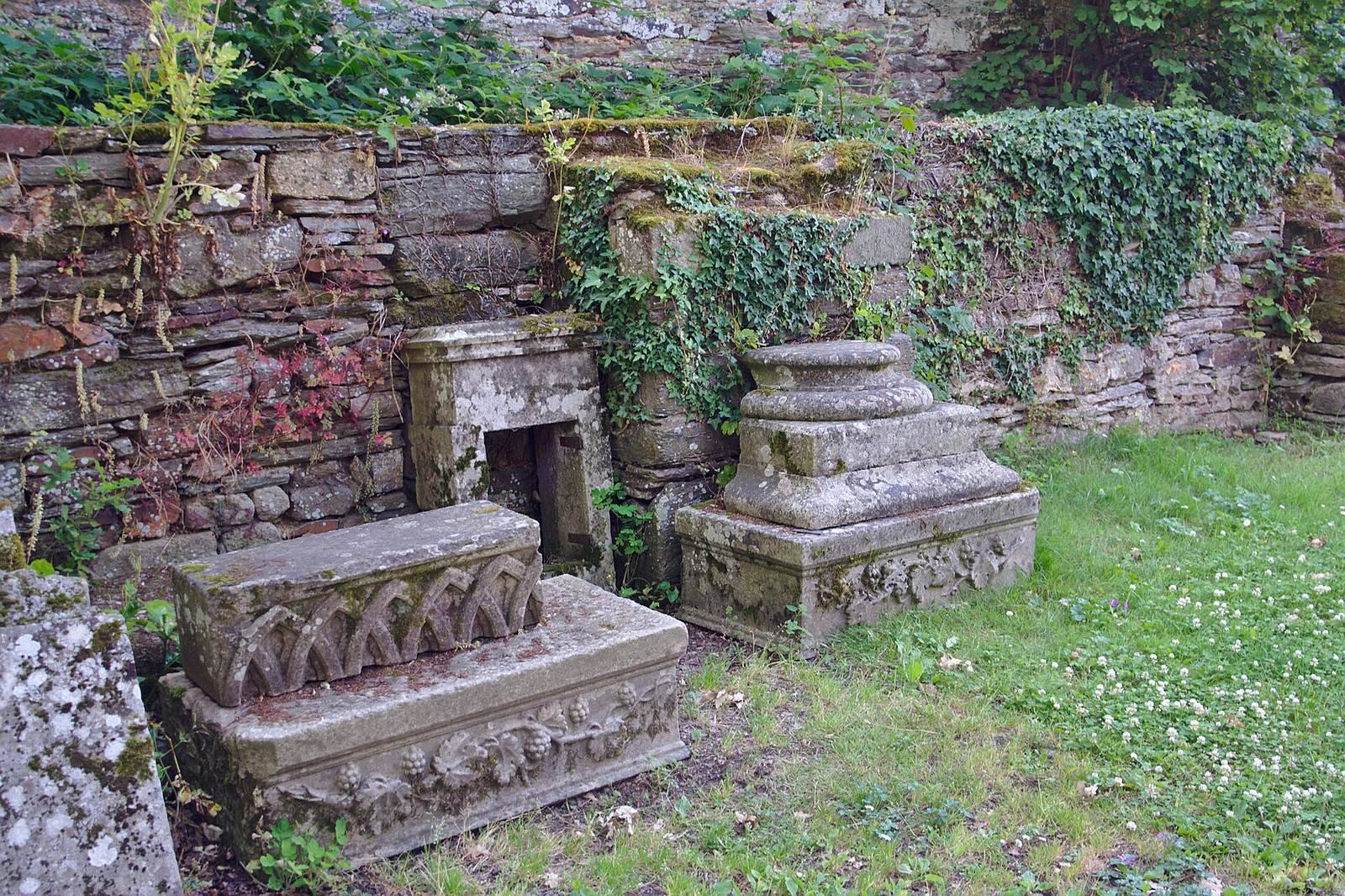
The Romanesque gable continues southward into the wall of the fifteenth-century double nave. This wall contains two large pointed-arch windows with traces of tracery, divided by a buttress, and a small doorway south of the buttress. The nave has been levelled, but sculpted elements from the former building, including friezes and column bases, are displayed there. Traces of a round apse also survive.
Stained glass and historical interpretation
The chapel’s former stained-glass windows dated from the fifteenth and seventeenth centuries and depicted the legend of Mary Magdalene. After their removal, they passed through private and institutional locations rather than remaining among the ruins. Alexandre Bloch’s 1886 painting preserves a visual interpretation of the fighting that took place at the chapel in 1795.