Stift Ranshofen: A Former Augustinian Canons’ Monastery in Austria
Site at a Glance
- Rating
- 4.7
- Popularity
- Very Low
- Country
- Austria
- Primary era
- Early Modern
- Eras represented
- Medieval, Early Modern, Modern
- Civilizations
- Austrian Empire, Duchy of Bavaria, Habsburg, Holy Roman Empire
- Site type
- Religious
- Remains
- Monastery
On this page13 sections
History
Stift Ranshofen is a former Augustinian canons’ monastery in Braunau am Inn, Austria, whose history began as an early medieval Bavarian ducal court in the eighth century. First mentioned in 788 as the Agilolfing court of Rantesdorf, it later became an imperial palace under Charlemagne and developed into a religious foundation that shaped the surrounding parishes for centuries.
From ducal court to imperial palace
Rantesdorf belonged to Duke Tassilo III, the last ruler of the Agilolfing dynasty, Bavaria’s early medieval ruling house. After Tassilo was deposed by Charlemagne’s Carolingian regime, the court passed into imperial ownership. Charlemagne raised Ranshofen to the status of an imperial palace, and King Louis the German and his son Carloman stayed there repeatedly.
Between 896 and 898, Arnulf of Carinthia, the last Carolingian emperor, commissioned a palace chapel dedicated to Saint Pancras. The chapel was first granted as a fief to the priest Ellimbrecht and was later transferred to him as free property. From 900, Ranshofen served as the seat of a community of secular priests. By 1120, it had become a ducal seat of the Welfs, a powerful noble dynasty that held authority in Bavaria and other medieval territories.
Foundation of the collegiate monastery
Before 1040, Emperor Henry II established the parish of Ranshofen and ordered the construction of a parish church. Emperor Conrad II confirmed the parish in 1040. The community of secular priests continued to develop around the former palace chapel, and in 1125 Duke Henry IX of Bavaria transformed it into a collegiate monastery for Augustinian Canons. These were clerics who followed the Rule of Saint Augustine while serving a pastoral religious institution. Salzburg Archbishop Konrad settled the canons at Ranshofen, and the monastery was probably consecrated in 1135.
The monastery gained important ecclesiastical rights during the twelfth and fourteenth centuries. In 1147, Pope Eugene III guaranteed its right to elect its provost freely. The foundation already exercised authority over churches in Braunau am Inn, Geretsberg, Gilgenberg, Handenberg, Hochburg, Neukirchen an der Enknach, and the Saint Michael’s parish church at Ranshofen. Around 1200, these churches were released from the supervisory rights of the Mattsee archdeaconry, which was subject to the Bishop of Passau. In 1212, Bishop Manegold of Passau renounced jurisdiction over the monastery’s subjects, and in 1345 Emperor Ludwig the Bavarian granted it lower judicial jurisdiction.
Warfare and medieval rebuilding
Ranshofen repeatedly suffered during medieval conflicts. In 1233, Duke Frederick the Warlike of Austria plundered the foundation’s branch church at Neukirchen an der Enknach while fighting Duke Otto II of Bavaria. In 1242, followers of the Bishop of Passau attacked from Obernberg, burning the palace and its two churches. Fighting between King Ottokar of Bohemia and Duke Henry of Lower Bavaria caused another fire at Ranshofen in 1266.
Under Provost Konrad I, construction of a new collegiate church was completed in 1283. Heinrich II of Rotteneck, Bishop of Regensburg, consecrated the building. The church and monastery were later badly damaged during the Landshut War of Succession, a conflict over the division of Bavarian territories, in 1504 and 1505. Under Provost Kaspar Türndl, Gothic rebuilding of the collegiate church began in 1508. The work also included a new monastery wing and a large service courtyard.
Reformation and Baroque renewal
Protestant ideas reached Ranshofen during the sixteenth century. Under Provost Adam Gensleuthner, the Catholic Counter-Reformation, the reform movement responding to the spread of Protestantism, was implemented rapidly. After 1620, the monastery entered a period of renewed prosperity despite the danger posed by the Thirty Years’ War, the European conflict that began in 1618 and involved religious and political struggles across the German lands.
Provost Philipp Vetterl directed a Baroque rebuilding of the complex. The church tower, which collapsed in 1621, was reconstructed, and the church received a new high altar, a strongly banded side portal, and a new organ. Religious confraternities dedicated to Corpus Christi, the Good Death, and the Rosary were established during this period. In 1634, Elector Maximilian I of Bavaria and his family took refuge at Ranshofen from Swedish troops. His wife, Elisabeth Renata of Lorraine, died there in early 1635.
Under Provost Benno Meier, a theological educational institution was established at Schloss Neukirchen. Provost Ivo Kurzbauer directed another renewal of the church and monastery in 1698, marking eight centuries since the foundation of the Saint Pancras palace chapel. The Baroque high altar created for this renewal was made by Sebastian Hagenauer, with an altarpiece by Johann Kaspar Sing showing the beheading of Saint Pancras and an upper section representing the Holy Trinity. In 1770, Johann Baptist Modler decorated the prelate’s wing with Rococo stucco, a lighter and more ornamental style that followed the Baroque.
Secularization and later ownership
After the Innviertel became part of Austria in 1779, the monastery entered an economic decline that deepened during the French Wars. The complex was plundered several times and was used as a hospital by opposing forces. Provost Johann Nepomuk Kierl, elected in 1784, was regarded as weak and extravagant, while divisions grew within the community. After his death in 1809, the canons elected no successor.
In 1810, the Innviertel returned to Bavaria. On 28 October 1811, the Bavarian government dissolved the monastery on the order of Minister Montgelas. The monastic buildings were secularized and converted into Schloss Ranshofen, while the collegiate church became a parish church. The former canons continued as secular priests serving the parishes that had been affiliated with the monastery. Valuable archival material was transferred to the Bavarian Hauptstaatsarchiv in Munich, and most of the library went to what is now the Bavarian State Library.
Count Frohberg Montjoie acquired the estate in 1812. Ownership passed to the Munich court councillor Ludwig Bernhart in 1839 and to Ferdinand Wertheimer in 1851. Wertheimer’s family retained the extensive complex and its lands until 1938. The Aluminium Works in Töging acquired Ranshofen in 1939. In 1945, the castle passed to the municipality of Braunau, which established a prisoner and refugee camp there.
Remains
Churches and chapels
Parish church
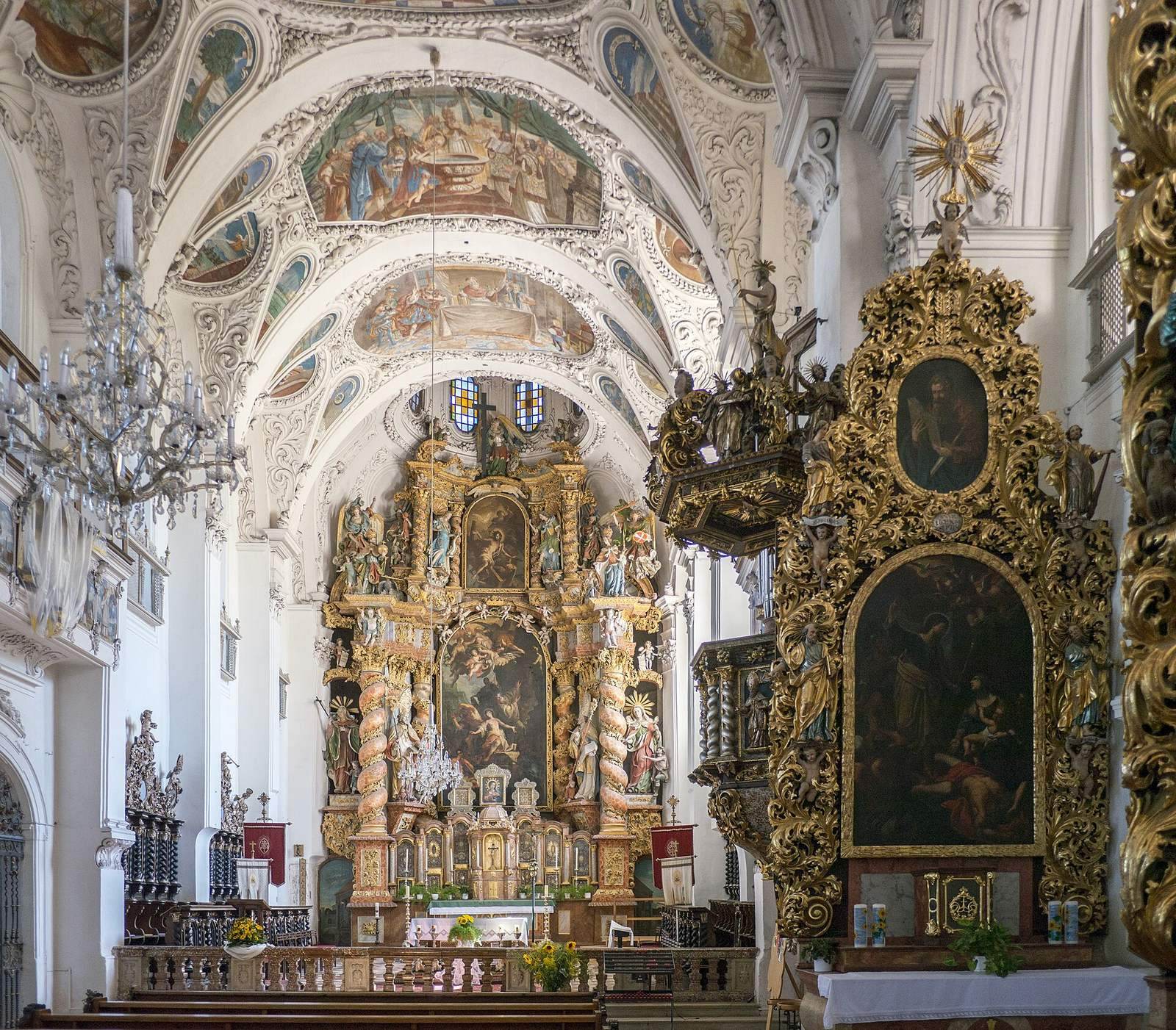
The former collegiate church is now the parish church of Braunau-Ranshofen. Its present form reflects several major building phases. The medieval church completed in 1283 was replaced through the Gothic rebuilding begun in 1508, while the Baroque renewal after 1620 added the high altar, side portal, and organ. The church tower rebuilt after its collapse in 1621 was originally much higher than the tower seen today and ended in a half-dome with a lantern. After a fire in 1859, the tower was rebuilt in a reduced form.
Saint Pancras Chapel
The earliest recorded sacred building at Ranshofen was the palace chapel dedicated to Saint Pancras, commissioned between 896 and 898 by Arnulf of Carinthia. Its memory remained important to the monastery’s history, and the church and monastery were renewed in 1698 for the eight-hundredth anniversary of the chapel’s foundation.
Marian Chapel
The Marian Chapel was redesigned for the monastery’s religious confraternities during the Baroque period. It received a new altar in 1632, as the confraternities dedicated to Corpus Christi, the Good Death, and the Rosary became part of the religious life of the complex.
Saint Michael’s Parish Church
A separate Saint Michael’s parish church stood in front of the monastery. It underwent a Baroque renovation in 1712, was profaned in 1785, and was demolished in 1799. Its stones were reused in the repair of Braunau’s extensive fortifications.
Monastery and castle complex
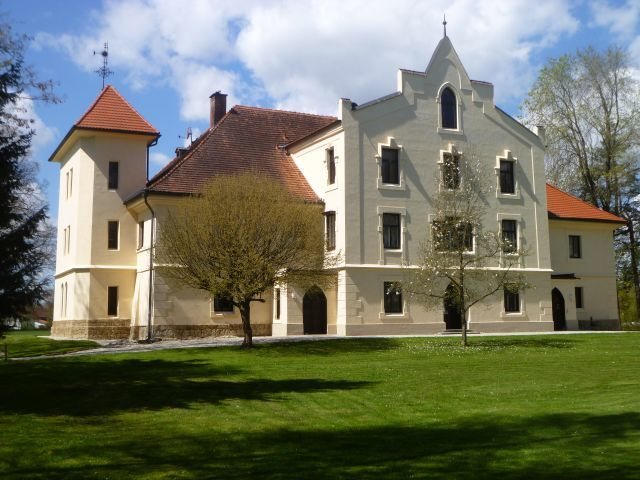
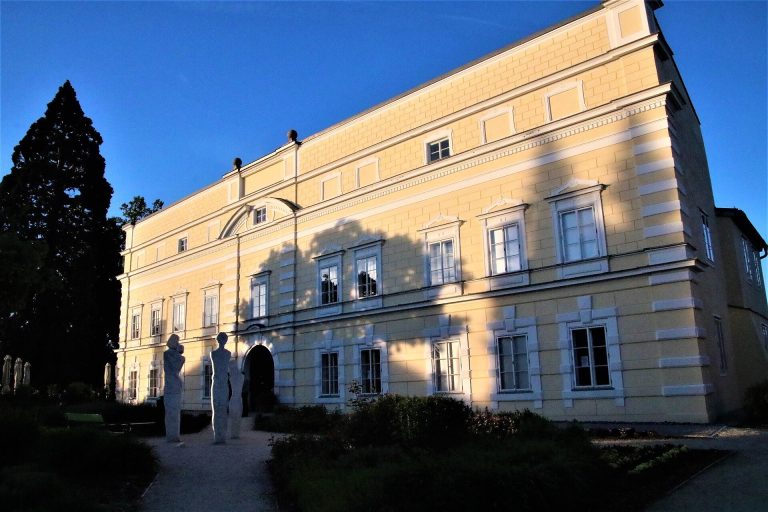
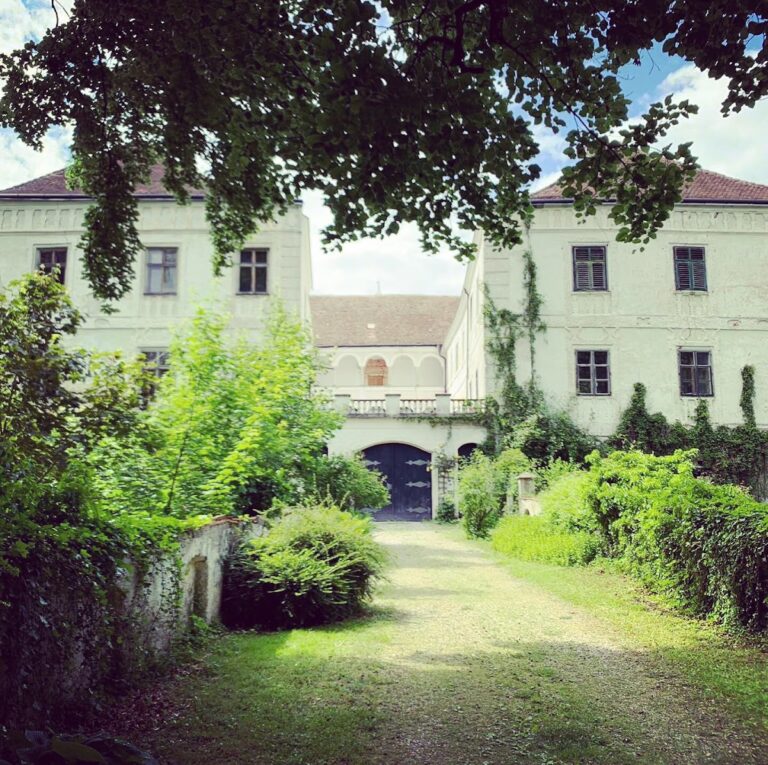
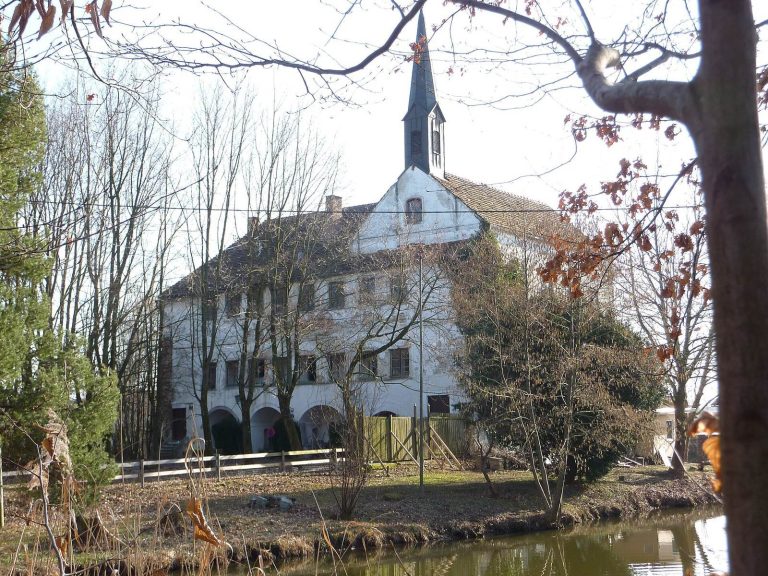
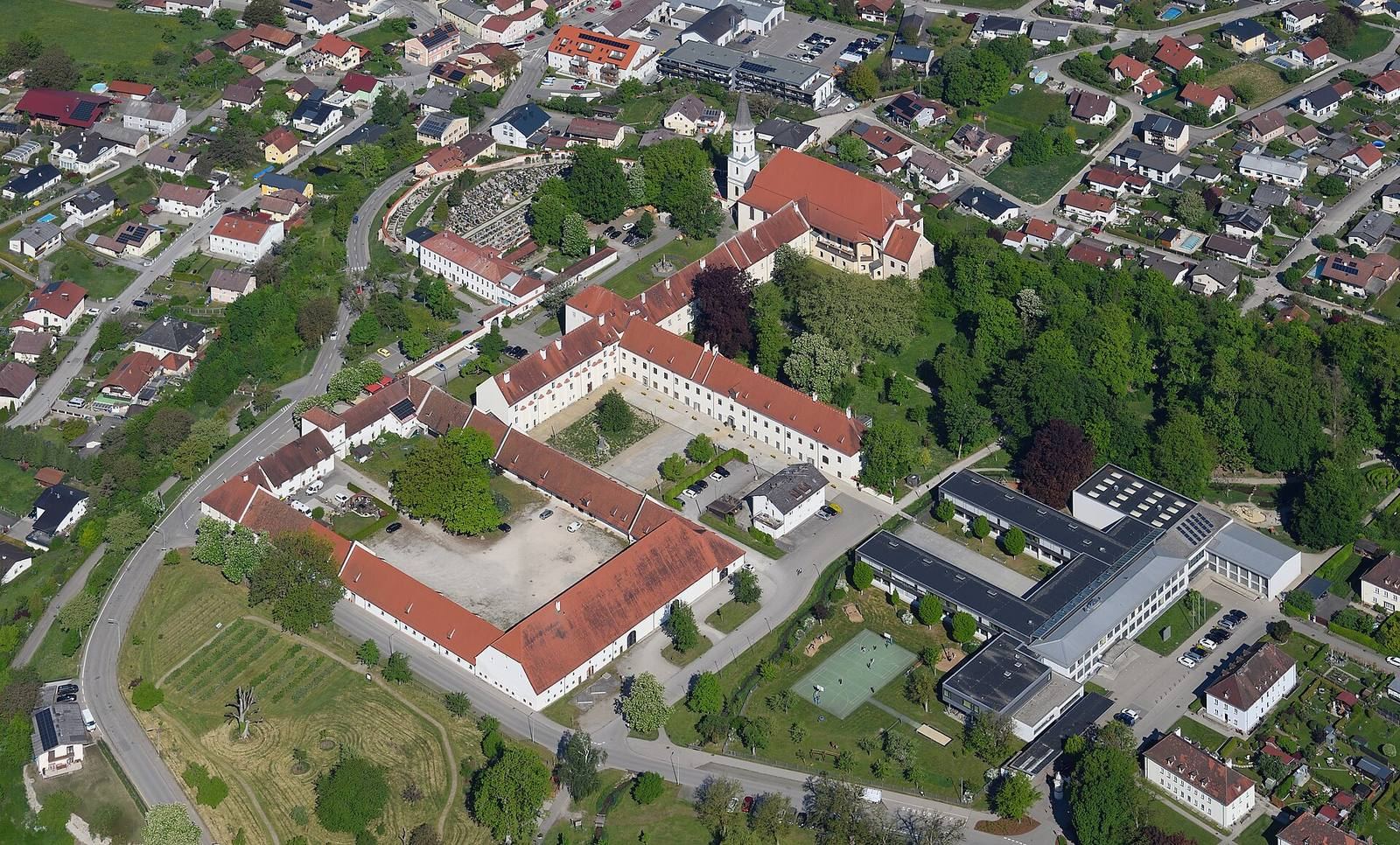
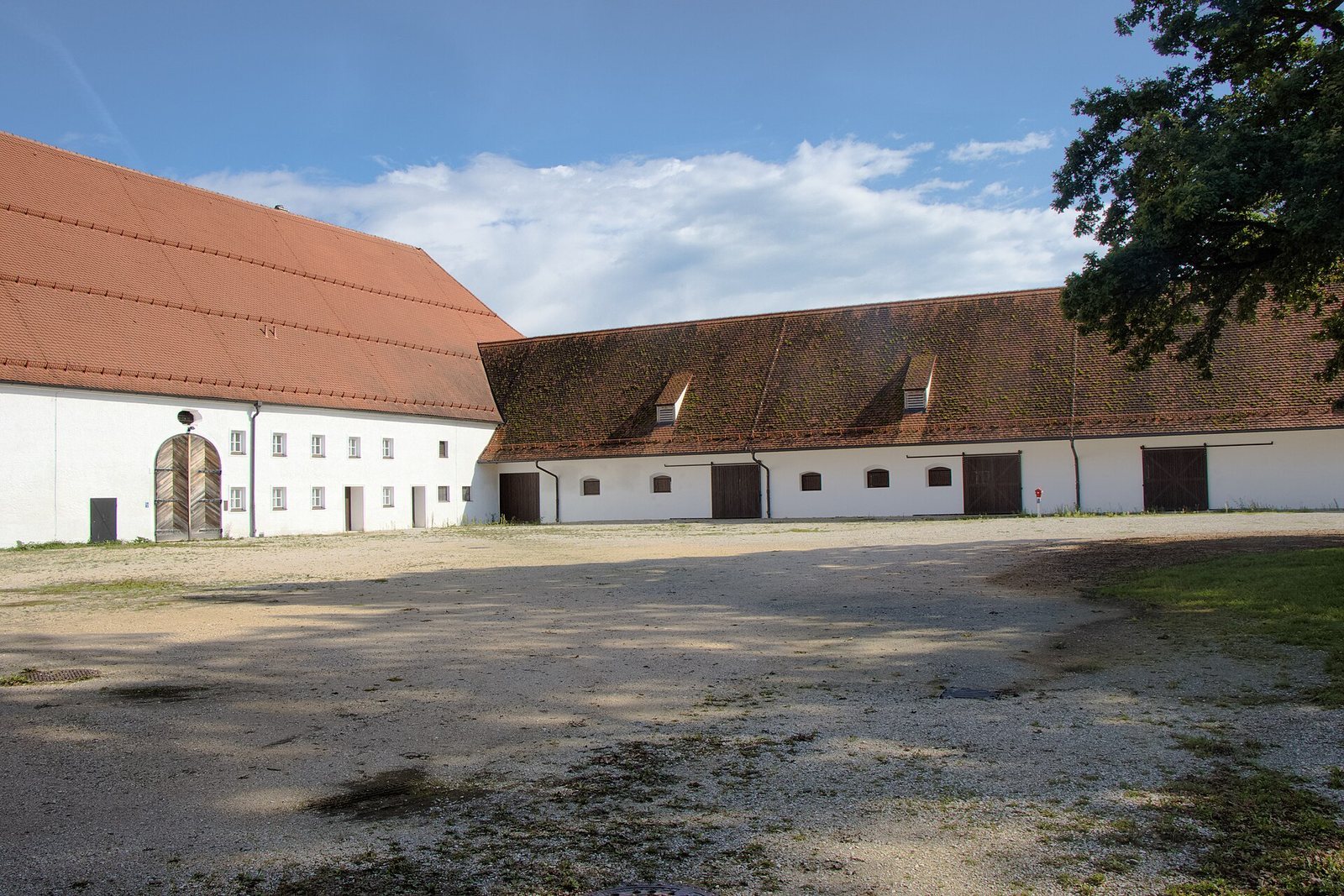
The former monastery buildings form a large complex with extensive associated grounds. The rebuilding begun in 1508 added a new monastery wing and a large service courtyard. Later Baroque work reshaped the church and monastery, while the prelate’s wing received Rococo stucco decoration in 1770. During the French Wars, the buildings were used as a hospital. After the monastery was dissolved in 1811, the complex was converted into Schloss Ranshofen, preserving the physical setting of the former religious foundation while changing its institutional function.