Schloss Hagenau: A Renaissance Castle in Austria


Site at a Glance
- Rating
- 4.4
- Popularity
- Low
- Country
- Austria
- Primary era
- Early Modern
- Eras represented
- Early Modern
- Civilizations
- Habsburg, Holy Roman Empire
- Site type
- Domestic
- Remains
- Castle
On this page8 sections
History
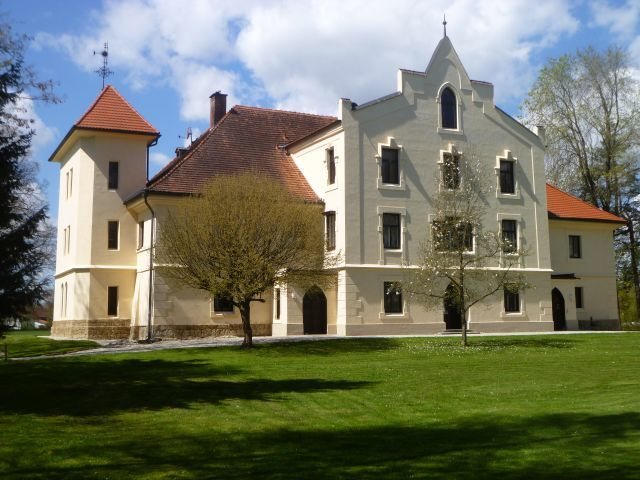
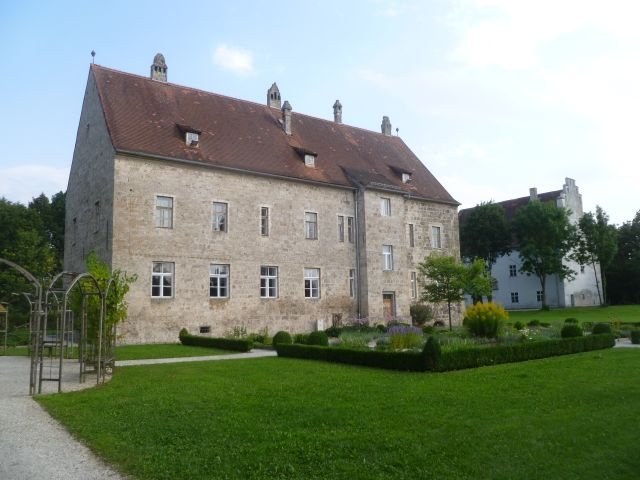
Schloss Hagenau is a Renaissance castle in Austria, located in St. Peter am Hart in the Braunau district of Upper Austria. The present building dates from 1571, when a new castle was erected on higher ground after the earlier one suffered severe damage from fires and floods. Its position and surviving architecture reflect the long history of a stronghold that passed through noble, ecclesiastical, and princely hands.
Medieval Lords and Passau
A castle near the present Schloss Hagenau is first recorded in 1088, when Hartwicus de Hagenowe belonged to the family that gave the castle its name. After the Upper Austrian branch of the Hagenau family died out, the property passed in 1152 to the bishops of Passau. These bishops were major ecclesiastical authorities who controlled extensive lands and feudal rights in the region. They granted the castle as a fief to a ministerial family, a group of medieval officials or dependent nobles who could hold land in return for service, and this family also adopted the Hagenau name.
Reginbert, Bishop of Passau and the best-known member of the family, died during the Crusade of 1147. The family became extinct in 1262 with Ludwig von Hagenau. The castle then briefly came to the Ortenburgs before passing to the dukes of Bavaria. The Toerring family held it from 1270, the Ahamer family acquired it around 1400, and the Taimer family purchased it in 1525.
Fire, Floods, and Reconstruction
The old castle was demolished in 1571 after repeated fires and floods had left it severely damaged. The present Schloss Hagenau was built at the same time on a higher elevation protected from flooding. The later impoundment of the Inn for the Frauenstein power station created the impression that the castle had originally been designed as a water castle, although its present relationship with the water is the result of this later change.
The Taimer family retained the property until 1635, when Elector Maximilian I of Bavaria gave the estate to his personal physician, Ferdinand Schütz. Maximilian I was one of the leading princes of the Holy Roman Empire in the early seventeenth century. Schütz commissioned the brewery and stables beside the castle, and the elector allowed him to use the title “von und zu Hagenau und St. Peter.”
Eighteenth-Century Rebuilding and Later Ownership
Count Ferdinand Josef von Rheinstein und Tattenbach acquired the castle in 1710. Because the building had deteriorated, it was rebuilt between 1717 and 1728. In 1722, ownership passed to Johann Franz, Count Franking. The estate later came by inheritance to the Barons von Handel in 1829.
Maximilian Handel converted Hagenau into a castle hotel, but the enterprise was unsuccessful. After his death in 1966, the property passed to his daughter, Colette Spaur. Her family continues to own the castle and arranged its restoration in 2001. Schloss Hagenau is protected as a monument and is now used as a cultural center and for rental apartments.
Remains
Schloss Hagenau occupies a rocky spur projecting toward the Inn, beside the bay at the former mouth of the Mattig. The Renaissance building is organized around a courtyard and has corner towers that give it a strongly fortified appearance. A side wing forms part of the complex, while the castle’s position on higher ground reflects the rebuilding carried out after the earlier site was damaged by fire and flooding.
Main Castle
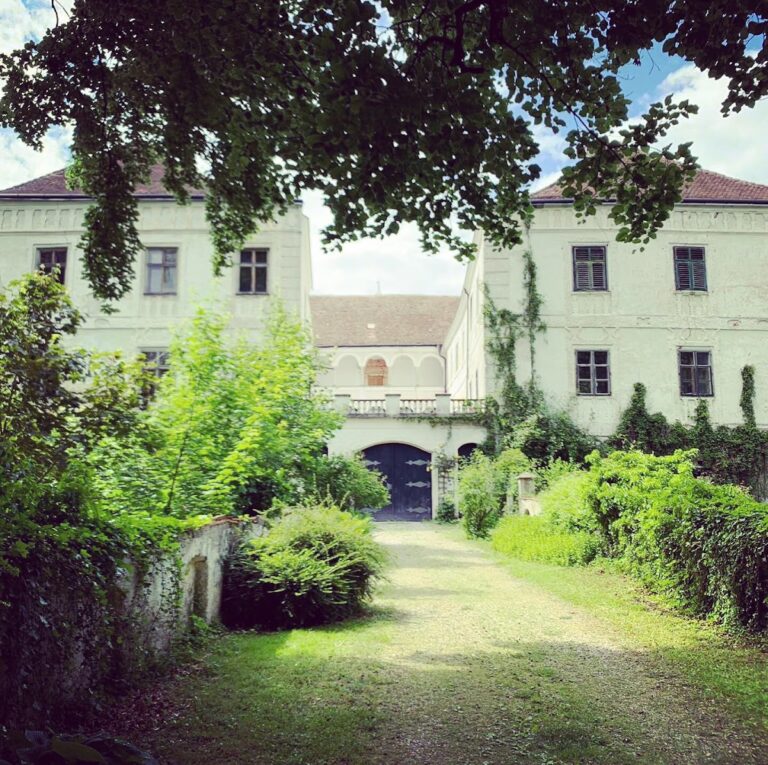
The courtyard contains a draw well decorated with wrought iron. Open galleries once ran above the arcades, but they were later enclosed by walls. The entrance is topped by the coat of arms of the von Handel family, linking the surviving appearance of the building with one of its later periods of ownership.
Chapel
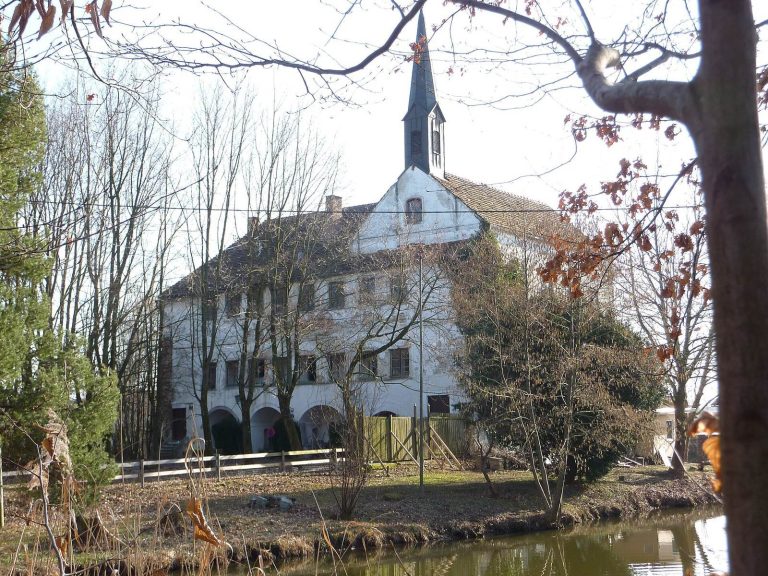
A Gothic chapel dedicated to Saint Nicholas stands in the castle park. Gothic architecture was the medieval tradition associated with pointed arches, vertical emphasis, and elaborate structural design. The chapel dates to 1515 and was rebuilt by Count Franking in 1727 and 1728 because of its deteriorated condition. It is now used as an event space, including for concerts.
Brewery and Stables
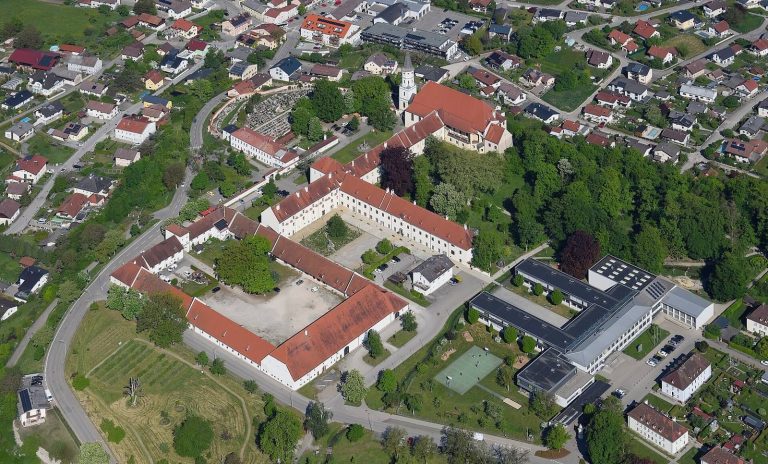
The brewery and stables beside the castle were built in 1635 after Ferdinand Schütz received the estate from Elector Maximilian I of Bavaria. They remain part of the wider Schloss Hagenau complex and represent the service buildings associated with Schütz’s ownership.