Schloss Blumenstein (Wildeck): A Hesse-Rotenburg Hunting Lodge and Summer Palace


Site at a Glance
- Rating
- 4.4
- Popularity
- Very Low
- Country
- Germany
- Primary era
- Early Modern
- Eras represented
- Medieval, Early Modern
- Civilizations
- Holy Roman Empire, Landgraviate of Thuringia
- Site type
- Domestic
- Remains
- Palace
On this page13 sections
History
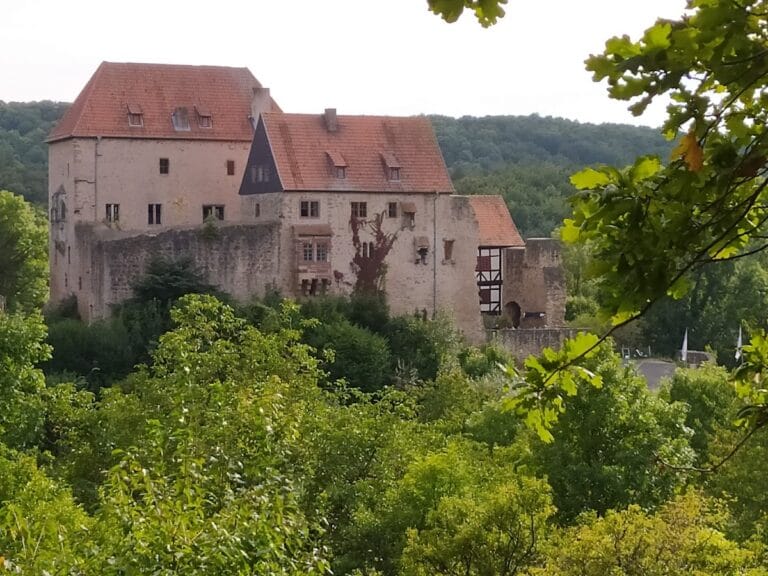
Schloss Blumenstein (Wildeck) is a former hunting lodge and summer palace in Germany, built and developed by the landgraves of Hesse-Rotenburg in the wooded Wildeck Valley. Its history began with a medieval castle, followed by a hunting lodge constructed in 1727 and a larger representative summer palace commissioned from 1770. The palace and its English landscape gardens were once known as the “Hessian Sanssouci.”
From Wildeck Castle to the hunting lodge
Wildeck Castle was built around 1250 for the landgraves of Thuringia. By the fifteenth century, it had become a ruin and served as a hiding place for a gang of robbers. In 1627, the forest and the castle ruins passed to Hesse-Rotenburg, a semi-sovereign branch territory of the Hessian ruling house created for the sons of Landgrave Maurice of Hesse-Kassel and his second wife, Juliane of Nassau.
Landgrave Ernst II Leopold of Hesse-Rotenburg established a new use for the site in 1727 by building the Blumenstein hunting lodge on the medieval ruins. The later builders reused parts of the castle as building material, linking the new residence physically to the older stronghold.
The Hesse-Rotenburg summer residence
Beginning in 1770, Landgrave Constantine of Hesse-Rotenburg commissioned a larger summer palace near the hunting lodge. The expanded complex included extensive gardens and a palace park, where the Rotenburg landgrave family regularly spent the summer in the Wildeck Valley. In September 1811, Constantine’s daughter Clothilde celebrated her marriage there to the Prince of Hohenlohe-Bartenstein.
After the death of the last landgrave, Victor Amadeus, in 1834, Hesse-Rotenburg was united with Hesse-Kassel under the arrangement created in 1627. Victor Amadeus’s estates outside Hesse, including the Princely Abbey of Corvey and the Silesian Duchy of Ratibor, passed to his nephews, Princes Victor and Chlodwig of Hohenlohe-Waldenburg-Schillingsfürst.
Decline and preservation
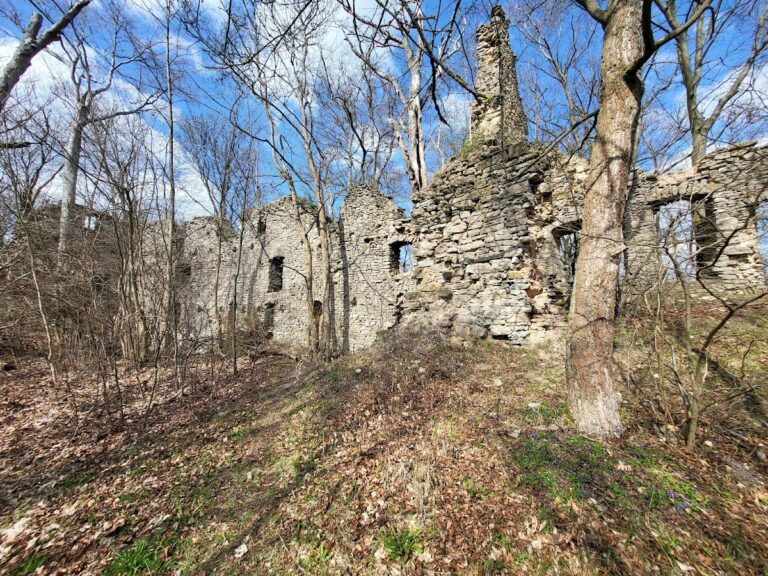
The Electors of Hesse had other palaces and gardens, among them Schloss Wilhelmshöhe, and showed little interest in Blumenstein. The palace fell into neglect. After Prussia annexed the Electorate of Hesse in 1866, the property became part of the Prussian state. By 1873, the palace was being used as housing for forestry workers, and in 1874 it was demolished because of structural disrepair. The hunting lodge was gradually demolished as well.
Volunteer efforts preserved the walls that remained. From 2016 to 2020, Hessen-Forst, the owner of the site, carried out restoration work on the ruin.
Remains
Schloss Blumenstein lies in the southern Richelsdorfer Gebirge, within the Raßdorf cadastral area of Wildeck. The remains stand in the wooded Wildeck Valley at about 290 metres above sea level near the Pfaffengraben, the left headstream of the Suhl. The former hunting lodge occupied a mountain spur roughly 400 metres east-northeast of the summer palace.
Medieval castle and hunting lodge
Wildeck Castle
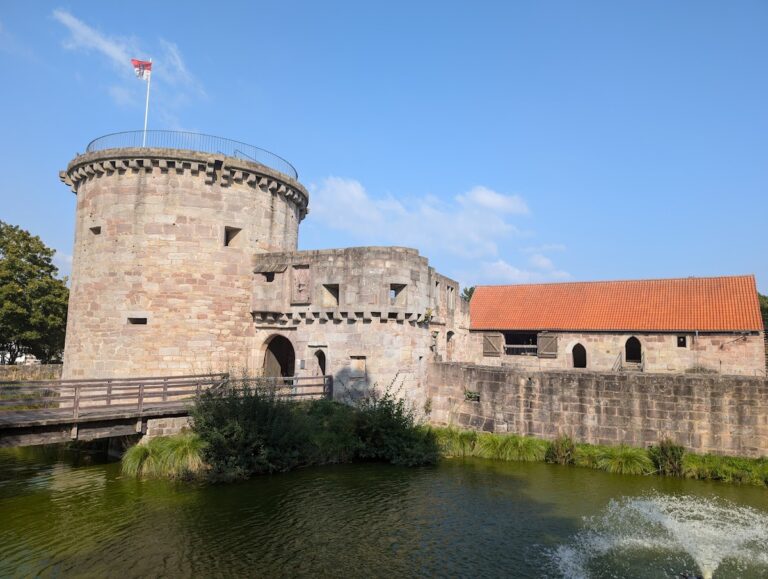
The medieval castle is represented by the foundations of its rectangular enclosing walls and a stone-covered well. These elements define the basic outline of the earlier complex. The later hunting lodge used the castle ruins as a quarry, making the medieval foundations part of the material history of the subsequent residence.
Blumenstein hunting lodge
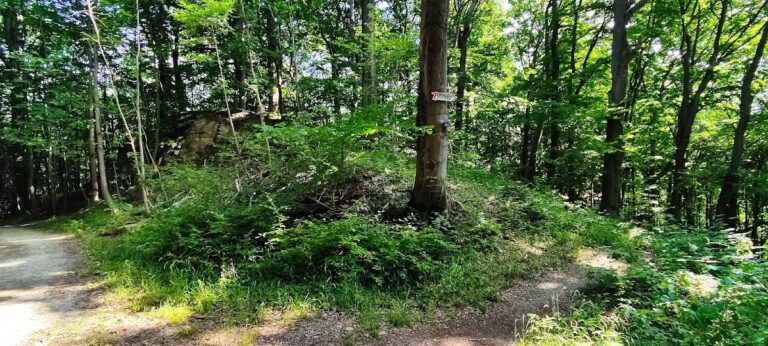
The hunting lodge survives in a cellar on its northern side and an archway along the access path. These remains mark the building established by Ernst II Leopold in 1727 on the site of Wildeck Castle.
Summer palace and garden landscape
Summer-palace remains
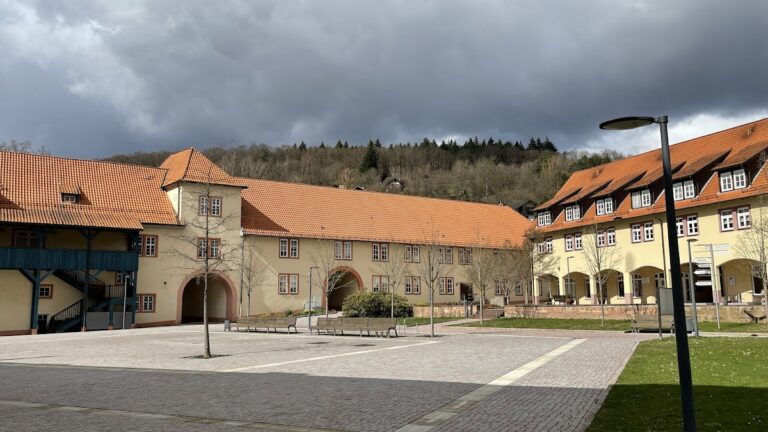
The former guesthouse is the principal surviving building of the summer-palace complex. A forestry house was later built over the palace’s old foundations, while a two-part staircase on the garden side survives from the palace itself.
Park and avenues
The palace garden and park extended southward in a trapezoidal area about one kilometre long. It included a cemetery and widened from approximately 100 metres near the palace parterre to about 800 metres at the Stubbach, a right-hand headstream of the Suhl that formed the southern boundary. The plum, birch, and poplar avenues originated during the period of the palace gardens.
Sandstone obelisk
A sandstone obelisk rises 22 metres in the former park. Landgrave Charles Emmanuel of Hesse-Rotenburg probably erected it around 1790 for his wife, Maria Leopoldine of Liechtenstein. Its height and material distinguish it as one of the park’s major surviving memorial features.
Inselteich and Love Island
The park also retains the Inselteich, or island pond, whose round island is known as Love Island. Ten poplar trees formerly stood along the island’s shores. At its centre is a 1.35-metre-high stone pedestal with a naturalistically worked hanging border and a relief of a Greek amphora on its front.
The pedestal bears the Latin inscription QUAM RAPUIT INVIDA MORS RESTITUTA, translated as “She whom envious death stole has been restored.” The pond and island date from the Rococo or Sentimentalism period, when ornamental refinement and emotional responses to nature often shaped garden design. The pedestal was probably a votive or memorial altar and may originally have supported a statue or another sculpture. The original sculpture is unknown, so the meaning of the inscription remains unclear.
Nearby sites