Wasserburg Friedewald: A Ruined Water Castle in Germany


Site at a Glance
- Rating
- 4.7
- Popularity
- Low
- Country
- Germany
- Primary era
- Medieval
- External website
- Open
- Eras represented
- Medieval, Early Modern
- Civilizations
- Holy Roman Empire
- Site type
- Military
- Remains
- Castle
On this page7 sections
History
Wasserburg Friedewald is a ruined water castle in Friedewald, Germany, probably originating in the thirteenth century and shaped by late-medieval and early-modern rebuilding. Its position beside two historic routes helped encourage settlement and made the site useful to Hersfeld Abbey, the major medieval ecclesiastical institution that controlled the surrounding territory.
Abbey Stronghold and Hessian Enclave
Friedewald stood where the escort road through the Kurzen Hessen connected Frankfurt and Leipzig with a trade route between Bremen and Nuremberg. The territory belonged to Hersfeld Abbey by no later than the tenth century. The first stone structure on the castle grounds probably formed part of a lightly fortified abbey castle, meaning a defended residence or administrative stronghold associated with the abbey.
The office of Friedewald was first mentioned in 1302, when the abbot granted the settlement as a fief to the Hessian landgraves. A landgrave was a high-ranking territorial ruler in the medieval and early-modern German lands. In 1306, the landgraves also received control of escorts on the road through the Kurzen Hessen. During the fourteenth century, the territory around the castle became a Hessian enclave within lands controlled by Hersfeld.
Landgravial Residence and Rebuilding
By 1392, the castle served the Hessian landgraves as an administrative residence and hunting lodge. In 1476, Landgrave Heinrich III of Hesse-Marburg acquired the ownership shares held by the Lords of Milnrode. He then commissioned remodelling by the landgravial master builder Hans Jakob von Ettlingen, who was known for fortress construction and renovation.
After Heinrich acquired the shares of the Lords of Altenburg in 1489, he became the castle’s sole owner. Rebuilding in the outer bailey began soon afterward and continued until about 1500. The outer bailey was the subsidiary enclosure for service, administrative, and residential buildings.
Palace Transformation and War
In 1551, a princely assembly met at Friedewald to seek the release of Landgrave Philipp I, known as Philipp the Magnanimous. He had been imprisoned by Emperor Karl V after the Schmalkaldic War, a conflict between Protestant princes and the emperor. From 1580, Landgrave Wilhelm IV rebuilt the water castle in palace-like form. Around 1600, Landgrave Moritz gave the outer bailey a similar transformation and added the Senghaus south of it, with a game kitchen and accommodation for the huntsman.
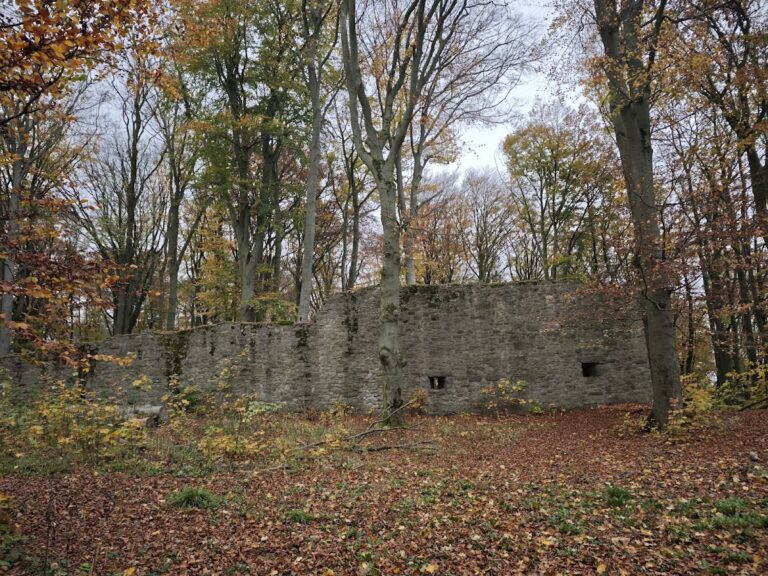
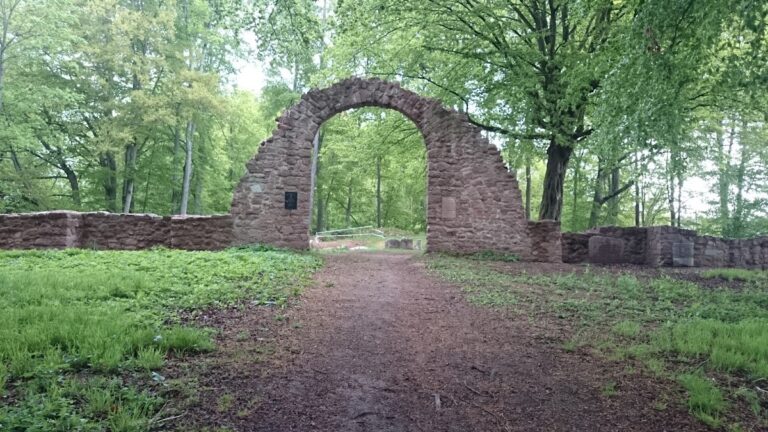
The Thirty Years’ War, fought mainly in Central Europe from 1618 to 1648, brought changing occupying forces to the castle. In 1762, during the Seven Years’ War, General Stainville of the French army destroyed the water castle. The Seven Years’ War was a global conflict fought from 1756 to 1763. The castle was not rebuilt, while the outer bailey continued as an administrative office and courthouse and later accommodated the forestry office. The water castle now survives as a ruin.
Remains
Castle Layout and Defences
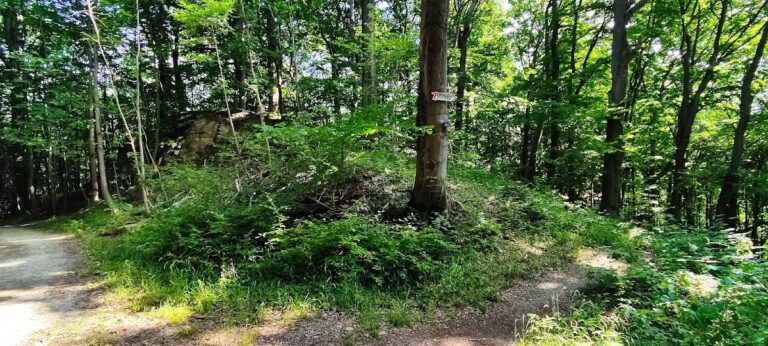
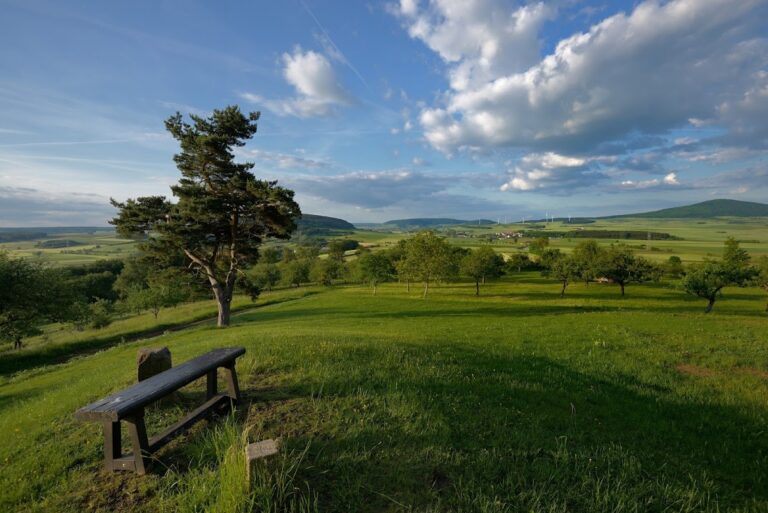
The ruined water castle stands immediately south of Friedewald’s old village centre at an elevation of 380 metres above sea level. The ground rises only a few metres to the south toward the Dreienberg, which reaches 525 metres. The site is a lowland castle in a settled area and is classified as a water castle. Archaeological excavations in the courtyard in 1983 uncovered a potsherd in a fire layer dating to the eleventh or twelfth century, together with foundations of the earliest stone building, dated to the thirteenth or fourteenth century.
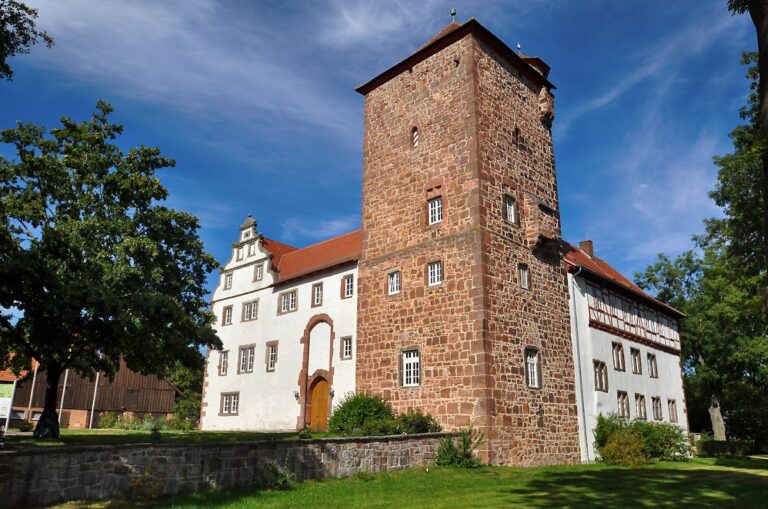
The fifteenth-century rebuilding created a transitional defensive arrangement. It combined the high central tower associated with a high-medieval castle with a square plan resembling a late-medieval fortress, including four low but heavily fortified corner towers. The surviving Thick Tower has four storeys. All four towers had tall pointed roofs with small turret-like projections.
Outer Bailey and Fountain
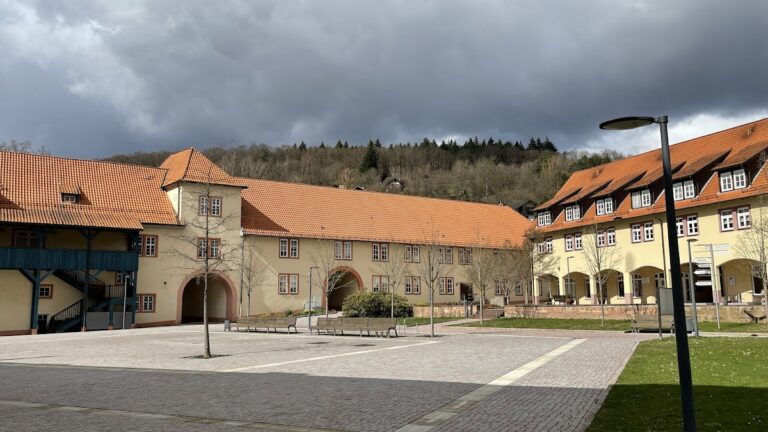
The outer bailey formed a three-wing complex of service buildings opening toward the water castle. Its northern and southern stables survive. The southern wing now contains a museum, while the western wing is a modern building that contains a hotel. South of the outer bailey stood the Senghaus, which housed a game kitchen and the huntsman’s accommodation.
The courtyard between the outer bailey and the castle contains a three-basin fountain made in 1605. It is attributed to Wilhelm Vernuken, a court sculptor at Kassel, and was restored to operation in 1968. The fountain also appears on the coat of arms of Friedewald.
Nearby sites