Zuylestein Castle: A Historic Estate near Leersum in the Netherlands


Site at a Glance
- Rating
- 4.5
- Popularity
- Low
- Country
- Netherlands
- Primary era
- Modern
- External website
- Open
- Eras represented
- Modern
- Civilizations
- Dutch
- Site type
- Domestic
- Remains
- Castle
On this page9 sections
History
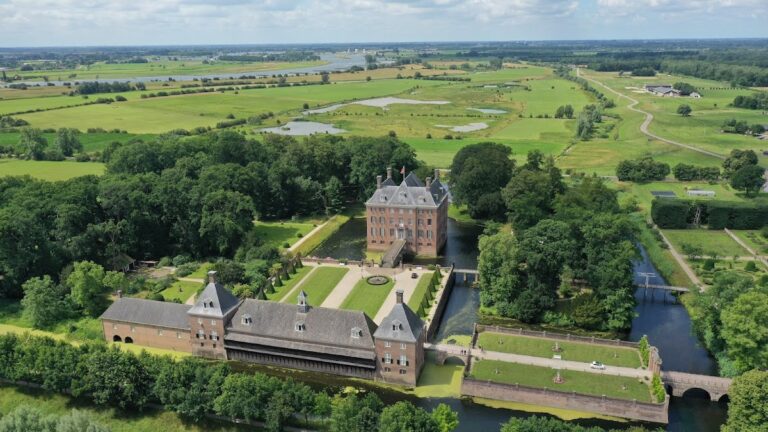
Zuylestein Castle is a historic estate and former castle near Leersum in the Netherlands. Its origins lie in a fourteenth-century house with Renaissance architectural elements, and its status as a ridderhofstad connected it to the political and social institutions of Utrecht.
Medieval origins and Utrecht status
The bishop of Utrecht’s fief register names the house by the end of the fourteenth century. One early form of its name was Sulensteyne. In 1465, Johan van Zuylen van Natewisch received the property as a fief, and in 1536 Zuylestein gained formal recognition as a ridderhofstad. This was a recognized fortified or manor residence whose owner met the legal and social requirements for admission to the Utrecht knighthood. The designation expressed status and political eligibility, rather than necessarily indicating an active military role.
Ownership passed through several Utrecht families during the sixteenth and early seventeenth centuries. Ernst van Nijenrode, burgomaster of Utrecht, held the estate from 1549. His daughter Geertruid inherited it in 1558 and married Godert van Reede van Saesfeld, who also owned Amerongen. Their daughter Aleida received Zuylestein under an arrangement that would have transferred it to her brother Frederik if she had no children. After Frederik died in 1611, Aleida transferred the property to her cousin Johan van Renesse, although Frederik’s children challenged the sale.
The Orange-Nassau period
Johan van Renesse obtained Zuylestein in 1611. In 1630, Frederick Henry, Prince of Orange, purchased the estate for 35,000 guilders. Frederick Henry was a Dutch prince and stadtholder, the chief executive and military leader of the Dutch Republic’s provinces. He enlarged the grounds, introduced elaborate garden designs, and added Leersum to the estate in 1632.
In 1640, Frederick Henry transferred the castle and its lands to his illegitimate son Frederick. The new owner received the title Lord of Zuylestein and became known as Frederick Nassau-Zuylestein. The transfer enabled him to enter the Utrecht Ridderschap, the province’s collegiate body of nobles and qualified knightly landowners. Membership gave him a formal role in Utrecht’s political estate. Frederick later served as guardian of his nephew, the future William III.
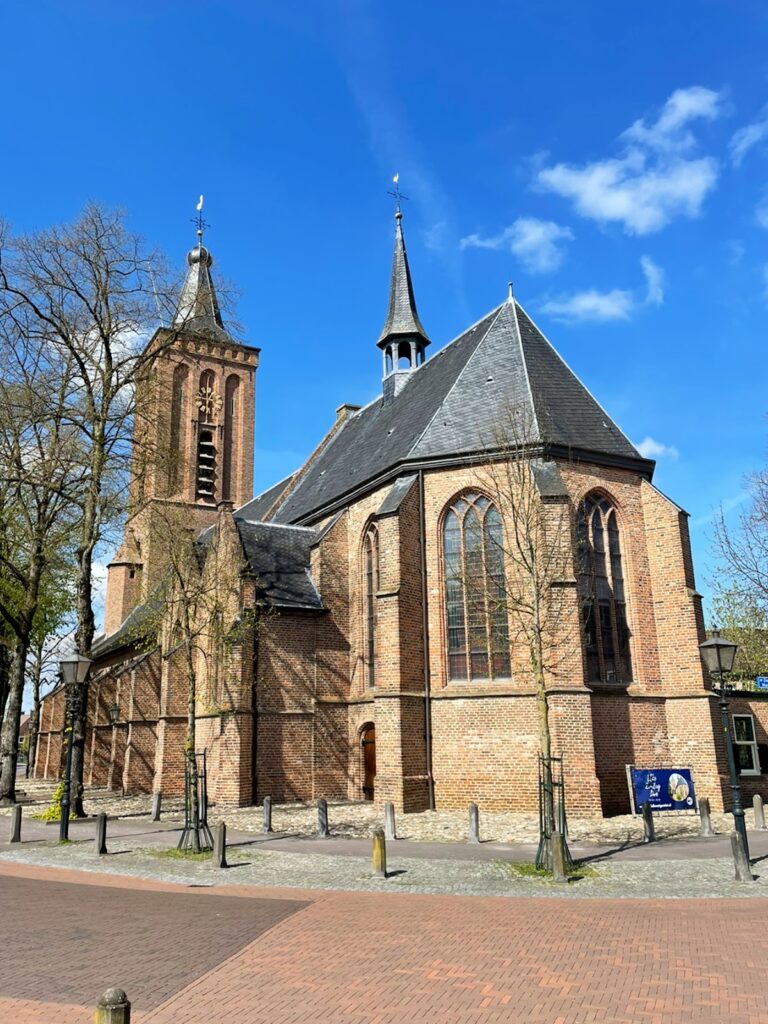
Zuylestein escaped plundering by French troops during the Dutch disaster year of 1672, but Frederick Nassau-Zuylestein was killed at the Battle of Kruipin. His son William Henry Nassau-Zuylestein later received high honours from William III for his services during the Glorious Revolution, the transfer of the English crown in 1688 and 1689 to William III and Mary II with parliamentary support. In 1695, William Henry entered the English nobility as Earl of Rochford, Viscount Tunbridge, and Baron Enfield. After his naturalization, the family increasingly managed its affairs in Britain. William Henry, together with his parents Frederick and Mary Killigrew, was buried in the church of Saint Michael at Leersum.
Tenancy, war, and destruction
During the eighteenth and nineteenth centuries, Zuylestein was rented to a succession of occupants. They included the Van Nellestein family, the mathematician Johann Samuel König, and the writer Maarten Maartens. In 1897, Godard John George Charles, Count of Aldenburg Bentinck of Amerongen Castle, inherited the estate and modernized it.
Count Charles Bentinck, Godard John George Charles Bentinck’s brother, lived at Zuylestein permanently from 1901 until his death in 1934. The estate was then rented to Philip van Alphen, an Amsterdam art collector and advertising-agency director.
During the Second World War, occupying authorities confiscated Zuylestein. On 23 March 1945, members of the local resistance informed British forces that a German general and his staff were using the castle. British aircraft bombed the site on 25 March and attacked again the next day. The first raid left the castle intact, while the second severely damaged it and reportedly caused several deaths.
The reason for the second raid remains uncertain. It may have been aimed at nearby Broekhuizen Castle, where German troops were stationed, or it may have been a retaliatory attack connected with the owners’ earlier provision of refuge at Amerongen Castle for the former German emperor Wilhelm II in 1918.
Postwar estate
The damaged castle stood as a ruin for several years before being demolished in 1953. Postwar difficulties and a building moratorium contributed to that decision. The old stones were later sold for the rebuilding of the old church at Zwammerdam.
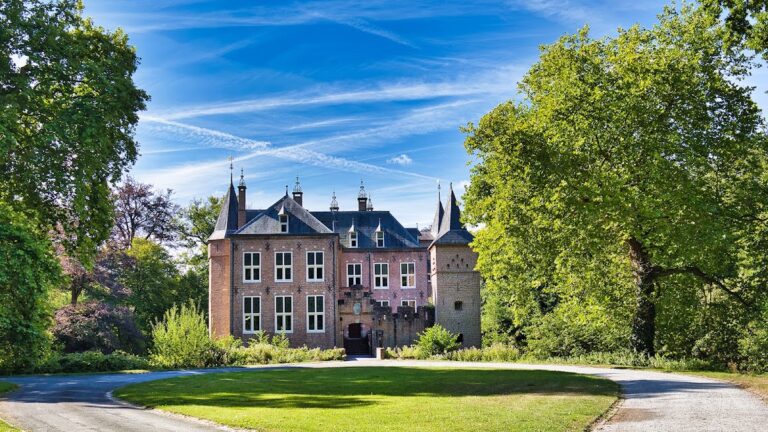
The heirs of the Van Aldenburg Bentinck family built a new country house on the estate in 1980. The Zuylestein estate covers 120 hectares and has been managed by the Twickel Foundation since 2024. Its garden and gatehouse are protected as national monuments, while the estate’s historical importance is also expressed through its recognition as a ridderhofstad. A severe windstorm on 18 June 2021 destroyed the seventeenth-century star forest. Replanting and restoration were completed in 2025.
Remains
The surviving estate combines elements of the former castle complex with later country-house and garden features. The medieval house developed through seventeenth-century remodelling, while the gatehouse, formal grounds, kitchen garden, and wooded landscape preserve different phases of Zuylestein’s history.
Former castle complex
The original house was built in the fourteenth century and included Renaissance elements, meaning a revival of classical architectural forms and proportions. Stones recovered while the rubble from the 1945 bombing was cleared were identified as fifteenth-century material. After Frederick Henry acquired the estate in 1630, Frederick Nassau-Zuylestein remodelled the house and raised the tower above the entrance. A forecourt was created on the south side, and a gatehouse with stables was added on the east. These changes gave the complex an increasingly castle-like appearance, although it served no defensive function.
Gatehouse and entrance
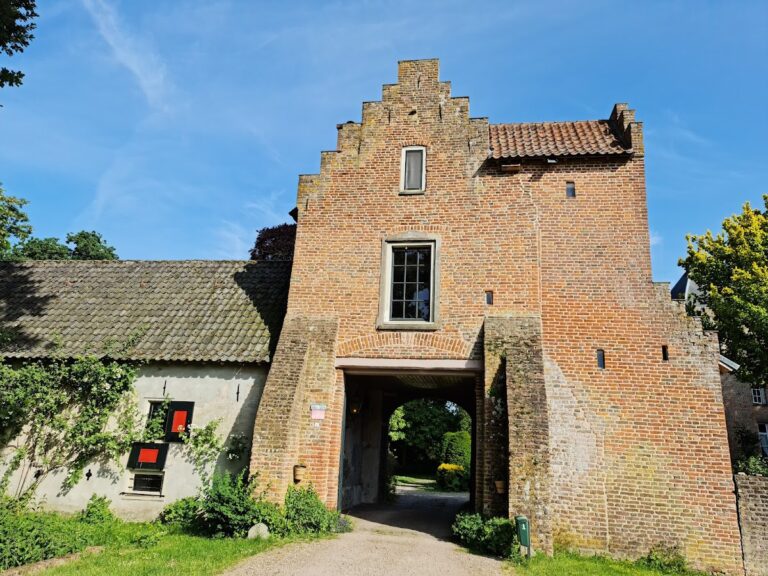
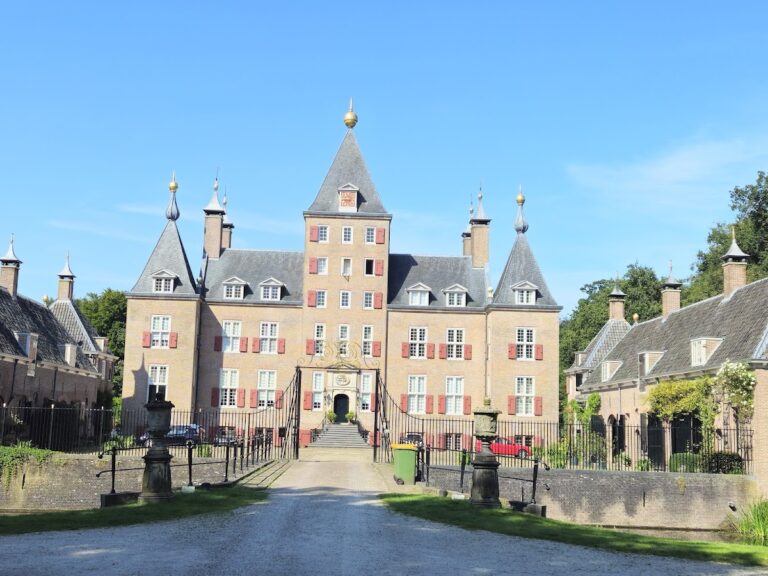
The entrance gate and gatehouse were designed in the nineteenth century by Pierre Cuypers, the Roermond architect who had also worked at Amerongen Castle. The historic gatehouse remains in use and is one of the protected elements of the estate.
Gardens and wooded landscape
Extensive grounds and formal gardens were developed after Frederick Henry’s purchase in 1630. The walled kitchen garden is being reconstructed from a 1710 print by the Dutch draughtsman Daniel Stoopendaal. Restoration had begun by 2011, and the garden is fully used for growing kitchen produce.
The estate’s seventeenth-century star forest formed another planned element of the landscape. The windstorm of 2021 destroyed it, and the replacement planting was completed in 2025.
Nearby sites