Domaine du Château de Meursault: A Historic Burgundy Wine Estate in France


Site at a Glance
- Rating
- 4.3
- Popularity
- Low
- Country
- France
- Primary era
- Medieval
- External website
- Open
- Eras represented
- Medieval, Early Modern, Modern
- Civilizations
- Duchy of Burgundy, French
- Site type
- Economic
- Remains
- Production Complex
On this page11 sections
History
Domaine du Château de Meursault is a historic wine-producing estate in Meursault, France, whose origins reach back to the eleventh century and the rule of Robert I, Capetian Duke of Burgundy. Robert I, a hereditary ruler of the Duchy of Burgundy, granted the fief of Moulin Foulot to one of his squires. The estate later developed through successive periods of political conflict and private ownership.
Medieval and Early Modern Ownership
From the twelfth through the sixteenth century, the fief changed hands repeatedly during conflicts between the Duchy of Burgundy and the kings of France. These transfers placed the property within the shifting political landscape of Burgundy, where local lordships were affected by the rivalry between ducal and royal authority.
In 1645, when the estate belonged to the lordship of Mazeray, Pierre Legoux de La Berchère, Lord of La Rochepot, acquired it. François de Raigecourt and his wife, Béatrice de Beaufremont, became its owners in 1662. Four years later, in 1666, the property passed to Pierre de Blancheton, a lawyer at the Parliament of Burgundy, the region’s high judicial institution under the French monarchy. The Blancheton family retained the estate until the French Revolution.
Revolutionary Transfer and Nineteenth-Century Expansion
During the French Revolution, the estate was confiscated and sold to Pierre Jobard, a merchant from Beaune. His daughter, Jeanne-Marie Philippine, inherited the property and married Charles Serre on 21 July 1818. Serre came from a family of merchants from Chalon.
The early nineteenth century brought major changes under the Serre family. The property was enlarged, substantial architectural alterations were made, and the wine estate was developed on a broader scale. In 1928, inheritance transferred the estate to the Countess of Moucheron, born Marcelle Boussenot du Clos. She later left it to her eldest son, Étienne. At that time, the estate covered about one-quarter of its present area.
Restoration and Present Wine Estate
André Boisseaux, then owner of the Patriarche group, acquired the château in 1973 and completely restored it. A new vat house was constructed in 1980, providing gravity-operated facilities for the separate processing of the estate’s vineyard parcels.
The Halley family took over the estate at the end of 2012. It operates under the direction of Olivier Halley, with Stéphane Follin-Arbelet identified as the estate’s director. Today, the Domaine du Château de Meursault is both a wine-producing estate and a wine-tourism property. Its vineyards cover approximately 65 hectares across the Côte de Beaune, with holdings in Pommard, Aloxe-Corton, Savigny-lès-Beaune, Volnay, Puligny-Montrachet, and Meursault.
The estate grows Chardonnay for white wines and Pinot Noir for red wines. Most of its holdings are classified as Premier Crus or Grand Crus, Burgundy’s designated vineyard classifications, with Grand Cru as the higher category. Red and white wines are produced in approximately equal quantities. The vineyards are managed parcel by parcel by 18 workers, each of whom follows the same parcel throughout the year. During the September harvest, about 150 pickers gather the grapes, which are carried in perforated 20-kilogram crates for sorting and processing.
Each parcel is pressed, fermented, and aged separately, allowing the estate to produce as many as six cuvées from one legally defined wine-growing designation, or appellation. White grapes are hand-sorted and slowly pressed in a pneumatic press before settling for about twelve hours. The clarified juice then ferments in French-oak barrels or stainless-steel vats. During aging, the barrels are stirred to resuspend the lees, the sediment formed by yeast and other particles, with the intensity adjusted to the vintage and the character of the site.
For red wines, grapes are destemmed and optically sorted before entering vats by conveyor belt. Individual parcels are fermented separately in stainless-steel vats or, for the highest-quality terroirs, wooden vats. Cold maceration before fermentation is followed by alternating punching-down and pumping-over, techniques that draw color, aromas, and tannins from the grape skins. Daily tastings guide the timing of drainage and the desired extraction before the wine is transferred to oak barrels. The estate also continues to host the Paulée, a communal wine-harvest feast held on the third day of Les Trois Glorieuses, Burgundy’s three-day sequence of major traditional wine events around the end of harvest, and La Paulée de Printemps in mid-March.
Remains
Château and Cellars
Park and Main Buildings
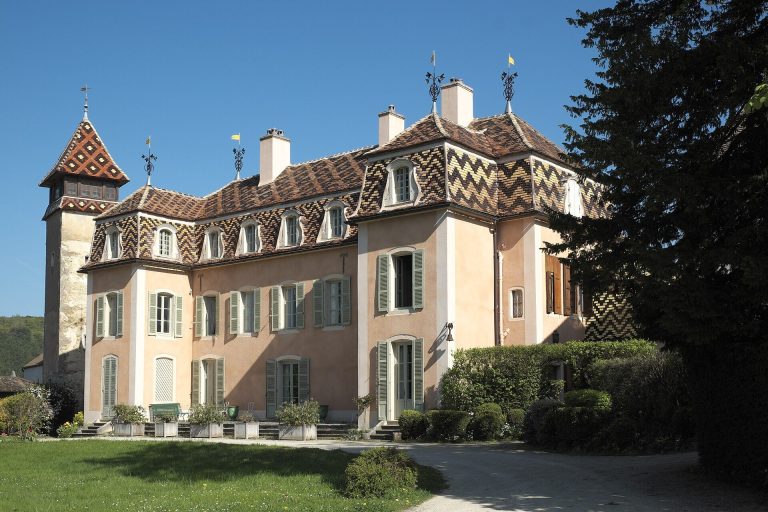
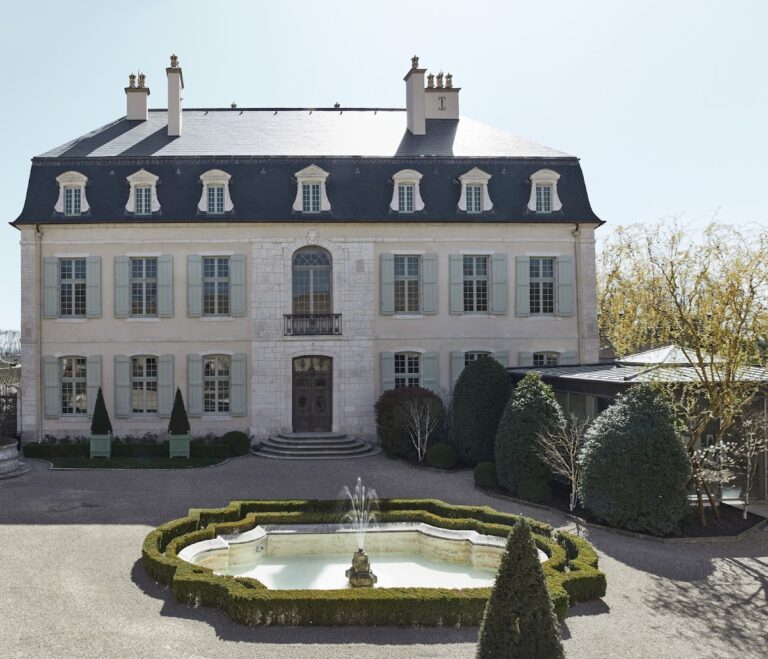
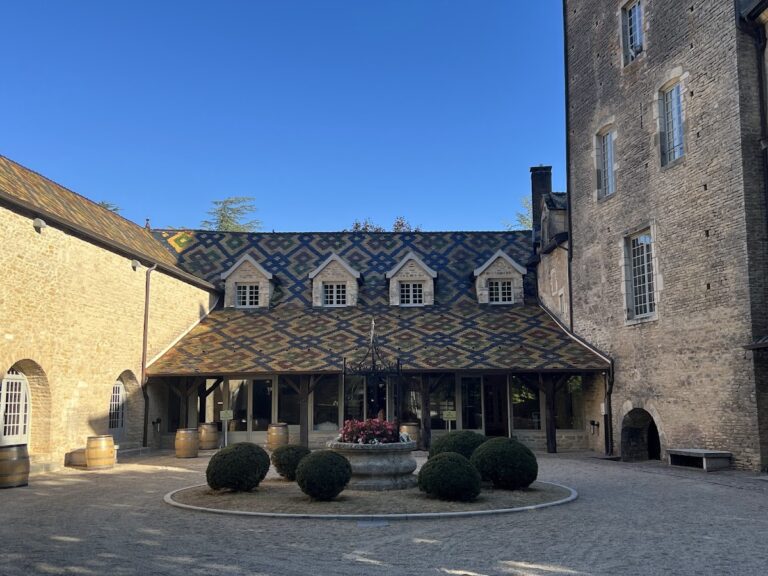
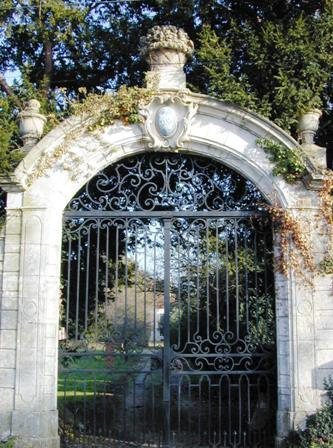
The château stands within a park and forms the central element of a complex that includes the main building, an orangery on the left, and the cuverie, or vat house, on the right. The arrangement combines the historic residence and its dependencies with facilities that support the estate’s continuing wine production.
Medieval Cellars
Extensive cellars extend beneath the château and its dependencies. Their stone vaults follow a Cistercian tradition, a medieval building style associated with the Cistercian monastic order and characterized by vaulted construction with restrained decoration. The vaults date from the twelfth, fourteenth, and sixteenth centuries, and some are double-vaulted.
The cellars can accommodate up to 800,000 bottles and more than 2,000 oak barrels. They hold Grand Cru and Premier Cru wines as well as barrels of Marc de Bourgogne, a Burgundy grape spirit made from the solid residues left after pressing grapes. The estate bottles its wines at the château in bottles modeled on eighteenth-century flasks, then ages them in the cellars for at least one year before labeling.
Vineyards and Wine-Making Facilities
Vineyard Parcels
The estate’s vineyards are divided among more than 110 parcels within an average radius of 10 kilometres from the château. Individual holdings range from 10 ares to 8 hectares. The vines occupy mid-slope sites at approximately 250 metres above sea level, face due east, and are sheltered from westerly winds by mountains. Limestone-rich, well-drained soils provide the physical setting for the Chardonnay and Pinot Noir plantings.
Gravity-Operated Cuverie
The 1980 cuverie contains gravity-operated equipment for parcel-specific pressing, fermentation, and aging. The separation of each parcel continues through the production process, with white grapes transferred after clarification to barrels or stainless-steel vats and red grapes handled in stainless-steel or wooden vats according to the quality of the terroir. The estate also includes a tasting cellar and commercial premises connected with wine production, including a shop.