Abbaye de Maizières: A Former Cistercian Monastery in France
Site at a Glance
- Rating
- 4.8
- Popularity
- Very Low
- Country
- France
- Primary era
- Early Modern
- External website
- Open
- Eras represented
- Early Modern
- Civilizations
- French
- Site type
- Religious
- Remains
- Monastery
On this page15 sections
History
Abbaye de Maizières is a former Cistercian monastery in France, at Saint-Loup-Géanges, founded from 1125 in the Romanesque period. It was the third daughter house of La Ferté, which was itself the first daughter house of Cîteaux. Cistercians belonged to a reforming monastic order that emphasized communal religious life, disciplined observance, manual labor, and self-sufficient estates.
Foundation and early development
The monastery was established on the ruins of a hermitage. Foulques de Réon, a benefactor of La Ferté, donated the original domain, and monks from La Ferté formed the new community. They first settled in the territory of Scoteria, where they built a wooden chapel at the place now called Les Gouttières. They probably moved to Maizières in the mid-twelfth century to benefit from the abundant water of the Dheune.
The foundation charter, dated 1132, granted the abbey land at Verglat and Maizières, as well as property at Corcelotte and Pommard. The document was entrusted to Dom Barthélemy, abbot of La Ferté, and drawn up in the presence of Gautier, bishop of Chalon, Jocerand of Langres, Pierre I, archbishop of Tarentaise, Robert of Marnay, Raymond Gumber, and Hugo Rufus of Saint-Romain. During the twelfth century, Maizières established Sturzelbronn as a daughter house. Janauschek’s nineteenth-century catalogue of Cistercian monasteries assigned Maizières the number 62.
Land, water, and urban possessions
During the thirteenth century, the monks developed fishponds on the Vendaine, including Etang Neuf and Etang du Petit Beauregard. They also acquired water mills on the Dheune and the Petite Dheune canal, and the mill of Saint-Loup-de-la-Salle became part of the abbey’s dependencies in 1304.
By the end of the thirteenth century, successive donations had provided Maizières with forests, fishponds, cultivated land, irrigated pasture, mills, farms, tenant holdings, and vineyards. Its vineyards included properties at Beaune, Chassagne, Pommard, Blagny, Puligny-Montrachet, and Morgeot. The abbey also owned a tower and houses in Beaune, including a group known as “little Maizières,” with houses, cellars, and the abbot’s residence. Several houses in Beaune were purchased between 1362 and 1364.
In 1377, Philip II the Bold, Duke of Burgundy from 1363 to 1404, exempted the abbey from entry duties on wines from Beaune, Blagny, Puligny-Montrachet, and Morgeot. The magistrates of Beaune challenged the privilege, but letters patent dated 20 April 1395 confirmed it. In return, Beaune purchased part of the abbey’s property in the city, including a tower that became the town belfry and clock tower.
Wars, rebuilding, and the final monastic years
The Wars of Religion, the sixteenth-century conflicts between Catholic and Protestant factions in France, caused serious damage to Maizières. The complex was looted in 1560, 1580, and 1595. A community of approximately twenty to thirty monks began restoring the monastery during the second quarter of the seventeenth century, while further rebuilding also took place during that century. François Gendron worked to improve the abbey’s difficult condition, and Claude de Bessey repaired damaged roofs and built a finely executed campanile.
Forty-one abbots governed Maizières between its foundation and the Revolution. Its last abbot was François Ange de Romilly, who held the office from 1755 to 1790. In 1789, only nine monks remained. The cellarer, Gaspard Goudier, a Cistercian and freemason since 1777, unsuccessfully sought secularization before the ecclesiastical court of Chalon-sur-Saône. After the Revolution temporarily released him, he was arrested and interned during the Terror because of his attachment to monastic life and the former order’s property.
Revolutionary sale and dissolution
The French Revolution nationalized church property, and an inventory of Maizières was made in July 1790. The estate was divided into four lots: the conventual house, which had accommodated the monastic community; the abbatial house, associated with the abbot; the Forge farm; and the Épervier farm. The lots were auctioned in 1791. Together they had been valued at 117,902 livres 18 sols 4 deniers and sold for 163,500 livres.
Nicolas Degros, a merchant from Chalon, bought the lots and immediately resold them in three parts. The principal lot passed through Antoine Durus to Claude-François Deplace late in 1791. Deplace demolished the abbey church and cloister, sold their stones, and retained the former conventual house, known as the château, with a domain of about 200 hectares comprising land, woodland, vineyards, ponds, farms, and a mill. The abbey was dissolved during the Revolution. The former site is listed in the French Ministry of Culture’s heritage database.
Remains
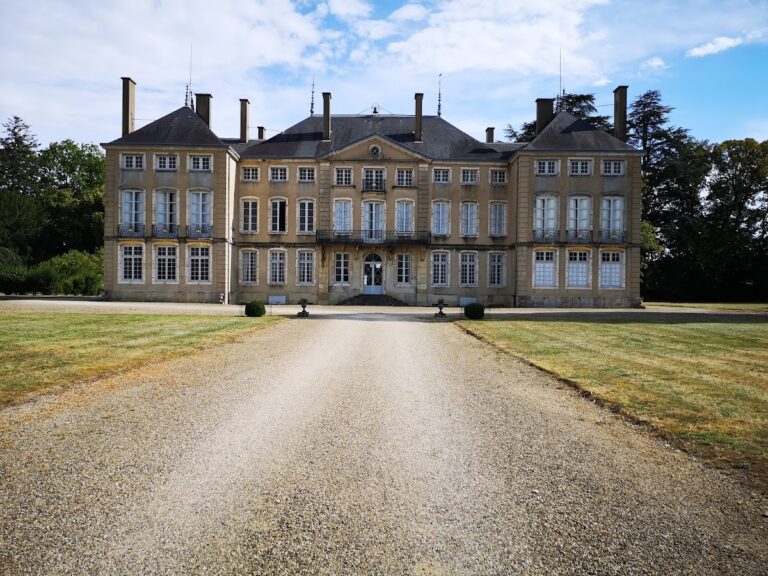
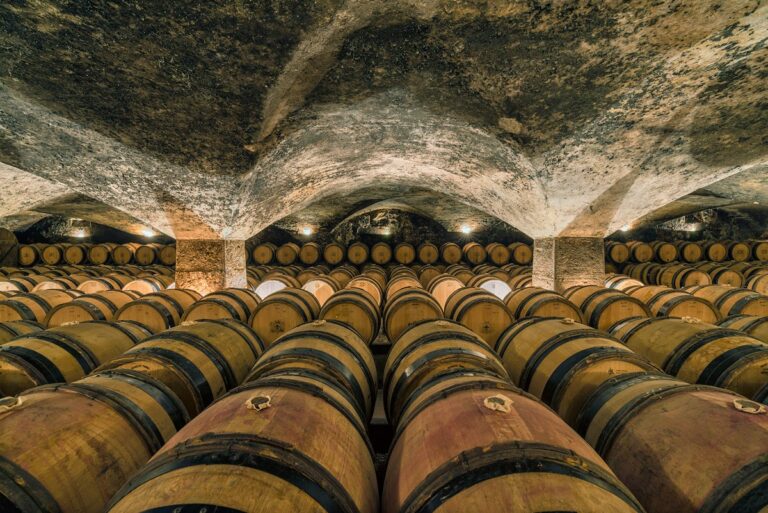
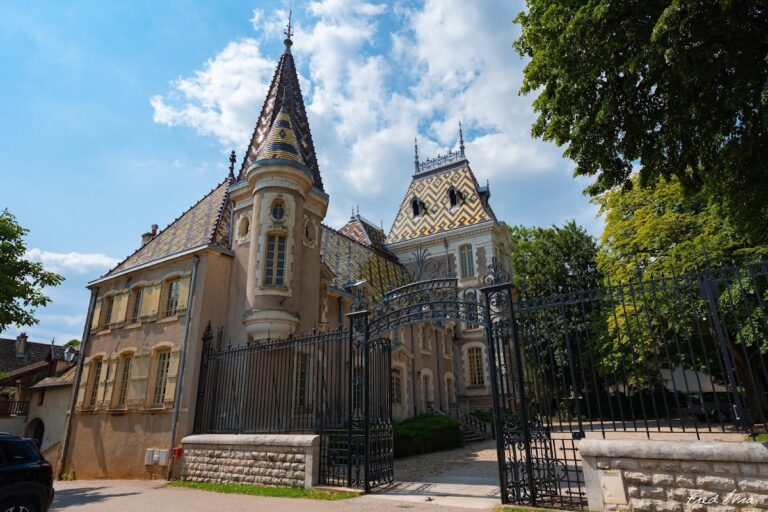
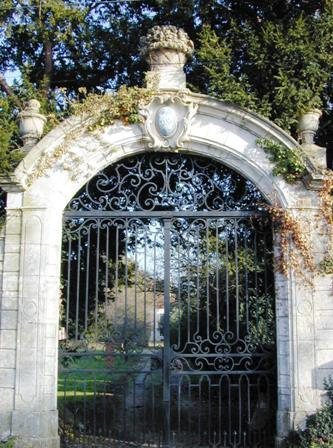
Abbaye de Maizières stood west of the parish of Saint-Loup, beside the Dheune, in a water-rich setting. Its surviving complex includes a brick perimeter wall with three portals, a mill, seventeenth-century stable buildings, a cellar, the former conventual house known as the château, and the former abbatial building. The abbey church and cloister were demolished in 1791, and their stone was recovered and sold.
The abbey church
Church layout and construction
The great abbey church was consecrated on 12 October 1236. Built in the Romanesque tradition, it had a relatively narrow nave and a choir surrounded by an ambulatory, a passage allowing movement around the sanctuary. The ambulatory formed a broad horseshoe-shaped gallery running from one transept to the other as a continuation of the aisles. The choir contained eighty stalls and the church had fifteen chapels, most of them placed around the choir. A substantial apse stood close to the monastic buildings, while the slate-covered bell-tower spire rose 38 metres from the lantern to the cross. The church was compared in appearance with the church of Semur-en-Auxois.
Burials and commemorative monuments
The choir contained mausoleums for Alexandre de Montaigu and Olivier de Martreuil, bishops of Chalon. It also contained burials of benefactors and members of noble families, including Hugh III, Duke of Burgundy, Guy of Vergy, Hugh of Palleau, Guy of Verdun, Richard of Montbéliard, and members of the houses of Couches, Montaigu, Chagny, and Navilly. By 1717, only the two episcopal mausoleums remained visible inside the church. The founder, his wife Chonors, and their children were commemorated by tombs in the cloister, while other burials had been disturbed during the Wars of Religion.
Surviving monastic buildings
The château and former abbey buildings
The château is the former conventual house retained after the church and cloister were demolished. The former abbatial building, cellar, mill, stable buildings, and brick enclosure also survive as parts of the former monastic complex. The cloister, a covered passage around an open courtyard that connected the principal monastery buildings, was dismantled with the church in 1791. Its choir grille was reused as the staircase railing to the first floor of the former conventual house.
Objects transferred from Maizières
Sculpture and relics
A nearly three-metre-high statue of Christ from the abbey church was transferred to the church at Saint-Loup. Two reliquaries were moved there on 17 August 1791. Statues of Saint Augustine, Saint Ambrose, Saint Jerome, and Saint Gregory that had stood in the abbey choir were transferred to Saint-Pierre in Chalon.
Organ, stalls, bells, and funerary stone
The abbey organ, built in 1699 by the royal organ builder Julien Tribuot, was purchased by the parish of Seurre. It is now in Seurre church and underwent extensive restoration in 1991. The eighty original choir stalls were transferred to Saint-Pierre in Chalon, while the abbey bells went to Demigny. Some library volumes entered the library of Chalon, and a fifteenth-century inscribed funerary slab belonging to the lords of Montaigu was reused as a sink stone in the château’s main kitchen.
Effigy of Alexandre de Montaigu
The recumbent effigy of Alexandre de Montaigu, bishop of Chalon, who was buried at Maizières on Christmas Day 1261, was transferred to the Denon Museum in Chalon.