Château des Vaux: A Historic French Estate and Palace


Site at a Glance
- Rating
- 4.4
- Popularity
- Low
- Country
- France
- Primary era
- Modern
- External website
- Open
- Eras represented
- Early Modern, Modern
- Civilizations
- French
- Site type
- Domestic
- Remains
- Elite Residence
On this page8 sections
History
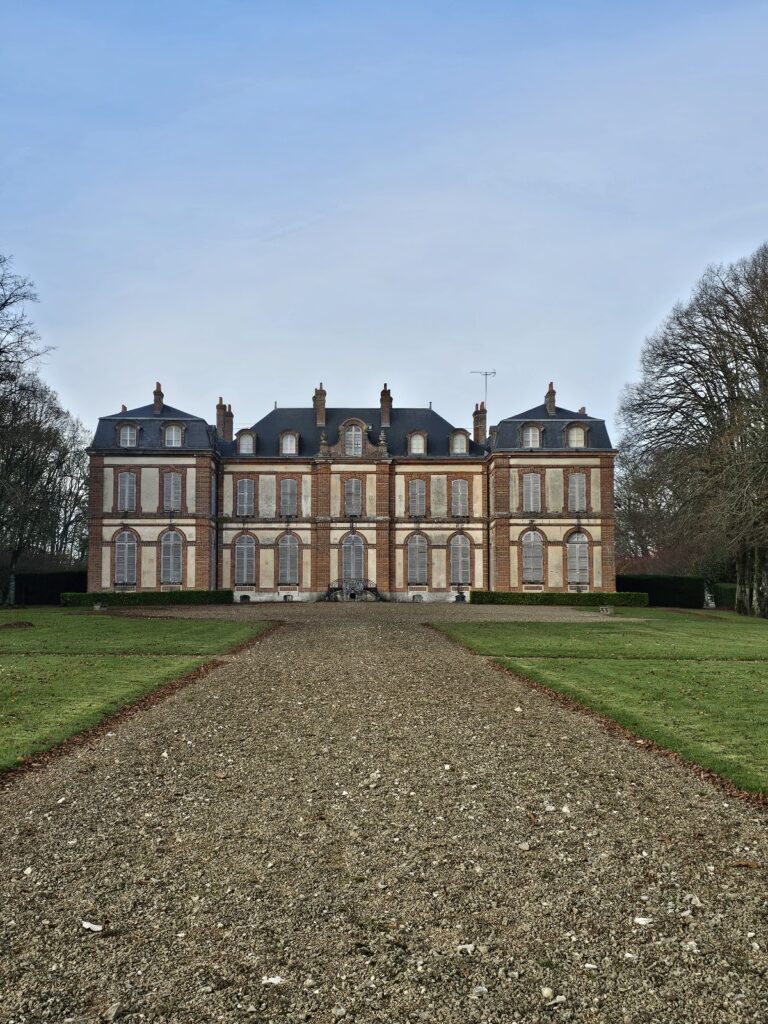
Château des Vaux is a historic château in France, at Saint-Maurice-Saint-Germain, whose present complex is principally a nineteenth-century enlargement associated with the Louis XV style. It began as a much smaller seventeenth-century residence belonging to Charles de Roussin and later became an extensive aristocratic estate in the Perche.
From the seventeenth century to 1789
The original château had modest proportions compared with the complex that survives today. About a decade before the French Revolution, the political upheaval that began in 1789, a person named Desvaux bought the property with the intention of turning it into a farm. He could not finance its upkeep and sold the estate to Louis d’Ussieux shortly before 1789.
Louis d’Ussieux died in 1805. His children then sold Château des Vaux to Étienne V d’Aligre, marquis d’Aligre. The marquis also owned Château de la Rivière, approximately five kilometres away, which served as the ancestral seat of the d’Aligre family.
The d’Aligre enlargement
Étienne VI Marie Charles d’Aligre, the last marquis d’Aligre and a peer of France, inherited Château des Vaux in 1847. A peer of France belonged to the historic high-ranking peerage associated with the kingdom and later the French state. He began major enlargement works that transformed the residence into an immense palace said to contain more than 300 rooms.
The expanded estate became a centre for hunting with hounds, a mounted aristocratic practice in which trained hounds pursued game over an extended course. Its grounds covered 10,000 hectares in a particularly game-rich part of the Perche, and hunting influenced both the decoration of the château and the way its social life was organized.
Étienne VI married his cousin Sophie de Preaulx in 1857. She died without issue in 1873. Three years later, he married Marie Charlotte de Preaulx, who became the last marquise d’Aligre. Étienne VI died in 1889, and his widow completed the enlargement works in 1891. She kept the château until her death in 1926.
Twentieth-century changes and educational use
After 1926, the estate’s farms were dispersed through auctions, while a hotel company bought the château and park. Proposals were made to establish a casino there, possibly in connection with a nearby station on the Paris–Brest railway. After the company’s owner died, the property was sold to Charles Delaporte. He retained the furniture until 1934 and occupied only a small part of the château for a long period.
In October 1946, the Orphelins Apprentis d’Auteuil acquired Château des Vaux for the value of two postage stamps. Around one hundred orphans moved into the property that same month under the direction of Father Barrat, a missionary of the Spiritan order. The institution later accommodated 350 and then 500 orphans. The Apprentis d’Auteuil, a French charitable educational institution supporting children and young people facing social or family difficulties, has owned the château since 1946, and the estate continues to serve young people in difficulty.
Château des Vaux extends across the communes of Pontgouin and Saint-Maurice-Saint-Germain in Eure-et-Loir. In 2018, its Temple of Love was placed on the Patrimoine en péril list through Mission Bern and the Fondation du patrimoine, initiatives and organizations concerned with identifying endangered heritage and supporting its preservation.
Remains
Château buildings and layout
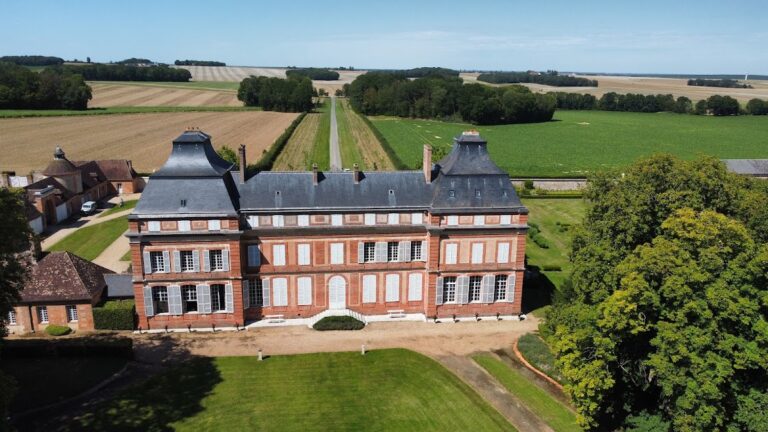
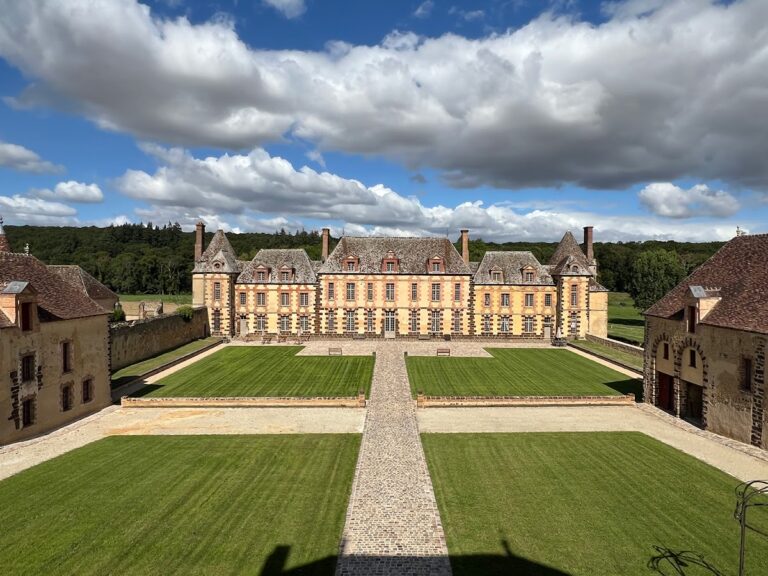
The seventeenth-century residence consisted of one main block with a central pavilion and two lateral pavilions. These three elements were retained during the nineteenth-century transformation. From 1847 onward, two wings and extensive service buildings were added around them, producing the large complex of more than 300 rooms. The completed château is principally associated with the Louis XV style and with nineteenth-century construction.
The reception apartments and chapel received their decoration during the enlargement works. Together with the service buildings, they formed part of the expanded residential and institutional complex. The former hunting facilities included almost grandiose stables, which were altered after 1946 and converted into a series of workshops.
Park, gardens, and water
The nineteenth-century remodelling also changed the estate’s landscape. The course of the Eure was diverted, views across the park were opened, and extensive formal French gardens were laid out. An orangery forms part of the estate, while the Temple of Love stands as a nineteenth-century garden structure within the château grounds. Its identification as a heritage feature at risk in 2018 drew attention to the need for its preservation.
Hunting decoration and commemorative features
Hunting shaped the interior decoration of the château. Hunting scenes and motifs appeared on overmantels and decorative friezes, while Sèvres porcelain reinforced the theme. Hunting-horn chandeliers illuminated the large dining room, where hunts ended. A stag erected in front of the main courtyard commemorated the killing of the thousandth stag on the estate.
Nearby sites