Schloss Königs Wusterhausen: A Royal Hunting Residence in Germany


Site at a Glance
- Rating
- 4.4
- Popularity
- Low
- Country
- Germany
- Primary era
- Early Modern
- External website
- Open
- Eras represented
- Medieval, Early Modern
- Civilizations
- Holy Roman Empire, Kingdom of Prussia, Margraviate of Brandenburg
- Site type
- Domestic
- Remains
- Castle
On this page9 sections
History
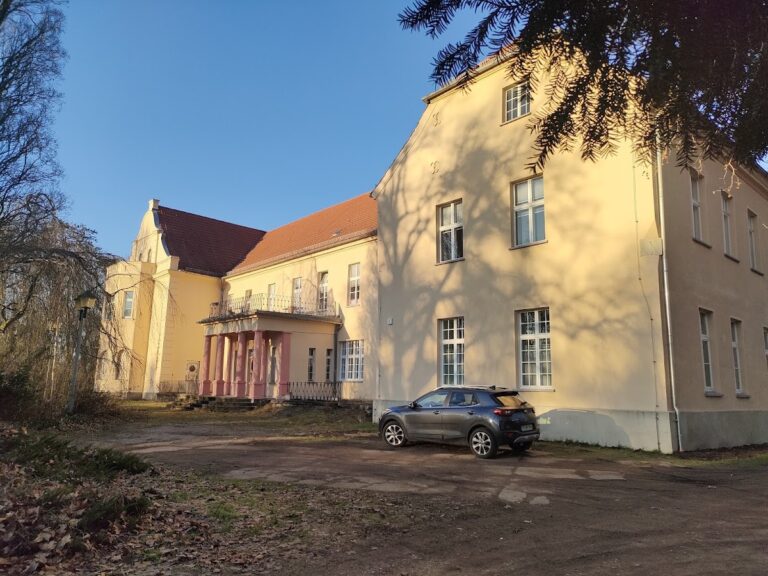
Schloss Königs Wusterhausen is a historic castle and royal residence in Germany, in the town of Königs Wusterhausen southeast of Berlin. It developed on the site of a fourteenth-century water castle first recorded in 1320 and mentioned again in 1375 as “castrum wusterhuse.” The present building is a two-storey Renaissance fortified house, transformed into a royal hunting residence in 1717 and 1718.
From water castle to royal residence
Frederick William, the Great Elector of Brandenburg, acquired the estate in 1682 for his son Frederick I of Prussia, the first king in Prussia. Frederick I later gave it to his son Frederick William I, who used the relatively simple residence as a hunting lodge, summer residence, and occasional autumn retreat rather than living mainly in his urban palaces. From 1717, the settlement received the addition “Königs” to its name, and the castle was reshaped as a royal hunting residence in 1717 and 1718.
Frederick William I, often called the Soldier King, was known for military discipline, administrative austerity, and the expansion of the Prussian army. At Königs Wusterhausen he held informal tobacco colleges, gatherings where he and selected relatives, advisers, and associates discussed political and personal matters while smoking and drinking beer. He also hunted and sought diversion from state affairs while overseeing the training of his exceptionally tall soldiers, popularly known as the “Lange Kerls.”
In 1725, Frederick William I established the Neue Mühle game preserve directly beside the castle park to protect the hunting stock. The castle also became the setting for important political and dynastic events. The Treaty of Wusterhausen between Prussia and Austria was signed there in 1726. In 1730, Frederick William I signed the decree concerning his son Frederick II’s attempted escape to England. The affair resulted in Frederick’s imprisonment and the execution of his friend and lieutenant Hans Hermann von Katte.
Changing royal use
After Frederick William I died in 1740, his preferred son August Wilhelm inherited the castle and its estates. Excavations around the building have produced numerous remains associated with use during this period. The castle was probably vacant at times, however, and was assigned as a residence to a war councilor and his officials.
Frederick II, later known as Frederick the Great, retained unhappy childhood memories of Königs Wusterhausen and preferred Rheinsberg, followed by Sanssouci in Potsdam. From August 1798, Frederick William III allowed Frederick’s brother Heinrich to use the castle. Heinrich stayed there from 1799 until his death in 1802, especially during March, often in October, and occasionally in summer.
Royal hunting and modern heritage use
During the nineteenth century, the Prussian kings Frederick William IV and Wilhelm I again used Königs Wusterhausen as a royal hunting lodge. Court hunts resumed in 1863, when the building was repaired and refurnished. Wilhelm I held a court hunt there in December 1883 with Carl Alexander, Grand Duke of Saxe-Weimar-Eisenach, and Ernst I, Duke of Saxe-Altenburg. The last major hunt took place under Emperor Wilhelm II in 1913.
During the Weimar Republic, the castle temporarily housed a museum. In the Second World War it served as a military hospital, and during the German Democratic Republic it became the seat of the district administration of Königs Wusterhausen. Extensive restoration began in 1991. The castle and garden reopened to the public on 30 September 2000, and the building again became a museum and cultural center used also for concerts. The Stiftung Preußische Schlösser und Gärten Berlin-Brandenburg owns the castle and garden, which are protected as a historic monument.
Remains
Castle building and courtyard
Main castle
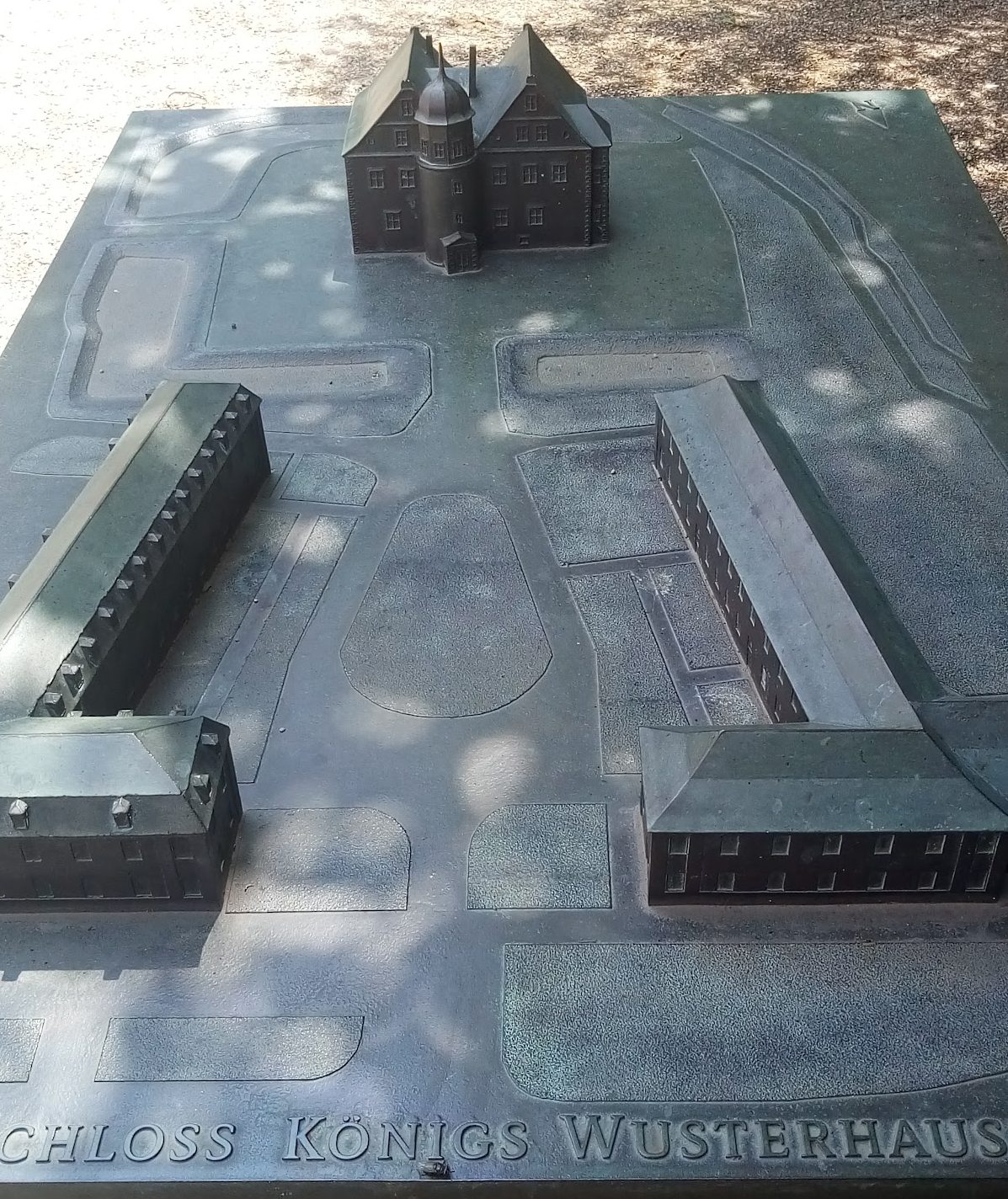
The castle is an almost square, two-storey building of the Renaissance fortified-house type, a substantial residence designed with defensive characteristics between a noble house and a full fortress. Fieldstone extends through the construction up to the upper storey. The north and south sides have gabled fronts with steep, parallel pitched roofs. On the north courtyard facade, a stair tower projects on an offset from the central axis and is crowned by a curved roof covered with slate.
The great hall contains approximately forty paintings made by Frederick William I himself at Schloss Kossenblatt between 1735 and 1739. They were transferred to Königs Wusterhausen in 1863, when the castle was repaired and refurnished for the revival of court hunts.
Cavalier houses
Two low cavalier houses stand in front of the castle. Built in 1703, these secondary buildings provided accommodation or service functions beside the main residence and together form a trapezoidal castle courtyard.
Gardens
A Renaissance garden originally extended west of the castle, while the eastern side was undeveloped meadowland. Between 1696 and 1698, Electress Sophie Charlotte commissioned a French Baroque garden for the eastern area and sent Siméon Godeau, a Parisian garden designer and pupil of André Le Nôtre, to create it. The garden’s Baroque structure has been restored along with surviving elements of the nineteenth-century design and alterations made around 1969.
Nearby sites