Château of Thoiry: A Renaissance Residence and Historic Estate in France


Site at a Glance
- Rating
- 4.5
- Popularity
- Low
- Country
- France
- Primary era
- Early Modern
- External website
- Open
- Eras represented
- Early Modern, Modern
- Civilizations
- French
- Site type
- Domestic
- Remains
- Elite Residence
On this page24 sections
History
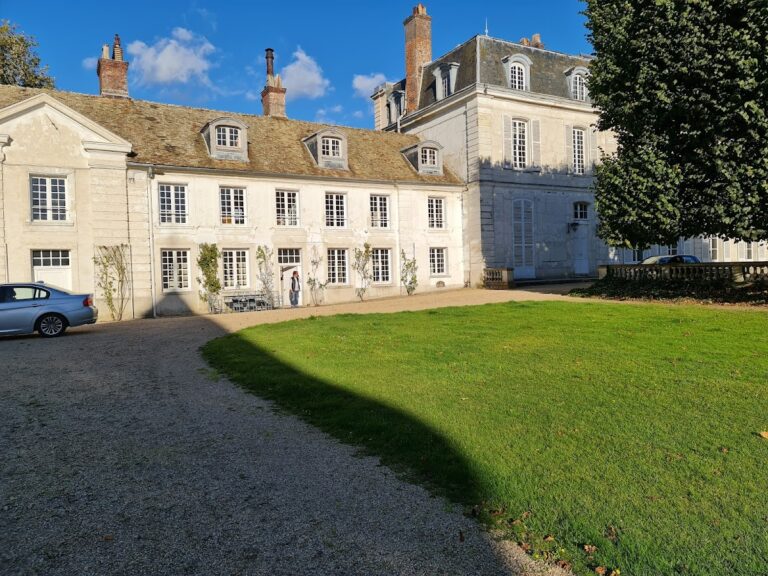
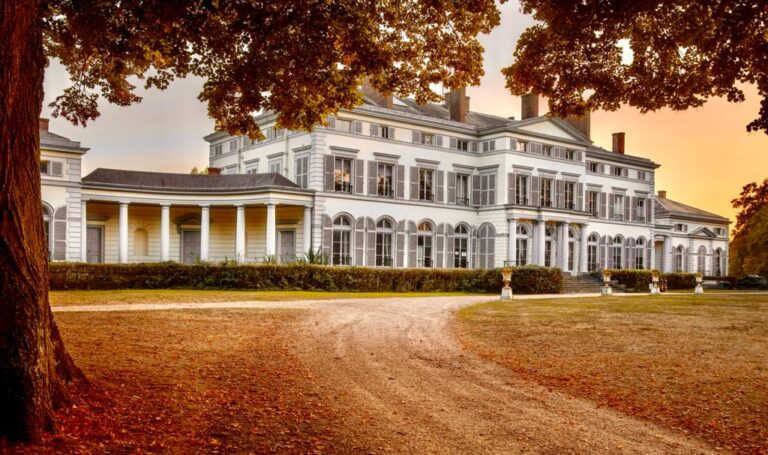
The Château of Thoiry is a sixteenth-century Renaissance residence in Thoiry, France, built between 1562 and 1564 by Olivier Ymbert for Raoul Moreau. The Renaissance was a European cultural and artistic period that revived classical forms and emphasized proportion, perspective, humanism, and harmony between architecture and nature. Moreau had acquired his wealth as treasurer to King Henry II of France, and the château was initially intended as a private home.
Foundation and family succession
The château’s early history was reshaped by a violent incident at its gates. On 1 May 1612, Raoul II de Moreau, grandson of the original owner, killed Ann le Blanc du Raulet in a duel. Sentenced to death, Raoul II fled to Rome, and the Crown confiscated his property. The king then entrusted Thoiry to Guillaume Marescot. This transfer was the only sale in the château’s history. From Marescot’s acquisition in 1612, the estate remained within the same family for thirteen generations, with succession frequently passing through women. The present owner is Count Paul de La Panouse.
Angélique de Marescot became one of the most prominent women associated with Thoiry. She married successively Adrien, Marquis de Baussan, François Renouard de Villayer, and the Marquis de Vatan. After the death of her son Alexandre, she brought up her granddaughter, Angélique de Baussan, whose life also became closely connected with the château.
Family life and royal service
In 1739, Alexandre was being treated for smallpox when three friends shared his quarantine. Their courtship poems were gathered into the manuscript La Quarantaine du cœur et de l’esprit, which preserves a record of the episode and of the social world surrounding the household.
Angélique de Baussan married Charles de Machault in 1773, but he soon returned to his regiment, the Languedoc-Dragons. He became a colonel in 1780. During their long periods apart, the couple exchanged 1,500 love letters, amounting to about 6,000 pages. These letters are preserved in the archives of Thoiry and provide an unusually extensive record of their relationship.
Thoiry was also connected with the political life of the reign of Louis XV, king of France from 1715 to 1774. Jean-Baptiste de Machault d’Arnouville, a senior minister and keeper of the seals, lived at the château. His efforts to extend taxation to the clergy, together with his attempt to obtain the dismissal of Madame de Pompadour, Louis XV’s influential official mistress, contributed to his removal from office. A letter preserved at Thoiry records the king’s regret and friendship toward Machault d’Arnouville.
Revolution and nineteenth-century transformation
At the beginning of the French Revolution, Angélique de Baussan, Charles de Machault, and their children left Paris after the storming of the Bastille and took refuge at Thoiry. They were arrested on 20 May 1794 after being denounced in connection with relatives who had emigrated. The family was sentenced to the guillotine, but the executions were halted after the fall of Robespierre, and they were released on 25 October 1794.
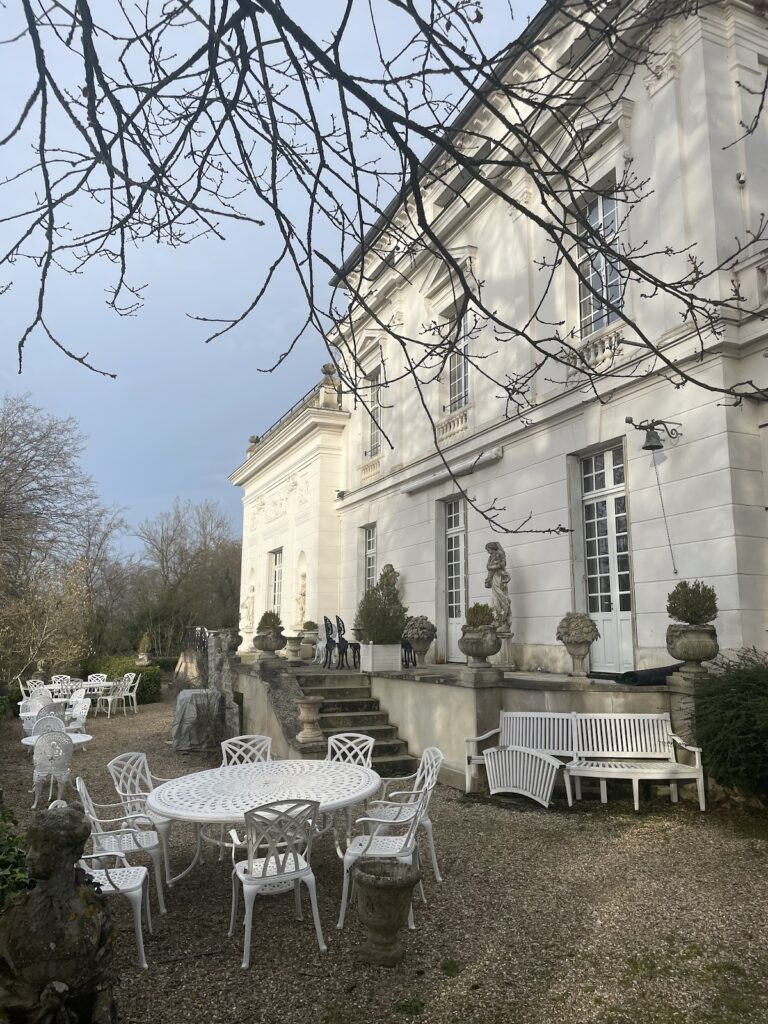
Henriette de Machault d’Arnouville, who became Marquise de Vogüé after marrying Léonce de Vogüé in 1826, commissioned major modernization work around 1840. The garden façade was refaced in stone, while the courtyard and forecourt were removed. The gardens were redesigned by Louis-Sulpice Varé, changing both the appearance of the residence and its relationship with the surrounding grounds.
War, preservation, and public opening
During the First World War, Eugène, Count de La Panouse, his wife, and Marie-Hélène Béjot vowed to dedicate the chapel to the Sacred Heart if German forces were stopped before reaching Thoiry. Eugène returned from the war exhausted and died of Spanish influenza in 1919. His widow later fulfilled the vow.
The Second World War brought direct damage to the estate. The German army repeatedly used Thoiry as a rest location for troops, and the château was occupied and damaged. In 1940, Lieutenant Antoine de La Panouse escaped the encirclement of his regiment in Belgium. Wounded three times and left for dead, he was saved by a German surgeon and later repatriated.
Count Antoine de La Panouse opened the château to the public in 1965 and established a zoological park in part of the surrounding domain. The wooded estate covers about 380 hectares, with approximately 130 hectares occupied by the animal park; the château, zoo, and botanical-garden complex covers 150 hectares. By 1974, the complex received more than 280,000 visitors annually.
The château was entered in the supplementary inventory of historic monuments in 1973. Protection was extended by orders issued in 2014 and 2022, and a classification order of 28 November 2024 replaced those registrations. The gardens are also protected and carry the Jardin remarquable label. The building retains furniture from several periods and extensive archives. Selected ground-floor rooms are open to visitors, while the entire building is not accessible as a public interior.
Remains
The surviving estate combines a sixteenth-century Renaissance residence with formal and landscaped gardens, botanical areas, and a zoological park. Its design is described as being in harmony with nature, and the central arch is associated with the position of the sun at the summer and winter solstices. The château’s interiors preserve furnishings, artworks, household objects, and documents from several centuries, while the grounds retain successive approaches to garden design.
Principal interiors
Honour Staircase Room
The honour-staircase room contains four Gobelins tapestries from The Loves of the Gods. Gobelins tapestries are high-quality French works associated with the Gobelins manufactory in Paris, which became a major royal centre of tapestry production. The four scenes are Venus at Her Bath, Diana Returning from the Hunt, The Myth of Narcissus, and The Abduction of Europa. They bear the arms of the poet Guillaume Budé. Several portraits are displayed at the entrance, including one of Marie-Hélène Béjot, Countess de La Panouse.
Morning Room
The Morning Room contains porcelain plates and eighteenth-century seating. Its armchairs represent Régence, Louis XV, and Louis XVI styles. Régence describes an early-eighteenth-century French decorative style associated with the regency of Philippe II, Duke of Orléans.
Tapestry Room
The Tapestry Room is named after a Gobelins work presented by Louis XV to Jean-Baptiste de Machault d’Arnouville. The room also contains portraits of Chancellor de Pontchartrain and Machault d’Arnouville, two seventeenth-century busts by Raon, and a Dutch chandelier dating from the seventeenth century.
Green Room
The Green Room contains a monumental nineteenth-century fireplace copied from the Renaissance fireplace of the Hôtel de Vogüé in Dijon. Its furniture includes seating by de Beauve, restored with gold leaf and covered again in matching textiles, together with a seventeenth-century Dutch-marquetry commode. Marquetry is a decorative technique in which pieces of wood or other materials are fitted together to create patterns or images on furniture. A small seventeenth-century marquetry table rests on four gilded wooden caryatids, sculpted female figures used as architectural supports instead of columns or pilasters. The room also contains a seventeenth-century dog bed.
A tapestry shows Henry IV hunting a lion. Portraits associated with the schools of François Boucher and Hyacinthe Rigaud include a young woman by Nicolas de Largillierre, Galéas de Marescotti, the child Louis XV, and the Duke of Orléans, brother of Louis XIV.
Grand Vestibule
The wood-panelled Grand Vestibule contains a Boulle-style marquetry commode, a Régence mirror flanked by two Roman busts, Charles de Machault d’Arnouville’s carriage armchair, and a cassone dating from 1450. A cassone is an Italian marriage chest traditionally associated with a wedding. The Marescotti family brought this chest from Italy, and it was restored in 2007.
Portraits in the vestibule include pastels of Jean-Baptiste de Machault d’Arnouville and Geneviève Rouillé, a gentleman by Nicolas de Largillierre, and Alexandre Millon by Hyacinthe Rigaud.
Libraries
The libraries contain collections of old books. Their cornices carry Japanese Imari vases, adding imported decorative objects to the rooms’ historic furnishings.
Music Room
The Music Room, also called the White Room, contains two bergères by Boulard, a fine-marquetry roll-top desk signed by Lardin, a table by Pierre Migeon, and sofas and armchairs by Gourdin père. Aubusson tapestries illustrate La Fontaine’s fables, while other seating is attributed to Pissard and Jean. Chinese wine coolers presented by Louis XV accompany a harpsichord by François-Étienne Blanchet.
The harpsichord was made about forty years before Christophe Huet painted it in 1750 with grotesques and musical monkeys. A harpsichord is a keyboard instrument whose strings are plucked rather than struck. This instrument retains its original mechanism, meaning that its historic sound-producing system survives.
The room’s marble fireplace has plaques and gilt-bronze chenets depicting Chinese subjects. A chenet is a metal support used in a fireplace to hold burning logs. The overmantel mirror and woodwork are gilded with gold leaf. Portraits include a pastel of Machault d’Arnouville’s three sons by Bondé, with the hands and faces attributed to La Tour, and two portraits of Angélique de Marescot by Maurice-Quentin de La Tour. One presents her as a nun and the other as Venus.
Angélique’s Bedroom
Angélique’s Bedroom takes its name from four successive female owners, Angélique de Baussan, Angélique de Marescot, Angélique de Vogüé, and Angélique d’Apougny. Its furnishings include a reading chair by Pierre Migeon, Régence- and Turcot-style commodes, corner cupboards, banquettes, and chauffeuses by de Beauve, as well as a canopied bed and a bronze-decorated commode by Cressent.
The portraits show Angélique de Marescot as a young woman, Angélique de Vogüé, Angélique d’Apougny, Michel de Marescot by Nicolas de Largillierre, Angélique de Baussan, and Charles de Machault by Alexander Roslin.
Chinese Boudoir
The Chinese Boudoir contains an eighteenth-century dressing table, a spittoon, and a caned armchair concealing a commode chair. Its painted silks were imported from Asia in the seventeenth century.
Chapel and archives
Chapel of the Sacred Heart
The chapel is dedicated to the Sacred Heart, a Christian devotion to the heart of Jesus that emphasizes divine love. Its stained-glass windows include two angels bearing the arms of Raoul and of the Motet de La Panouse line, referring to their participation in the 1248 crusade. A ceramic Virgin and Child by Della Robbia stands inside, and the oak altar dates from 1754.
Archive Room
The archive room preserves several tens of thousands of documents, with only a small selection displayed. The holdings include letters signed by Jean-Jacques Rousseau, Chateaubriand, Rodin, Lamartine, Eugène Sue, and George Sand. Genealogical trees, photographs, objects, medals, and official documents further trace the history of the families connected with Thoiry.
Gardens and wider estate
French-style garden
The gardens cover about 450 hectares, while the formal and landscaped gardens occupy 95 hectares in the twenty-first century. They bring together a French-style garden, an English-style park, a botanical garden, and a zoological park, reflecting changing ideas about the relationship between designed space and nature.
In 1715, Claude Desgot created an optical illusion in the French-style garden. A person descending the central avenue appears to see the perspective recede and the horizon move farther away. Desgot was a French garden designer and a great-nephew and successor of André Le Nôtre, who is associated with the formal French garden tradition.
English-style park
The English-style park was created between 1827 and 1850 as a deliberately naturalistic Romantic landscape. Its numerous exotic species reflect Asian influence, and bosquets and shrubs were allowed to envelop the château. The Comte and Comtesse de La Panouse later restored the gardens to recover their original perspective, which had been obscured as the English-style plantings expanded.
Arboretum and planting
Louis-Sulpice Varé planted a belt of cedars and sequoias in 1852. Two of these trees reach about 40 metres in height. Later planting included magnolias, cherry trees, hydrangeas, and other species chosen to extend the flowering season and create strong autumn colour.
Zoological and botanical areas
The zoological park includes an approximately eight-kilometre drive through the African Reserve, where animals roam freely, as well as a walk-through zoo. The wider complex also includes botanical gardens and a maze, extending the estate’s modern public role across its historic grounds.