Ruine Wielandstein: A Medieval Castle Group in Germany


Site at a Glance
- Rating
- 4
- Popularity
- Very Low
- Country
- Germany
- Primary era
- Medieval
- External website
- Open
- Eras represented
- Medieval
- Civilizations
- Holy Roman Empire
- Site type
- Military
- Remains
- Castle
On this page12 sections
History
Ruine Wielandstein is a group of medieval hilltop castles in Germany, associated with the rocky Wielandstein ridge above the Tobeltal near Oberlenningen in Baden-Württemberg. The castle group developed from around 1150 and was linked to the lords of Wielandstein, knightly ministeriales, or dependent nobles who served rulers in military, administrative, or court roles. These lords were connected with the dukes of Teck, a medieval noble house whose territories lay in central Swabia.
Foundation and expansion
Alt-Wielandstein and Hinterer Wielandstein were constructed around 1150. The lords of Wielandstein are documented from 1240, but they abandoned the castle group around 1330. Around 1250, Hinterer Wielandstein was rebuilt and enlarged. At the same time, Mittlerer Wielandstein and Vorderer Wielandstein were constructed around separate rock formations.
The rebuilding changed the organization of the ridge. Hinterer Wielandstein had originally consisted of two narrow timber-framed buildings with a combined length of about 50 metres. The later work enlarged its ground plan, added a cellar, and introduced another ditch. The castle section was also divided, making Zwischen-Wielandstein an independent part of the complex. Alt-Wielandstein was abandoned, and its masonry was probably dismantled for the construction of Vorderer Wielandstein.
Decline and destruction
By around 1350, Mittlerer Wielandstein and Hinterer Wielandstein were still inhabited. Hinterer Wielandstein passed into the possession of the counts of Württemberg in 1386. Around 1450, it was the sole inhabited section of the group. In 1478, it became the free property of the noble Schilling family, while the other castle sections had already become uninhabitable.
The castle was completely destroyed during the German Peasants’ War in 1525. This uprising of peasants and lower social groups across parts of the Holy Roman Empire brought warfare to many territories. In 1553, the community of Oberlenningen acquired the site and used the already collapsing masonry of Hinterer Wielandstein as a quarry.
Exposure and continuing instability
Between 1976 and 1979, the municipality of Lenningen exposed and secured the remains. The work identified seven neck ditches, defensive cuts across the narrow ridge that had separated the individual castle sections. A small watch post at Hohgreutfels is attributed to the castle group. Small finds place it in the second half of the thirteenth century, when it probably controlled the valley terrain upstream from Lenningen village and the Swabian Alb plateau above the castles.
Rock instability has continued to affect the site. Persistent rain caused a rockfall of about 50 square metres on the mountain side of Wielandstein in 2007. During the night of 13 to 14 January 2015, a much larger rockfall detached about one-third of the rock massif. Access routes and climbing facilities were then closed while the possibility of further rockfalls was assessed and remedial work continued.
Remains
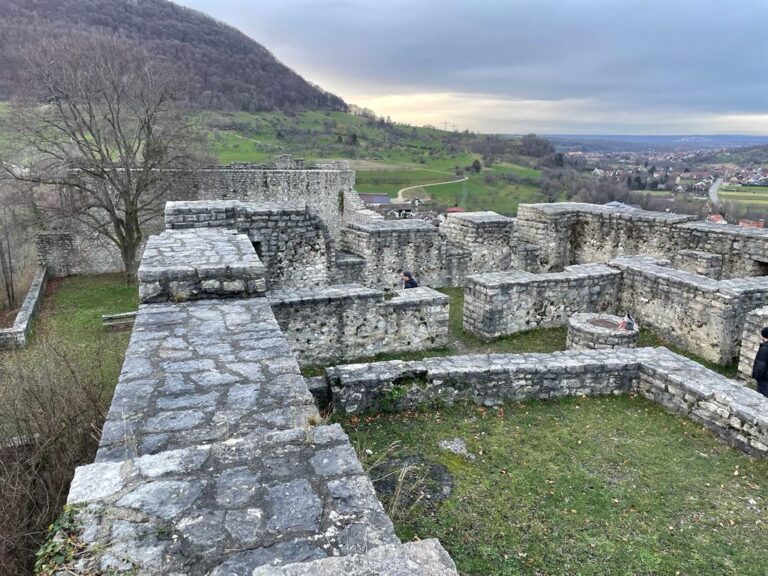
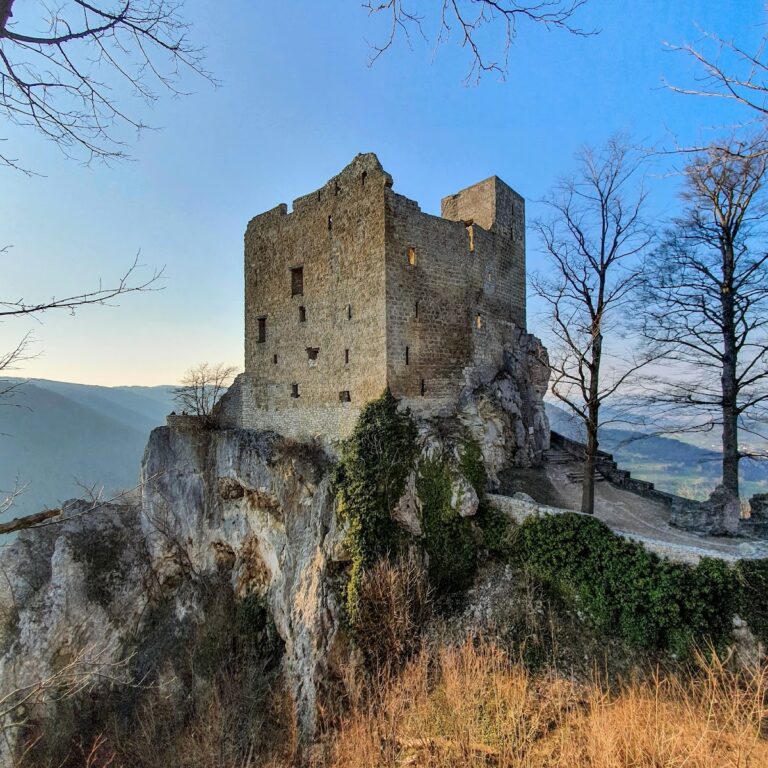
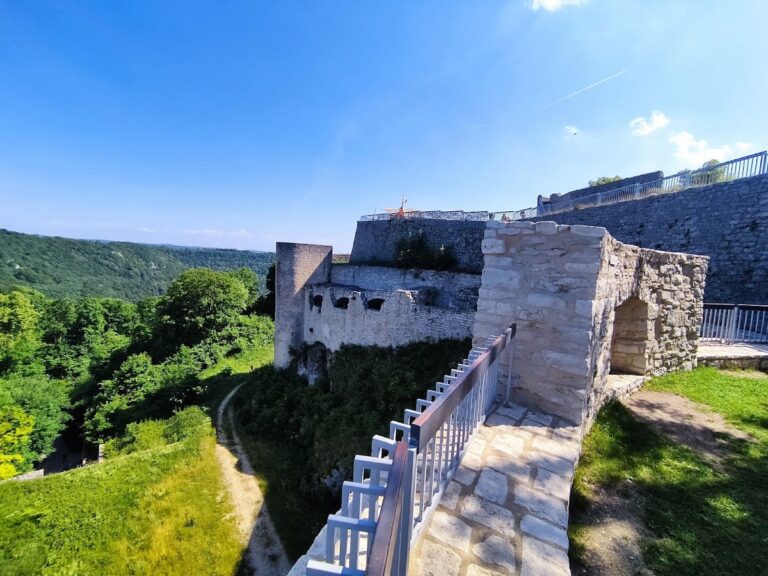
The present ruin group occupies a rocky ridge above the Tobeltal at approximately 671.2 metres above sea level. It comprises Hinterer Wielandstein, Zwischen-Wielandstein, Mittlerer Wielandstein, Alt-Wielandstein, and Vorderer Wielandstein. The masonry includes small ashlar, regular ashlar, and bossed ashlar, a form of dressed stone whose central faces project outward while its edges are more regularly fitted. The individual sections were separated by neck ditches cut across the ridge.
Castle sections on the ridge
Alt-Wielandstein
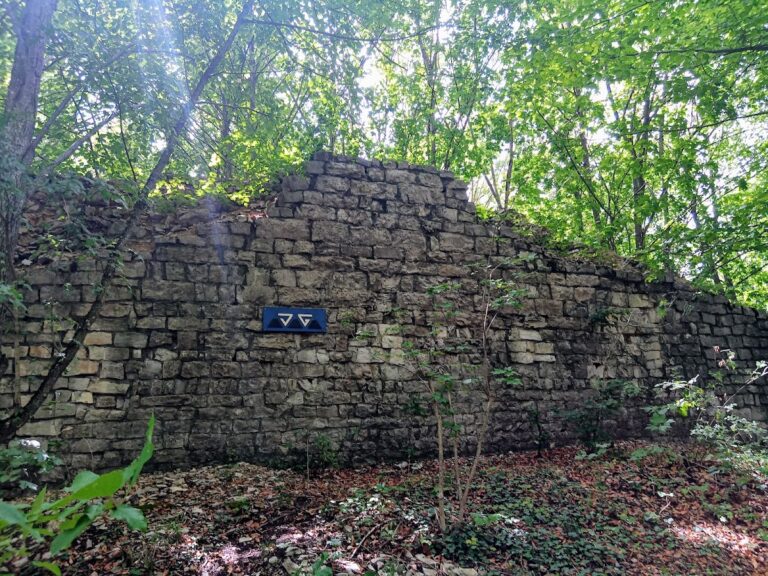
Alt-Wielandstein was a small oval castle. Parts of what was probably a substantial perimeter wall survive on the rocky ridge. Its position also shaped the defensive arrangement of the later complex, since a tower on the summit of Hinterer Wielandstein probably watched the eastern approach from the Alb that Alt-Wielandstein could not see directly.
Hinterer and Zwischen-Wielandstein
Hinterer Wielandstein retains wall remains interpreted as those of a small tower on its rocky summit. The tower probably served as an observation post for Alt-Wielandstein before the castle group was reorganized around 1250. The later rebuilding enlarged Hinterer Wielandstein, added a cellar and another ditch, and divided the area so that Zwischen-Wielandstein became an independent castle section. Ceramic finds provide evidence of medieval provisioning at the castle.
Mittlerer Wielandstein
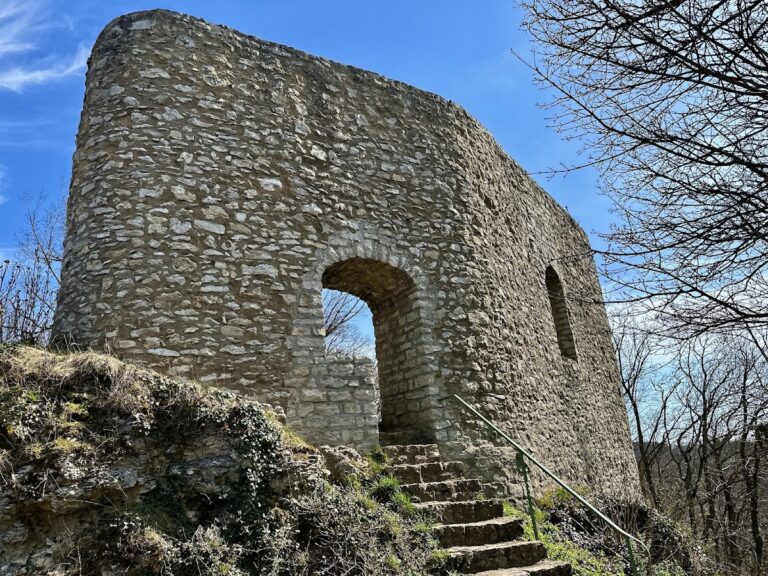
Mittlerer Wielandstein was built around 1250 around a separate rock formation. Its surviving walls indicate a tower with an estimated ground plan of approximately 5 by 7.5 metres. The remains form part of the sequence of fortified sections that extended along the Wielandstein ridge.
Vorderer Wielandstein
Vorderer Wielandstein was also constructed around 1250 around a separate rock formation. Parts of the castle retain a shield wall, a particularly strong defensive wall placed on the side most exposed to attack, reaching up to 3.8 metres in thickness. The castle covered about 20 by 20 metres and is interpreted as having contained a timber-framed building, whose structural wooden framework held infill between its members.
Hohgreutfels watch post
The small watch post at Hohgreutfels measured approximately 10 by 10 metres and was protected by two ditches. Its position probably allowed surveillance of the upstream valley and the Swabian Alb plateau above the main castles. Small finds associate the post with the second half of the thirteenth century.
Condition of the ruins
The castle sections survive in ruinous condition. The 2015 rockfall detached approximately one-third of the rock massif and affected the stability of the ridge, leading to the closure of access routes and climbing facilities while further rock detachments remained under investigation.
Nearby sites