Fort Stöckli: A Swiss Artillery Fortress at Andermatt


Site at a Glance
- Rating
- 4.6
- Popularity
- Very Low
- Country
- Switzerland
- Primary era
- Modern
- External website
- Open
- Eras represented
- Modern
- Civilizations
- Swiss
- Site type
- Military
- Remains
- Fort
On this page14 sections
History
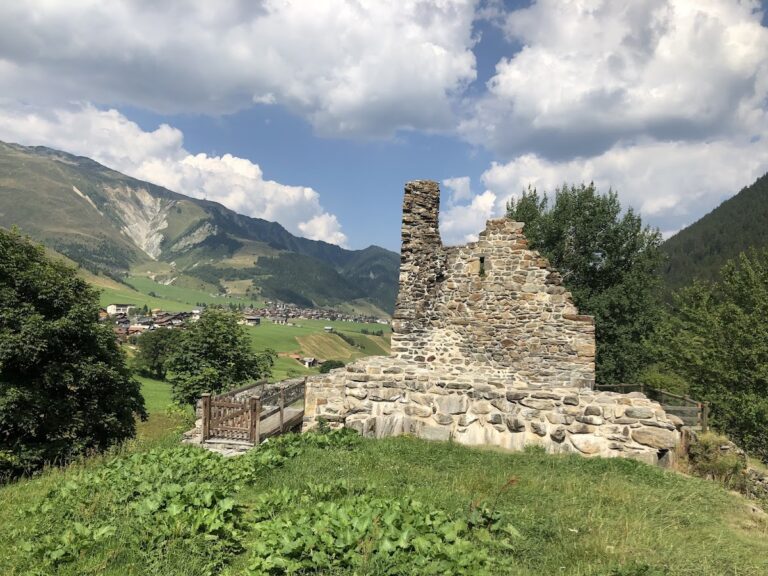
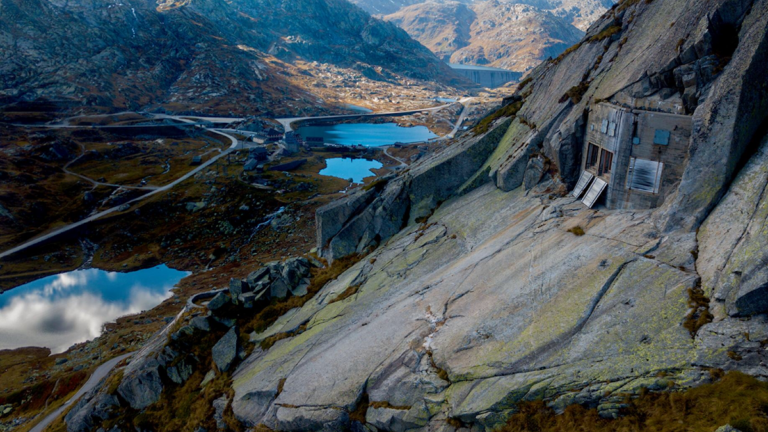
Fort Stöckli is a Swiss artillery fortress at Gütsch above Andermatt, Switzerland, built in 1893–1894 as part of the Gotthard fortifications. At 2,400 metres above sea level, beneath the 2,479-metre Stock mountain north of Andermatt, it was regarded at the time as Europe’s highest fortress. The installation formed part of Switzerland’s national defence system and controlled approaches connected with the Gotthard and Oberalp passes.
The Gotthard defensive plan
Swiss planners conceived the defences around Andermatt as a citadel within an entrenched camp, meaning a fortified central position supported by outer defensive works. The Furka, Oberalp, and Gotthard passes were intended to be blocked as outer positions while remaining open for the movement of Swiss troops. Fort Stöckli helped anchor this mountain defence at Gütsch.
Construction of the artillery fort followed a decision by the Federal Council, Switzerland’s federal executive authority. Work began in 1893 and was completed in 1894. A road from Nätschen towards Gütsch and a barracks camp at Grossboden were built first to provide access and support a mobile defence. Further artillery positions were later established at Grossboden.
Military adaptation and wartime service
The fort was repeatedly modified as military technology changed. In 1898, its defences were expanded with obstacle trenches, flanking casemates, an extension to the barracks, and a shelter for a mobile searchlight. An observation armoured cupola, an observation casemate, and a position for a 5.3-centimetre mobile armoured gun were added at the same time. A second position for such a gun followed in 1903.
A wireless-telegraphy test station was established on Gütsch in 1905. It used a Telefunken system and masts 50 metres high, but developments such as spark-gap radio systems and mobile radio stations made the installation obsolete within a few years.
During Switzerland’s first border occupation at the outbreak of the First World War in 1914, the defensive works around Gütsch and Stöckli were reinforced. Fortress Artillery Company II/9 operated the fort during the First World War, while Fortress Artillery Company V/12 served there during the Second World War. The fortress remained active during the Second World War without major enlargement.
Decline and abandonment
Fort Stöckli became less important after a new turret-artillery work was built on Gütsch and four bunkers secured the Oberalp Pass. In 1947, the outdated artillery installation was abandoned and disarmed. Its exposed position, limited effectiveness, and the continual maintenance demanded by severe weather all contributed to that decision.
After its military role ended, the buildings were used as troop accommodation. They were later stripped of their fittings and left to deteriorate. The wider defensive system also included the Oberalp Pass barrier, a group of works intended to block or control movement through the mountain pass. Its four infantry works were placed in two pairs, with two near the beginning of Oberalp Lake and two about halfway along it. Infantry Work A 8691 was cleared out in July 2016.
Remains
The surviving defensive complex is organized around the granite-built artillery fort at Stöckli, associated infantry works, covered rifle galleries, observation positions, artillery sites, and the wider Oberalp Pass barrier. The original installation combined a gorge barracks with a shelter. Stone slabs surrounded the fort and also formed a wall fitted with loopholes, openings through which rifles could be fired.
Fort Stöckli and its artillery
Artillery Work Stöckli
Artillery Work Stöckli, designated A 8682, was originally armed with two 12-centimetre Model 1891 armoured howitzers. An armoured howitzer was a short-barrelled artillery piece protected by armour. Their fire could reach the Oberalp Pass and control the Oberalp road, while two 5.3-centimetre mobile armoured guns and rifle positions provided close defence. The mobile guns, known here as Fahrpanzers, were small armoured weapon systems rather than modern tanks.
The 1898 additions included obstacle trenches with flanking casemates, fortified chambers arranged to fire along the side of a defensive obstacle. The fort also gained an enlarged barracks, a mobile-searchlight shelter, an observation armoured cupola, and an observation casemate. A second mobile-gun position was added in 1903. The abandoned and disarmed buildings later lost their fittings and deteriorated.
Stöckli infantry installation
Infantry Bunker Stöckli, designated A 8684, formed part of the associated close-defence system. Its relationship with the artillery work was reinforced by rifle positions and the observation facilities at Stöckli. The observation armoured cupola and the positions for the 12-centimetre howitzers and 5.3-centimetre mobile armoured guns remain among the named defensive elements of the complex.
Stock and Gütsch defensive positions
Covered rifle gallery on Stock
In 1915, a 200-metre covered rifle gallery was built on the immediately adjacent Stock. A rifle gallery is a protected passage or firing position for infantry rifles or machine guns. Machine-gun casemates were placed at its flanks. Permanent positions for position batteries, artillery units assigned to fixed locations, were also established at Grossboden and Vorder Felli.
Forward position of Gütsch
A closed infantry work and a position for a half-battery of two 12-centimetre guns were built on the forward position of Gütsch. A half-battery was a partial artillery unit consisting here of two guns. These weapons faced towards the Reuss and Unteralp valleys. Temporary artillery positions at Platten had their field of fire directed towards Tavetsch.
Gütsch wireless station
The former Telefunken wireless station on Gütsch belonged to the communications infrastructure of the defensive system. Its 50-metre masts supported early military wireless experimentation before newer radio technology made the station obsolete within a few years.
Oberalp Pass barrier
Infantry works and support installations
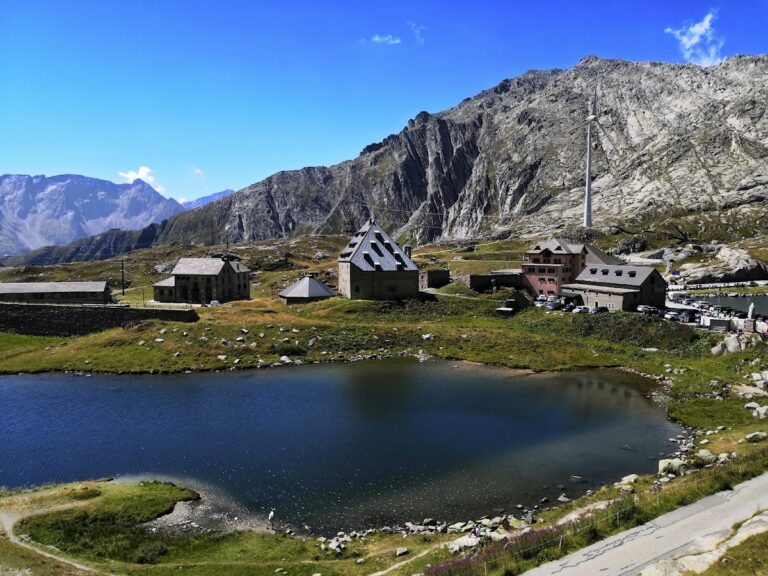
The Oberalp Pass barrier included Infantry Works A 8690, A 8691, A 8692, and A 8693. Two works stood near the beginning of Oberalp Lake and two were positioned approximately halfway along the lake. Accommodation on the pass and a cableway station supported the defensive installations, while the four infantry works formed the barrier’s principal fighting positions.
Nearby sites