Teck: A Medieval Hilltop Castle in Germany
Site at a Glance
- Rating
- 4.5
- Popularity
- Medium
- Country
- Germany
- Primary era
- Medieval
- External website
- Open
- Eras represented
- Medieval, Early Modern, Modern
- Civilizations
- German, Holy Roman Empire
- Site type
- Military
- Remains
- Castle
On this page12 sections
History
Teck is a medieval hilltop castle in Germany, built by the Zähringer dynasty around 1100 on Teckberg above the Lauter valley near Owen in Baden-Württemberg. Its earliest written mention appears in a treaty of 1152, when Duke Conrad of Zähringen promised Emperor Frederick Barbarossa military support for a planned Italian campaign.
The Zähringer and Teck Dukes
The castle and its surrounding territory formed the core of the Zähringer holdings in the area. From 1178, the Zähringer possessions that remained there passed to a junior branch of the family. This branch adopted the title dukes of Teck, linking its dynastic identity to the castle and its territory.
Financial pressure changed the castle’s ownership. The dukes sold one half to the Habsburgs in 1303 and the other half to the counts of Württemberg in 1381. Teck then ceased to serve as a ducal residence and became the seat of a Vogt, an appointed local official responsible for administration or jurisdiction.
Württemberg Rule and Destruction
The ducal line of Teck ended in the fifteenth century. In 1495, the title passed to the counts of Württemberg, who thereby became dukes of Württemberg. In 1519, defenders of the castle supported the Swabian League, a late-medieval alliance of princes, cities, and other estates in southwestern Germany, in its conflict with Duke Ulrich of Württemberg.
During the German Peasants’ War, a major uprising in the German lands, Burg Teck was completely destroyed in 1525. Duke Carl Alexander of Württemberg later planned to turn the ruins into a modern fortress. Work began in 1736, but the project ended after the duke’s death in 1737. Parts of the unfinished construction were dismantled in 1738, leaving the site as a ruin.
The Revival of the Teck Title
The title Teck returned to dynastic use in the nineteenth century. Franz, the son of Duke Alexander and a nephew of King Frederick I of Württemberg, could not inherit because his father had contracted a morganatic marriage, in which the lower-ranking spouse and children normally had no dynastic succession rights. Franz received a princely title in 1837 and became Duke of Teck in 1871.
In 1866, Franz married Princess Mary Adelaide, a granddaughter of King George III of Britain. Their daughter Mary of Teck later married King George V, bringing the name Teck into the official titulary of the British royal family. Franz, Mary Adelaide, and their unmarried daughter Mary visited the castle in 1892 and made a substantial donation to the site.
Modern Use and Conservation
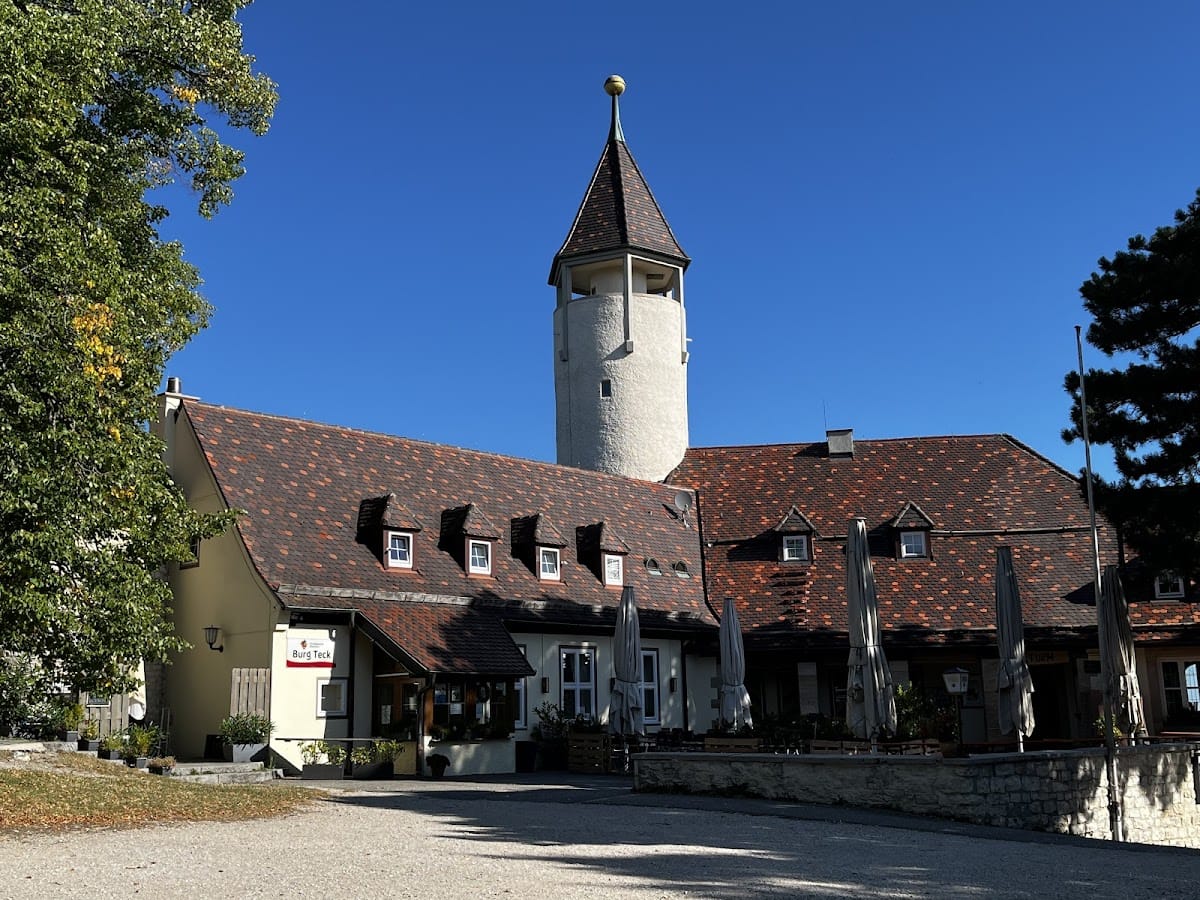
A lookout tower was erected on the medieval foundations in 1889, followed by a travelers’ shelter in 1893. An events hall, the Mörikehalle, was built beside the tower in 1933. Since 1941, the complex has belonged to the Swabian Alb Association, a German hiking and heritage organization. The association expanded and rebuilt the hall in 1954 and 1955 as a hikers’ hostel with a restaurant and sleeping rooms.
The surrounding area became the Teck Nature Reserve on 9 November 1999. A tower stump from the Staufer period, the era of a medieval German imperial dynasty, collapsed in May 2010. It was secured in 2013 without being rebuilt in its original form. Extensive repairs to the lookout tower and the hostel roof followed in 2020.
Remains
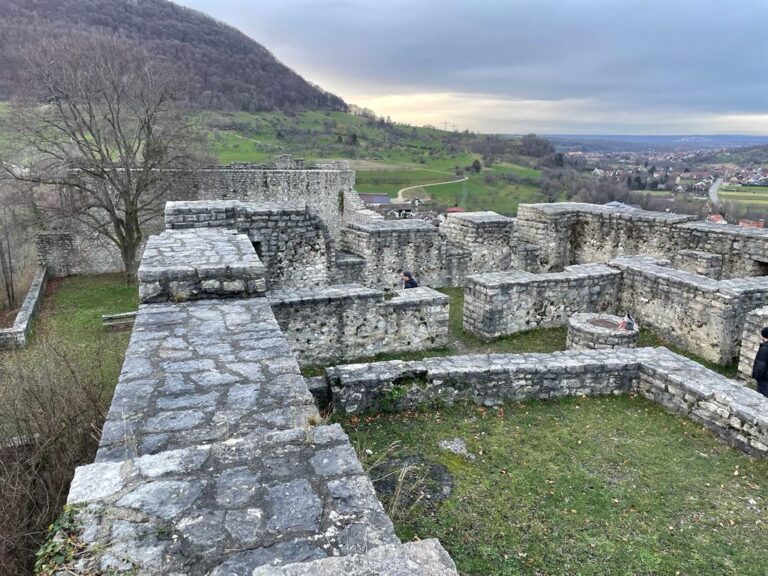
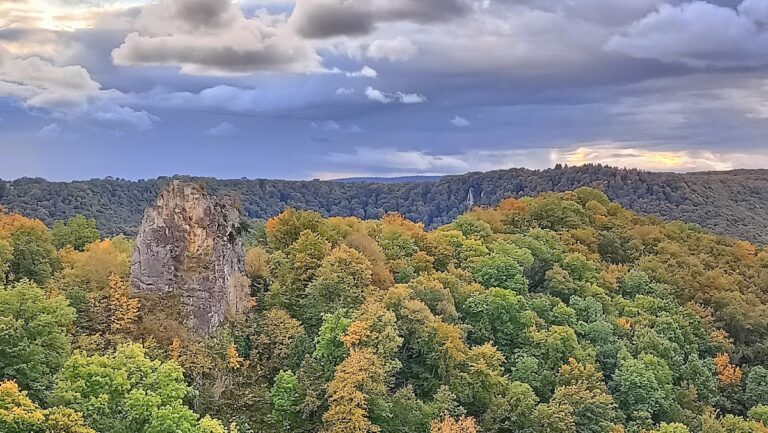
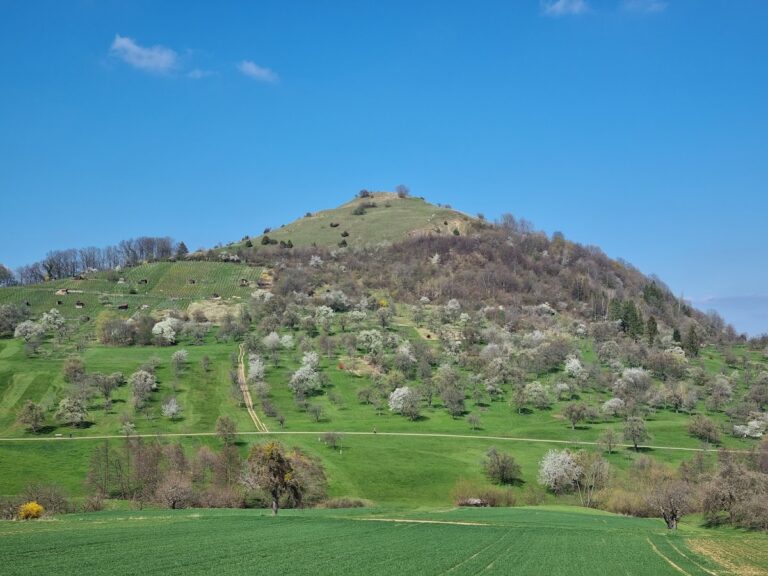
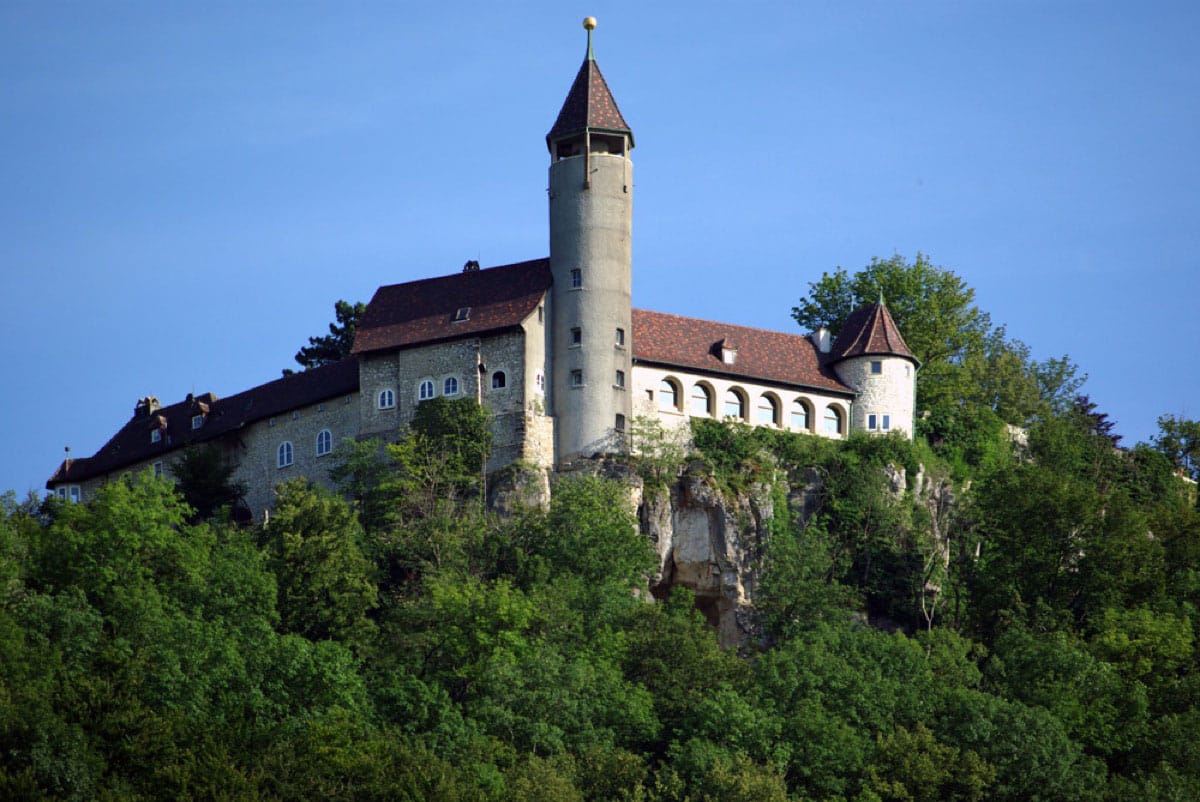
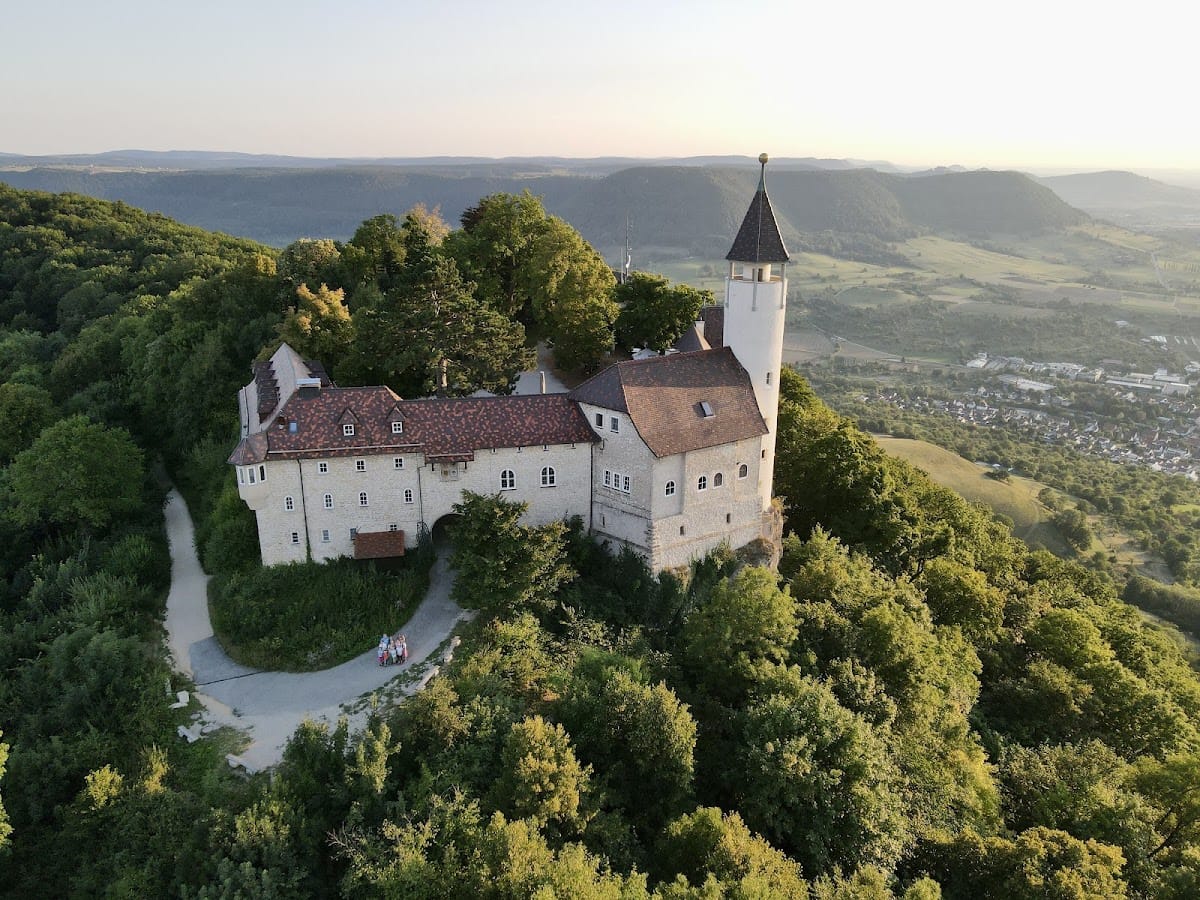
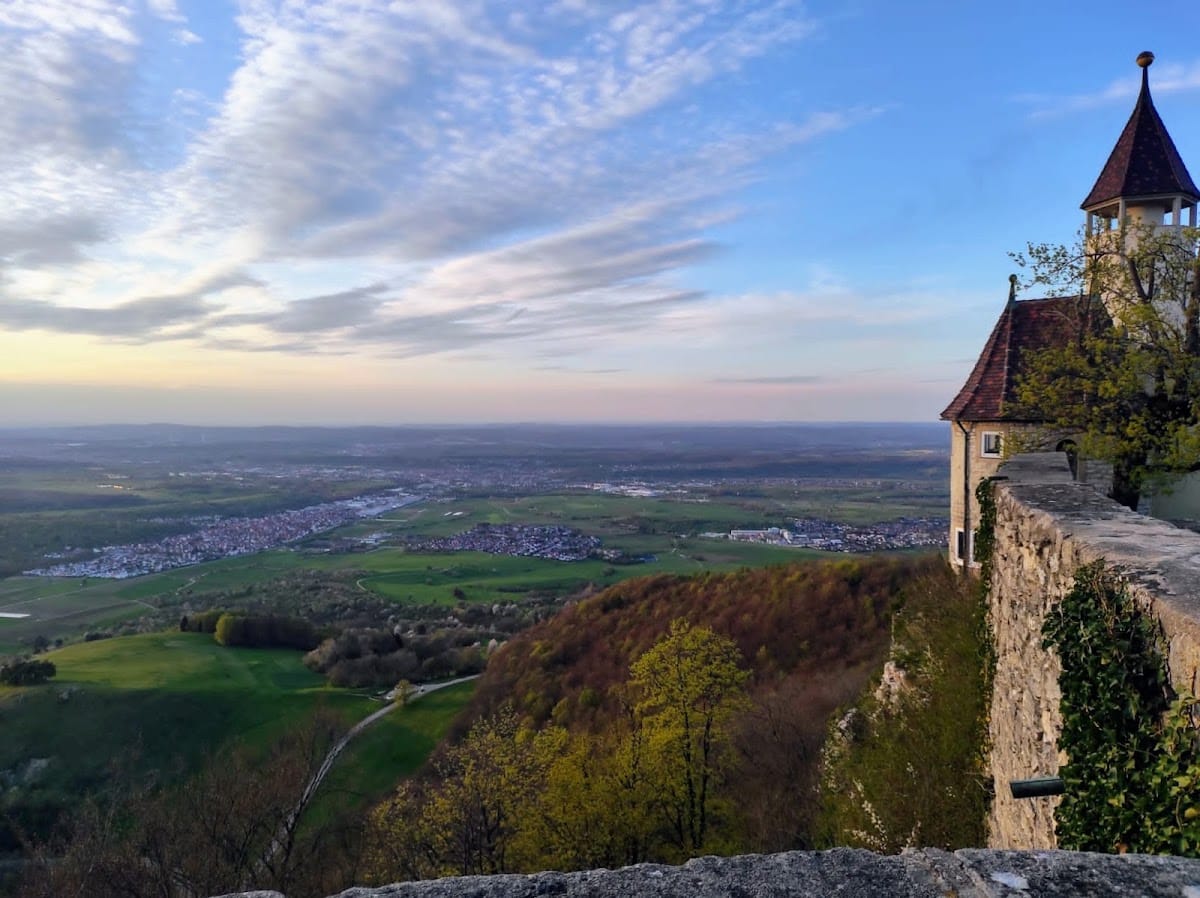
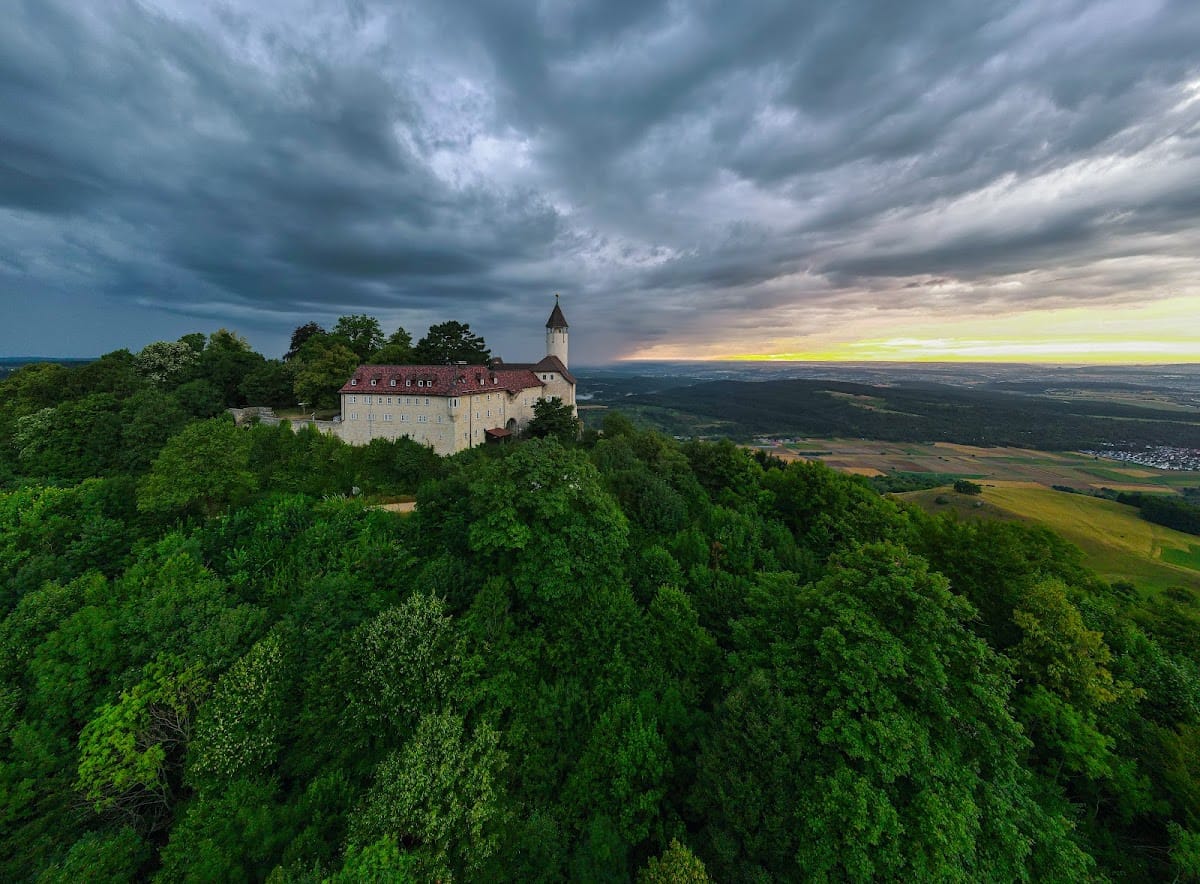
Teck occupies the rocky summit of Teckberg at approximately 773 metres above sea level, above the Lauter valley, where the river continues toward the Neckar. The castle borders the municipal territory of Bissingen an der Teck. Beneath the summit, a natural cave called Sibyllenloch lies in the rock. The present complex combines nineteenth- and twentieth-century buildings with medieval foundations, supporting walls, ruins, and surviving masonry.
Medieval Foundations and Masonry
Castle Foundations
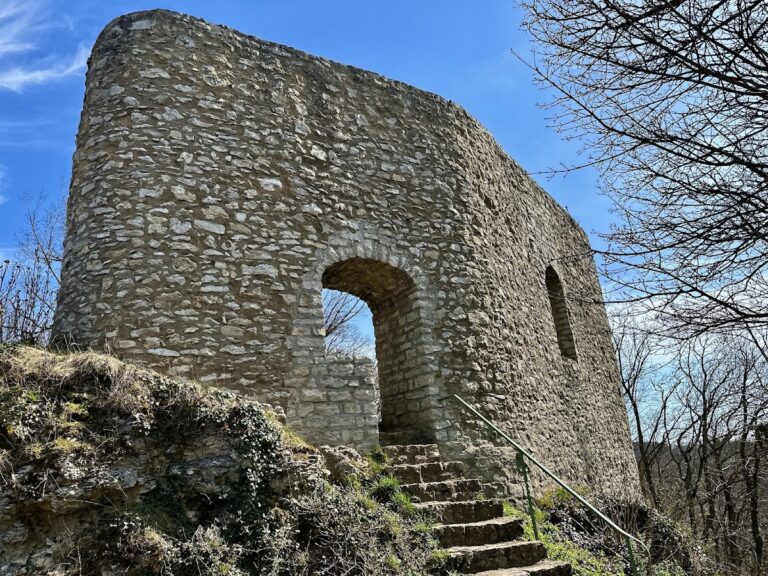
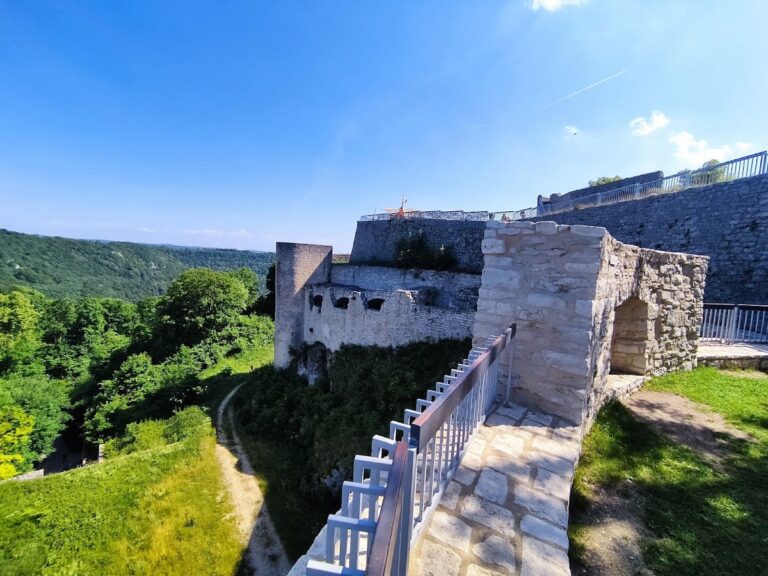
The original castle survives principally through its foundations, ruined structures, supporting walls, and medieval masonry. The stonework includes small ashlar, regular ashlar, and bossage, or rusticated ashlar, in which the outer faces of the blocks project from the wall. These remains occupy the summit and form the physical base for later buildings.
Staufer Tower Stump
A tower stump dating from the Staufer period stood among the medieval remains until it collapsed in 2010. The surviving material was secured in 2013, but the stump was not reconstructed in its original form.
Lookout Tower and Later Buildings
Lookout Tower
The lookout tower stands on the foundations of the former bergfried, the principal defensive tower of a medieval German castle. The earlier tower was approximately 31 metres high. Wind-related concerns led to the lookout tower being rebuilt into its present form in 1955.
Travelers’ Shelter and Mörikehalle
The late-nineteenth-century travelers’ shelter stands beside the tower. The Mörikehalle was added in 1933 and later converted and enlarged as a hikers’ hostel containing a restaurant and sleeping rooms. Together, these later structures occupy and extend the medieval castle setting while the older foundations and masonry remain part of the complex.