Huntington Castle: A Fortified Tower House and Historic Estate in Ireland
Site at a Glance
- Rating
- 4.9
- Popularity
- Very Low
- Country
- Ireland
- Primary era
- Medieval
- External website
- Open
- Eras represented
- Medieval, Modern
- Civilizations
- Irish
- Site type
- Military
- Remains
- Castle
On this page6 sections
History
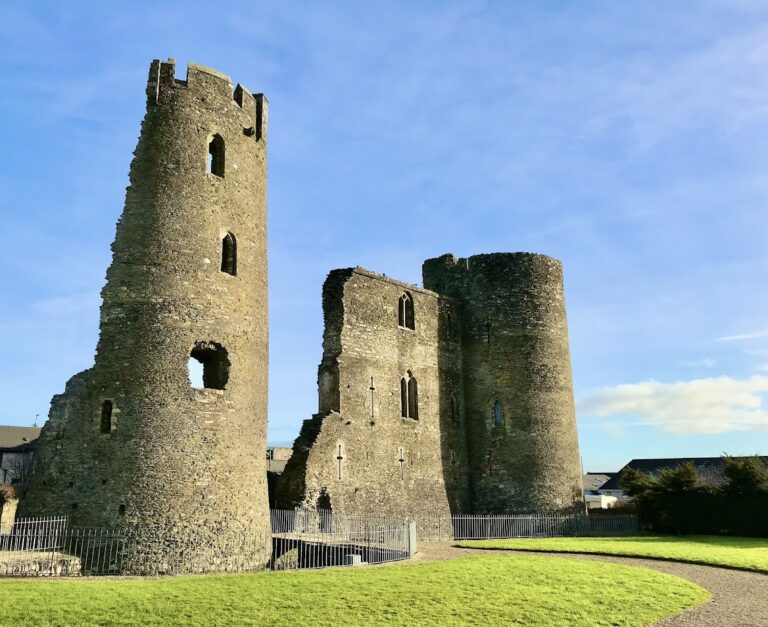
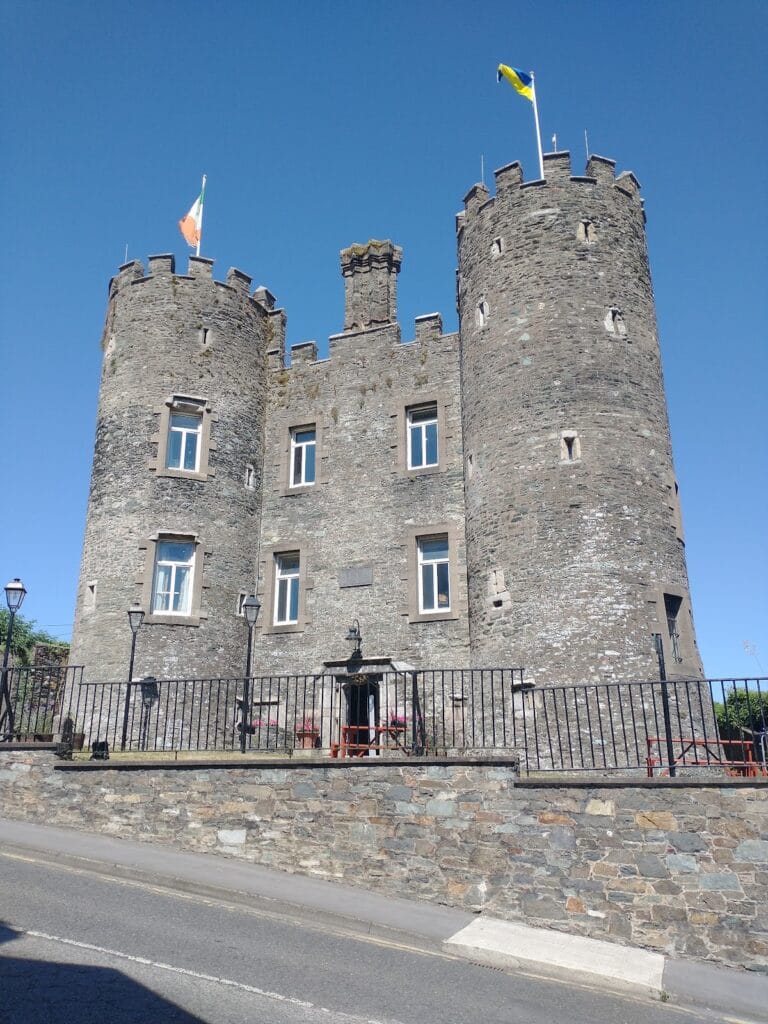
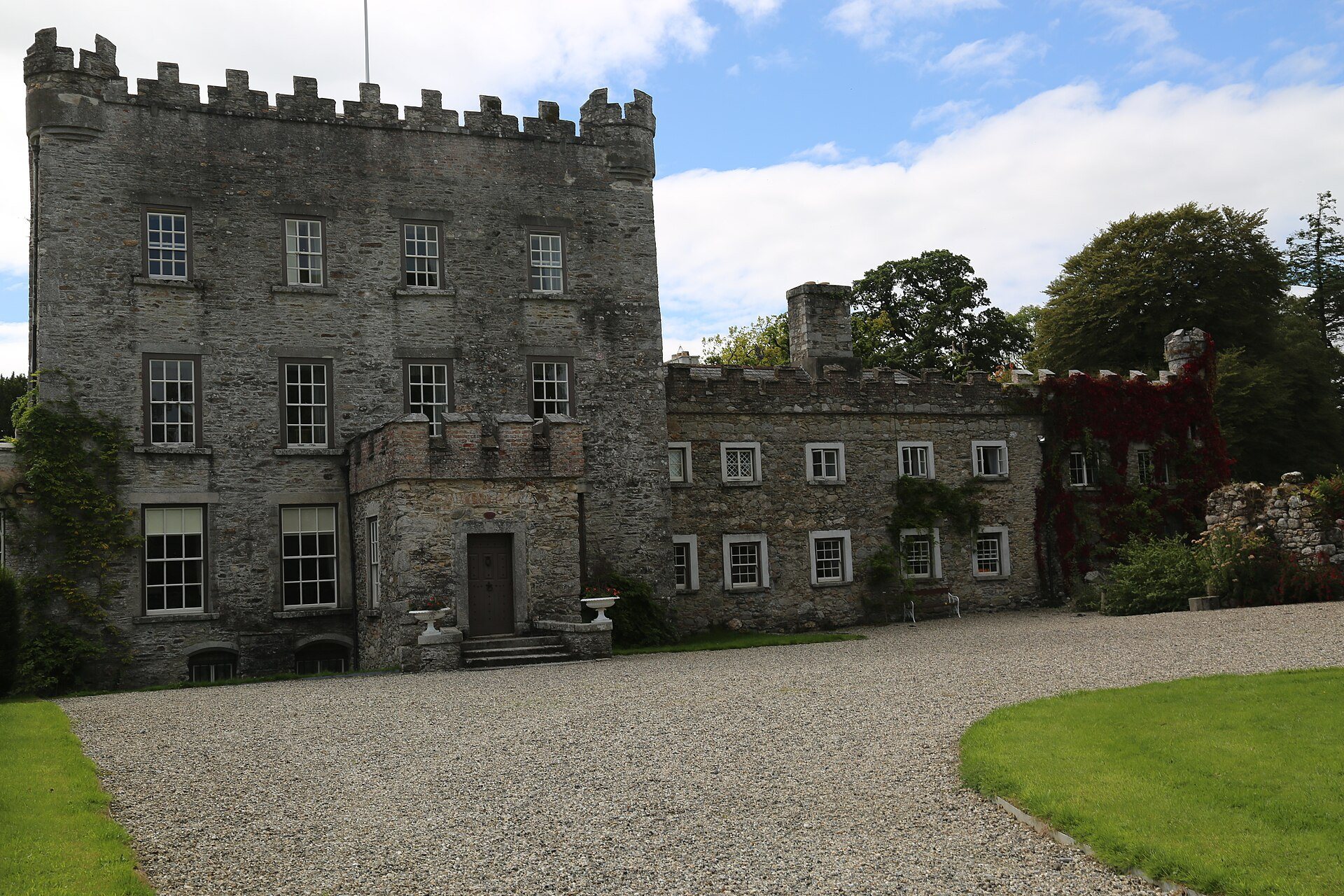
Huntington Castle, also known as Clonegal Castle, is a fifteenth-century fortified tower house in Clonegal, County Carlow, Ireland, built by the Caviness, an old Irish clan, as the residence of its chief. A tower house was a fortified stone residence centered on a tall, compact tower that could accommodate a small garrison.
The Plantation period
During the Plantation of Ireland in the early seventeenth century, Huntington Castle served as a defensive stronghold and garrison post supporting English colonization. The Plantation was an English-sponsored program in which land was confiscated from Irish inhabitants and settled by English and Scottish colonists. Clonegal’s position on the road between Dublin and Wexford gave the castle strategic value during this period.
Baron Esmonde later seized the castle, which then became associated with the Esmonde family. During the seventeenth century, the family established gardens around the building.
War and later use
Fighting reached the castle during the Irish uprising that began in 1641. Rebels captured Huntington Castle and flew the flag of the Irish Confederation, an alliance formed by Irish Catholic forces during the conflict. In 1650, forces commanded by Oliver Cromwell stormed and captured the castle while marching toward Kilkenny. Cromwell was the English military and political leader whose forces carried out the Cromwellian conquest of Ireland in the mid-seventeenth century.
Since 1976, the castle’s underground rooms have served as a base for the Fellowship of Isis, a modern religious organization founded that year and associated with Isis-centered and broader esoteric religious traditions. Huntington Castle was also used as a filming location for Stanley Kubrick’s historical drama Barry Lyndon.
Remains
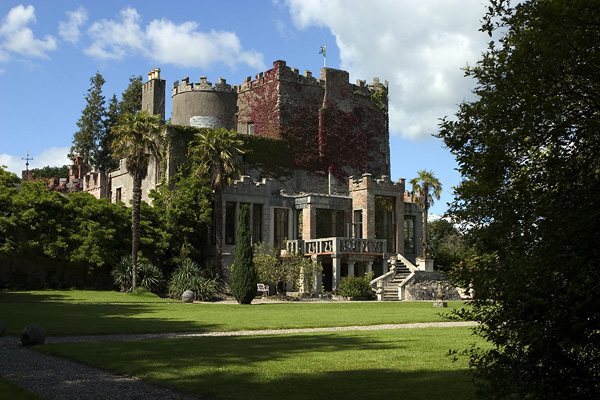
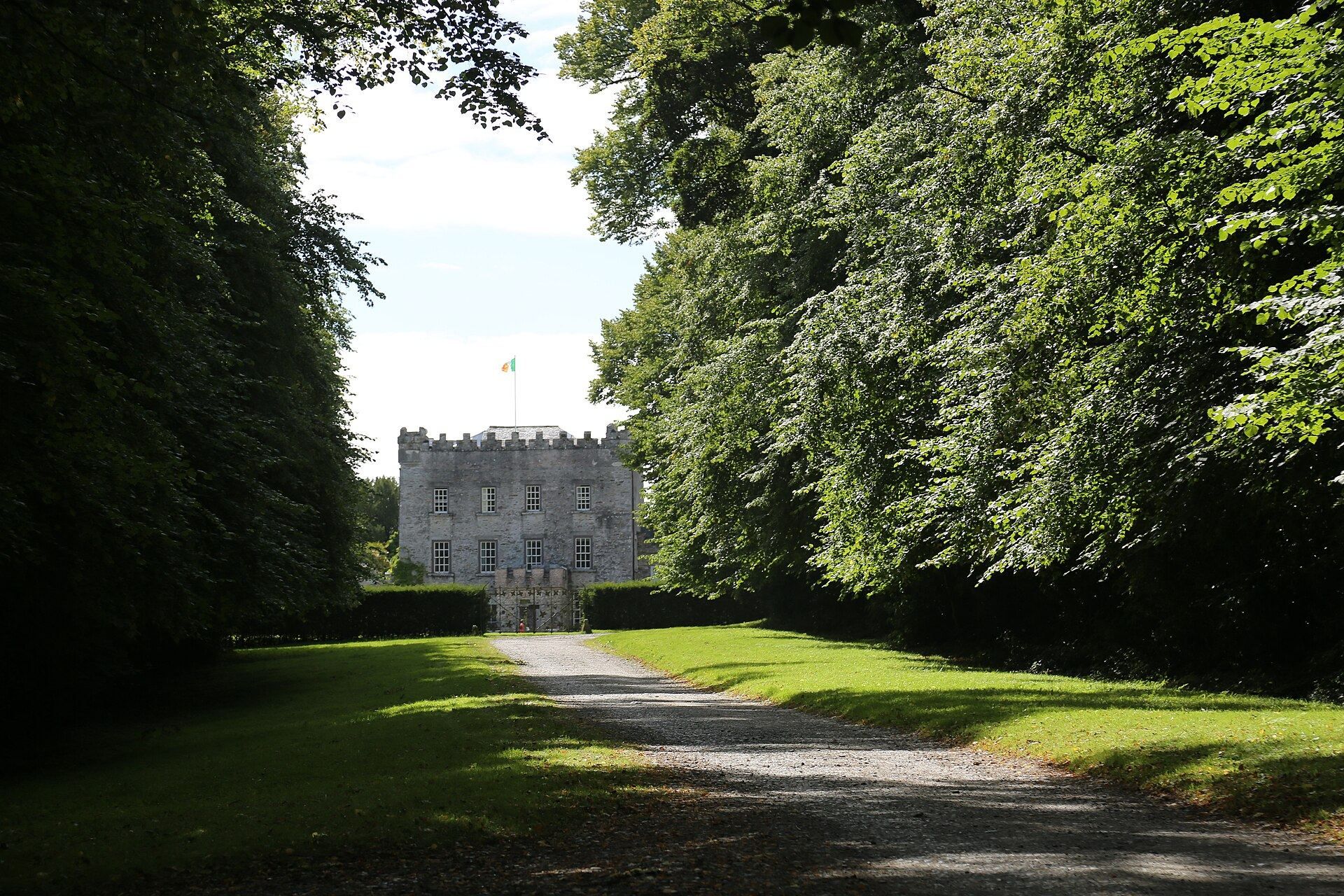
Huntington Castle is a well-preserved lowland fortress, meaning a fortified structure built on relatively level ground rather than on a naturally elevated defensive site. Its fifteenth-century tower house is constructed of rubble stone, and the surrounding estate combines formal gardens, lawns, meadows, woodland paths, water features, and the River Derry.
The castle and formal gardens
The castle’s original tower house was built to house a garrison. Around it are a French lime avenue, a parterre, formal lawns, meadows, a yew walk, and fishponds positioned on both sides of the central path. A parterre is a formal garden arrangement of ornamental beds set in geometric patterns. The ponds were created decoratively, although they could theoretically have supported fish breeding.
Plantings in the gardens include lime, yew, oak, spruce, pine, chestnut, hickory, crab-apple, and horse-chestnut. The lower naturalized garden contains a lake made for decoration, while the River Derry runs along its lower boundary. The river forms the boundary between County Wexford and County Carlow and is incorporated into the landscape of woodland walking paths.
Waterworks and legends
A water-turbine house near the castle supplied the estate with its own electricity from 1888. It is described as one of the earliest turbine houses of its kind in Ireland. A well at the castle is said never to run dry, and local legends connect it with protection from sieges and with the intervention of druid spirits.
Other legends associated with Huntington Castle describe druid spirits appearing in the fields and inside the castle. They are said to have created mist, kindled fires, caused blood to fall as rain, and sacrificed men and women to their gods.