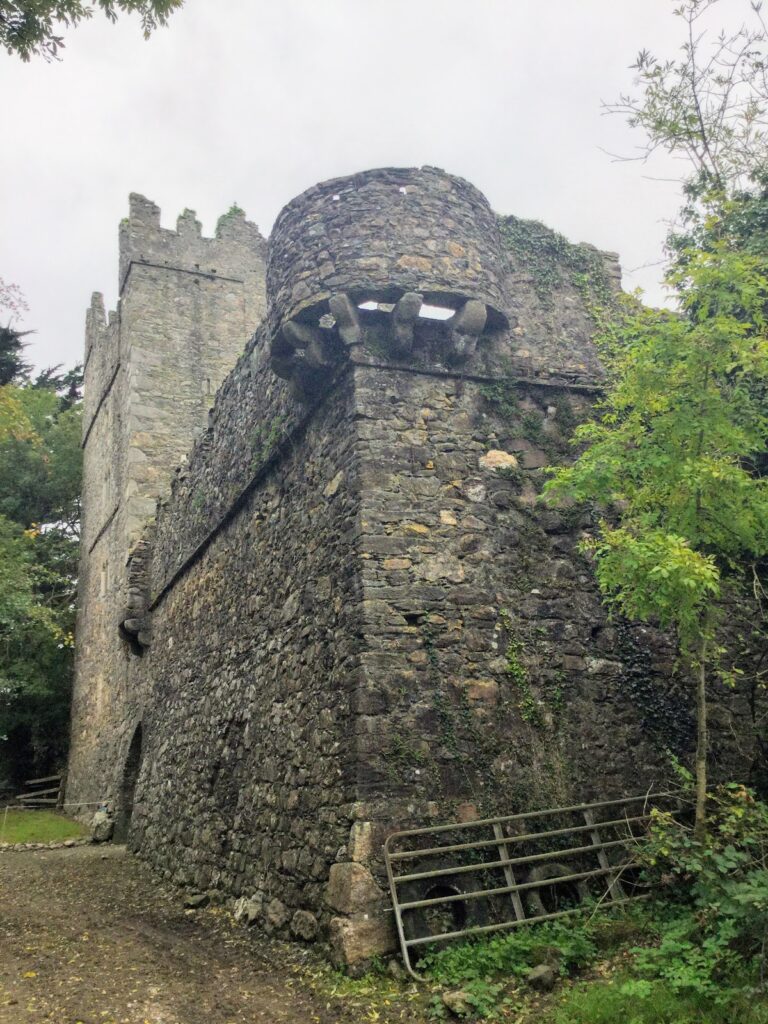
Ferns Castle: A Medieval Fortress in Ireland


Site at a Glance
- Rating
- 4.6
- Popularity
- Low
- Country
- Ireland
- Primary era
- Medieval
- External website
- Open
- Eras represented
- Medieval
- Civilizations
- Norman
- Site type
- Military
- Remains
- Castle
On this page7 sections
History
Ferns Castle is a medieval fortress in Ireland, developed during the thirteenth century under Anglo-Norman rule after Ferns had served as a religious centre and capital of Leinster. Its surviving remains reflect the political importance of a settlement associated with Gaelic kings, Norman lords, monasteries, and later military conflict.
Early religious and political importance
A fortress at Ferns is described as having been first established in 598, when Saint Aidan, also known as Mogue, founded a monastery there and became Bishop of Ferns. The settlement later became the capital of Leinster, one of Ireland’s historic provinces. At times, when kings of Leinster held the title of High King of Ireland, Ferns also functioned as a capital of Ireland.
Before the Viking invasions, Ferns was described as Ireland’s largest city. A fire later destroyed the town and reduced its extent by about one-third. The settlement had stretched along the River Bann, a tributary of the River Slaney, linking the history of the fortress to a much larger early urban centre.
Monastic foundations and Norman rule
In 1158, Diarmait Mac Murchada, the medieval king of Leinster, founded St Mary’s Abbey at Ferns as an Augustinian monastery. After his death in 1171, he was buried there. The Anglo-Norman conquest of Ireland, the late twelfth-century expansion of Norman rule into Gaelic territories, then brought Ferns under the control of Norman feudal lords.
During the thirteenth century, William Marshal, son of William Marshal, 1st Earl of Pembroke, built Ferns Castle. The fortress was later enlarged and reconstructed as Ferns continued to develop under medieval rule. A cathedral dedicated to Saint Edan was also built during this period of development. Queen Elizabeth I later intended to restore it, but the work remained only partial.
Seventeenth-century destruction and later status
Ferns Castle was involved in fighting during the Irish rebellion that began in 1641. Oliver Cromwell, the English Parliamentarian commander whose forces conquered much of Ireland during the mid-seventeenth-century conflict, subsequently suppressed the rebellion. The castle was severely destroyed in the aftermath.
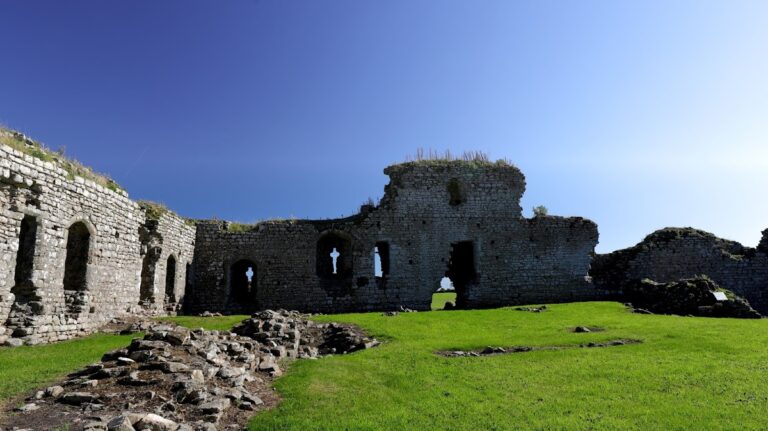
The castle, churches, and monasteries at Ferns now survive as ruins, preserving the memory of the former fortress and religious centre. Ferns Castle is designated a National Monument of Ireland.
Remains
Castle structure
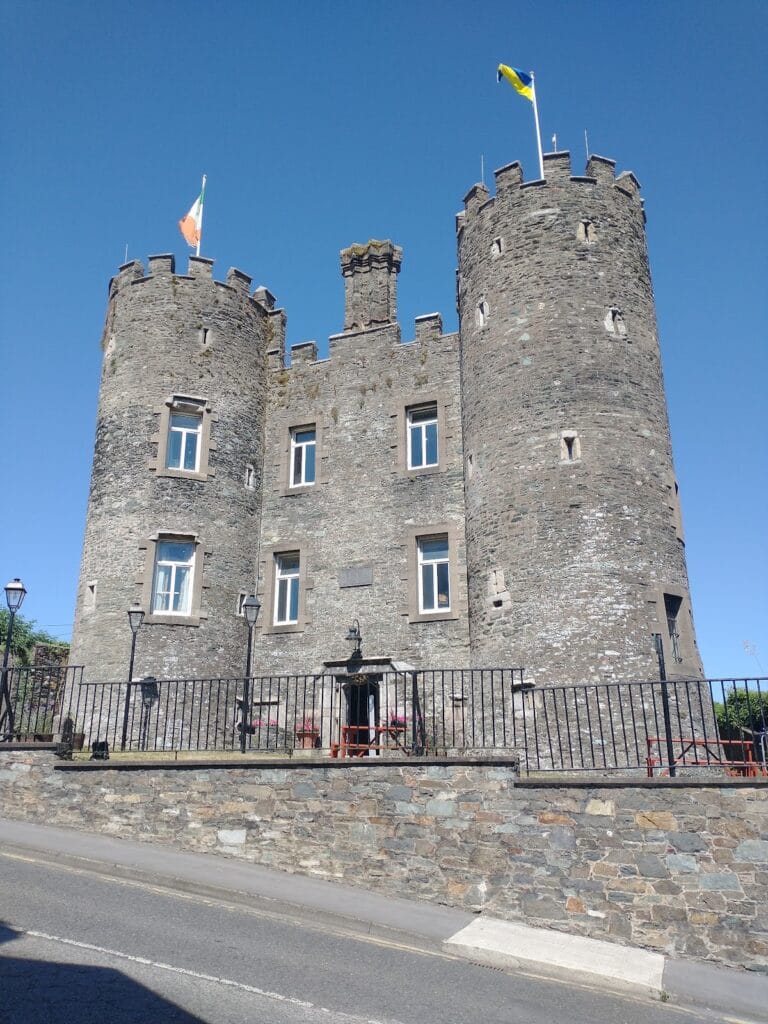
Ferns Castle originally consisted of a large square tower with round towers at its corners. Later enlargement and rebuilding altered the fortress, which had three storeys and windows in its eastern wall. The first floor of the eastern tower contains a vaulted circular chapel, whose roof carries eight sculptures. Narrow spiral staircases rise to the top of the tower, providing views across the surrounding landscape.
Religious remains
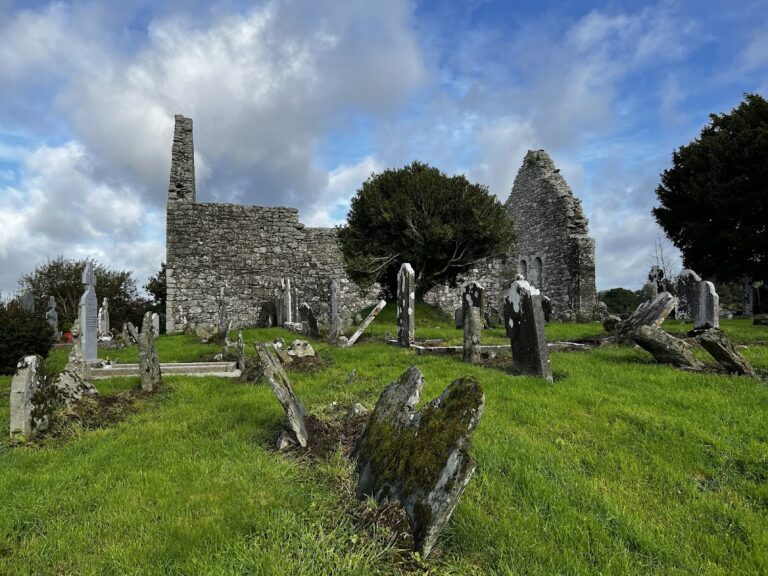
Ruins of the thirteenth-century Saint Edan’s Cathedral stand beside the present Saint Edan’s Cathedral. The medieval cathedral itself has not survived, while the former St Mary’s Abbey, the Augustinian monastery founded by Diarmait Mac Murchada, is also in ruins.