Castillo de Curiel de Duero: A Royal Medieval Fortress in Spain


Site at a Glance
- Rating
- 4.6
- Popularity
- Very Low
- Country
- Spain
- Primary era
- Medieval
- External website
- Open
- Eras represented
- Classical, Medieval, Modern
- Civilizations
- Roman, Visigothic
- Site type
- Military
- Remains
- Castle
On this page8 sections
History
Castillo de Curiel de Duero is a fortified castle in Curiel de Duero, Spain, built over a Roman castellum, a fortified military site. Its original castle walls probably date from the seventh century, and the site is regarded as the oldest castle in Valladolid province. Positioned above the Horcajo stream and the Duero Valley, it became a strategic stronghold in the region’s medieval history.
Roman foundations and medieval frontier
Archaeological remains from the fourth century have been found beneath the castle. The fortress later served as a bastion during the repopulation of the Duero Valley between the ninth and eleventh centuries, a period when fortified settlements supported the consolidation of Christian-controlled territory in the region.
Royal ownership and imprisonment
From the eleventh century onward, records place the castle in the possession of several monarchs of León and Castile. These included Alfonso VII, Alfonso VIII, Alfonso IX, Ferdinand III, Alfonso X, Sancho IV, Alfonso XI, Peter I, and Henry II of Trastámara. The castle also formed part of the marriage dowries of royal women including Berenguela of Castile, Violante, Infanta Estefanía, and Eleanor Plantagenet.
Under Henry II of Castile, Diego de Castilla was imprisoned at Curiel for 54 years. This captivity is described as the longest recorded imprisonment in the history of Spain. A traditional saying later compared the fortress with nearby Peñafiel: “Peñafiel would have a fine castle, if it did not have Curiel in view.”
Decline and restoration
Over the following centuries, the castle deteriorated through the effects of time, looting, and inadequate maintenance. By the beginning of the twenty-first century, it was almost entirely ruinous. An intensive restoration began in 2003 and was completed in 2006, converting the site into a Posada Real, a hotel complex that has operated within the restored castle since then.
Remains
Hilltop fortress
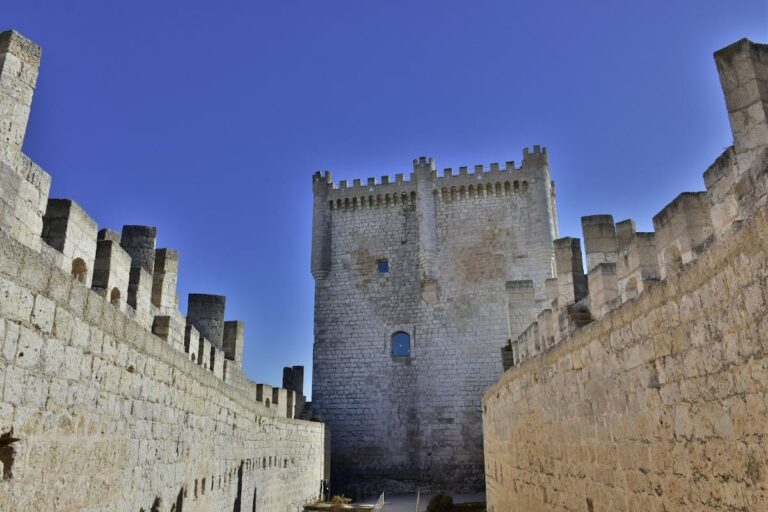
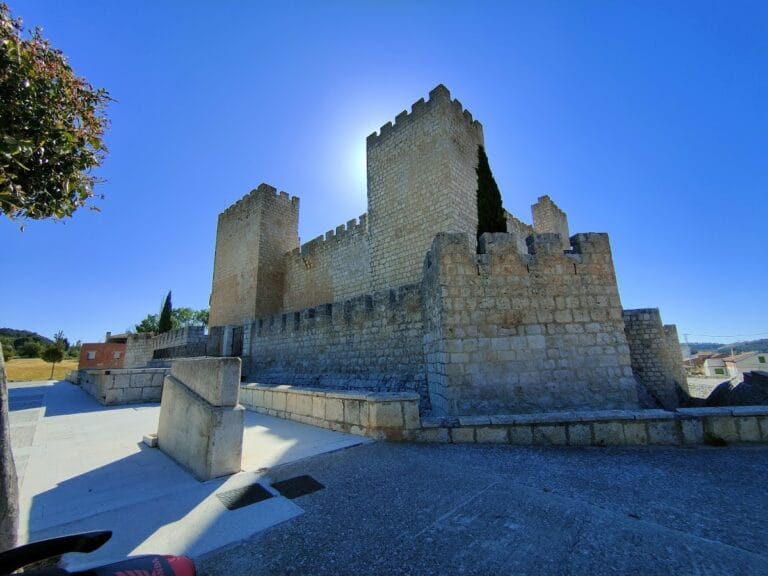
The castle occupies the summit of a rocky hill above the Horcajo stream, with an elevated position over the Duero Valley and the settlement of Curiel de Duero. Its plan is square, with four towers and a keep, the principal fortified tower of a medieval castle. The walls are constructed from rubble masonry, using irregular stones set in mortar.
Outer defenses
A curtain wall, the defensive wall enclosing the castle, formerly surrounded the fortress and incorporated four gates. Only small vestiges of the gates and the surrounding wall survive, while the principal castle structure has been incorporated into the restored complex.
Restored complex
The restored hotel complex contains 24 rooms and includes a swimming pool in the parade courtyard. These modern functions occupy the castle after its conversion during the restoration completed in 2006.