Vinica Castle (Črnomelj): A Medieval Castle in Slovenia


Site at a Glance
- Rating
- 4.4
- Popularity
- Low
- Country
- Slovenia
- Primary era
- Medieval
- External website
- Open
- Eras represented
- Medieval
- Civilizations
- Holy Roman Empire
- Site type
- Military
- Remains
- Castle
On this page8 sections
History
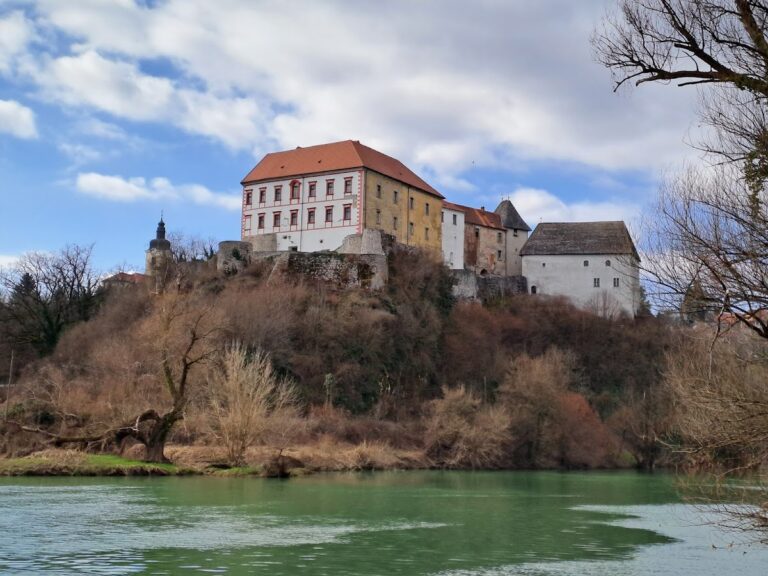
Vinica Castle (Črnomelj) is a medieval castle in Slovenia, first mentioned in 1082 and built on the ruins of a Roman fort, a fortified military installation within the Roman imperial system. It is a Slovenian national cultural monument. The castle’s history includes attacks by Turkish forces, destructive fires, long periods of ruin, changing ownership, and a major restoration carried out in 2014 and 2015.
Medieval origins and attacks
Vinica developed on a site that had previously served Roman military purposes. By the medieval period, the castle had become a fortified residence and defensive complex. Turkish forces attacked it in 1469 and again in 1471, placing the castle within the period of Ottoman incursions that affected parts of the region.
Ownership returned to the Semenich family in 1520 and remained with them until the beginning of the seventeenth century. Reliable information about the castle’s owners during much of the sixteenth and seventeenth centuries is lacking, but the family’s return marks an important phase in the property’s history.
Fire, decline, and changing ownership
A fire almost completely destroyed Vinica Castle in 1555. The complex then remained in ruins for a long period, although its fourteenth-century chapel survived in good condition. Further fires damaged the castle in 1874 and 1878. The castle was abandoned during the eighteenth century.
The Guzikov family owned Vinica in the middle of the eighteenth century. Frank Frido bought it in 1856 and sold it to Alpe Montangesellschaft in 1882. Henrik Grünwald acquired the property in 1888, after which it changed hands several times among local residents. Miha and Peter Malich were owners for a long period.
Frank Mihelic acquired the rights to the castle complex in 1925, and the property has belonged to his descendants since then. Restoration and reconstruction took place in 2014 and 2015, after which the castle complex was completely restored.
Archaeology and heraldic identity
Vinica and its surroundings contain numerous prehistoric settlements and burial mounds, artificial earthworks raised over one or more graves. Systematic excavations of the mounds in the early twentieth century investigated 353 graves and produced a collection of about 20,000 objects. The collection was later taken to America and sold at a public auction in New York in 1934.
The castle’s coat of arms shows a fierce golden griffin holding a bunch of grapes on a blue field. The griffin represents courage, bravery, challenge, and vigilance, while its aggressive posture signifies readiness for combat. Blue represents honor, honesty, loyalty, and stability; gold represents grandeur, prestige, dignity, and wealth. The grapes symbolically represent the principal branch of the castle’s owners.
Remains
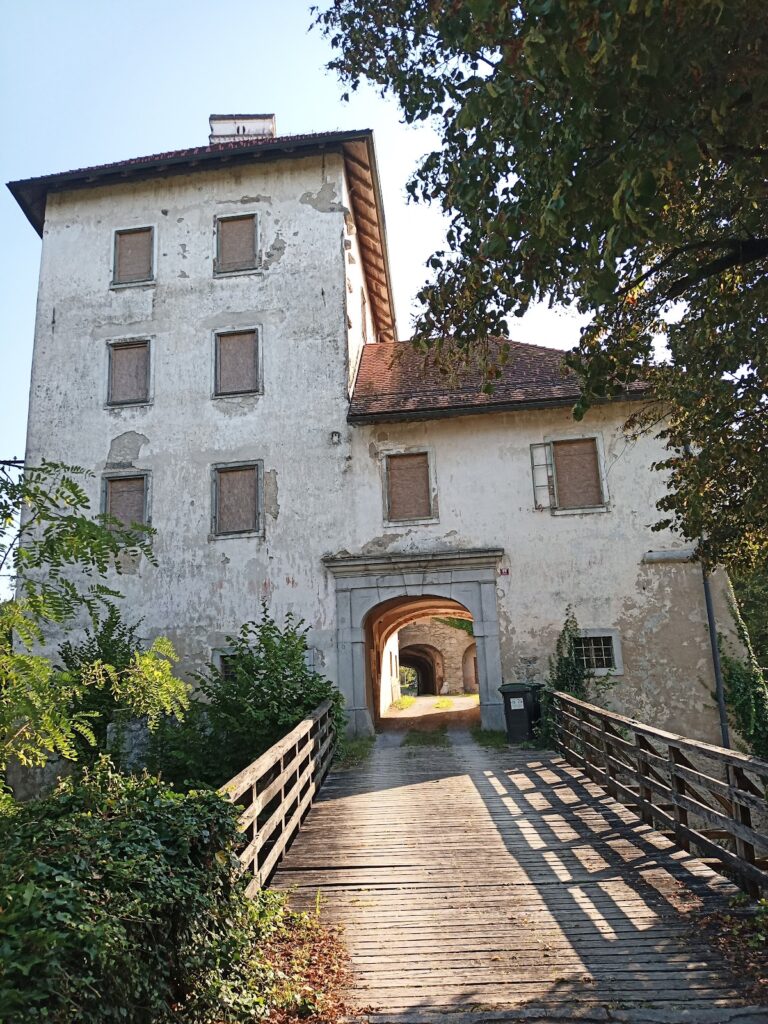
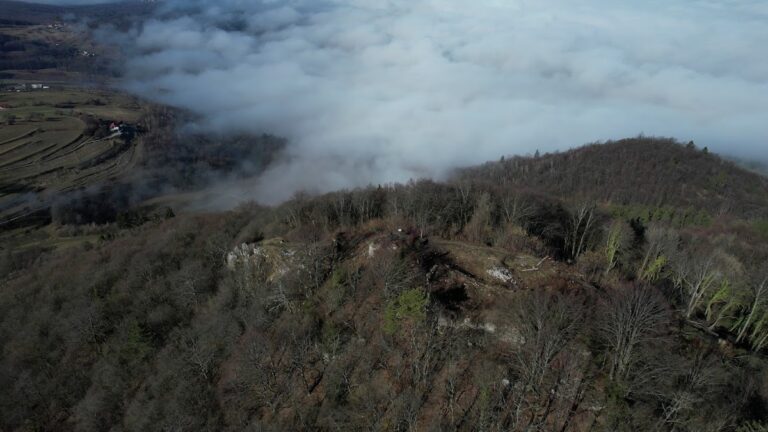
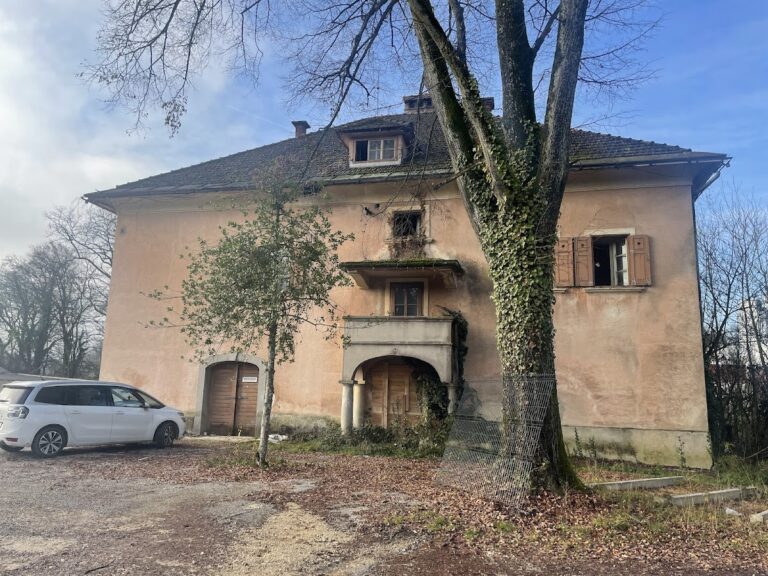
Before the restoration of 2014 and 2015, the complex consisted of a partially ruined central mansion and small surviving sections of its fortification walls. The fourteenth-century chapel was the best-preserved part of the pre-restoration ruins. The completed work restored and reconstructed the castle complex as a whole.
Surviving architectural groups
Central mansion and fortification walls
The central mansion formed the principal surviving building of the pre-restoration complex, although it was only partly intact. Small sections of the fortification walls also remained. Restoration and reconstruction between 2014 and 2015 addressed these damaged elements, and the castle complex is now completely restored.
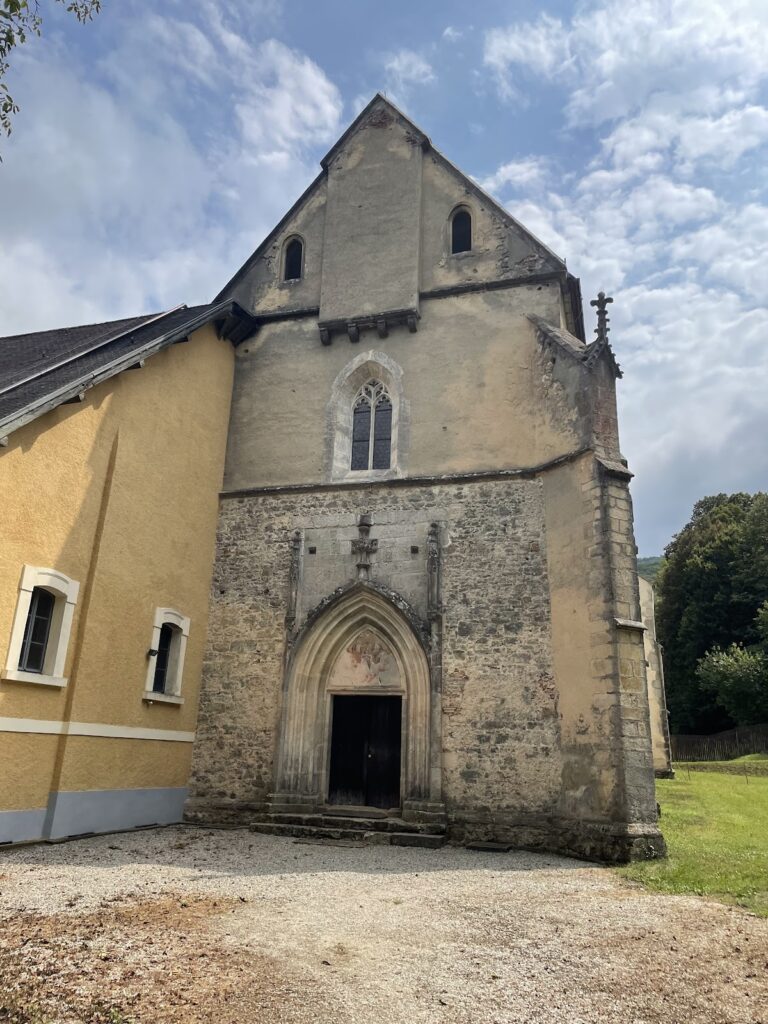
Fourteenth-century chapel
The chapel dates from the fourteenth century and remained well preserved while the rest of the castle stood in ruins after the fire of 1555. Its survival provides a physical link with the medieval castle before the later fires and reconstruction of the wider complex.