Sancerre Castle: Medieval Seat of the Counts of Sancerre



Site at a Glance
- Rating
- 4.5
- Popularity
- Low
- Country
- France
- Primary era
- Medieval
- External website
- Open
- Eras represented
- Medieval, Modern
- Civilizations
- French
- Site type
- Military
- Remains
- Castle
On this page7 sections
History
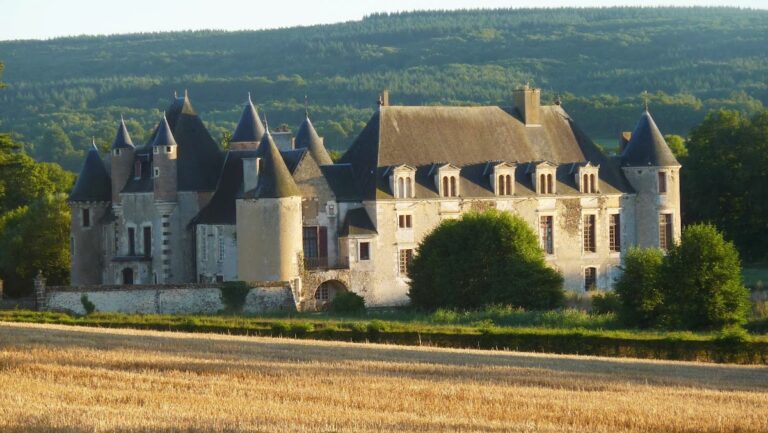
Sancerre Castle is a medieval French fortress at Sancerre, France, built on an isolated hill above the Loire valley. The castle developed as the seat of the counts of Sancerre, whose power extended across the Sancerrois from the eleventh to the fifteenth century.
A strategic comital seat
The hill rises approximately 150 metres above the Loire valley. From this position, the counts could control the surrounding heights, the north-south boat traffic on the Loire between Bourbonnais and Orléanais, and the western slopes of the Nivernais. The fortified town of Sancerre grew below the castle and blocked access to the hill’s least steep approach.
The counts of Sancerre were powerful lords, and members of their family held senior offices in the French kingdom. Louis de Sancerre became Constable of France, a leading royal military office. During the later phase of the Hundred Years’ War, the future Charles VII and Joan of Arc stayed at the castle while Sancerre occupied a strategic position on the frontier of the French kingdom.
Demolition and later ownership
The castle and the town fortifications were demolished in 1621. The medieval complex consequently survived only in limited form, including the keep, foundations, cellars, and parts of the ramparts. In 1794, the last count of Sancerre, Charles-Antoine d’Espagnac, sold the estate to Count Roy. His heir, Alexandrine-Laure Roy, married the Marquis de Talhouët, and their daughter Françoise de Talhouët married the Duke of Uzès, Armand-Géraud-Victurnien de Crussol.
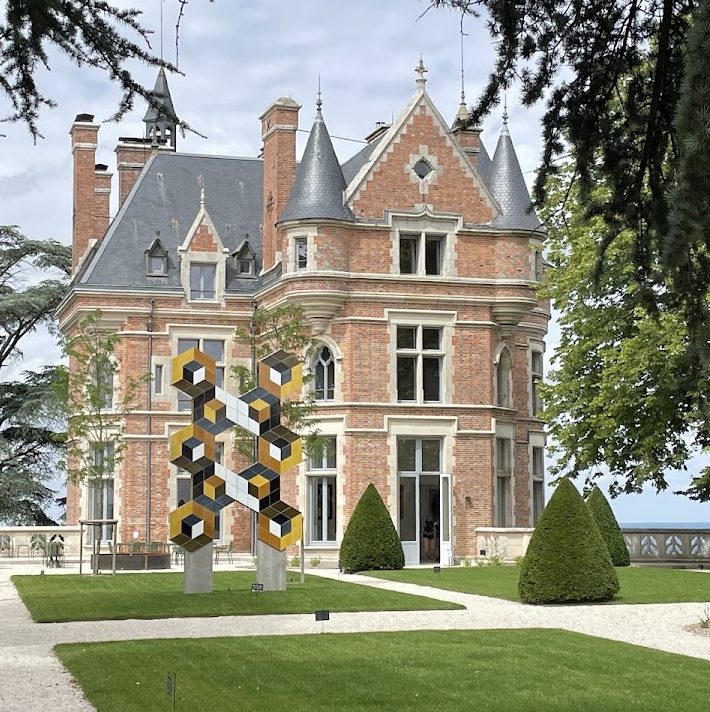
Armand de Crussol, Duke of Uzès, installed a wooden staircase in the Tour des Fiefs in 1856. A mansion in the Louis XII style, which combined late Gothic construction with emerging Renaissance decoration, was built over the ruins in 1874 for Mademoiselle de Crussol d’Uzès.
Wine estate and modern transformation
Louis-Alexandre Marnier-Lapostolle founded the Château de Sancerre wine estate in 1919. The estate covered 55 hectares of Sancerre AOC vineyards, a French appellation regulating production within a defined area, and produced approximately 450,000 bottles annually while associated with the château. The Marnier-Lapostolle family retained it until 2016, when it was sold to the Campari Group. In 2017, the wine activities passed to Maison Ackerman, part of the Terrena Group, while the château was sold separately.
The château changed ownership again in 2023 and became a hotel establishment. Renovation completed in 2025, with facilities including eight bedrooms, a gastronomic restaurant, and a treatment room. The Tour des Fiefs has been protected as a French historic monument, a heritage property subject to legal conservation measures, since 12 February 1927.
Remains
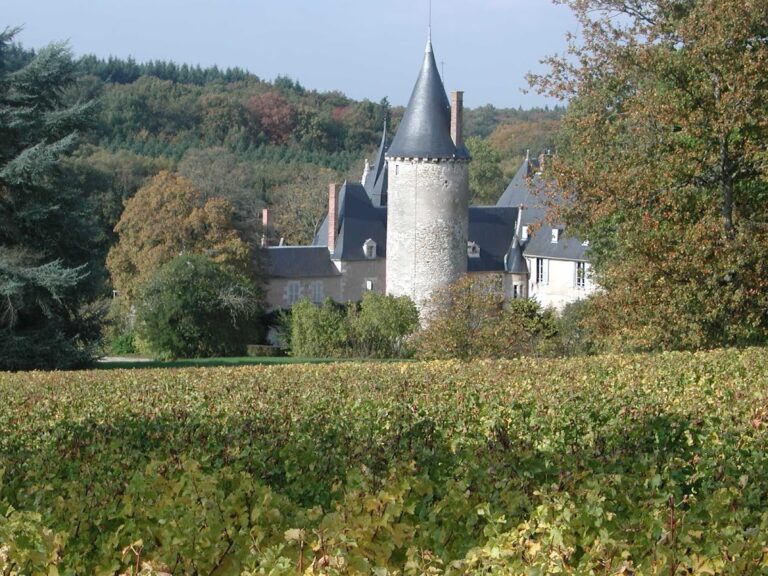
The surviving site occupies the summit of the hill and combines the cylindrical medieval Tour des Fiefs with fragmentary remains of the former castle and a later mansion set within a private park. Foundations, cellars, and sections of the medieval ramparts preserve parts of the earlier fortified complex.
The Tour des Fiefs
The Tour des Fiefs is a cylindrical keep dating from the late fourteenth century and is one of the last surviving elements of the castle of the counts of Sancerre. A spiral stone staircase flanks the tower, while the wooden staircase installed in 1856 provides another important part of its later history. The ground floor contains a private museum with armour and cannonballs associated with the siege of Sancerre in 1573. An eighteenth-century chapel occupies the first floor.
The later mansion and estate
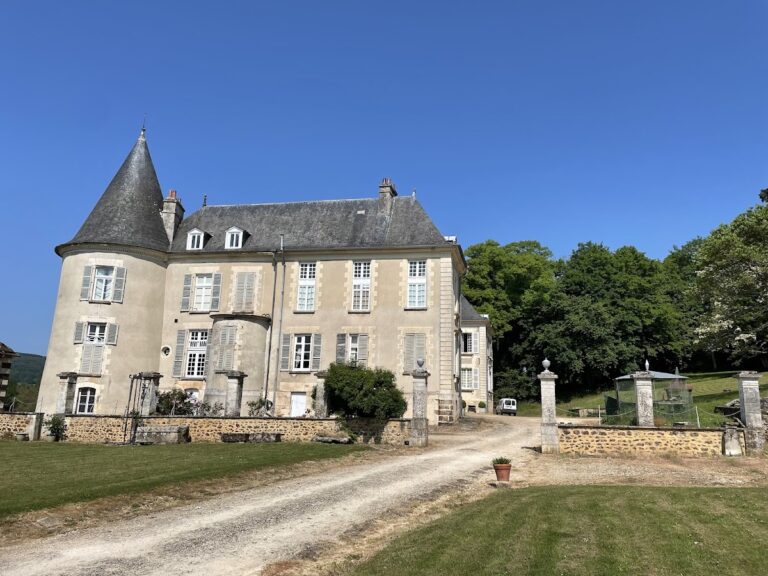
The former castle site also contains the Louis XII-style mansion built in 1874 over the medieval ruins, together with a private park. The medieval fortifications survive in fragmentary form through their foundations, cellars, and portions of the ramparts. The vineyards once connected with the château are now separate from it and belong to Maison Ackerman of the Terrena Group.
Nearby sites