Hohenstein Castle Ruins: A Medieval Fortress in Germany


Site at a Glance
- Rating
- 4.6
- Popularity
- Low
- Country
- Germany
- Primary era
- Medieval
- External website
- Open
- Eras represented
- Medieval
- Civilizations
- Holy Roman Empire
- Site type
- Military
- Remains
- Castle
On this page9 sections
History
Hohenstein Castle Ruins are a medieval hilltop fortress in Germany, probably originating in the 11th century on Hohenstein Mountain near Kirchensittenbach. The castle’s first documented mention dates to 1163, when Sicolinus von Hohenstein was recorded as its bailiff. Its position and later history connected it with the ruling houses and territorial struggles of the medieval German world.
Medieval Lords and Dynasties
The Counts of Sulzbach held Hohenstein before control passed to the Hohenstaufens, a medieval German dynasty that produced several kings and Holy Roman Emperors. This connection gave the castle its alternative name, Hohenstaufen Castle. After the Hohenstaufen line ended in 1268, authority over Hohenstein passed among the Wittelsbachs, a powerful Bavarian dynasty, the Luxembourgs, a major European ruling house whose members also held the imperial crown, and finally the Bavarian dukes.
Werner von Parsberg, a nobleman who fought on behalf of Nuremberg, held the lordship of Hohenstein Castle until his death in 1455. The castle’s political role became more closely tied to Nuremberg during the Landshut War of the Succession, a conflict over the inheritance of the Bavarian duchy of Landshut. Nuremberg secured the fortress and purchased it in 1505.
Nuremberg Rule and Destruction
After the purchase, Hohenstein became the administrative seat of the Hohenstein administrative office. A Nuremberg administrator lived at the castle, which helped govern and defend Nuremberg’s newly acquired territory. This administrative function placed the fortress within the wider system of an imperial city, a self-governing city of the Holy Roman Empire that answered directly to the emperor rather than to a territorial prince.
During the Second Margrave War, a 16th-century conflict in which Albrecht Alcibiades fought several imperial cities and territories, troops under the command of Albrecht Alcibiades, Margrave of Brandenburg-Kulmbach, captured and destroyed the fortification. Nuremberg and its allies eventually prevailed, and Hohenstein remained in Nuremberg’s possession. Rebuilding followed and continued into the 17th century.
Abandonment and Conservation
In 1806, when Nuremberg lost its status as an imperial city, Hohenstein and the surrounding territory became part of the Kingdom of Bavaria. The castle was abandoned and deteriorated. Parts of the complex were sold for demolition and reuse as building material, and the keep, the castle’s main defensive tower, was among the structures dismantled.
Efforts to halt the decay began around the middle of the 19th century. The Hohenstein and Surroundings Beautification Association acquired and renovated the chapel in 1901, then later conserved and restored other parts of the complex, including its walls and towers. In 1983, the association acquired and renovated the rest of the castle. After the southern wall of the palas, the principal residential and representative building of a medieval castle, collapsed on the night of 28 February 2000 following previously inconspicuous deformation, it was reconstructed. The association acquired the Long House in 2005 and extensively renovated it. The protected complex now serves as a museum and publicly accessible heritage site, with the chapel and castle tavern used for ceremonies and the Long House for cultural events, seminars, and conferences.
Remains
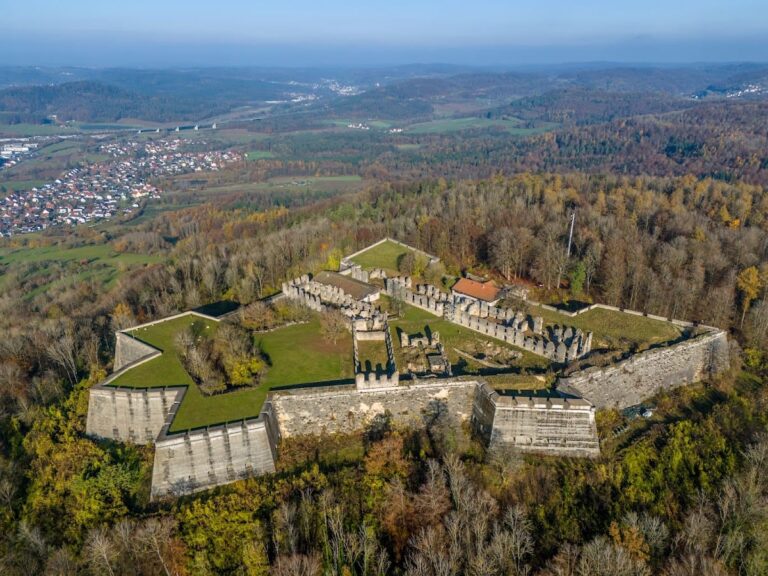
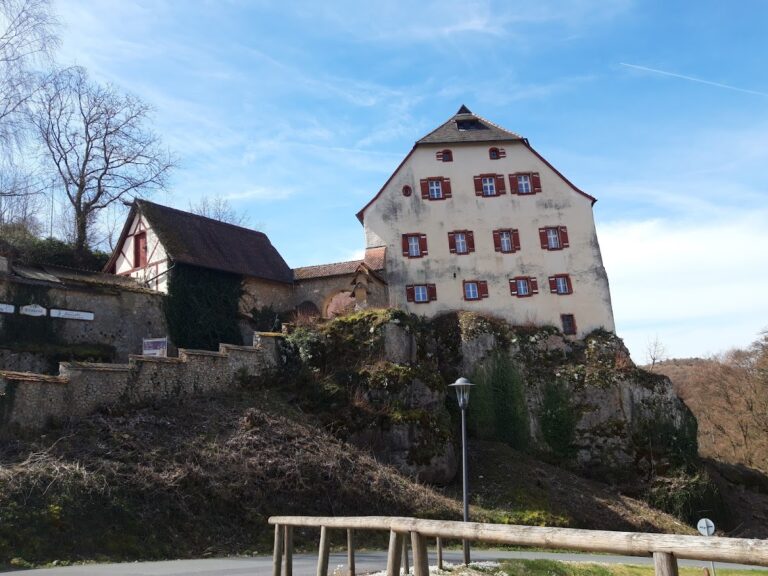
Hohenstein Castle Ruins occupy the summit plateau of Hohenstein Mountain at the western edge of Hohenstein village, in the Hersbrucker Alb of the Franconian Alb. At approximately 624 metres above sea level, the site stands on the highest point of this part of the Hersbrucker Alb northwest of the Pegnitz. The fortification rests on a dolomite rock formation about 30 metres high. Dolomite is a hard carbonate rock that can provide a natural foundation for fortified sites. The slopes fall almost vertically on three sides, giving the rocky hilltop complex a strongly defended setting.
Castle Buildings
Chapel
The castle chapel is one of the surviving components of the complex. It was renovated in 1901 and remains part of the protected castle site. The chapel is also used for wedding ceremonies, preserving a continuing ceremonial function within the restored ruins.
Palas and Long House
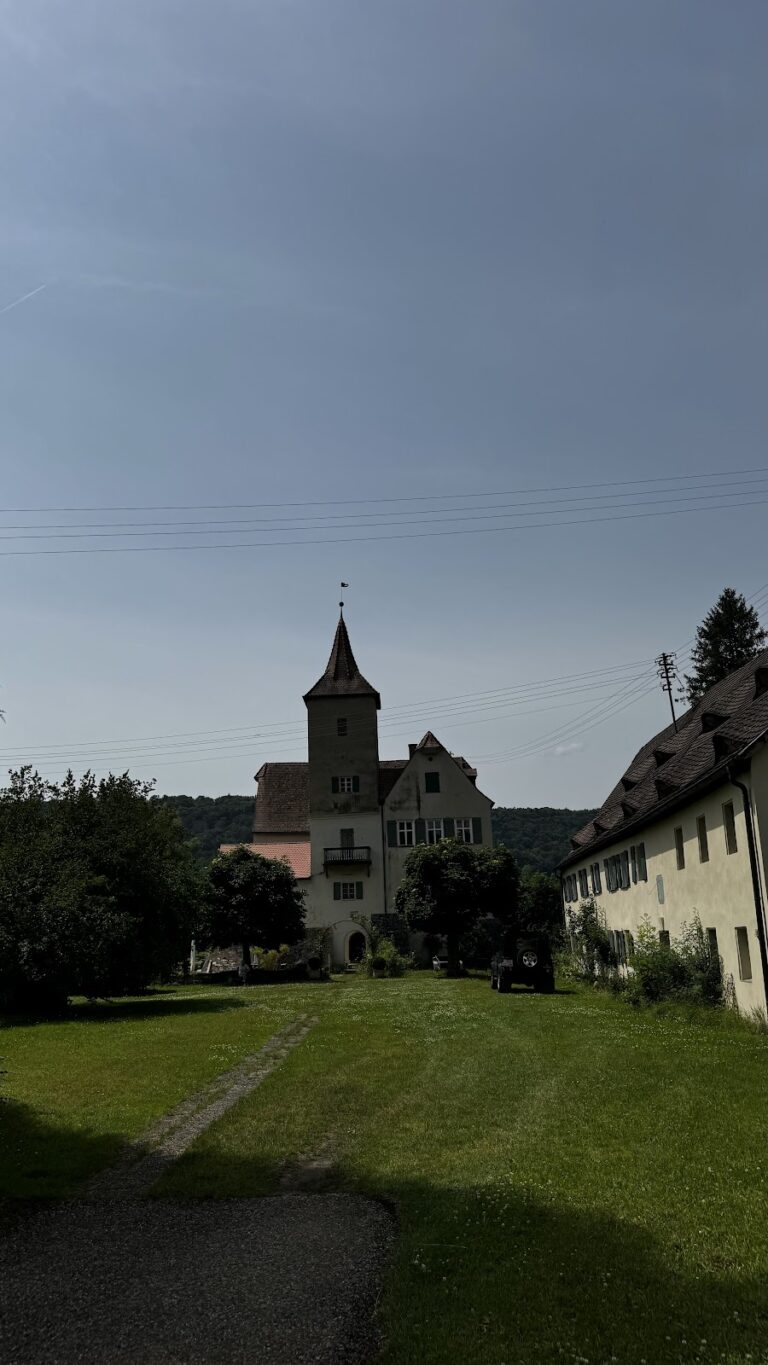
The palas formed the principal residential and representative building of the castle. Its southern wall collapsed in 2000 after gradual deformation and was later reconstructed. Another major surviving building is the former governor’s palace known as the Long House. Acquired by the Hohenstein and Surroundings Beautification Association in 2005 and extensively renovated, it now accommodates cultural events, seminars, and conferences.
Defensive Structures
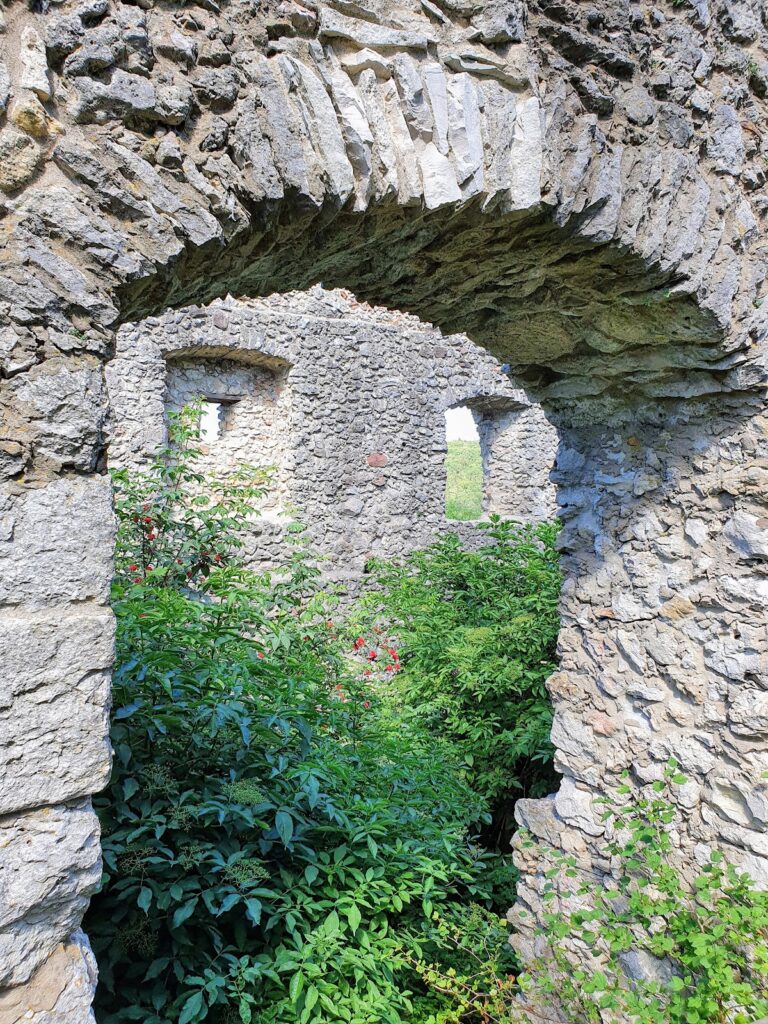
Substantial defensive remains include massive stone towers, surviving wall sections, and the former keep. The keep was dismantled after the castle’s abandonment, while other walls and towers were conserved to prevent further deterioration. A staircase leads up to the castle, whose surviving fabric continues to express the organization of a rocky hilltop fortification.